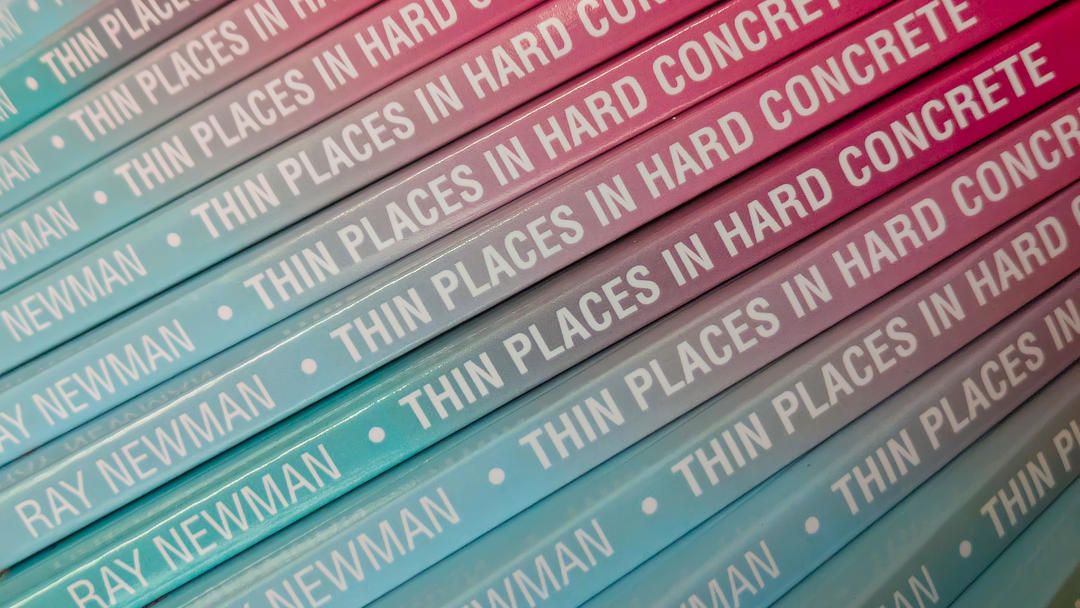
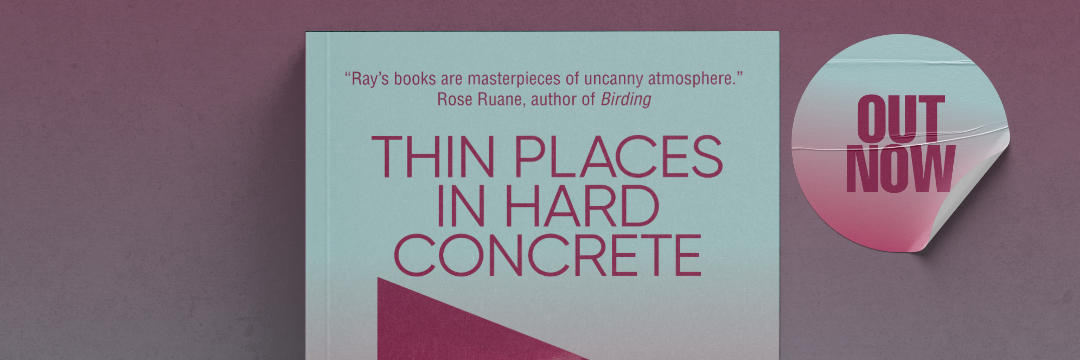
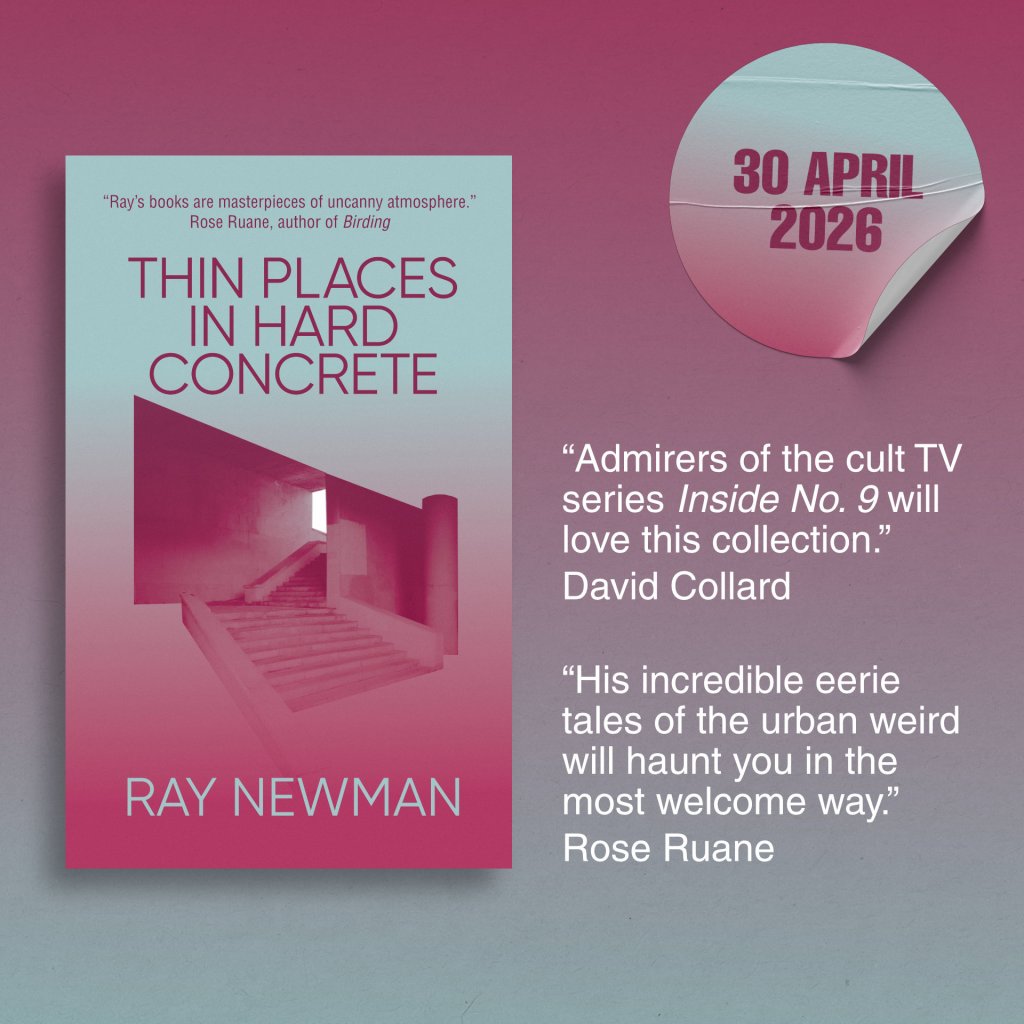
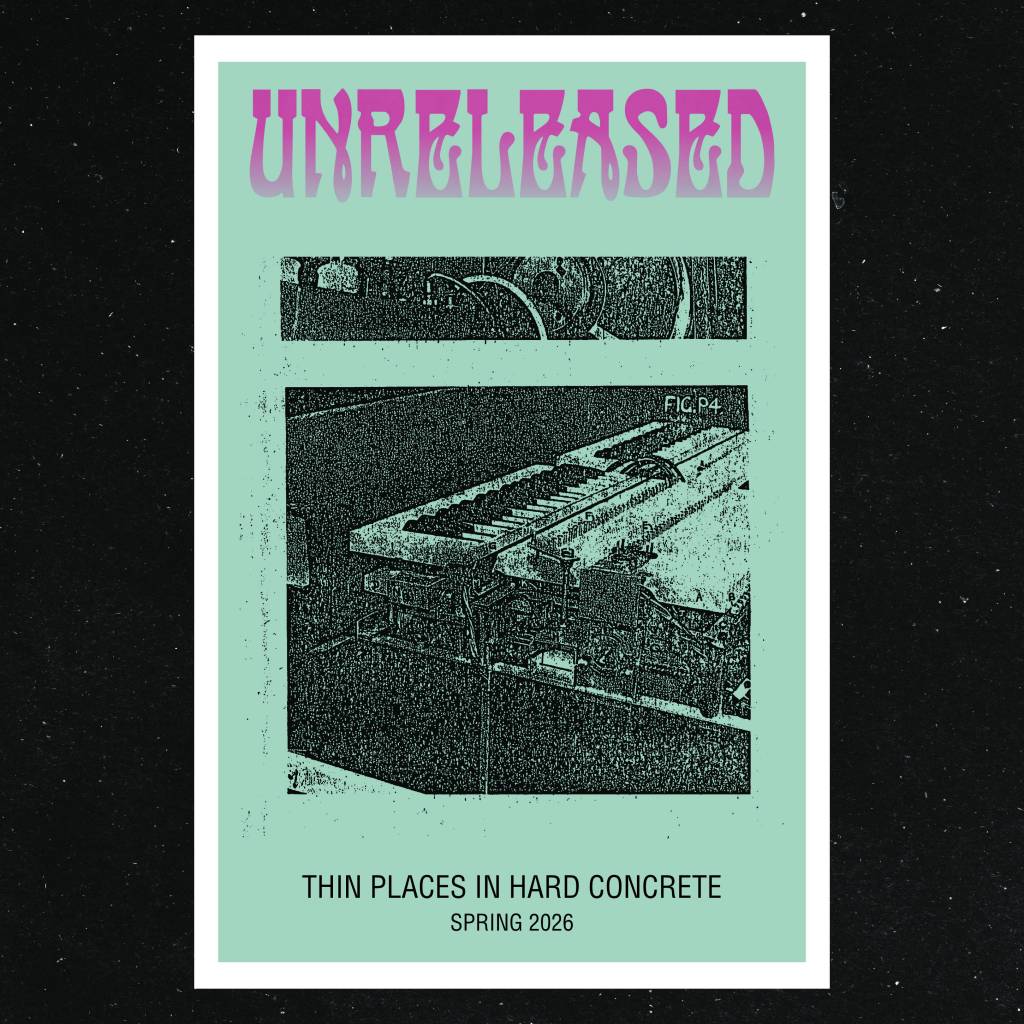
If you want to buy the paperback of Thin Places in Hard Concrete directly from me now’s your chance because I’ve got a limited number of copies and I’m all geared up to do the admin.
One copy costs £13 including what for some reason we always refer to as “postage and packing” (P&P).
I also have copies of my earlier collections, Municipal Gothic and Intervals of Darkness. They’re also £13 each including postage and packing.
I’ll apply a discount if you buy two or more books:
1 book = £13 inc. UK postage
2 books = £25 inc. P&P
3 books = £36 inc. P&P
Other ways to buy and read my books
I really, really don’t mind if you buy from Amazon. Unless you need them signed, it’s probably easier for you, and definitely easier for me.
If you’ve got Kindle Unlimited, you can read the eBook for free – or, at least, as part of your subscription. I get paid according to the number of pages you read. This is all totally cool as far as I’m concerned.
Various online booksellers like Hatchard’s also carry the paperback. I get a smaller cut this way but, again, I really don’t mind that at all.
If you really want to read one of my books but you’re too skint to buy a copy, message me and we’ll sort something out.
Or you could ask your local library to get them in, which would also be great for me.
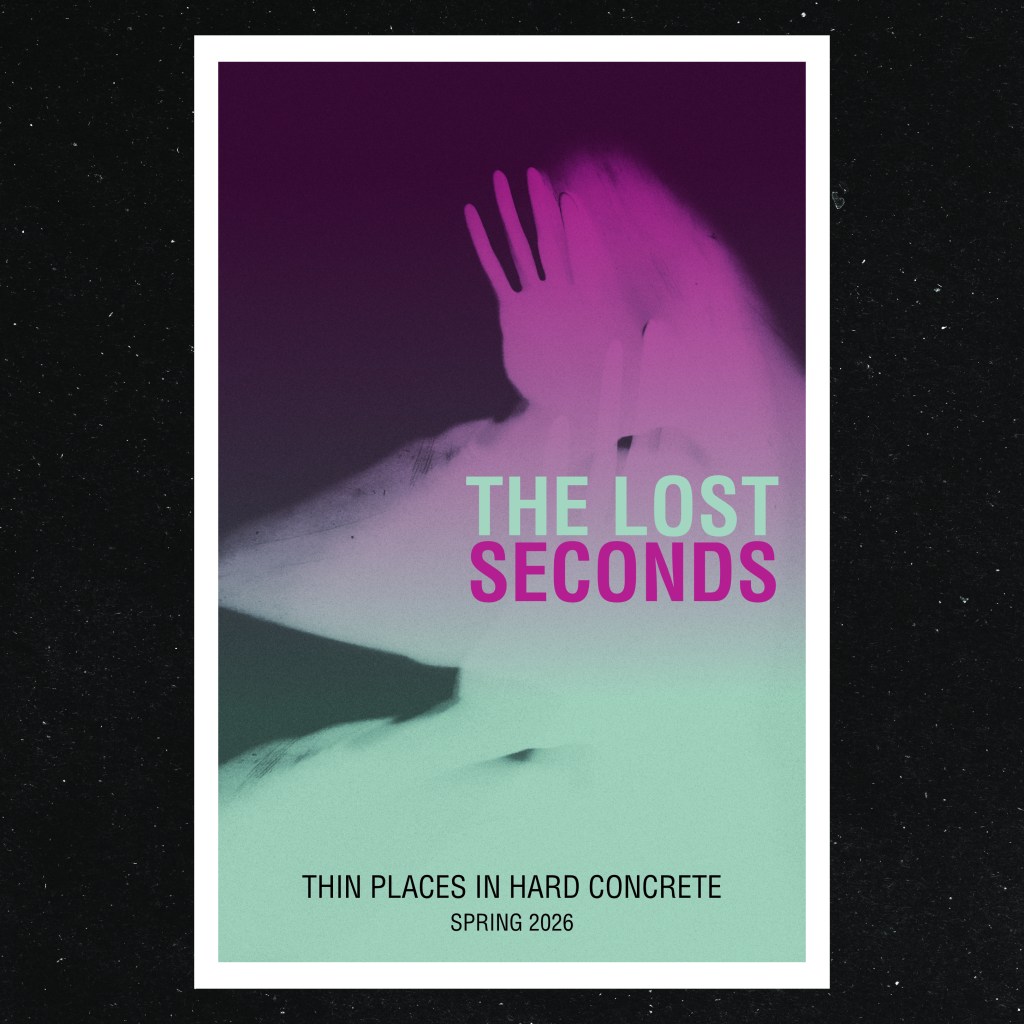
The tenth and final story in my new collection Thin Places in Hard Concrete is about what might happen if time froze around you for just a few seconds, leaving you out of sync with the world.
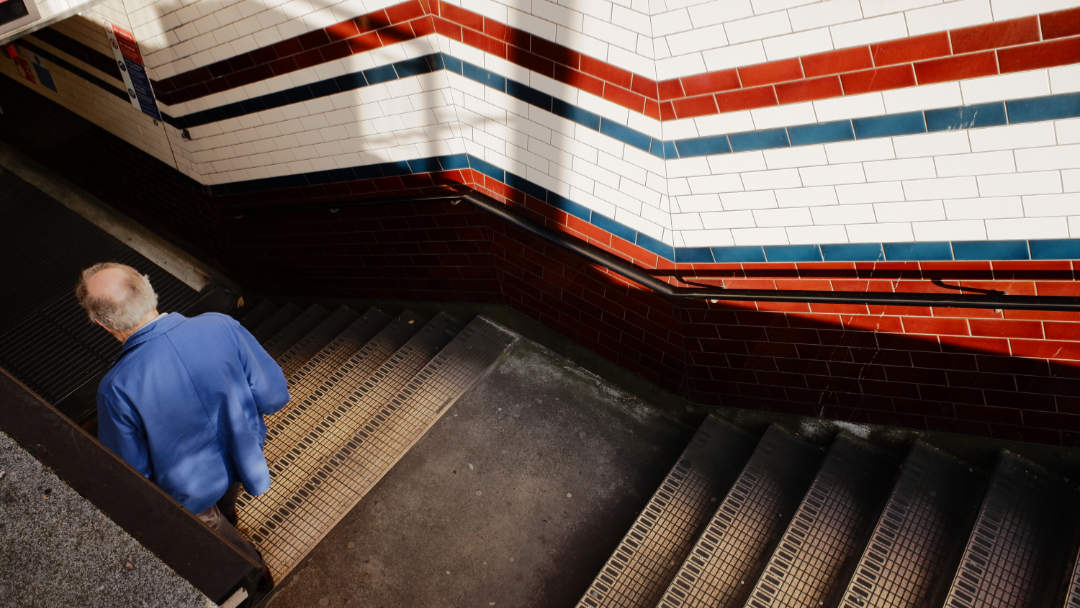
Here’s a bit from the opening which takes place in the gents toilets beneath London’s Paddington Station:
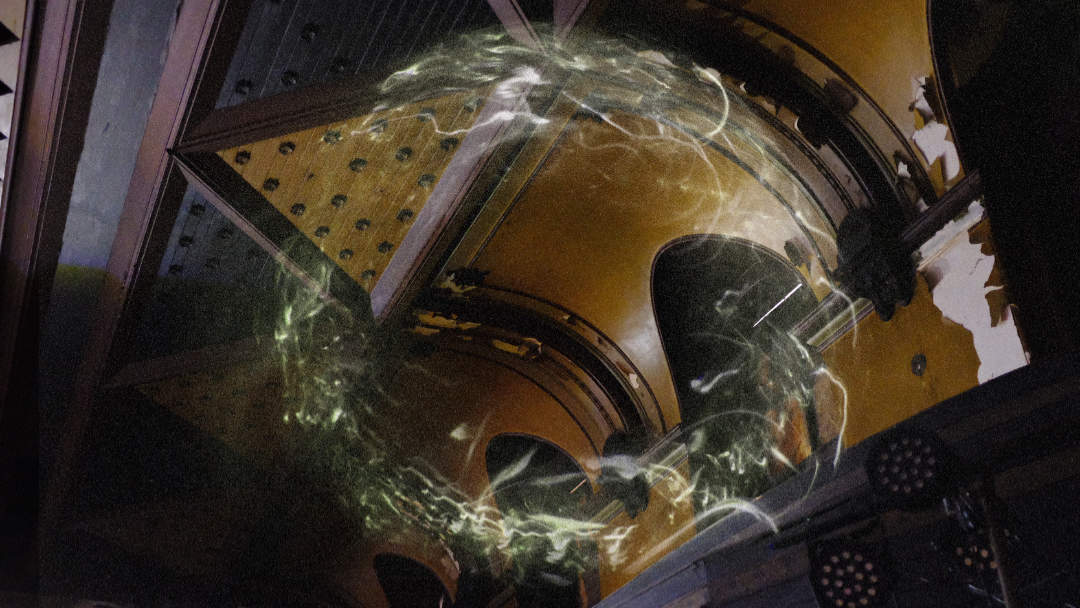
The cleaner’s mop ceased to splash and slap. Cisterns and taps no longer dripped – the background percussion I hadn’t even noticed was there disappeared. I’m now aware of the constant, multi-layered hum of electricity, fans and mechanical devices but at that moment, for the first time, I really knew what silence was… You know how when you pause a film, it looks different? Even if the shot is of nothing – a blank wall, paint drying, still life – when the video is playing at twenty-four or thirty or sixty frames a second, it feels alive. But paused, it loses definition. The grain or pixels become fixed in place, revealing the surface texture and two-dimensionality of the image. During the freeze, when time stopped for me, the real world looked something like that. Dust hung in the air, no longer swirling but like a previously unnoticed field of stars, and fruit flies, fixed in space, became solid black punctuation marks.
I suppose what I’ve written is more speculative fiction than weird fiction – but what could be weirder than time freezing for no apparent reason? And what I really wanted to explore wasn’t the mechanics or science of a disruption in time but how it might feel.
Like quite a few of the stories in Thin Places in Hard Concrete it’s really about someone whose sense of how the world works has been yanked out from beneath them, leaving them alienated and disconnected from society.
As I type that I think, huh, that’s weird, because I sometimes feel alienated and disconnected from society. There’s a good description of this phenomenon in a recent post by Eoghan Walsh:
For readers among you who have never experienced this feeling, it may seem paradoxical to both feel lonely and simultaneously fail to grasp with the fervour of a thirsty man in the desert any and all opportunities the world presents to engage with it. I am sure there are people reading this now, furrowing their brows at the memory of their own efforts to arrange drinks that went nowhere, contact scorned, or the prolonged periods where it appears I just disappear for weeks on end.
It’s interesting that we sometimes refer to breaking off contact like this as ‘ghosting’, isn’t it? Some other behaviours Eoghan describes – being physically present but refusing to engage, holding yourself at arms’ length, making yourself invisible – are also arguably those of a living ghost.
In an interview with Bob Fischer in Fortean Times recently film director Mark Jenkin said:
I realised at some point during the making of this film that all time travel films are effectively about ghosts, and all ghost stories are effectively about time travel.
In ‘The Lost Seconds’ the protagonist becomes a sort of ghost from 8 seconds in the future – or perhaps he’s haunted by the world from 8 seconds ago?
The ability to freeze time is a common fantasy. I think what it often expresses is a desire to stop all the noise and action, reduce the cognitive load of a world in motion, and take control. When it all begins to feel too much, the ability to hit pause might help.
London stories
I lived in London for a decade after university; my partner is from London; and we visit often. Being an obsessive walker and casual photographer I’ve probably explored more of London’s streets than many people born and bred there, sometimes with Nairn’s London or some other guidebook in hand.
So, I feel confident in depicting London and entitled to set the odd story there, if it feels right. But when does it feel right? All I can say in this case is that the moment from which the entire story sprang, the opening quoted above, popped into my head while I was in London, using the very facility described.
For a moment, I was the only person there and thought, “If the whole world disappeared above ground, I’d have no idea.” Somehow, that led to the follow-up question: “What if nobody ever walks down those steps because they’re all frozen in place somewhere else?”
The final story-by-story post
I’ve enjoyed writing these, forcing myself to recall where stories came from, and interrogating myself about their influences.
I want them to work like trailers for people who have not read Thin Places in Hard Concrete (“You had me at ‘gents toilets beneath Paddington’!”) and as a bonus feature for people who have read the book and want to know more.
Maybe it’s not a good idea to reveal so much about how my stories come into being. If the essence of weird fiction is leaving things unexplained, the zero ending, deliberate obscurity, then this over-explaining must be the antithesis.
You can buy Thin Places in Hard Concrete as an eBook or paperback from Amazon wherever you are. For starters, here’s where you’ll find it if you’re in the UK or US:
I’ve chosen not to apply digital rights management (DRM) to the eBook file so you can download it as an ePub file or PDF to read on whichever device you like, such as a Kobo.
The ninth story in my new collection Thin Places in Hard Concrete is about what happens when you read aloud the names on old headstones in your local cemetery.
If you follow me on BlueSky, and previously followed me on Twitter, you might know that I collect names from headstones and sometimes share them with the hashtag #CemeteryNames.
I do this because I find them beautiful and fascinating, especially when the name is one I’ve never come across before.
When I was the guest at one of David Collard’s online literary meetups the other day someone mentioned the fact that many surnames died out during World War I and perhaps this brings an added layer of melancholy and bittersweetness.
Here are some recent examples from cemeteries in Bristol and South Gloucestershire:
Bundey
Dascombe
Dolling
Duffin
Filor
Greasley
Gubbins
Hordo
Krywen
Lasper
Loney
Rodbard
Skyrme
Tossell
Weetch
The best, though – my absolute favourite – is Frederick T. Mittens, which would be a great name for a cat.
These names sometimes end up in my stories, too, bringing their own strange flavour. Another place I look for character names is on war memorials. (And on the shelf right above my desk, where I keep books about London, the West Country, and folk traditions.)
I have wondered if my spotting, writing down or saying aloud these names triggers some kind of notification to their bearers in the afterlife: “Ping! Emma Weetch you have… One… new mention.”
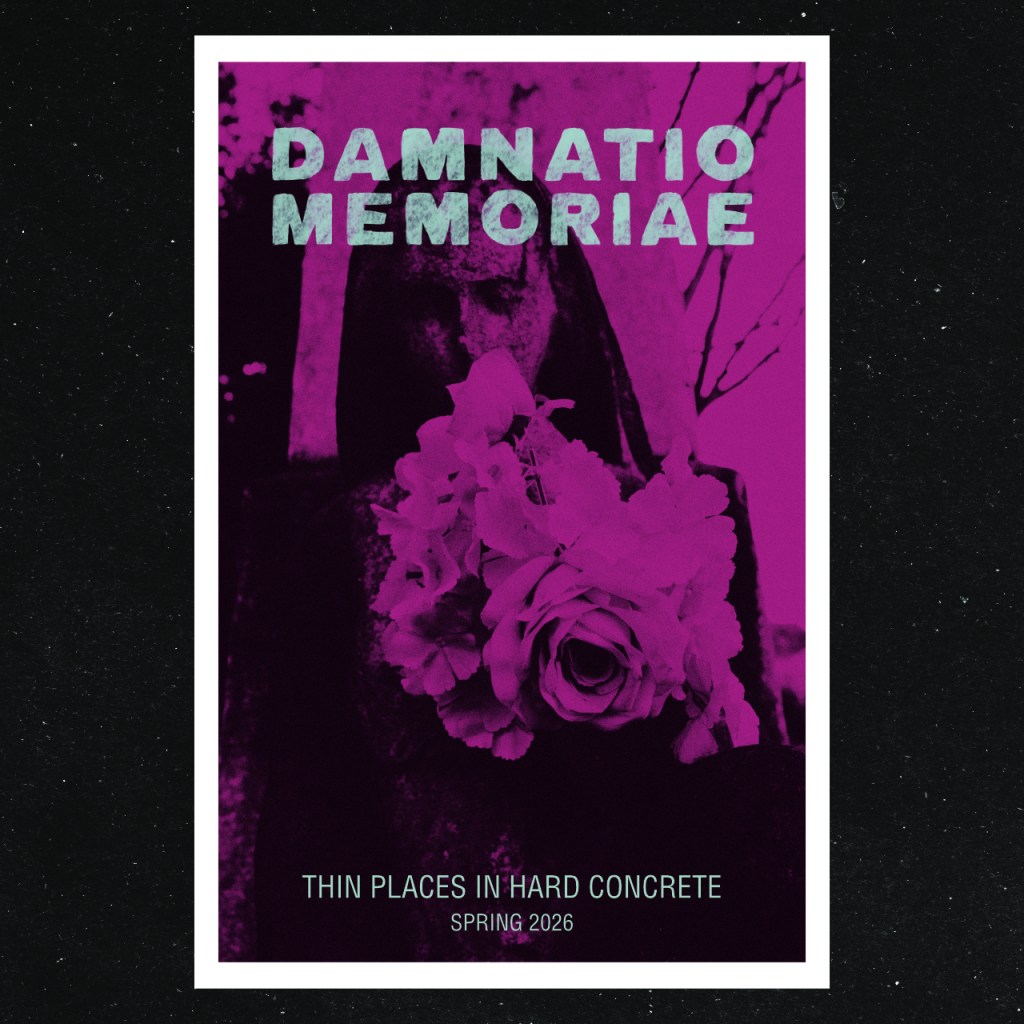
As you’ll know if you’ve already read it (thank you) this thought was the origin of the story ‘Damnatio Memoriae’.
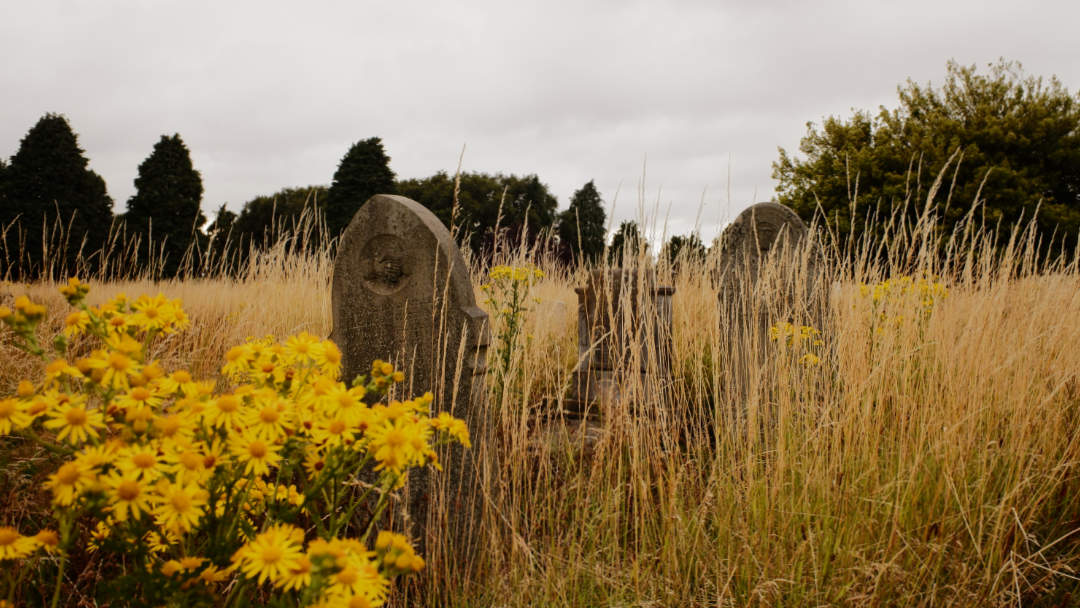
Avonview Cemetery in Bristol really is my nearest cemetery and, like the unnamed protagonist of ‘Damnatio Memoriae’, I often walk there. My family on both sides has tended to prefer cremation so there are very few places I can go to pay my respects. Visiting the graves of other people’s relatives is a good substitute, though, prompting me to think about my dad, my grandparents, my uncle Norman, and various other people I’ve lost over the years.
It also helps put my everyday worries in perspective. Sure, I might be a bit stressed at work, but at least I’m alive beneath a big blue sky, hearing the wind shaking the trees, rather than buried under a stone which records the charabanc accident that killed me.
The mechanics of the afterlife
‘Damnatio Memoriae’ is also a contribution to one of my favourite sub-genres: stories about how the afterlife works, and especially its processes and bureaucracy.
The former depicts a blandly pleasant reception resort for the recently dead where they’re given the chance to explain why they deserve to move onto heaven.
The latter depicts the grey-suited civil servants who process the departed, helping them understand the meaning of their lives before they’re allowed to progress.
A similar example from TV would be The Good Place.
In each case, there’s an attempt to grapple with the practicalities of how the afterlife might work, and an assumption that it will resemble the systems of waiting rooms, appointments, petty rules and paperwork we know from our lives on earth.
My story doesn’t quite go there but it does assume that there’s a line of communication between earth and the afterlife, and that the system has its own rules, faults and quirks.
Cemeteries lend themselves to stories like this because they resemble human filing cabinets; they’re places where death is visibly present in our communities; and where we go to transact with our own mortality.
A note on the title
The title for this story came from one of the many museums I visited in the Balkans last year. They’re stuffed with Roman artefacts and one exhibit explained that when a prominent Roman was deposed, and fell out of favour, their name and face would be scrubbed from the record – their memory would be condemned or damned.
You can buy Thin Places in Hard Concrete as an eBook or paperback from Amazon wherever you are. For starters, here’s where you’ll find it if you’re in the UK or US:
I’ve chosen not to apply digital rights management (DRM) to the eBook file so you can download it as an ePub file or PDF to read on whichever device you like, such as a Kobo.
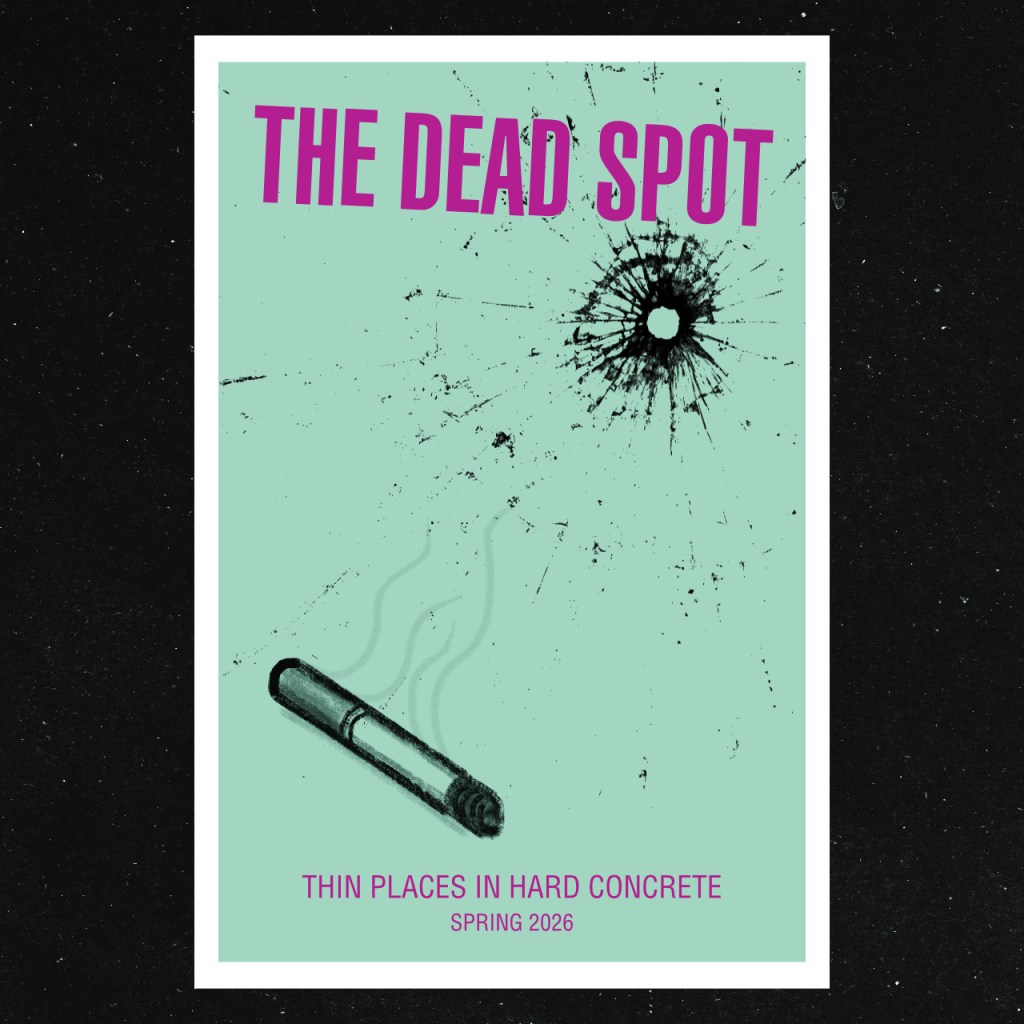
The eighth story in my new collection, Thin Places in Hard Concrete, is just as long as it needs to be. Which is another way of saying it’s very short – just shy of a thousand words.
When I read that it flipped a switch in my brain and I suddenly understood that if I wanted to write a 10,000 word story, that was fine, and if I wanted to write 350 words, that was also OK. Sure, it’s useful to have guidelines, but they shouldn’t interfere with the simple act of storytelling.
‘The Dead Spot’, it turned out, wanted to be about a thousand words long. Sure, I could have stretched it, but I like to keep my prose lean, and I hate reading stories that I can tell have been padded, or pulled too thin.
With ghost stories especially the plot often comes after the central image, incident or premise. The writer wants to tell an anecdote, or evoke a feeling, but is obliged to shape it into a more substantial narrative.
I love Algernon Blackwood – his stories genuinely creep me out – but they often seem to me to be about a third too long, with an excess of preamble and rounds of repetition. I suspect he was often writing to meet the word count requirements of magazine publishers.
When I’m putting together one of my own collections, I’m not bound by any such restrictions. And, in fact, I like to vary the stories by theme, intensity and length. I won’t go so far as to suggest that a collection of stories has a rhythm but a succession of 3,000 word stories probably does register with the reader as repetitive on some subconscious level.
English Civil War
‘The Dead Spot’ is set in the aftermath of some sort of conflict – I’ve kept it fairly oblique – as life is getting back to a new post-war normal. Everyone wants to move on and forget, but that’s easier said than done with ruins and memorials all around.
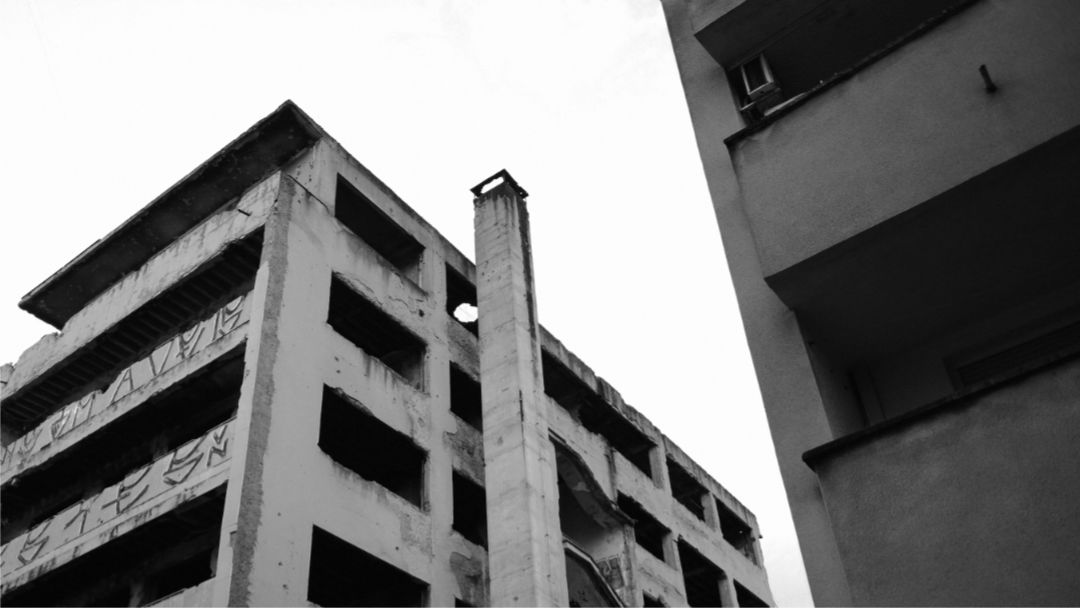
It was inspired by a visit to Mostar in Bosnia where we stayed in a clean, modern apartment-hotel that it turned out was previously a ruin on the frontline between Bosniak and Croat forces during the Bosnian War of the early 1990s.
Discovering this freaked me out. The flat was so ordinary – spatulas in the drawer, wi-fi router behind the telly, pot pourri on the coffee table – and yet 30 years ago it might well have been a sniper’s nest.
A couple of days ago I wrote about my story ‘One Star Review’ which touches on some of the same feelings which are, really, the fundamental energy source for ghost stories. What happened in this place and might it have left residue? It doesn’t matter if it’s a Gothic castle or a holiday flat, the feeling is the same.
There’s also something in the day-after-tomorrow faintly dystopian setting of ‘The Dead Spot’ that comes from the experience of living in 2026. Things feel unstable. Never-agains feel as if they might, in fact, be about to happen again. We’re already feeling the effects of climate change and the battle for resources has begun.
About 20 years ago, I started work on a novel provisionally titled English Civil War. I wrote about 20,000 words before, first, deciding that it was too ambitious for me to handle and, secondly, that reality was moving faster than my imagination.
A later completed but unpublished novel, Long Knives, borrowed some of the mood of that earlier piece, being set in the slow run up to civil war as the facade of British democracy begins to crumble.
‘The Dead Spot’ might be set in this same world.
You can buy Thin Places in Hard Concrete as an eBook or paperback from Amazon wherever you are. For starters, here’s where you’ll find it if you’re in the UK or US:
I’ve chosen not to apply digital rights management (DRM) to the eBook file so you can download it as an ePub file or PDF to read on whichever device you like, such as a Kobo.
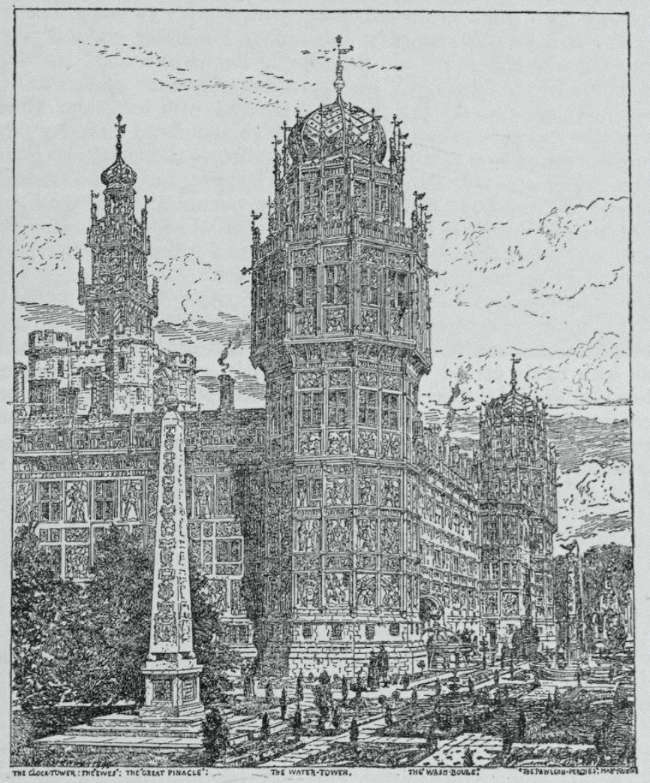
The seventh story in my new collection, Thin Places in Hard Concrete, was inspired by reading about Henry VIII’s colossal Nonsuch Palace.
I first learned about Nonsuch from the 1945 book British Architects and Craftsmen by Sacheverell Sitwell, which I read in a yellowing Pan paperback edition from 1960. A chapter about Tudor architecture includes a murky line illustration of Nonsuch (or Nonesuch) along with this attention-grabbing line:
Unfortunately the most conspicuous building of the age has been destroyed. This was the palace of Nonesuch in Surrey.
“Nonesuch Palace: a reconstruction by the late H.W. Brewer”.
I was astonished to discover that a palace bigger and more gorgeous than Hampton Court had once existed but was allowed to be demolished, with its constituent parts sold off as building materials to pay the gambling debts of Barbara, Countess of Castlemaine, in the 17th century.
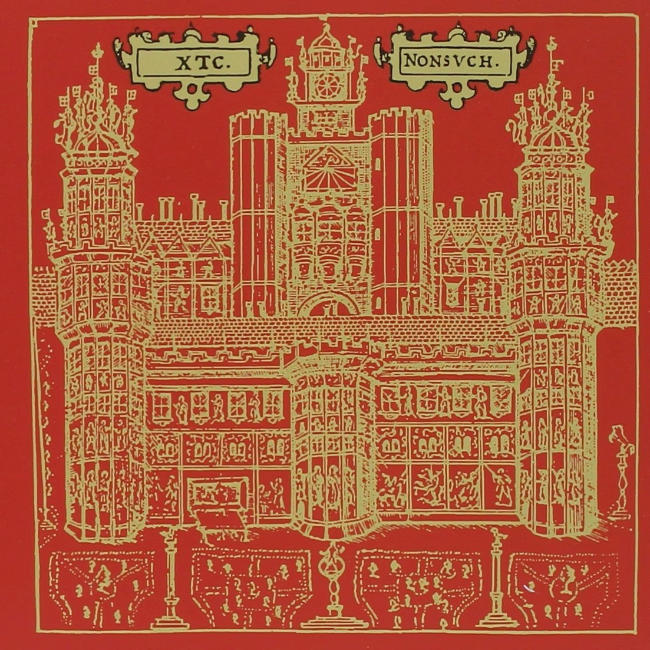
And, yes, I knew about the XTC album Nonsuch but, honestly, I just thought it was a fairy tale, or something Andy Partridge had invented, along the lines of Neverland or Erewhon.
Nonsvch, XTC, 1992.
The dissolution of Nonsuch got me thinking about whether it’s the house that’s haunted or the site where the house stands. Would a ghost want to stay in place, perhaps cut off at the knees or floating in dead space? Or would they stick with the bricks, mortar, beams and panelling of the room they once knew?
This is another story that I rewrote completely. An earlier version was a response to a very specific call for submissions from a US magazine. It had a period setting and was pretty much a pastiche of M.R. James. It opened like this:
It was in the late summer of 1853 that a man in an expensive but gaudy waistcoat was shown into the private study of Linden House in Blackheath on the Kent side of London.
‘Do I have the honour of addressing Mr Thomas Nightingale, the noted historian?’ he asked, betraying his class by pronouncing the H in honour.
Nightingale, a man of about fifty with weeping white whiskers, allowed his nod to become a small bow.
‘Indeed you are, sir. And you are–’ Nightingale looked at the visiting card in his hand. It was printed on stiff board of distinct quality. ‘Mr Nathaniel Hanmer, master builder.’
Hanmer attempted to return Nightingale’s bow but the tightness of his waistcoat over his considerable belly prohibited such movement.
‘That I am, sir, and I come to you in particular, sir, as I believe you are the only man in England who will comprehend the value of certain items in my possession.’ He waved a hand from side to side. ‘Excepting, perhaps, Mr Hamilton in Birmingham.’
At the mention of this name, Nightingale’s lean face twitched, briefly.
The story wasn’t accepted and I found myself lumbered with a piece that, though fun to write, didn’t really fit with my other work. I pondered putting it on my blog, and also briefly considered putting together a whole collection of period pieces – which might still happen one day. In the end, though, I pulled up my writing trousers and started a fresh, blank document.
To fit in the collection that was brewing the story needed a contemporary setting, that being a rule I’d set myself. What immediately came to mind was the strange obsessions of tech billionaires (usually space travel, the obvious bastards) and their desire to be seen as contributing to the culture.
A few summers ago I found myself walking a public footpath across the country estate of James ‘Hoovers’ Dyson. It was staked out with signs warning against trespassing and I felt great frustration that one person was able to own such a swathe of beautiful English countryside. The grass is always greener, and it was really green, just over there, where I wasn’t allowed to go. In some vague way, this played into the character of Henry Hamblin – a man who owns so much but is, essentially, Billy-no-mates locked away in a bunker.
That second draft flowed quite naturally, being one of those cases writers sometimes describe where the characters dictate what happens with what feels like minimal need for intervention from the author. The ending took a few attempts, though, and I was ready to ditch the story altogether until, boom, the right structure popped into my head while I was in the bath, nowhere near a notebook.
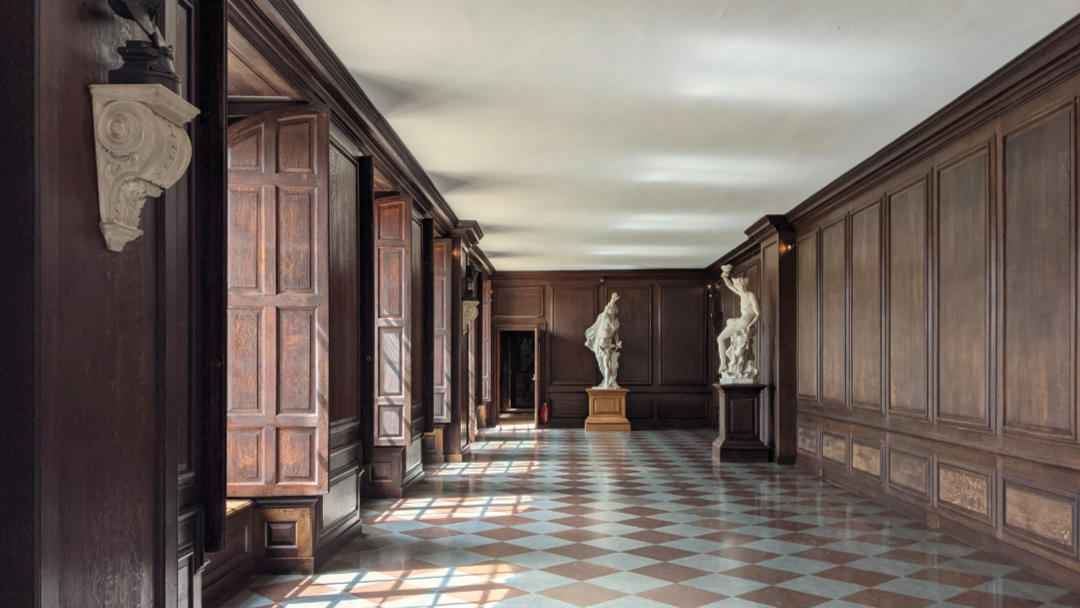
As for the title, that’s something else I picked up from Sachaverell Sitwell’s book. The King’s Presence Chamber was a room outside the throne room where important guests were received. That it also happens to sound like a reference to supernatural occurrences is very convenient for me.
You can buy Thin Places in Hard Concrete as an eBook or paperback from Amazon wherever you are. For starters, here’s where you’ll find it if you’re in the UK or US:
I’ve chosen not to apply digital rights management (DRM) to the eBook file so you can download it as an ePub file or PDF to read on whichever device you like, such as a Kobo.
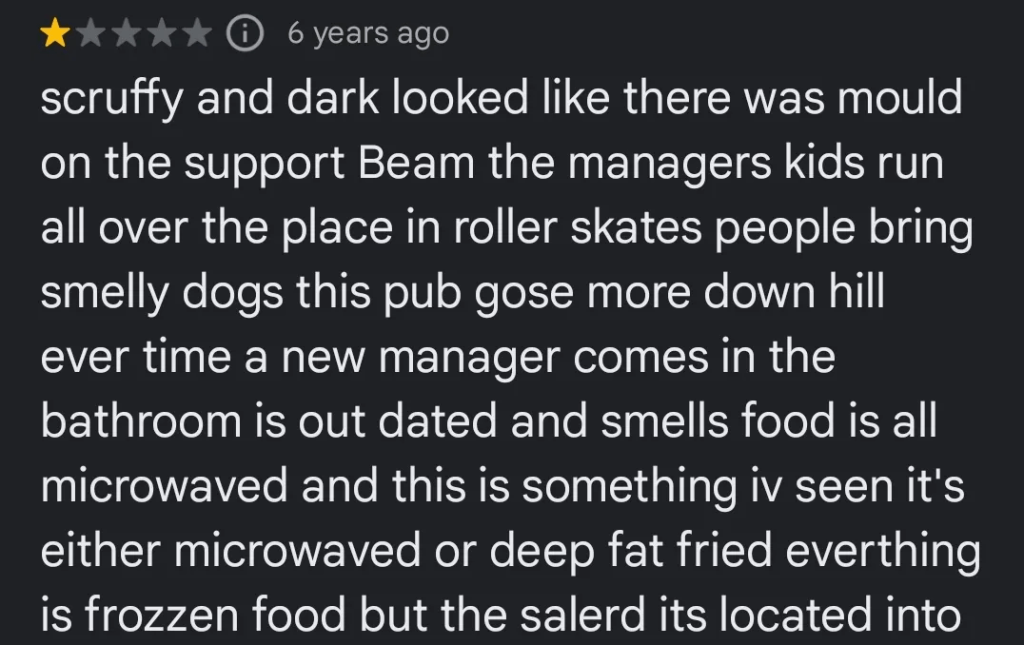
The sixth weird story in my new collection Thin Places in Hard Concrete is told in the form of a series of reviews of a holiday apartment, and responses from the host.
It’s another of my experiments with form along the lines of ‘Modern Buildings in Wessex’ and ‘An Oral History of the Greater London Exorcism Authority’ from Municipal Gothic. I always enjoy writing pieces like this because I get to adopt a range of different voices and play around with the language of bureaucracy and commerce.
In this case, I’m quite smugly pleased with myself having included the line “Views of the iconic river and harbourside area” in the description of the property by the owner – inspired by something I saw in a real estate agent’s listing and jotted in my notebook.
I enjoyed writing it. Laying it out for the finished book was another matter. Which idiot decided to include all these headings and subheadings? What am I supposed to do with all these star ratings? Fortunately, typesetter and designer Ray doesn’t get a say in the actual writing. Otherwise, everything would be much plainer.
When it came to writing the various reviews, I tapped into another of my favourite things: choosing a restaurant or pub on Google Maps; checking out the reviews; sorting the reviews to show the worst reviews first.
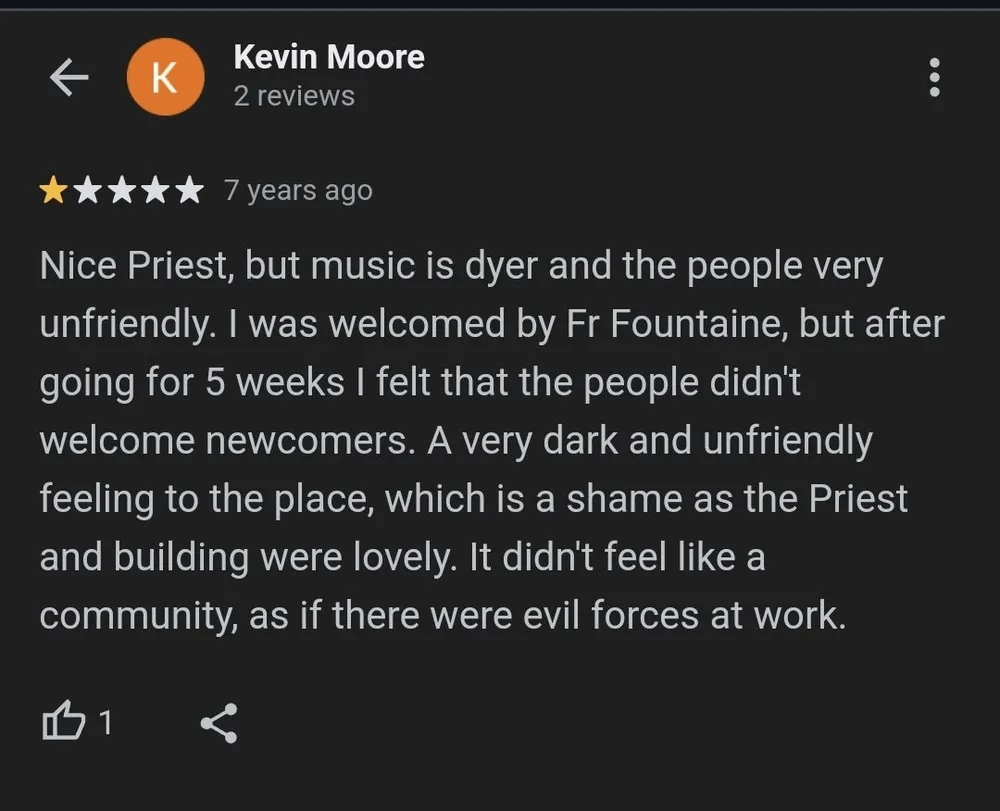
My absolute favourite pne star review is not of a hospitality venue, however, but of a church between Bristol and Bath. It’s a perfect small horror story in its own right:
I first aired the idea for this story back in August 2024 and wrote several versions until it really fell into place. Once again, that big trip around the Balkans last year provided lots of fuel for my imagination, as we stayed in one apartment after another. Who lived there before it was turned over to the tourist trade? What horrors might those flats in Sarajevo and Mostar have overlooked? (More on Mostar to follow in a later blog post.)
Holiday lets and hotels are all homes that are not homes. They have beds that have been slept in by hundreds of other people – people who have left behind stains and hairs and crumpled love letters. Little hauntings, in a sense.
And that’s before we even dig into all those hotels and apartment blocks converted from other uses: tenement blocks, mills, factories, prisons, orphanages… Sleep well!
You can buy Thin Places in Hard Concrete as an eBook or paperback from Amazon wherever you are. For starters, here’s where you’ll find it if you’re in the UK or US:
I’ve chosen not to apply digital rights management (DRM) to the eBook file so you can download it as an ePub file or PDF to read on whichever device you like, such as a Kobo.
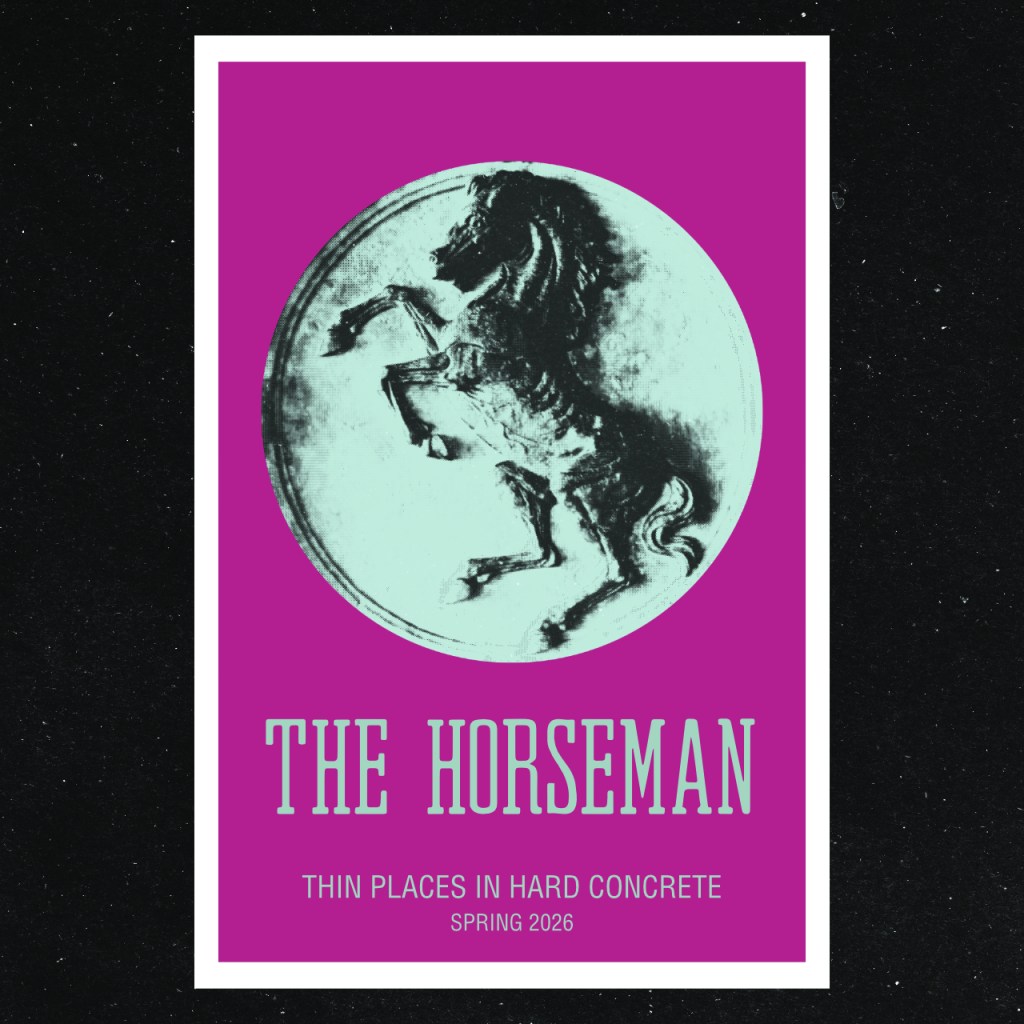
The fifth story in my new collection Thin Places in Hard Concrete is about a woman who doesn’t understand why on the site of St John the Baptist on the high street there now stands a temple to the cult of a horseman.
Not only is the temple there but it seems to have been there for more than a hundred years, and everyone around her seems to take this strange cult for granted.
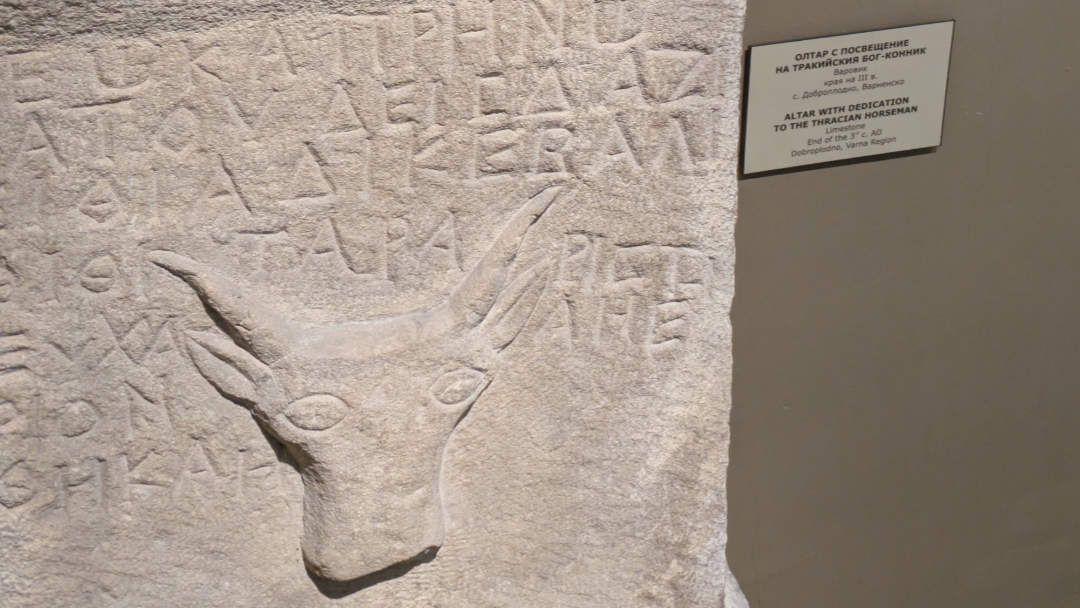
It’s an alternate reality story was inspired by my visits to museums in Romania, Bulgaria and Serbia where various artefacts from the ancient world depicted images of the Thracian horseman. There was a cult of the Thracian horseman in the Balkans for about 500 years from the third century BC. Then, in the Christian era, the imagery of the rider was applied to depictions of St George and St Demetrius.
I was already fascinated by this, and pondering on whether there might be some folk horror potential in it, when something I saw in a museum in Bosnia gave me the final inspiration I needed.
Up to this point, the Balkan countries I’d visited tended to talk about the Ottoman period as a dark time when very little of cultural importance happened. They were on hold, waiting to be liberated. But in Bosnia, that narrative was flipped, and the Ottoman Empire brought light where there had been ignorance. In that context, a display of medieval Christian artefacts came with interpretation that said something like:
“Christianity was one of many cults that emerged in the Roman Empire.”
Now, I’m not religious, but I did grow up in a country and a culture shaped by Christianity, so this description momentarily startled me. Even though, of course, this is exactly the point that is also made in Monty Python’s Life of Brian.
What if a different cult had risen to the top? And what if that cult was totally unlike Christianity? Would there still be harvest festivals and church coffee mornings and dancercise meetings in the hall on Wednesday mornings?
I think my favourite might be The Horseman, in which a woman is surprised to see the local church has been replaced with a temple to a strange new faith… except it’s not new, it’s clearly an old building, which everyone else remembers having always been there. So far, so Arkham City, but what elevates it is that rather than playing out like a grand cosmic horror narrative, the replacement faith operates with the same faint crapness as modern British Christianity, all Henry hoovers in the holy places, awkward attendance at occasional ceremonies to placate older relatives, and an air of cringe around anyone too thoroughly into it.
And, yes, that’s exactly what I wanted to achieve.
Re: that Henry hoover, by the way…
One thing I noticed when compiling the collection is that its protagonists are, on the whole, slightly less working class than in Municipal Gothic and Intervals of Darkness.
In this case, I found myself thinking of the slightly more well-to-do people from my home town who, while not posh, and still with Somerset accents, drove newer cars, played golf, and took holidays to Turkey or Spain every year.
They had management jobs at the cellophane factory, became councillors, wore blazers on special occasions and, of course, had a church that they sometimes went to.
Their vague commitment to Christianity was part of what made them respectable.
You can buy Thin Places in Hard Concrete as an eBook or paperback from Amazon wherever you are. For starters, here’s where you’ll find it if you’re in the UK or US:
I’ve chosen not to apply digital rights management (DRM) to the eBook file so you can download it as an ePub file or PDF to read on whichever device you like, such as a Kobo.
I’ve chosen not to apply digital rights management (DRM) to the eBook file so you can download it as an ePub file or PDF to read on whichever device you like, such as a Kobo.
(This also means you could email it to everyone in your address book, or upload it to piracy websites. But, uh, please don’t do that. I’m trying to be helpful here.)
In a couple of weeks’ time I’ll be advertising signed paperback copies for sale directly from me, but I need to find time and space for admin, packaging and posting. So bear with me.
The first reviews are in
“Ray Newman is an M.R. James for the 21st century. His haunting stories unfold in familiar, even banal settings – a rented flat, a holiday let, an inexplicable motorway interchange, the corner of a room. Things happen, or seem to happen, just out of sight, and beyond comprehension. Admirers of the cult TV series Inside No. 9 will love this collection.” – David Collard
“To be able to write well at all is hard enough. And to maintain a high standard across many stories is very rare. But across separate volumes? Now we’re in hen’s teeth territory… Ray Newman’s third deliciously jarring collection continues taking us down alleys we’d never noticed, and through doors we’d always thought locked. It’s our own lives on the other side, but somehow wrong, out of sync and more disturbing for being so familiar.” – David Peate, BlueSky review
“Thin Places In Hard Concrete shares with Ray’s first collection, Municipal Gothic, the masterstroke of a title that summarises the contents so well as to make any further attempt on a reviewer’s part redundant. Which is probably for the best, because otherwise I might be tempted to come up with some SEO monstrosity like ‘John Grindrod meets M.R. James’, and nobody needs that…” – Alex Sarll, Goodreads review
“Thin Places in Hard Concrete is a wonderful addition to Ray’s two previous books of short stories. If you enjoy that kind of format in general, or enjoyed his previous books, this is a must-buy.” – Andreas Krennmair, Amazon review
Municipal Gothic from 2022 is a compilation of stories I’d already written with one story dating back more than a decade. Many of them had things in common but, actually, the title implies a unity that is not there.
Intervals of Darkness from 2024 has mostly stories I wrote knowing they’d be collected together and was intentionally more varied, with period pieces and nods to folk horror as well as more of the social realist urban horror that people know me for. I think that disappointed or confused some readers. Why is the haunted British tower block guy writing something set in early 19th century Milan?
I wanted Thin Places in Hard Concrete to have a clear proposition, signalled by the title, and to feel more approachable, with 10 carefully chosen stories and fewer ‘album tracks’.
I also gave myself some rules:
Nothing should be set primarily or only in the past.
They should be set primarily in town.
No folk horror.
This helped me stay on track and focus on writing, rewriting, rewriting, rewriting, editing, editing, editing, polishing, polishing and polishing just the stories for this collection.
Half-finished stories got parked and I tried to banish them from my mind, for now. And some excellent stories that are finished but didn’t fit got put to one side. I’ve already trailed this in various places but some of those will find a home in my next collection, provisionally titled Oakhunger, in which I’m intending to fully embrace rural settings and folk legends.
Where did the title come from?
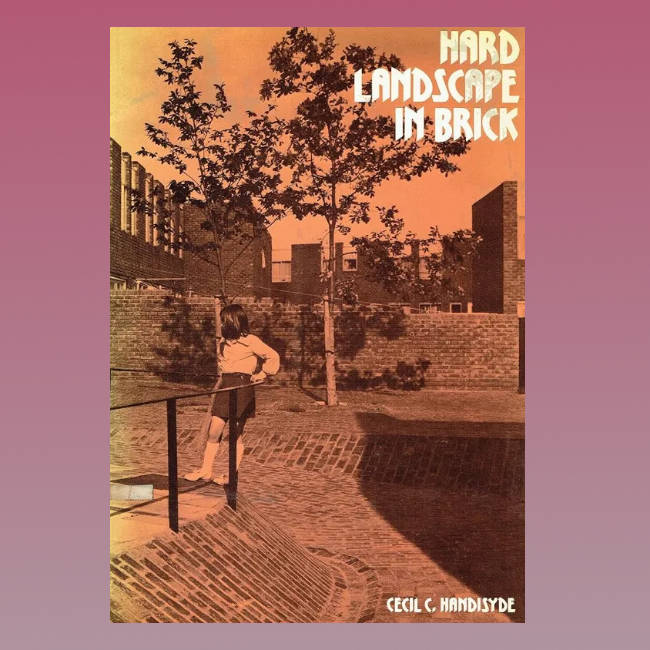
Titles are hard. I really sweated over Intervals of Darkness eventually finding that phrase in a story by M.R. James. But Thin Places in Hard Concrete came to me in a flash via my interest in modernist and post-war architecture. I have this book on my shelf…
Hard Landscape in Brick, Cecil C. Handisyde, Architectural Press, 1976
…and hope to acquire its sibling volume, Hard Landscape in Concrete, some day.
Help me out
We write to be read. I don’t have grand ambitions to be a bestselling author, or to be rich and famous, but when I’ve sweated over a collection of stories as I’ve sweated over this one, I want to know my words have connected with the brains of at least a handful of my fellow human beings.
If you’re a reader then buy the book. I want people to read it. (If you can’t afford to buy the book, message me and we’ll sort something out.) And rate and/or review on Amazon and Goodreads if you can.
If you’re someone with any kind of audience anywhere, and you like what I do, tell people that the new book is out. I’m on BlueSky and LinkedIn but don’t use any other social media these days so I really appreciate any shout outs on Instagram, Facebook, or wherever.
If you’re a book reviewer and would like to review this one, let me know. The more articles and blog posts there are, the better.
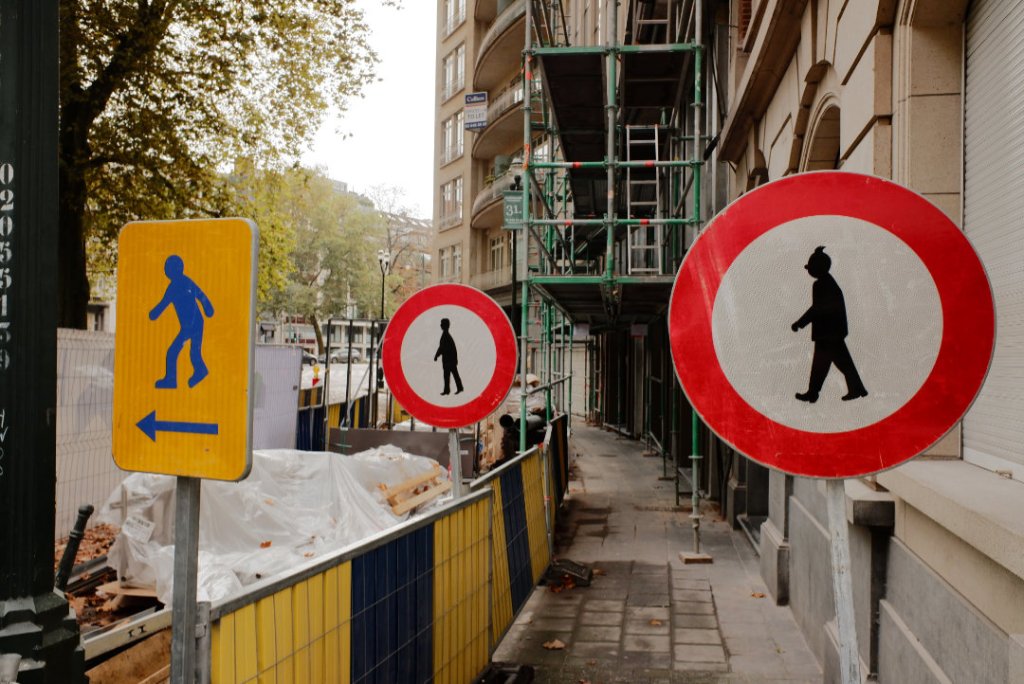
The fourth story in my new collection Thin Places in Hard Concrete is about a wannabe street photographer standing in a backstreet in Brussels with that itchy feeling something isn’t quite right.
I’m not sure where this story came from, exactly. It might have started with the title, with its misleading whiff of body horror, or it might have been inspired by watching too much photography YouTube.
YouTube, in case you didn’t know, is full of channels run by people faking it until they make it in their chosen creative field. They’re obliged to talk with great authority, making bold declarations and shocking statements, because the algorithm likes that.
But it’s usually painfully clear that they’re not that confident about what they’re saying – especially when they do a video one year on called something like “Why I was totally wrong about…”
I’m also amazed at how often they give all sorts of advice about how to take great photos and then cut to a gallery of their pictures, accompanied by chilled out lo-fi beats, and every single image is totally unremarkable. Or even straight up terrible, if not quite in Brooklyn Beckham’s league.
I know, I know… If you follow me on BlueSky, and have previously followed me on Twitter and/or Instagram, you’ll have seen plenty of my own unremarkable photos. But you’ll notice that I don’t have the nerve to make how-tos and video essays about them.
Another thing about the try-hard YouTube street photographer is that they’re often incredibly privileged. Several of them seem to lead lives where they drift from city to city, country to country, hanging out in luxurious rental apartments with their beautiful friends. And then spend the day taking pictures of homeless people or market stall operators because, you know, humbling and authentic and so on and so forth.
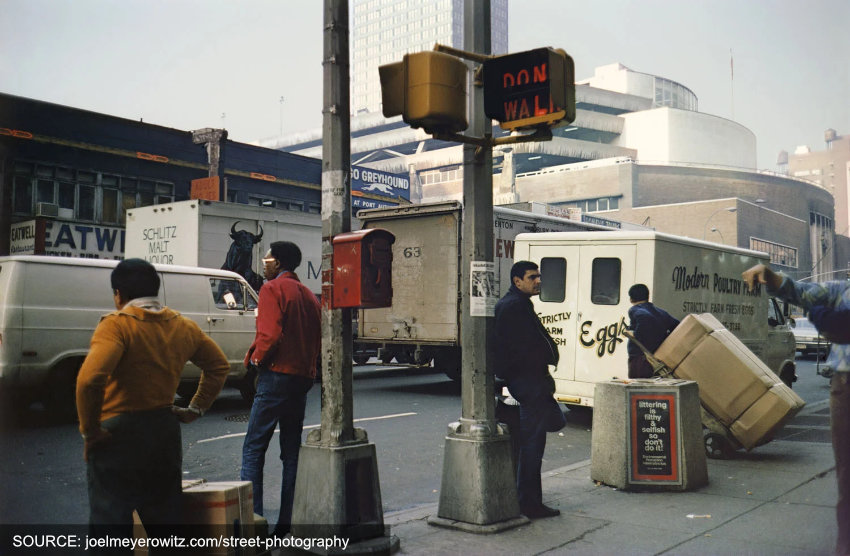
Back to that title, though: it’s refers to how the obvious presence of a photographer begins to change people’s behaviour, thus compromising the naturalness of a situation. It’s a phrase attributed to Joel Meyerowitz who took photos like the one below.
It’s a great example of the kind of picture Toby, my protagonist, would like to take and clearly the result of a practiced eye. Meyerowitz couldn’t have staged the two men dressed in yellow and red, echoing the colours of the traffic light next to them, but he sure as heck could wait until someone in yellow came along, and wait until the light turned red, and position himself to include the red phonebox and red-edged anti-littering poster at strategic points in the frame.
I am in awe of the bravery and confidence of the great street photographers – or, you might say, their arrogance and entitlement. But that’s a whole other debate. I’ve been challenged and shouted at when I wasn’t taking photos of people at all. Someone once pursued me over a mile because they were annoyed I’d taken a shot of an old sign on a factory building. I suppose what this story depicts is the ultimate fear that holds most of us back from taking photos of strangers: what if they really don’t like it and things turn nasty?
Why Brussels? Because it’s a city I’ve got to know fairly well over the years and, while I love it, it’s also somewhere I feel constantly on edge. It’s the only place, for example, where I’ve ever had a bona fide encounter with a pickpocket. It’s wild, chaotic and untidy. It can be beautifully photogenic, when it’s not terribly ugly. For all these reasons, it seemed like an interesting place to dump my anxious, unworldly protagonist.
You can order ‘Thin Places in Hard Concrete‘ now, with 10 brand new stories of everyday worlds weirdly out of whack: cults, ghosts, impossible infrastructure, haunted holiday apartments…
The third story in my new collection, Thin Places in Hard Concrete, is called ‘Unreleased’ and is about a haunted Mellotron tape bank.
It isn’t about The Beatles, exactly, but it is very clearly inspired by my reading of books and articles about them over the course of many years.
It’s funny that I sometimes think I’m not enough of a Beatles guy to consider myself A Beatles Guy. That’s despite the fact that my first (short) book was ABOUT THE BLOODY BEATLES.
In 2006, as a rather understimulated junior civil servant, I wrote 30,000 words about Revolver, based on extensive research. I published it online under a Creative Commons licence and it went somewhat viral after mentions at Boing Boing, in Rolling Stone and in The Sunday Times, among other places.
Then it got picked up by a publishing house that specialised in turning blogs into books. This was very exciting – I was going to be a published writer! The book got a cover design, got listed on Amazon, the publicity wheels started to turn… But the publisher got bought by a multinational and promptly dumped the project.
It badly needs an update, rewrite and edit – I’ve learned a lot about writing since 2006 – but it’s still worth a read if you want to grab the PDF.
The point is, though, like lots of people, I love The Beatles and think about them a lot, and for some time one strand of that thinking has been about how dark they could be at times. One little joke of mine from a few years ago was to choose alternate titles for Beatles songs that would make them sound much more miserable, using only actual lyrics from the songs in question.
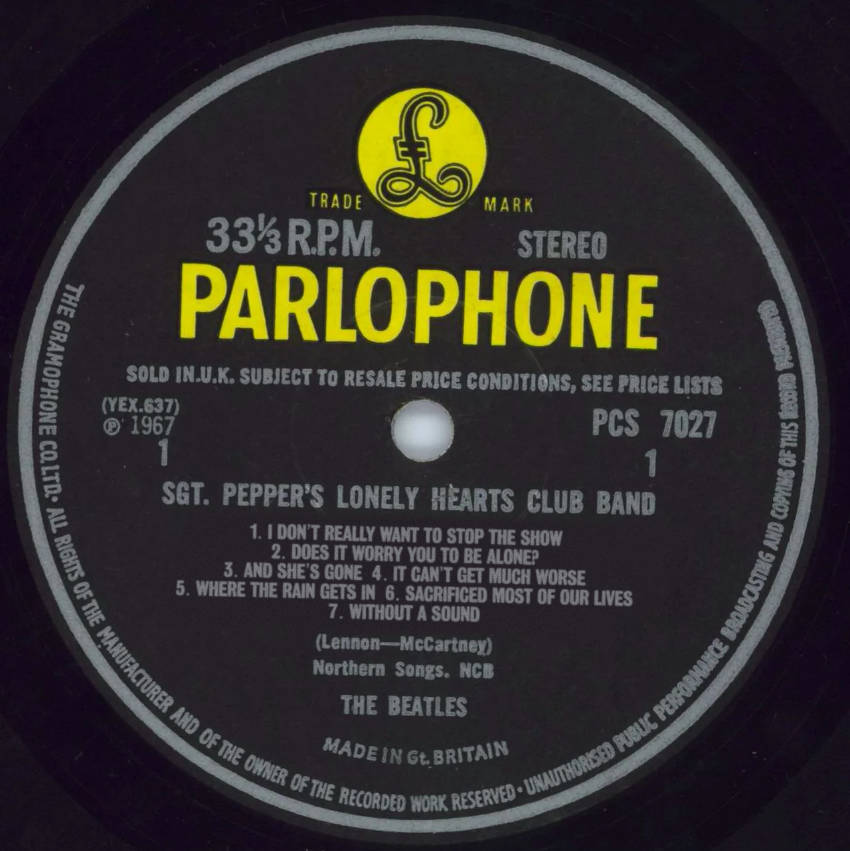
The cover of Sgt. Pepper’s Lonely Hearts Club Band includes occultist Aleister Crowley, horror writer Edgar Allan Poe, and Aubrey Beardsley who illustrated Poe among other macabre subjects. Stuart Sutcliffe, a former Beatle who died in 1962, also features, like a ghost haunting his old band. (In my story, serial killer Ed Gein is on the cover of an unnamed 1967 album, just to underline that this is not quite about The Beatles.)
Then there’s the whole conspiracy theory about Paul McCartney having died and been replaced by a double. Of course this didn’t originate with The Beatles but, as Ian McDonald points out in Revolution in the Head, they also couldn’t resist teasing people who inferred secret messages from their lyrics.
I’m fascinated, too, by the emphasis on mind-expanding near-death experiences in accounts of LSD use. John Lennon’s song ‘Tomorrow Never Knows’ is very much an attempt to evoke the sensation of an acid trip and contains multiple references to death and dying – the surrender to the void.
Which brings us to ‘The Beyond’, the unreleased song at the centre of my story.
The Beyond
Back in 2021 I was seized by the sudden need to realise an idea and, in a flurry of activity one evening after work, created a short ghost story in the form of a pastiche of Revolution in the Head.
You can read that here on the blog as a sort of teaser for ‘Unreleased’. It’s more explicitly about The Beatles than ‘Unreleased’ and was as much an exercise in capturing Ian McDonald’s voice (snarky, a little too sure of his own correctness) and the design of the book (fonts, layout) as it was a piece of storytelling.
The overlap between ghost story people and Beatles people is quite small, I think, so this didn’t exactly set the world alight. A couple of people did say, “Ho ho, very clever!” and Robin Allender talked about it on his podcast Your Own Personal Beatles.
The song it describes, ‘The Beyond’, is in my mind somewhere adjacent to ‘Tomorrow Never Knows’, ‘Carnival of Light’, ‘You Know My Name, Look Up The Number’ and ‘Revolution 9’. The title is, of course, borrowed from the 1981 Lucio Fulci film which seems to have lodged in my brain not as Italian exploitation gore but as a rare example of genuine nightmare logic weirdness on film. If anyone wants to have a go at recording a version, by the way, I’d love to hear it.
For the past five years, I’ve been trying to work out how to turn that snippet into a full story. There were several failed attempts including one that was told entirely in the form of found text. Some of that made it into the final version but not, for example, this:
Flyer for the New Church of the Power Station of God, 1966
Are you dissatisfied?
Life is a miracle, but being alive is a drag.
We spend energy every waking moment.
Soul vampires take energy from us.
However much we eat of the flesh, and of the bounty of the earth, we can never keep up: we are machines for producing shit, and ennui is the result.
But what if there were an infinite power source to which a chosen few might connect?
God has left us, for now, abandoning us to our atom bombs and holocausts – but the source of his power remains!
If only we have the courage to crowbar the door, cross the threshold, and seize control.
We need a coup. We need leaders. We need soldiers.
Telephone Chelsea 4831 to arrange a personal confessional with a counsellor and find your way to endless spiritual power!
There was also a version told mostly through posts and threads from early internet Beatles forums. This was great fun to write but, ultimately, probably wouldn’t have been much fun to read.
Releasing the unreleased
When you take five years to write a story, you have plenty of time to draw in new ideas. By the time I reached something like a final draft of ‘The Unreleased’ earlier this year I’d also been thinking, for example, about how the team managing The Beatles’ legacy has used artificial intelligence to clean up old film footage and create new mixes of old songs.
This all began with ‘Free as a Bird’ back in the 1990s which used a fluttering, degraded tape of Lennon singing to create a new Beatles single. I like the record partly because it sounds uncanny and ghostly, rather than sweetly nostalgic as I think was the aim.
This only compounded a feeling I’ve had for years that recorded music has an inherent uncanny quality. You’re telling me that we’ve captured the performances of long-dead people in such fidelity that we can hear them clearing their throats, blowing their noses and asking for cups of tea from the studio canteen? When a review of a remastered album says, “It’s like being there in the room,” I shudder slightly and wonder if they ever sensed our presence.
One final contribution to the story was reading about obsessive vinyl collectors, and observing them in the real world in record shops and charity shops around Bristol. A challenge I set myself for Thin Places in Hard Concrete was not to rely purely on nostalgia and period settings. That meant I needed to find contemporary characters and give them a reason to encounter the haunted tape bank. Obsessive collectors, and the people who are obliged to live with them, gave me the necessary angle.
You can order ‘Thin Places in Hard Concrete‘ now, with 10 brand new stories of everyday worlds weirdly out of whack: cults, ghosts, impossible infrastructure, haunted holiday apartments…