Categories
Uncategorized

Reading, thinking, doing August 2026

This summer I’ve been reading yellowing paperbacks, thinking about extreme heat, and promoting a book.

A little context: this type of blog post is what I decided to do instead of starting a newsletter.

You can subscribe to this blog (enter an email address, get updates when I post) using a widget that, hopefully, you can see at the bottom of the screen.

Or, if you use an RSS reader like Feedly or Readwise Reader, you can add this blog there. 

The format was inspired by someone on BlueSky saying:

“I don’t really want to read writing advice from authors… I just want to know what they are reading and thinking and doing.”
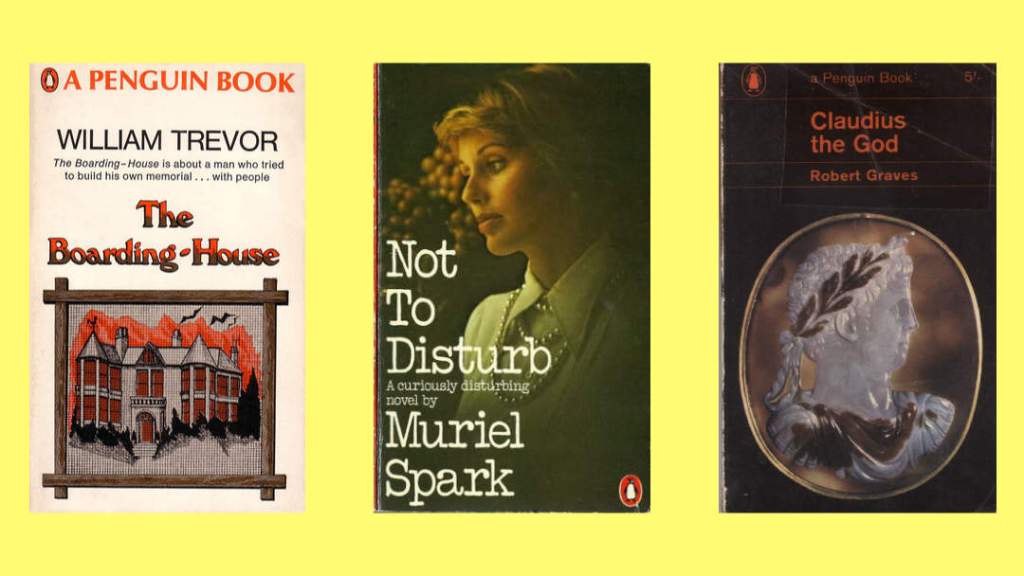
A row of grotty old Penguin paperbacks: The Boarding House by William Trevor, Not to Disturb by Muriel Spark and Claudius the God by Robert Graves.

Reading yellowing paperbacks

I usually put together a list of the best things I’ve read at the end of each year but I’ve had a run of good ones in the past few months and thought I’d mention them here, now. The following are books that I ‘starred’ in the document I keep as a log:

  • The Boarding House by William Trevor, 1965 – a weird-adjacent ensemble piece set among the residents of tatty London boarding house hand selected by the odious landlord for maximum drama, and thrown into chaos when he dies.
  • Murderland by Caroline Fraser, 2025 – a true crime book (Ted Bundy is the primary subject) that is also a personal memoir and an account of the human and environmental atrocities committed by American industry in the 20th century.
  • The Underground Man by Ross Macdonald, 1971 – a private eye thriller that, oddly, seemed to echo Murderland in some of its themes, set in a California plagued first by wildfires, then by apocalyptic rain, where everyone has been badly fucked up by war, capitalism and their own damaged parents.
  • City Primeval by Elmore Leonard, 1980 – a police procedural set among homicide detectives in Detroit on the hunt for a killer who gets away with murder because of sheer confidence; it reminded me of Ed McBain, Hill Street Blues and The Wire.
  • Claudius the God by Robert Graves, 1934 – the follow up to I, Claudius which depicts the tragedy of the reluctant emperor as he is betrayed by those around him and by his own vanity, which grows like a cancer.
  • Not to Disturb by Muriel Spark, 1971 – a novella about the staff at a Swiss chateau prepare themselves to capitalise on the murder they’re certain is about to happen in the drawing room; again, weird-adjacent, perverse, and (ironically) disturbing.

A book I did not click with in the end was Dark Neighbourhood by Vanessa Onwuemezi. Frankly, I wasn’t always sure what was actually happening or to whom, even if the uncanny atmosphere was often compelling. Onwuemezi is a poet and I guess I ought to have read these stories like poetry, perhaps out loud, with annotations, line by line.
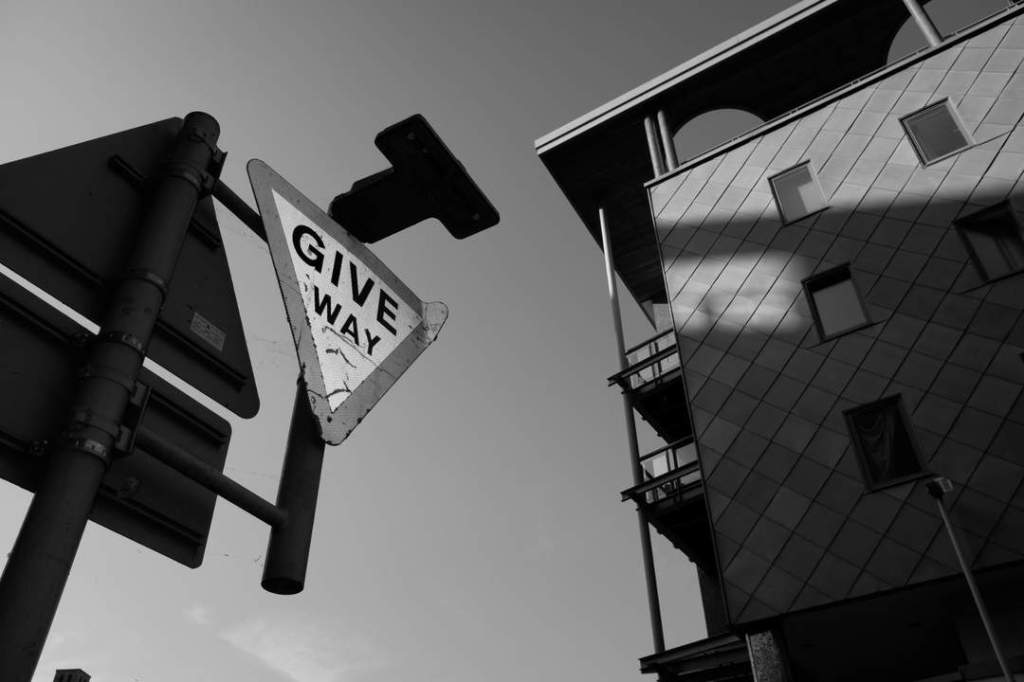
A hot city street with sunlight blasting a block of flats and shining from a street sign.

Thinking about extreme heat

I have not coped well with the UK summer and its rolling heatwaves. I’m also aware this doesn’t make me special.

I started out with good intentions, determined not to moan about the weather, and just to adapt as best I could. That worked early on. I dressed differently, even though I hate wearing shorts and hats; I changed my routines, walking and running earlier and later in the day, in shadier spots; I went into the office more, to enjoy the air conditioning; I covered my window at home with a big sheet and kept the blind down all day; I took ice blocks to bed with me.

By August, though, I was not only thoroughly miserable but also utterly depressed about the future. You mean I have to do this every year now? And it will keep getting worse? Yeah, no thanks, I’d like to opt out. All this agonising manifested in a miserable little zine.
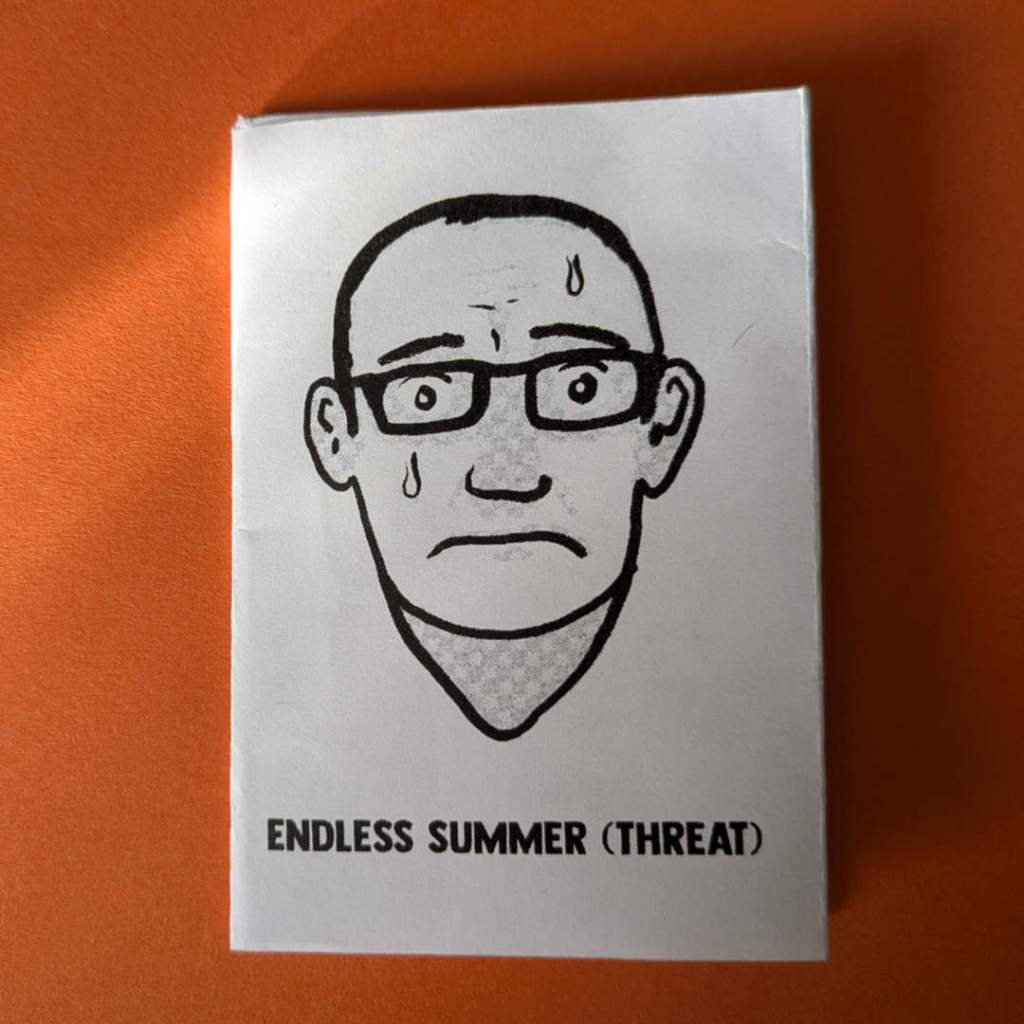
A small zine printed on a folded sheet of A4. The cover image is a self portrait of me (bald, glasses) sweating and looking miserable.

In my more optimistic moments, though, I find hope in how we have collectively begun to adapt. I’ve never seen so many houses with impromptu screens erected over their windows as I did this year, for example.

My friend Jim is one of those people who gets stuff done and studies communities, collectives and cooperatives. In the pub the other night, he told me he and his wife had been working on some simple DIY canopies for protecting houses from the sun which he’s now trying to work out how to turn into some kind of kit, working with a local community centre.

This article by Eric Klinenberg from The New Yorker about European cities adapting to extreme summers was scary and inspiring in equal measure:

I had come to meet Stefano Boeri, a Milanese architect and urban planner known for designing buildings, and occasionally whole metropolitan areas, around trees. First, I wanted to see his signature project, Bosco Verticale: two apartment towers, twenty-six and nineteen stories high, whose deep balconies hold enough trees, shrubs, and flowering plants to fill twelve acres of woods… One of Boeri’s assistants arranged for me to visit a compact one-bedroom apartment that Boeri’s firm maintains on the ninth floor of the taller tower. Its windows framed the skyline through tangles of dark, leathery holm-oak leaves and, disorientingly, thick tree trunks rooted in enormous planters and secured against storms by vertical cables. I slid open the heavy balcony door. Light filtered through the foliage, and soft gusts carried scents of olive trees, sage, and rosemary. The air was markedly cooler than on the sidewalks below. Though the morning was already approaching ninety degrees, I wanted only to sit there, listening to birdsong as the building, and I, breathed.

The article lists numerous other schemes and tactics from Paris, Barcelona and Madrid, many of which involve planting more trees and creating more shade. I live in part of Bristol that was redeveloped after the Blitz with wider roads, lots of concrete, and not much greenery. I look at Marsh Lane and think, hmm, if that had a row of trees down the middle, I could probably get from my house to the park without being exposed to direct sunlight for more than a few seconds. And we wouldn’t have the road surface acting like a giant radiator, either.

On the bits of the earth over which I have any direct control – my little front and back yards – I’m going to double down on greenery and encourage my partner to spend as much as she likes on plants in the coming years.

Thinking about other things

I’ve also written a few things here on the blog since my last not-a-newsletter update.

First, I reviewed David Southwell’s book Hookland Fragments Volume One. I’ll be honest, I’m worried I put my foot in it with this one, because everyone seemed to ignore it, including David. Moreau Vazh wrote an excellent and much more detailed review which quite rightly got plenty of attention.

The next post I wrote, however, got rather too much attention, being featured on something called Hacker News and going (by my standards) properly viral. It’s had 8,000 views so far, compared to my usual c.50. It’s something I’ve been working on for a while and is built around a collection of recent news clippings which suggest we are, in fact, living in a science fiction future, even if it feels so mundane that we barely notice it:

“A video has been shared on social media with claims it shows a robotic dog patrolling the grounds of a ‘migrant hotel’. But this is false – while the footage does appear to show a robotic dog, it was filmed in the grounds of a building housing a religious group in Crewe.”

As someone who is trying to write fiction commercially (more on that in a moment) I have to resist the urge to put all my stories on the blog. I love the immediacy of writing something and sharing it directly with readers, rather than waiting months for it to appear in a magazine or book. Every now and then, though, I indulge myself, and give people who like my writing what I hope will be a little treat. This time, it was a piece inspired primarily by J.G. Ballard called ‘Passenger X’, constructed from fragments about hauntings on London Underground:

The escalator is not working which means I have to walk up it, struggling with the deeper than usual steps. I know it isn’t working, I know that when I step off it will just be like reaching the top of a normal staircase. But, still, I feel a lurch, a jolt, and stumble as I transition from one surface to another. In some small way, it feels like a near-death experience. The tube is full of moving parts, and non-moving parts, and tunnels, and closed tunnels, and spaces between the two. They say “mind the gap” but what if that gap is where I need to be?

In professional mode, on LinkedIn, I wrote articles about:

Promoting a book

Writing and publishing a book is one thing. Continuing to find ways to talk about it several months on is another.

To keep Thin Places in Hard Concrete in the conversation, and bring it to the attention of people who might like it, I’ve mostly been finding ways to say something new about it on social media.

That might be sharing a snippet from a new review, like this one:

I have never been disappointed by Newman’s stories, and this was another winner… It is also exactly what the title promises: a set of uncanny stories about the places where reality becomes porous… The best of them balance concept and character perfectly.

…or shouting about endorsements from people like the brilliant writer and film curator Kier-La Janisse.

Regrettably, as my own marketing team, finding these means I have to constantly Google myself, which feels dreadful, and means I have to read the occasional unpleasant comment, too. Mostly, though, people have been extremely positive.

I’ve also done some podcasting including this quite unusual interview with Gerry Fialka. I’m told I came across well but from where I was sitting it was a pretty intense tightrope walk and I needed to lie down in a darkened room afterwards.

There was also this lovely chat with Ross from the General Witchfinders podcast in which we discussed Andrew Michael Hurley’s Starve Acre.

The big news is that, out of all of this, I finally have an agent, namely Isobel Dixon at Blake Friedmann, who got in touch after David Collard hosted me at one of his literary salon events. After a few weeks worrying that it was a scam (there’s a lot of it about) I now have a page on their website which has fully, totally convinced me it is real.

Isobel already has the manuscript of a crime novel I’ve been working on for a few years and we’re discussing what to do with my weird fiction, including what I think might be my first novel in the genre.
A sticker that looks like a comic book caption: G-g-ghosts!?

Stickers, painting, Polaroids

I’m bad at having hobbies that are actually hobbies, that I don’t take too seriously, that I don’t fret about. In recent months I’ve been making stickers, having acquired a CriCut machine. I’m doing this because (a) making stickers is fun and (b) they look cool when I put them on the covers of my journals and notebooks. But am I already worrying about how to make more of them, and make them better, and be more original? Regrettably, yes.

I’ve also started learning how to draw/paint in ProCreate on an iPad with an Apple Pencil. The self-portrait on the cover of the zine above was created that way, and I also made this ‘painting’ of Peter Falk as Columbo that’s not half bad. Crucially, I didn’t trace it; I had a photo open as a reference and painted this in separate window, from scratch.
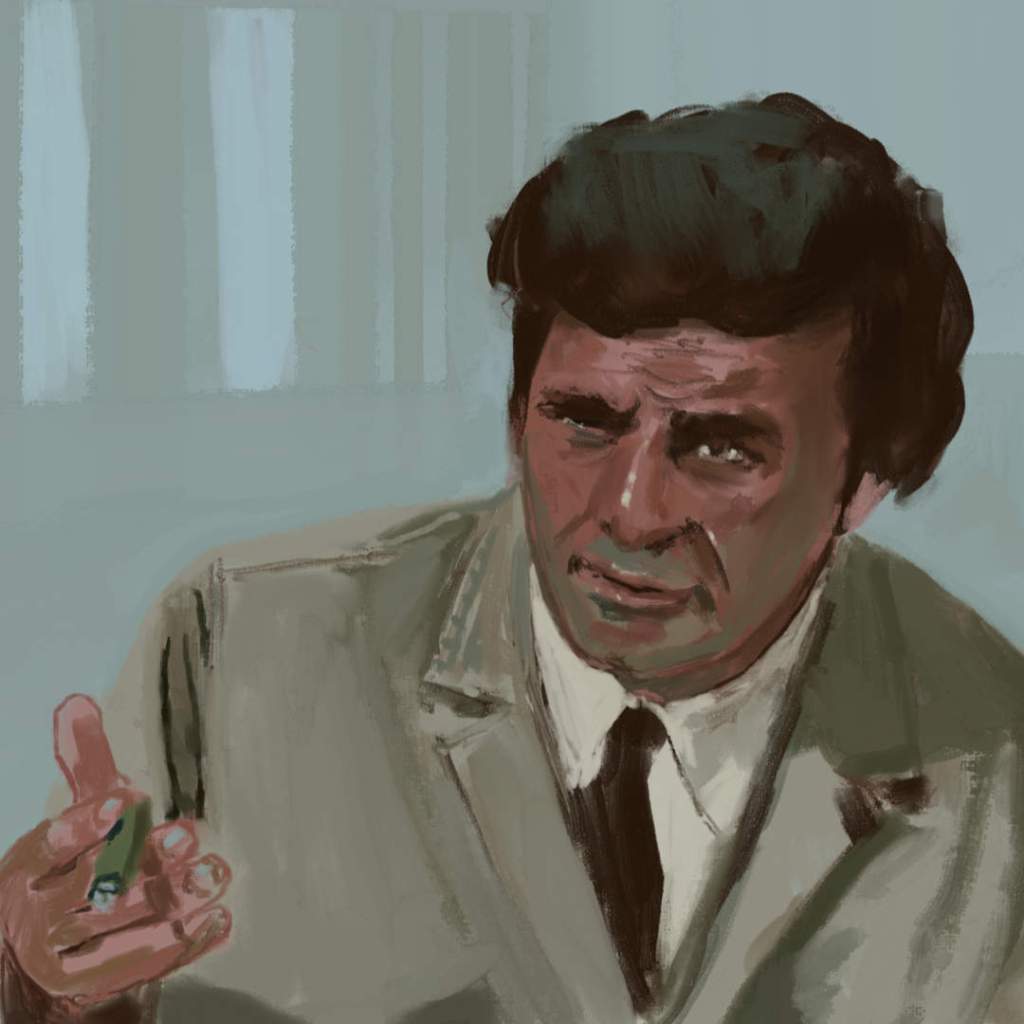
A digital painting of Peter Falk as Columbo asking just one more thing.

This has promise as a hobby because it’s so absorbing and so pointless, although even now I’m thinking about how this means I might be able to create the cover for my next collection of stories.

I’ve also been out with my Polaroid camera taking pictures like this, forcing myself to use the precious film, just for the sake of seeing and connecting with the world in a different way.
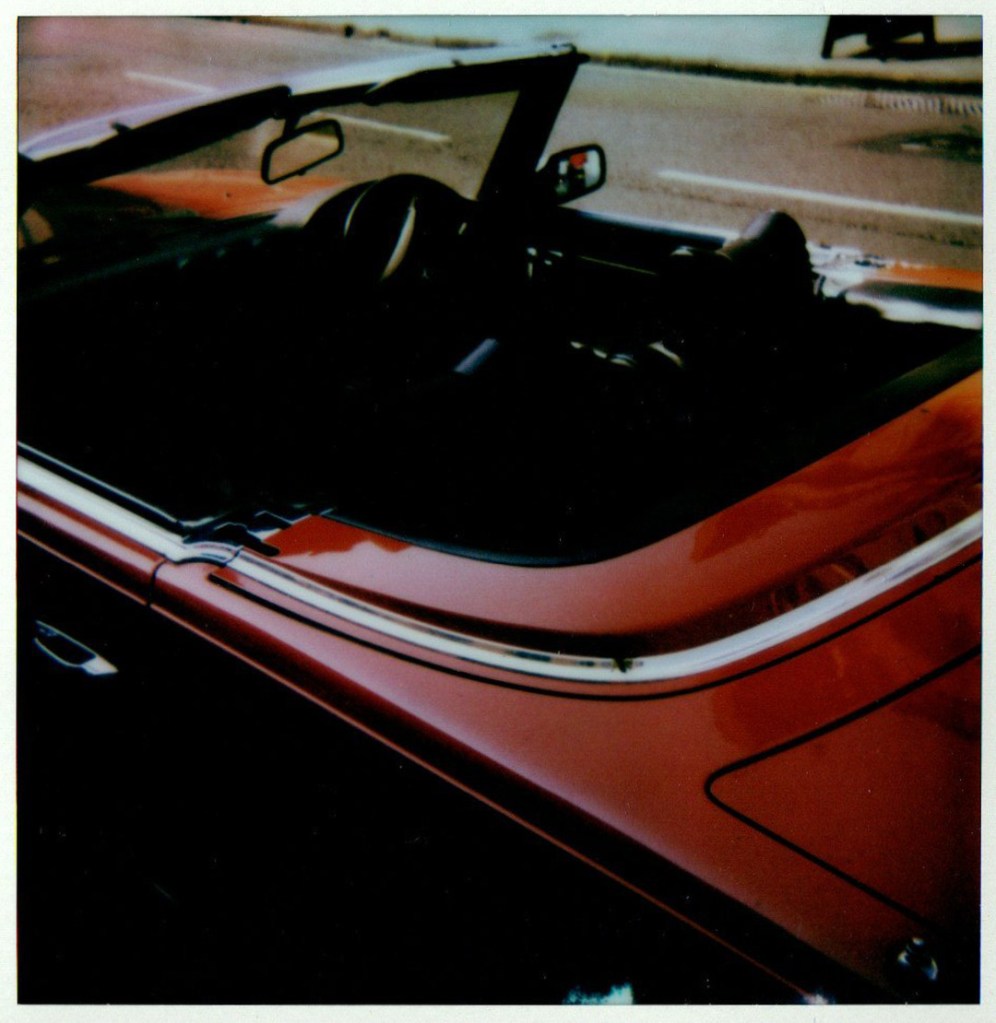
A red sports car with its top open.
Categories
Uncategorized

New Worlds

Don’t let the absence of a flying car in your garage distract you: we are definitely now living in a version of the future out of J.G. Ballard or William Gibson.

Every day I notice a news story that startles or alarms me, that feels like pure cyberpunk, nestled between reports about council bin collections and cabinet reshuffles.

“The first ever IV Drip clinic to appear in the centre of a shopping mall, our Westfield clinic is a must-stop shop when doing a bit of retail therapy. From Vitamin Drips to Instant Vitamin D Testing, Get A Drip Westfield has it all. Book your appointment today!”

Publicity for Get A Drip Limited

This made me think of Michael Moorcock’s habit of opening stories or chapters with startling newspaper clippings that revealed the future apocalypse already underway in the present, or Ballard’s typographic collages. So I began snipping.

“A video has been shared on social media with claims it shows a robotic dog patrolling the grounds of a ‘migrant hotel’. But this is false – while the footage does appear to show a robotic dog, it was filmed in the grounds of a building housing a religious group in Crewe.”

Full Fact, 4 November 2025

It’s not quite Blade Runner but it might be Robot Jox or Bubblegum Crisis.

“Soul ‘musician’ Sienna Rose has made headlines this week as suspicions mount that her music is a product of artificial intelligence… On Spotify, her sound is described as a blend of the ‘elegance of classic soul with vulnerability of modern R&B’, while she is simply referred to as ‘an anonymous neo-soul singer’. Many fans have taken note of the reference to her anonymity, which makes her 2.6million monthly listeners all the more staggering.”

NME, 17 January 2026

In the middle of a video about stationery and everyday tech on YouTube the other day there was a passing shot of two robots kickboxing in a cage; another robot was taking coffee orders at a kiosk. This was (blandly) “cool to see”.

“British police have helped seize a record nine-tonne haul of cocaine from a ‘narco sub’ in the Atlantic Ocean… The mammoth seizure weighed nearly as much as a school bus and the sub was 230 nautical miles from the Azores when it was intercepted… The semi-submersible eventually sank before authorities could take all its cargo, sending 35 of the 300 packages to the bottom of the Atlantic.”

Sky News, 27 January 2026

E-scooters scattered on a pavement.

What the visionaries got wrong, it turns out, was what would go digital. Did anybody bet on cigarettes? Or scooters? Or that neon would be replaced by LEDs?

“A humanoid robot named Edward Warchocki chased away a herd of wild boars in Warsaw, shouting ‘Go away!’ in Polish as the animals fled into the forest, in video footage released on Sunday…”

Reuters, 14 April 2026

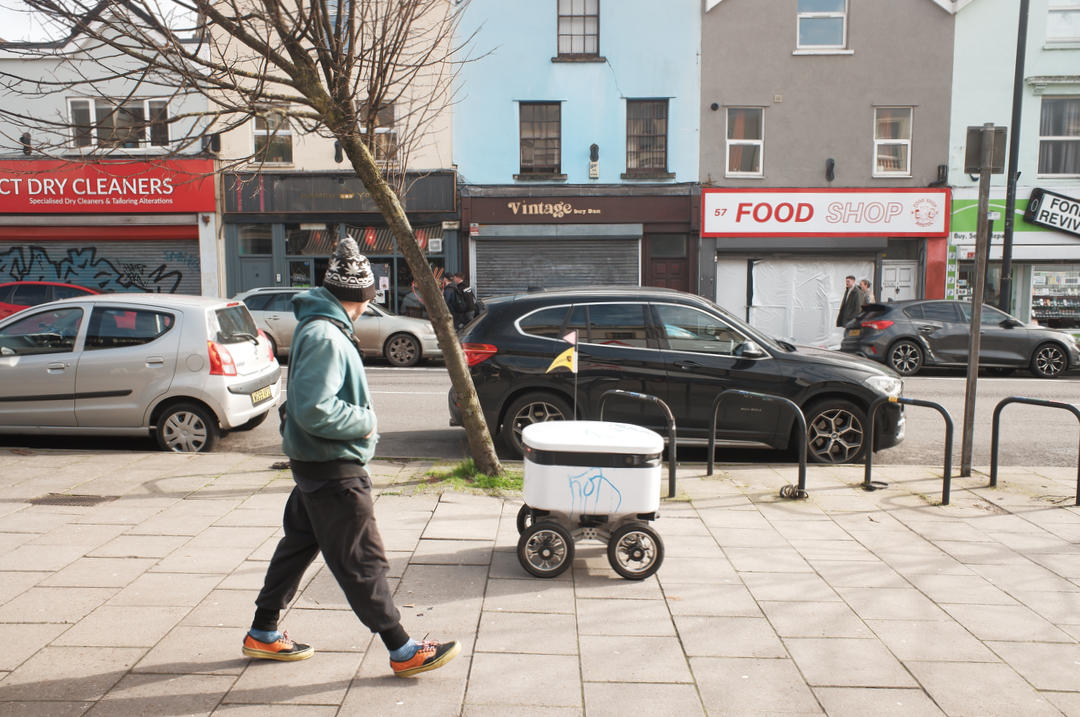
My personal moment of future shock came when a delivery robot trundled past me on Gloucester Road in Bristol, weaving between Saturday afternoon drunks and stoners, some of whom chased it and blocked its way.

“Four child-sized humanoid robots take the stage at an arena in eastern Seoul, and as the opening beats of a song by K-pop star G-Dragon begin, they start to dance… Arms swinging, legs stepping in sync, heads bobbing, wigs and baggy clothes swishing, until – mid-performance – one of them seemingly malfunctions and has to be removed from the stage… Welcome to Galaxy Robot Park, a new 16,500 square metre facility in Gangdong district that its creators claim is the world’s first robot theme park.”

The Guardian, 25 May 2026

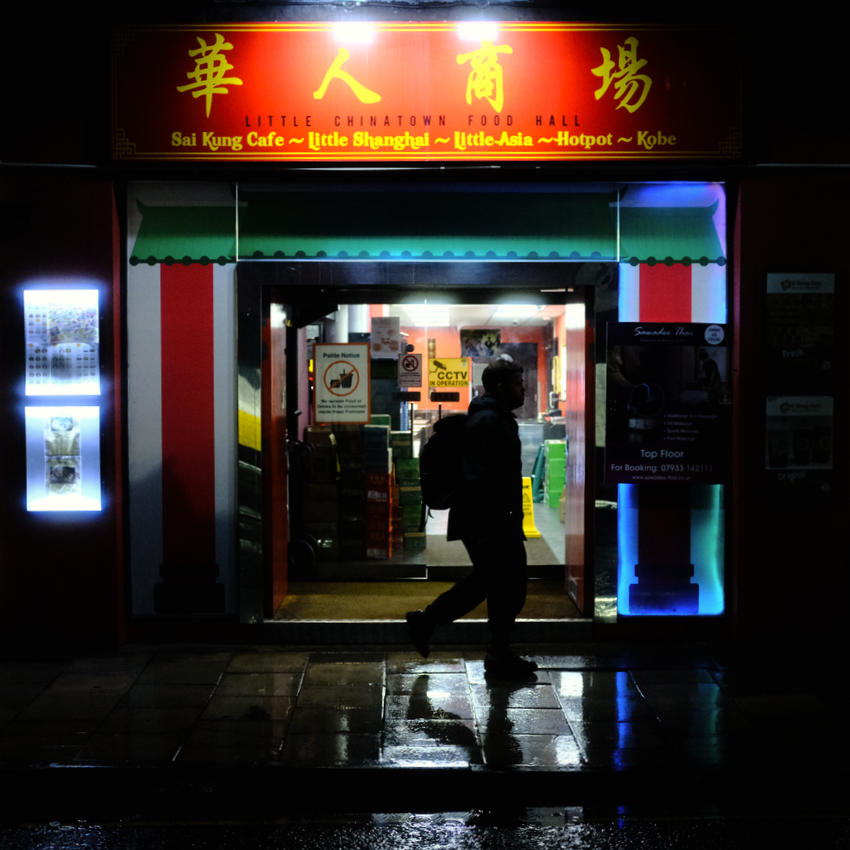
Chinatown in Bristol with glowing signs and wet pavements.

More often, the shock is that there is no shock. My mum uses the voice-activated computer in her house to remind herself to take the sprouts off the boil.

“[Shania] Collins had enjoyed modest success as a sprinter, with contracts from Puma and Adidas. But by 2024, with her career stalled and earnings shrunk, she retired at 29 to begin a long screening process to follow her parents into working for the [Drug Enforcement Agency]… Then organizers of the Enhanced Games, a controversial sports startup, got in touch last fall with an offer. The organizers were planning a one-day competition of sprinting, swimming and weightlifting in Las Vegas that would not only allow but encourage doping. And it paid the kind of money that might take some athletes years to make — six-figure salaries, on top of prize money of up to $250,000 for event winners and $1 million for a world record.”

NBC News, 26 May 2026

All of this technological advancement, apparently utterly mundane and running in the backgrounds of our lives, is accompanied by a sense of apocalyptic weirdness both in the climate and the culture.

“Meta has quietly embedded face-recognition technology for its smart glasses into an app downloaded to millions of phones… Code discreetly added to Meta’s AI app over multiple updates this year shows that the feature, internally called ‘NameTag’, identifies people captured by the glasses’ camera and, when activated, alerts the wearer when it recognizes someone.”

Wired, 4 June 2026

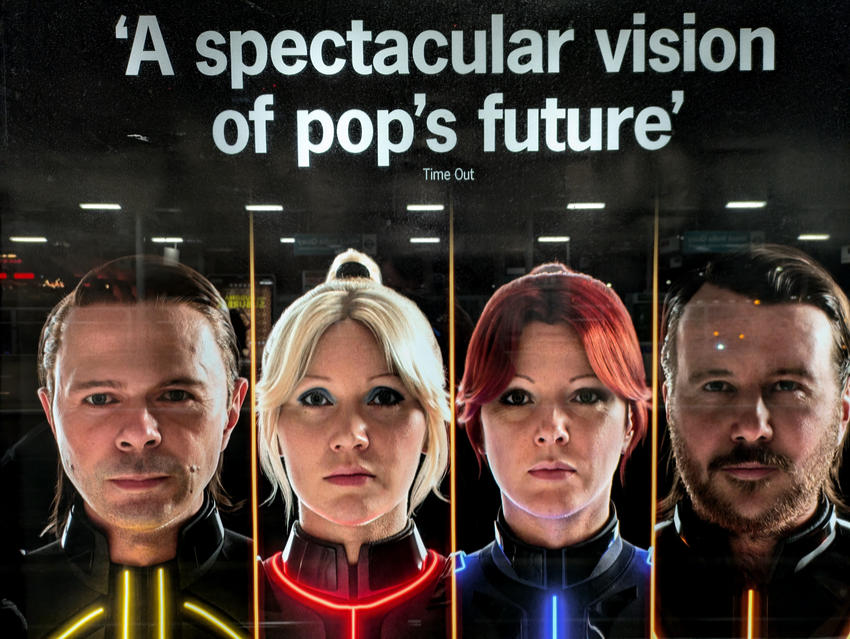
An advert on the London Underground for ABBA Voyage with the faces of the digital simulations of the members of the band and a quote from Time Out: "A spectacular vision of pop's future."

Blade Runner had its acid rain. We have wildfires taking out suburban housing estates in the English Midlands and heat buckling railway tracks.

“Two arrests have been made during a police operation using drone technology to target anti-social driving… Dorset Police said its operation on 29 May was in direct response to concerns raised by people living in Sandbanks, Poole… A police drone was deployed over the area to give a higher vantage point to spot any offences of poor driving, allowing officers to then intercept motorists on the ground, said Dorset Police.”

BBC, 6 June 2026

My brother, a data scientist, told me yesterday that it is now possible to prompt a large language model (LLM) to produce a three-dimensional digital model which you can then realise with a 3D printer. It’s not quite “Tea, Earl Grey, hot,” but it’s alarmingly close.

“While spending money on video games is not uncommon, EVE Online stands out because players’ assets can be permanently destroyed; their real-world cash outlay gone in seconds… The game’s financial system is so complex that in 2025, a former economist from the Central Bank of Iceland was hired to oversee it… Playing EVE Online can take hundreds of hours. Some see it as a second job, dedicating up to 35 hours per week to their virtual duties on top of their real-world nine-to-fives.”

BBC, 6 June 2026

At work, people send AI bots to attend meetings for them and it’s no more than an annoyance – a question of etiquette. If you’d told me this was possible when I was reading Neuromancer as a teenager in a concrete council house I’d have been awestruck.

“Stranger Than Heaven is an action-adventure game that spans fifty years… On Friday evening… Snoop Dogg took to the stage of Summer Game Fest to confirm Tupac’s involvement in Stranger Than Heaven as Amaru, which was the late rapper’s middle name. ‘The Tupac estate and my son and myself, we work very closely together,’ Snoop explained. ‘So it just made sense to put him in this game, because his likeness and his spirit still lives on. I just felt like it was so connected to what we’re doing.’

NME, 8 June 2026

A red LED sign with the word LEAVES. Above it are some actual leaves that its glow has turned red.

Another moment of future shock was when a former colleague posted on LinkedIn about his first ride in a self-driving taxi in San Francisco. It was a novelty, sure, but mostly just a fun story he could use to liven up his feed. Most people didn’t comment, they just gave it a weak “thumbs up”.

“During mealtimes, Vincent Zhang, a tech worker in Shanghai, has a habit of whipping out his phone to check on his ‘virtual parents’: a middle-aged couple online, armed with an endless stream of warm words for their imaginary child… In one of their most popular videos, the pair coos to the camera. ‘Are you tired from work and study lately? Don’t push yourself too hard. Mum and Dad know that you have endured a lot.’ … In the comments, many call the couple mum and dad, telling them about their lives and asking for birthday blessings.”

BBC, 13 June 2026

There are AI-generated posters in my local pub. My local supermarkets have signs warning shoppers that they’re using facial-recognition technology. It doesn’t feel like science fiction because everything surrounding it is so ordinary: facial recognition scanners; two for one on Doritos; images conjured from a prompt; pool, 50p a game, and roast potatoes on the bar on Sunday afternoon.

“AI-generated photos and videos featuring Russian soldiers have gained popularity on social media since mid-2025. They are most often posted by relatives of Russian servicemen fighting in Ukraine… The quality varies. In some videos, the AI generates figures without limbs or produces grotesquely distorted faces.”

BBC, 14 June 2026

How do you write science fiction in this context? Anything you come up with will seem farfetched, until it actually happens three weeks later and nobody bats an eyelid.

“US President Donald Trump celebrated his 80th and America’s 250th birthday with an Ultimate Fighting Championship (UFC) event on the White House lawn… Trump and thousands of other mixed martial arts fans watched on as American fighter Justin Gaethje beat Spanish-Georgian opponent Ilia Topuria to win the lightweight championship in the main event.”

BBC, 14 June 2026

When Moorcock and Ballard repurposed contemporary newspaper clippings they were saying, stop, look – can you believe this shit? But does stopping and looking actually help?

“The alt-pop US musician and internet personality Oliver Tree was among six people who died when the helicopter he was travelling in collided with another in Brazil… The 32-year-old had been on a world tour when the crash occurred over Rio de Janeiro on Sunday. One of the helicopters then fell onto the car park of a dealership, setting around 20 vehicles ablaze… With his distinctive bowl haircut, he was known for hits including Life Goes On, Miss You and Alien Boy.”

BBC, 15 June 2026

The human ability to resist stopping, to look away, to adjust to a new reality, absorb changes, and move on, is extremely useful.

“Banks say that criminals are engaging in more sophisticated fraud at greater volume with the use of artificial intelligence (AI)… Criminals have used AI to mimic the voices of celebrities, and even those of the victims’ family and friends, which has enabled them to carry out the crime at a greater scale.”

BBC, 15 June 2026

I’ve often wondered how long it would take me to adapt if I suddenly found myself fifty or a hundred years in the future. I suspect the answer is about 48 hours.

“The Trump administration on Tuesday announced a ban on new foreign-made humanoid robot imports to the US over ‘unacceptable risks’ to America’s national security… The move applies to advanced robots – including humanoid and four-legged machines. Many of them are made in China, which is competing with the US to develop robotics and artificial intelligence (AI).”

BBC, 29 July 2026

Because everyone around you would be totally unfussed by whatever unimaginable technological advances were occurring around them: “That? Huh. I suppose it is a bit odd, now you mention it. Do you want another HobNob?”

Categories
books Thin Places in Hard Concrete Uncategorized

Thin Places in Hard Concrete is out

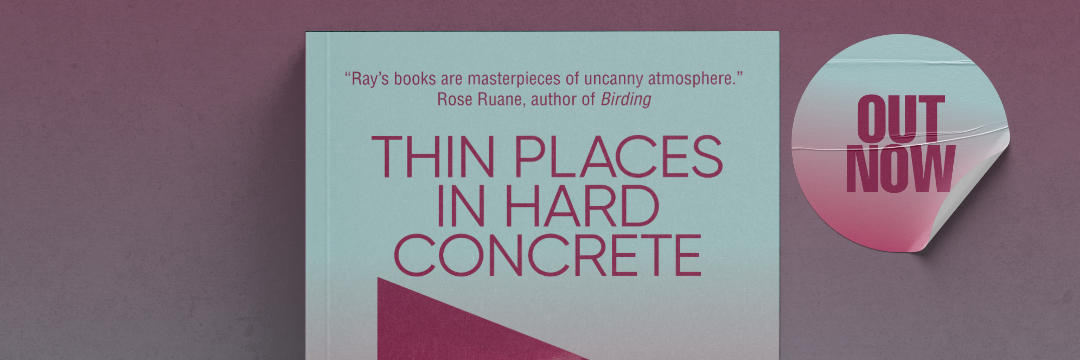
My latest collection, Thin Places in Hard Concrete, is now out, with 10 brand new weird stories.

You can buy the eBook and paperback from Amazon wherever you are. For starters, here’s where you’ll find it if you’re in the UK or US:

I’ve chosen not to apply digital rights management (DRM) to the eBook file so you can download it as an ePub file or PDF to read on whichever device you like, such as a Kobo.

(This also means you could email it to everyone in your address book, or upload it to piracy websites. But, uh, please don’t do that. I’m trying to be helpful here.)

In a couple of weeks’ time I’ll be advertising signed paperback copies for sale directly from me, but I need to find time and space for admin, packaging and posting. So bear with me.

The first reviews are in

“Ray Newman is an M.R. James for the 21st century. His haunting stories unfold in familiar, even banal settings – a rented flat, a holiday let, an inexplicable motorway interchange, the corner of a room. Things happen, or seem to happen, just out of sight, and beyond comprehension. Admirers of the cult TV series Inside No. 9 will love this collection.” – David Collard

“To be able to write well at all is hard enough. And to maintain a high standard across many stories is very rare. But across separate volumes? Now we’re in hen’s teeth territory… Ray Newman’s third deliciously jarring collection continues taking us down alleys we’d never noticed, and through doors we’d always thought locked. It’s our own lives on the other side, but somehow wrong, out of sync and more disturbing for being so familiar.” – David Peate, BlueSky review

Thin Places In Hard Concrete shares with Ray’s first collection, Municipal Gothic, the masterstroke of a title that summarises the contents so well as to make any further attempt on a reviewer’s part redundant. Which is probably for the best, because otherwise I might be tempted to come up with some SEO monstrosity like ‘John Grindrod meets M.R. James’, and nobody needs that…” – Alex Sarll, Goodreads review

“Thin Places in Hard Concrete is a wonderful addition to Ray’s two previous books of short stories. If you enjoy that kind of format in general, or enjoyed his previous books, this is a must-buy.” – Andreas Krennmair, Amazon review

Some background to the collection

I’m writing individual notes on each story in the collection but also wanted to say something about it as a piece – because this collection didn’t come together by accident.

Municipal Gothic from 2022 is a compilation of stories I’d already written with one story dating back more than a decade. Many of them had things in common but, actually, the title implies a unity that is not there.

Intervals of Darkness from 2024 has mostly stories I wrote knowing they’d be collected together and was intentionally more varied, with period pieces and nods to folk horror as well as more of the social realist urban horror that people know me for. I think that disappointed or confused some readers. Why is the haunted British tower block guy writing something set in early 19th century Milan?

I wanted Thin Places in Hard Concrete to have a clear proposition, signalled by the title, and to feel more approachable, with 10 carefully chosen stories and fewer ‘album tracks’.

I also gave myself some rules:

  1. Nothing should be set primarily or only in the past.
  2. They should be set primarily in town.
  3. No folk horror.

This helped me stay on track and focus on writing, rewriting, rewriting, rewriting, editing, editing, editing, polishing, polishing and polishing just the stories for this collection.

Half-finished stories got parked and I tried to banish them from my mind, for now. And some excellent stories that are finished but didn’t fit got put to one side. I’ve already trailed this in various places but some of those will find a home in my next collection, provisionally titled Oakhunger, in which I’m intending to fully embrace rural settings and folk legends.

Where did the title come from?

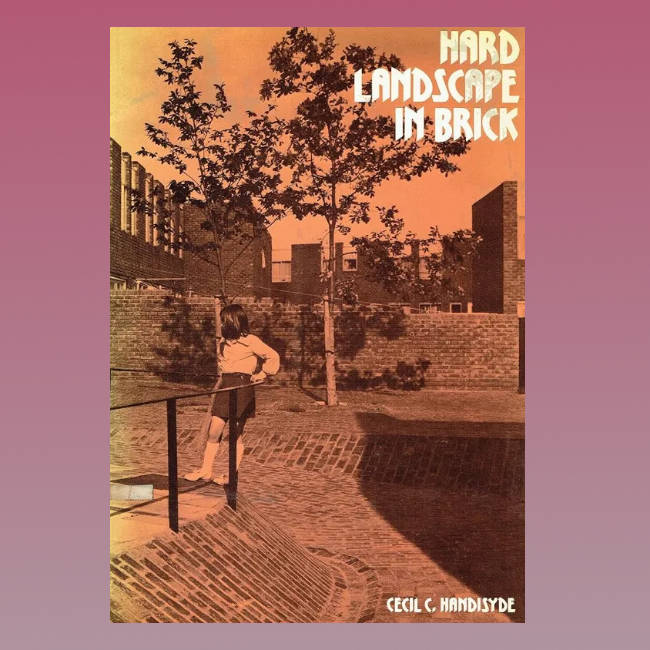
Titles are hard. I really sweated over Intervals of Darkness eventually finding that phrase in a story by M.R. James. But Thin Places in Hard Concrete came to me in a flash via my interest in modernist and post-war architecture. I have this book on my shelf…

The cover of a book showing a housing estate with walkways and raised areas in brick.
Hard Landscape in Brick, Cecil C. Handisyde, Architectural Press, 1976

…and hope to acquire its sibling volume, Hard Landscape in Concrete, some day.

Help me out

We write to be read. I don’t have grand ambitions to be a bestselling author, or to be rich and famous, but when I’ve sweated over a collection of stories as I’ve sweated over this one, I want to know my words have connected with the brains of at least a handful of my fellow human beings.

If you’re a reader then buy the book. I want people to read it. (If you can’t afford to buy the book, message me and we’ll sort something out.) And rate and/or review on Amazon and Goodreads if you can.

If you’re someone with any kind of audience anywhere, and you like what I do, tell people that the new book is out. I’m on BlueSky and LinkedIn but don’t use any other social media these days so I really appreciate any shout outs on Instagram, Facebook, or wherever.

If you’re a book reviewer and would like to review this one, let me know. The more articles and blog posts there are, the better.

Categories
ReadingThinkingDoing Uncategorized

Reading, thinking, doing October 2025

I’ve been reading about the end of the world, walking from Kings Cross to Wapping, and making zines.

This blog is what I do instead of starting yet another Substack newsletter.

You can subscribe to this blog (enter an email address, get updates when I post) using the widget at the bottom of the screen.

Or, if you use an RSS reader like Feedly, you can add this blog there.

This particular post is the second in what might be an ongoing series inspired by a post in which someone said: “I don’t really want to read writing advice from authors… I just want to know what they are reading and thinking and doing.”

If you follow me on Bluesky, you already have a pretty good idea of what I’m reading, thinking and doing at all times.

These are, I suppose, some edited highlights.

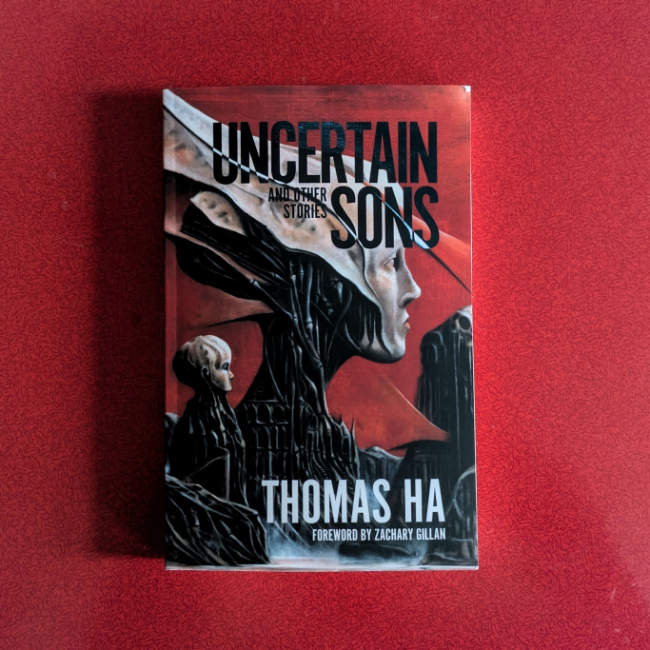
A paperback book with a cover image of horrific monstrous figures, half machine, half human, in a Gigeresque landscape.
Uncertain Sons by Thomas Ha

Reading Thomas Ha’s Uncertain Sons

I’ve been struggling with reading again, if I’m completely honest. I started a new project at work and the process of onboarding is using most of my energy and brainpower. So, at bedtime, I’m only managing a few pages before conking out.

Having said that, on a week’s holiday in Belgium, I ripped through Thomas Ha’s new collection Uncertain Sons.

It presents a series of thematically linked stories, some of which also share mythologies and are perhaps hints of novels to come.

Those themes include the apocalypse, denial, family relationships, artificial intelligence (obliquely), alien forms, and mutation. They’re all defiantly weird, disorienting us and forcing us to learn on the fly new rules about how the world works.

Sentient zombie hot air balloons that only come at night. A mutant that lives in the roots of a tree and kills its sibling over and over again. A new disease that causes narcolepsy, and the sinister perverts who prey on those sleeping in public.

It’s bleak and bewildering, the latter balancing the former, and keeping our eyes locked on a world falling apart.

The standout for me was ‘Where the Old Neighbors Go’ which offers very slight respite from the climate change, pandemic, End Times vibes of the rest of the book. It’s about urban gentrification but overlaid with fairy folklore and enchanted animal imagery straight out of the darker end of Studio Ghibli.

You can read various of Ha’s stories online if you want a taster, or order the book from Undertow Publications. I actually ended up breaking my Amazon streak for this one, though, as I couldn’t find an easy way to buy it in the UK otherwise.

Thinking about creepy hotels, Krimi, delinquency and content design

I’ve written quite a few blog posts since I last produced one of these updates.

Here at Precast Reinforced Heart – that’s the blog’s rarely used official name, by the way – I wrote about how…

  • “Hotels are fundamentally weird places and the sense of unease they prompt is powerful fuel for weird stories.” – Horror Hotels
  • “I’ve found the Blu-ray box set Shadows in the Fog to be a great introduction to the West German Krimi genre despite, on paper, being a collection of also-rans.” – The German-accented phantoms of old London town
  • “What happens when angry young men are more than angry? These three roughly contemporary books give us portraits of youths struggling with their own murderous instincts.” – Three pulp paperbacks about juvenile psychopaths

With my work hat on, I’ve been writing about design and content design on LinkedIn, of all places:

A couple of my LinkedIn posts (not articles) also went, by my standards, gently viral, including this item about cognitive load.

I also wrote some press release material to support a new exhibition about Bristol’s brutalist architecture which prompted me to think pretty hard about brutalist car parks in particular. I now want to write something more substantial just about the giant Trenchard Street car park which was built in the 1930s, replaced and rebuilt in the 1960s, and which, Overlook Hotel style, has a somewhat dark history.

Walking, zines, photos

Last weekend, I went up to London to meet a couple of old university friends for our annual walk. This year, it came late, and wasn’t very adventurous. Logistics got the better of us.

Still, I arrived in London early and got to walk on my own in glorious sunshine from Paddington to the rendezvous point at Kings Cross.

I find London very soothing. Being surrounded by people (against loneliness) who don’t want to talk to me (introversion) is perfect – and there’s just so much to look at.

When I’m walking, I sometimes activate what I call Path Less Taken Mode (PLTM). It’s really easy to follow the route Google Maps suggests, or to lock into habits and routines. With PLTM, the idea is, at every decision point, to take the less familiar turn.

In London, PLTM took me past the Tyburn Convent and the former Oranjehaven where Dutch airmen hung out during World War II. It also led me to some remarkably tranquil streets one or two blocks behind Tottenham Court Road where, from the right angle, it might have been 1892.

Back home, I’ve been making zines somewhat compulsively. There’s generally no particular purpose to this although I might end up slipping them in with orders of my books.

Which reminds me: you can order copies of Municipal Gothic and Intervals of Darkness directly from me. They’re £13 each, including delivery, or it’s £25 for both.

Anyway, back to zines… What I’m particularly enjoying is trying to make a complete zine from (a) one sheet of A4 paper and (b) a single copy of a magazine, or several copies of the same magazine. This creates a pleasing consistency in style and typography and also challenges me to dig a little deeper.

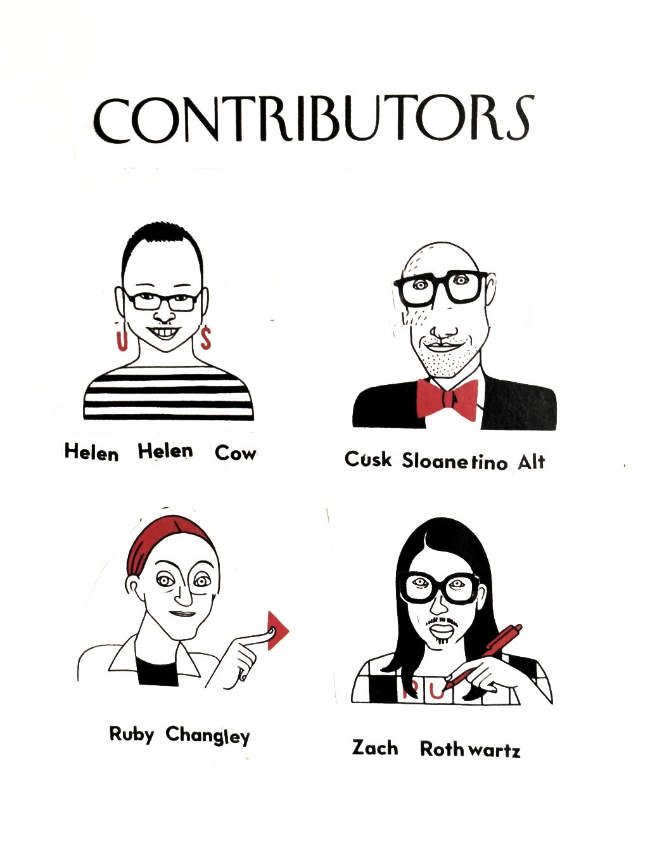
A page of contributors to The Nerk: Helen Helen Cow, Cusk Sloanetino Alt, Ruby Changley, Zach Rothwartz. Their faces are made from cut-up caricatures of New Yorker writers, so they all look a bit wrong and odd.
A detail from a zine called The Nerk made my cutting up a copy of The New Yorker.

I even made a zine at work, although that angered the Brooklyn Zine Police.

I’ve been taking photos too, of course, although the fading autumn light makes that harder.

I take most of my pictures on walks before or after work, and when it’s grey and/or dimpsy, it feels harder to find subjects.

There’s been the odd image I’ve been quite happy with, though.

White minibuses parked above a strip of lavender painted wall in front of a lavender painted industrial building beneath a blue sky.
Rose Green Road, Bristol, September 2025

A prize for making it this far

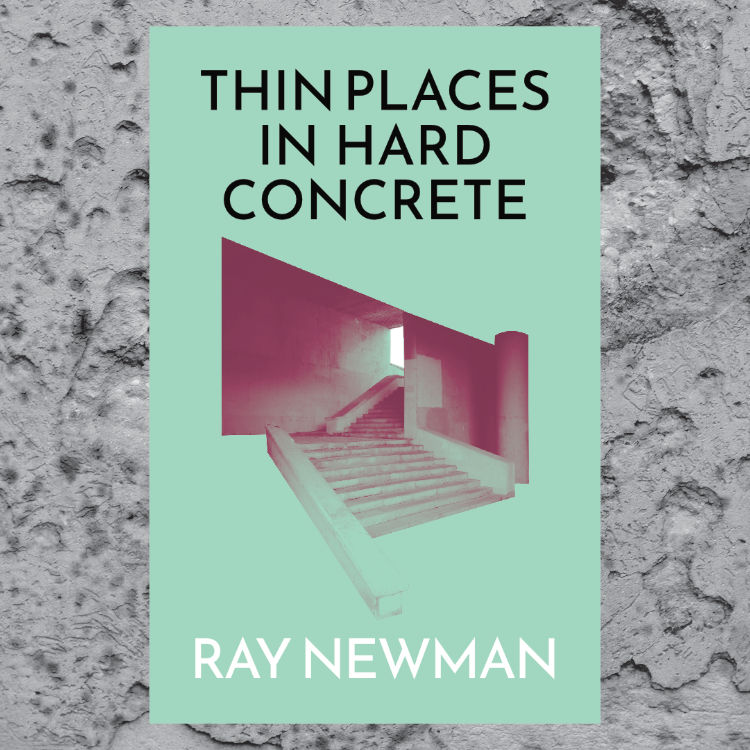
This is the first time I’m saying this publicly: my next collection is likely to be called Thin Places in Hard Concrete and this is a first sketch of the cover.

The cover of a book called Thin Places in Hard Concrete by Ray Newman. It is pale minty green with a concrete staircase cut out and floating in purple.

You can expect it at some point early in 2026.

Categories
Uncategorized

Staying afloat

Everyone manages their mental health differently. For me, it’s about treading water to keep my head above the waves.

As a teenager and twenty-something I was a wreck: depressed, often thinking about suicide, prone to panic attacks and insomnia.

Now, in my mid-forties, I still have low days, still don’t sleep well, and sometimes catch myself saying “Ugh, it would be easier if I was dead.”

But it’s under control, generally speaking.

That’s thanks largely, I think, to a single course of counselling on the NHS. I know that doesn’t work for everyone, or isn’t enough, but it worked for me.

It helped me stop worrying about what I can’t control (sleep); to let myself step off the high-achiever treadmill; and to address the scars left by childhood poverty.

I’ve also learned to talk to my other half when things feel bad – which isn’t often. Sometimes just verbalising it makes it go away.

That’s especially true of what I call, coyly, “the old SI” (suicidal ideation). Mostly, it’s an escape valve thought, an extreme form of “Ah, fuck it all.”

Stability and routines help, too. A wise friend once told me there are two types of people in the world: those who want a rollercoaster ride and those who want a steady life.

I’m the latter.

I wake up at the same time, seven days a week.

I know my plans days and weeks in advance.

I run on a set schedule.

Oh, yes, that cliché: I hate running but I have to take my medicine. If I skip a run, my mood dips noticeably.

I can also be thrown out by working late or at weekends, which doesn’t happen often; by too many social occasions in a row; or by, oh, you know, global pandemics.

Things like that interrupt the rhythm of my little legs, churning away under the waves, causing my head to dip below the surface.

That need for stability has probably prevented me being successful as a writer, to a degree. I need a nine to five job to cling to and it’s hard to write when you’ve been working all day.

But I also know that I’ve been lucky to enjoy 15 plus years of relative calm.

I don’t take it for granted. After all, it might only take one bad day to drag me right back down.

This quick post is a risk in its own way. “Talk about your mental health!” we’re constantly told. It’s good. It’s healthy.

Well, not for me. It’s like picking at a scab. I’ll decide when to do it, thanks, and might never do it again.

Categories
Uncategorized

Concrete and tall grass: inventing a place

After World War II, a second great wave of housing estate building began, with off-the-peg urban landscapes pushing up against the shrinking countryside. The Sydenham Estate in Bridgwater, Somerset, was one such manifestation.

Until I read this passage in a 1945 edition of the Taunton Courier it had never occurred to me that where I grew up had once been nameless – not a place but a void between them:

Regarding Eastover housing scheme, it was reported that the Minister of Health agreed in principle to the proposal to acquire 75 acres of land between Bath-road and Weston Zoyland-road. The District Valuer was instructed to negotiate for acquisition of the land, and it was decided that the site should in future be referred to as the Sydenham Estate.

On pre-war Ordnance Survey maps it is just a series of numbered cells – digits afloat in paper snow. But maps, and especially administrative maps, tend to reduce anything but the densely urban to an off-white nothing. In fact, those numbers represent individual fields on farmland stretching out behind Bower Farm. Bower Estate would have been a good name for the council development that grew there in the 1940s and 1950s but instead the authorities got its new name from the Manor of Sydenham, on the other side of the main Bath Road.

The present Sydenham House was built c.1500 for the Percival family. It was marched past by the Duke of Monmouth on his way to the Battle of Sedgemoor in 1685, and was later the site of a famous incident of nocturnal levitation, but otherwise sat quiet and alone in the flat landscape. Then, in the 1930s, Bridgwater burst its boundaries yet again and the British Cellophane factory was built on land adjoining Sydenham House. Trapped in a no-man’s-land between industry and the railway line, used by Courtauld’s Ltd for hospitality and meetings, it became inaccessible, invisible, and forgotten. The name lingered, though, having been given to Sydenham Terrace, a row of red-brick cottages built in 1865, and to a grand Victorian house called Sydenham Villa.

Oh, yes – red brick. Bridgwater was a brick-making town, and the West Country a brick-making region more generally, and the fact that the houses at this new place, the Sydenham Estate, were to be built from concrete caused some controversy in the late 1940s. BRIDGWATER WANTS BRICK HOUSES read one 1948 headline as the town council were repeatedly criticised for failing to take advantage of a supposed stockpile of 10 million local bricks ready for use. Not Bridgwater bricks, though, replied the council, and anyway, where was the manpower required to turn them into homes?

The town wanted to build 2,000 houses, public and private, as quickly as possible and there was no room for sentiment, so concrete it would be.

Perhaps this was a mistake. A place being created from nothing, in the middle of nowhere, literally on the wrong side of the tracks, could have used something to tie it to the town to which it was supposed to belong.

As it was, those Laing Easiform and Cornish Unit prefabricated concrete houses not only seemed alien but were also the same as thousands of others up and down the country, which meant the Sydenham Estate could have been anywhere. Shown photographs with only the name for a caption, wouldn’t most people guess that it is in south London?

Sydenham was constructed around a kilometre long boulevard called Parkway, down the central green spine of which marched crackling pylons. The streets that branched off Parkway were closed loops, leading nowhere. Sydenham Road, one of the four half-mile-long crescents, had an advantage, however: it formed the eastern edge and backed onto what everyone called The Fields.

The Fields were what remained of Bower Farm, overgrown and beautiful in their own way, with waving blonde grass and the remains of orchards, like something out of Laurie Lee. There was no formal access to The Fields from the estate because, after all, why would we want to wander there when we had public greens and playgrounds? All that meant, though, was that kids clambered over back-fences, crushing the chain-link to the ground over the course of years, while certain enterprising residents installed their own back gates in breach of the tenancy regulations. During the day, and especially during the summer holidays, that meant cousins and friends could run in and out of each other’s gardens using folk paths worn through the vegetation. At night it facilitated more sinister goings-on – muttering, scurrying, cold torchlight, clothes-line raids, and outright burglary.

As a frankly cowardly child The Fields scared me. There were things concealed in the grass that I didn’t care to encounter – hunks of rusting farm machinery, plastic bags full of hardened glue, all sniffed out; the remains of illicit bonfires; and, most terrifying of all, nests of adders. In autumn, low mist would lie on The Fields, and only on The Fields, like gatherings of ghosts.

They started building on The Fields when I was about 11-years-old, and I wasn’t sure if it was good or bad news. On the one hand I knew it would bring the wilderness into line – no more snakes or child traps, and an end to the sinister whispering of the grass beneath my bedroom window. On the other hand, I disliked change. I sulked when they installed double-glazing and pebble-dashed the council houses, but this was more drastic again – a fundamental reordering of the very landscape. Much as The Fields unnerved me, they also provided a contrast to the concrete and municipal repetition of the estate, and it felt simply wrong to turn them into yet more streets. Within a few years The Fields became the Bower Estate. Hundreds of just-too-small red-brick private houses arranged in whorls and loops along dusty new artery roads. 

Sydenham, meanwhile, became a place, but one defined by negatives. It was referred to on the news as ‘the troubled Sydenham Estate’, and my peers called it The ‘Nam. This was a self-deprecating joke, of course, but also reflected a low-key ghetto mentality. We’re stuck out here together, us versus them, and it’s a combat situation. Who ‘they’ were depended on context. Within the estate, Sydenham Road and Longstone Avenue had a wary rivalry, each convinced the other was a no-go area; and the Sydenham Estate as a whole was set against the Hamp Estate on the other side of town, where we kids were warned never to go. Of course when I did go, I found a twin – approximately the same kinds of houses, an exact clone of the shopping arcade, and a secondary school which looked like an off-kilter version of mine.

Because of this reputation, steps, as they say, were taken, and Sydenham seems to be fading away. In around 1991 my secondary school ditched the doubly toxic Sydenham Comprehensive label in favour of ‘East Bridgwater Community School’. Then, in 2011, Sydenham ceased to exist as a council ward, replaced by Fairfax and Dunwear, two new wards that split the estate through the middle and effectively deny its existence. Estate agents marketing houses in the area tend to refer to them as being “on the east side of town” or, even more vaguely, “a popular residential location”.

But those Cornish Units and Easiforms, designed to last a few years at best, are still there 70 years on, albeit with raw concrete disguised by paint and pebble-dash. They invaded, they persisted, and they saw the countryside off. There are no orchards anymore – no adders, no whispering grass, no wild frontier.

Categories
Uncategorized

Work in progress: the next novel

IMG_20190911_124441-04

A few people have asked if there’s another novel on the way, and there is.

As if today, 29 June 2020, I’m 47,500 words done on another crime novel, which will be 80-90,000 words when complete.

This one is set in Bristol in the 1950s and features a character I hope will fuel an entire series of books – a detective, of course.

I like him a lot. He’s not boring. He doesn’t listen to opera or drive a vintage car. He does things I don’t expect him to do – always pleasing.

I’ve been sharing chunks of it with my writers’ group for a while and so far, the reactions have been largely positive. And it can be a fairly brutal forum, so this is encouraging.

I’ll be honest, writing during the height of the coronavirus crisis wasn’t easy.

It didn’t seem important, for one thing – at least not as important as refreshing Twitter every five minutes for a fresh shot of condensed doom.

At the same time, when I did sit down to wrote, constant background anxiety made every word harder to extract.

I’m in the flow, now, though, thank God.

One job I’m not looking forward to is rewriting the whole thing in the present tense. Having devoured a few currently popular crime novels, I decided to give it a go and it was an obvious, immediate improvement.

Books set in the past always bear the risk of feeling distant; this small tweak transports the reader and makes the action feel way more vivid.

But 40,000+ words now need fixing.

I guess it’s one way to force a close edit of my own text.

At my current pace, it should be done by the end of September. Then I need to put it aside for a while, rewrite, edit, edit, edit, edit and…

Send it away with great hope and low expectations in January 2021, perhaps?

Categories
1959 books reading1959 Uncategorized

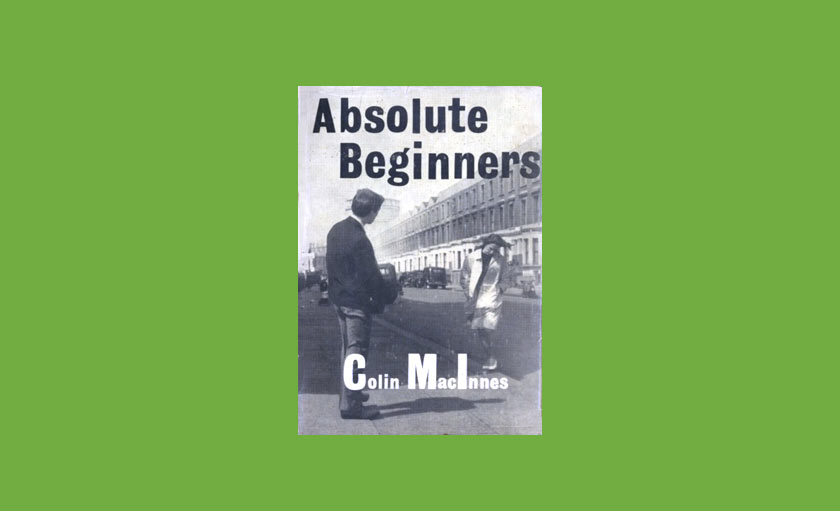
Reading 1959: Absolute Beginners

Colin MacInnes’s Absolute Beginners is an invigorating virtual reality experience – a hot London summer spent swimming in the primordial soup of a teenager’s head.

If No Love for Johnnie was about a generation struggling to break free from Victorian tradition, the misery of slum-life and the trauma war, then Absolute Beginners presents what is left when the cocoon is finally shed.

The nameless 18-year-old protagonist didn’t fight in the war, though he is a ‘Blitz baby’, and doesn’t care for the ‘sad, gloomy and un-contemporary’.

He successfully presents himself as cynical for the first half of the book, professing to care about nothing, not even the ever-present threat of atomic war. He seems to despise his pathetic cuckold of a father, his promiscuous mother, and his hopeless half brother. At one point, just when the reader might be warming to him, he exploits a girl’s heroin problem for his own ends.

But a steady tap, tap, tap of optimism and enthusiasm begins to shine through: he loves his on-off girlfriend, Crepe Suzette, wholeheartedly.

He loves jazz, too. Really loves it, not for show, but in his bones: it ‘sends him’.

He takes pornographic photos to pay the rent but all the time he is slowly turning into a real photographer – into an unashamed artist.

When he is really tested, when he is asked to prove his humanity as race riots turn West London into a warzone, he cannot pretend to be other than an idealist. He sides with the underdogs, against the racists, and risks his neck to do the right thing in a pocket civil war.

Ultimately he can’t even conceal the love he feels for his parents. “Don’t be a c–t,” says his his mother at one point, but we, and he, know what she really means.

Almost everyone in this book behaves surprisingly, from the proto-hippy pimp who turns out to be a bright-eyed fascist, to the retired Admiral who refuses to be homophobic for the TV cameras. These characters are hard to grasp and all the more real for it.

But Absolute Beginners was written in the late 1950s, and so perhaps Crepe Suzette is lacking a dimension or two – a manic pixie dream girl with the sex dial turned up. On the whole, the female characters aren’t as convincing or as interesting as the male characters, even Big Jill the lesbian pimp.

After a stretch where it seems black characters might be treated merely as a background mass, individuals emerge, though still primarily as non-player-characters for the white protagonist to react against or move towards. Some of his best friends are black, and all that.

(But, come on, let’s be fair: compare this with the grimmer, greyer angry young man novels where there are hardly any non-white characters, and in which women are generally either fantasy figures or ambition-crushing marriage traps.)

Quibbles aside, spat out of the far end of Absolute Beginners, my heart was beating fast. I could still see the colours, hear the beat, and the roar of the Vespa. I felt 20 again. I wanted to go out on to the streets and do something to make things better. (And, very badly, to see my Dad for a pint.)

Categories
Uncategorized

Smoke & Mirrors

Grandpa smoking.

I’ve never smoked but I spent my childhood in smoky rooms, surrounded by grandparents and parents, aunts and uncles, all smoking.

Bronzed fingers, yellow nails, picking at cellophane and gold paper. Those fingers flicking at lighters, pressing a fresh cigarette to the orange glow of another already underway, or pushing one through the bars towards the orange-purple flames of a gas fire. Those fingers hooked around cigarettes, lifting them to lips that kissed me goodnight or spat into tissues to wash my sticky face.

The smoke itself had a warm smell of home, not the wholesome smell of a wood fire but sweeter and dirtier. Like an animal. It created its own fog, sepia toning as practical effect, until breathing was like chewing and my eyes ached and ran wet. And there was no escape: “Shut that window, it’s bloody knottling.”

There were ashtrays on tables, windowsills, the arms of chairs, all full of smooth grey dust and bent filter tips, some with lipstick stains. Ashtrays were souvenirs, gifts and ornaments — the lozenge of green and red glass, the magic machine with the button to open the trap, the porcelain Whitbread promotional piece the size of a toilet seat, the vintage car with the red plastic seats — and yet nobody could ever find one, which is how cigarette ended up in tea cups or the empty foil trays from Sunday’s jam tarts.

All the houses were tanned brown, nicotine jam on every smooth surface, from fireplace tiles to the smoked grey plastic lid of the Hi-Fi. Scrape it with a nail and it would come away, pleasingly, in curls. There were burns in odd places, like either the tracks of tiny meteors or wormholes, depending where and how the tip of the fag had landed.

Player's No 6.

Smoking was a mode of personal expression: Uncle Ernie’s meagre roll-ups, Grandpa Newman’s stubby naval non-filters, Dad’s attention-grabbing pipes, his mate Mark’s cigars, all made some sort of statement. Some brands were ladylike, others masculine, and everyone had a preference.

I asked my Grandpa Roland what he wanted for Christmas every year and he always gave the same reply: “Packet of fags.” (Players No. 6.)

We woke to morning coughs — to the sound of lungs trying break the belts that bound them with a hack, hack, hack, rattle and release, and then repeat. Later there were inhalers and oxygen tanks, and yet still cigarettes. Give up smoking or you will die, the doctors said, and most of my relatives looked from cigarette to doctor and back again, and took another drag.

I sometimes miss the smoke, the smell, and especially the smokers, happily smoking, sharing cigarettes to show their affection for each other, sitting in a cloud they made together.

But, like I say, I’ve never smoked.

Categories
Uncategorized

The Comprehensive Club

The Comprehensive Club (exterior)

Do you know the Comprehensive Club on Pall Mall? It’s an extremely exclusive institution whose members are required to have attended a non-selective state school.

It’s housed in a plain brutalist building built in around 1964, and quite discreetly advertised. The bar is a pub, the restaurant a canteen, and instead of leather armchairs and grandfather clocks it’s all knackered but comfortable sofas, and plastic school chairs. There are TVs and lots of noise and if you want a cup of tea, there’s the kettle, make it yourself.

But for some reason – I’m vague on the details – membership is much sought after by posh types. They grovel and beg to be admitted but, no, they’re simply not the right sort of people. It sometimes seems as if the committee takes a perverse pleasure in humiliating them as it turns them down in favour of someone from one troubled council estate or another. The chair can sometimes be heard to mutter, “Taste of their own bloody medicine…”

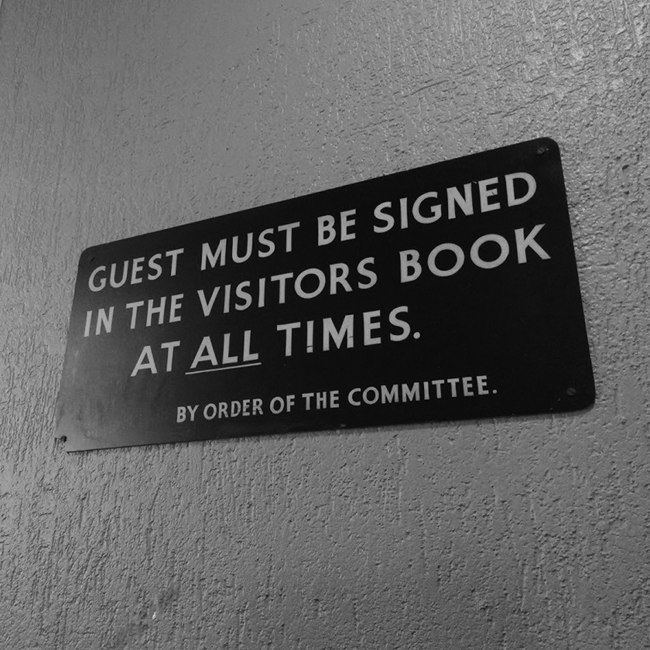
"Guests must be signed in the visitors books at all times."

Other than the comprehensive school requirement, the rules are quite simple. First, only fifteen new members may join in any given year, based on their personal achievements, and bearing in mind the circumstances of their upbringing. Secondly, members must avoid wearing jackets, ties, black tie, gowns, or any other symbols of formality at any time. And, finally, it is a serious offence to do anything to belittle, embarrass or otherwise ‘lord it over’ (those are the words in the constitution) any other member. If someone wants to eat chips with their fingers, mind your own business.

But beyond that, despite having been a member for 25 years or so, I’m not entirely clear about how it all works – about the practical details. Where does the money come from? Surely the members can’t be expected to pay huge fees, unless it’s only for people who’ve somehow got rich, which would hardly be desirable. I’ve never been asked for a penny. Another thing: what does it offer that the real world doesn’t? Why not just go to the pub, or a café? And isn’t the idea of an exclusive club, even on these terms, just a bit… wrong?

Truth be told, I go there less often these days. I don’t need it as much as I did in my teens and twenties when I found it a refuge – somewhere my manners could never be too clumsy, my tastes never too crude – and, at the same time, a delicious means for exacting revenge against the public school set. In fact, as the weight on my shoulders has lifted, and the wounded creature that used to whisper in my ear has become less insistent, I sometimes wonder if the Comprehensive Club ever existed at all.