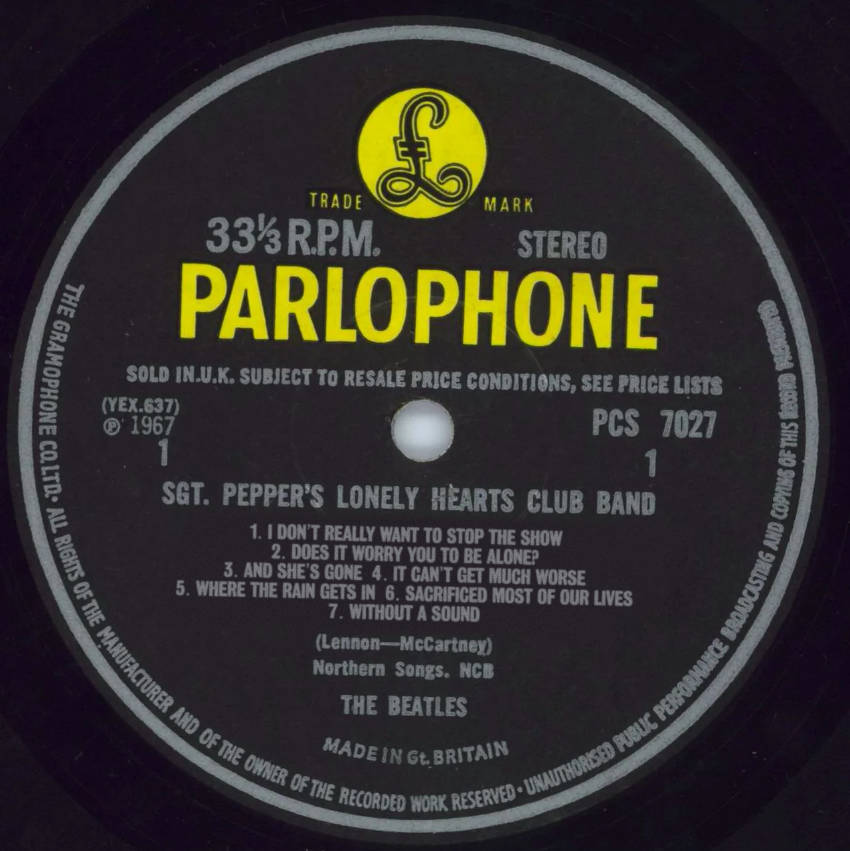
It’s amazing to think that we can pinpoint the most magical two seconds in pop music, which occur exactly one minute into ‘Strawberry Fields Forever’ by The Beatles, as Take 7 melts into Take 26.
Listening casually, all you’ll hear at this point is the song ‘kicking in’ – the gentle, dreamy introduction giving way to the heavier, more orchestrated, more percussive body of the song.
Listen to it a lot, over and over, on headphones, and you might notice something else. Although the song doesn’t change key or tempo, it does change. Lennon’s voice becomes thicker and more woozy; the instrumentation shifts; and the mood, for want of a better word, completely alters.
It’s the aural equivalent of a dolly zoom shot in cinema, where the camera moves in one direction on tracks (dolly) while the lens zooms in the other, keeping the subject the same size while the world around them distorts.
In the case of ‘Strawberry Fields’ the word ‘magical’ doesn’t seem like an exaggeration. Here’s how Beatles producer George Martin describes the moment in his 1995 book Summer of Love:
Ever the idealist, and completely without regard for practical problems, John said to me, “I like [both takes]. Why don’t we join them together? You could start with Take 7 and move to Take 20 halfway through to get the grandstand finish.”
“Brilliant!” I replied. “There are only two things wrong with that: the takes are in completely different keys, a whole tone apart; and they have wildly different tempos. Other than that, there should be no problem!” John smiled at my sarcasm with the tolerance of a grown-up placating a child. “Well, George,” he said laconically, I’m sure you can fix it, can’t you?”
With great difficulty, Martin and his team sped up Take 7, and slowed down Take 20, and found that, miraculously, this put them at about the same pitch and speed. To Martin, this seems to have been primarily a technical problem, and he describes the edit as having “always stuck out like a sore thumb for me”. Which it does, I suppose, in rather a wonderful way.
Another comparison might be the feeling you get when you suddenly know that someone is in the room with you – another human being or, if you believe in that sort of things, a ghost. It’s a shiver down the spine trapped on tape.
Take 7 of ‘Strawberry Fields’ is lovely. If that’s the version we’d got as a single it would still be a beloved record.
But running slower, and without that momentous change, while it’s not quite a dirge, it lacks dynamism.
Take 26 is excellent, too. It’s frantic, in-your-face, opening with a blast of those bandstand horns that are all over Sgt. Pepper’s Lonely Hearts Club Band and then lolloping along at full tilt for the full three minutes.
What it lacks is that sense of being gently immersed in the song before the heat’s turned up. It doesn’t have that moment when Lennon does as he’s promised and takes you down.
In the finished mix, that’s what happens at the 1-minute mark: we go down, we’re pulled in, and the song folds over us like a blanket of sweet, warm jam.
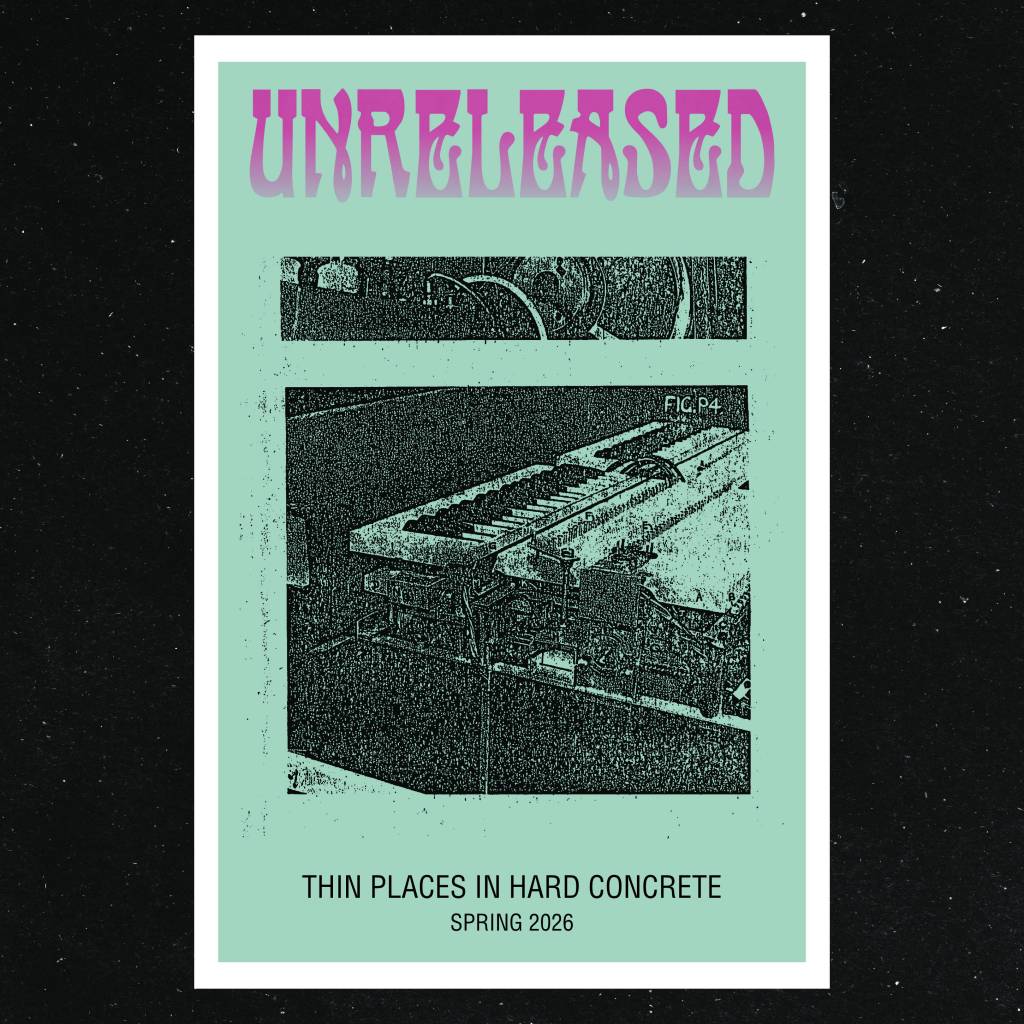
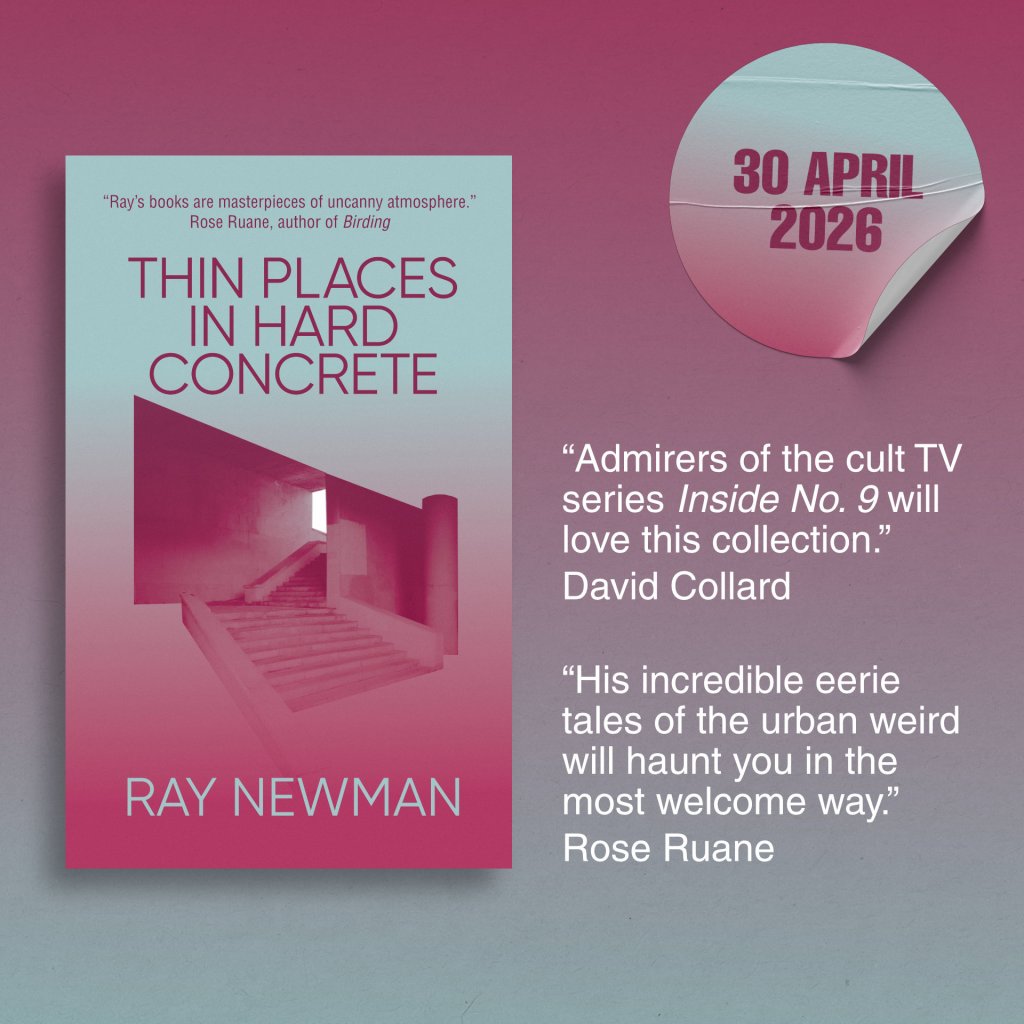
The third story in my new collection, Thin Places in Hard Concrete, is called ‘Unreleased’ and is about a haunted Mellotron tape bank.
It isn’t about The Beatles, exactly, but it is very clearly inspired by my reading of books and articles about them over the course of many years.
It’s funny that I sometimes think I’m not enough of a Beatles guy to consider myself A Beatles Guy. That’s despite the fact that my first (short) book was ABOUT THE BLOODY BEATLES.
In 2006, as a rather understimulated junior civil servant, I wrote 30,000 words about Revolver, based on extensive research. I published it online under a Creative Commons licence and it went somewhat viral after mentions at Boing Boing, in Rolling Stone and in The Sunday Times, among other places.
Then it got picked up by a publishing house that specialised in turning blogs into books. This was very exciting – I was going to be a published writer! The book got a cover design, got listed on Amazon, the publicity wheels started to turn… But the publisher got bought by a multinational and promptly dumped the project.
It badly needs an update, rewrite and edit – I’ve learned a lot about writing since 2006 – but it’s still worth a read if you want to grab the PDF.
The point is, though, like lots of people, I love The Beatles and think about them a lot, and for some time one strand of that thinking has been about how dark they could be at times. One little joke of mine from a few years ago was to choose alternate titles for Beatles songs that would make them sound much more miserable, using only actual lyrics from the songs in question.
The cover of Sgt. Pepper’s Lonely Hearts Club Band includes occultist Aleister Crowley, horror writer Edgar Allan Poe, and Aubrey Beardsley who illustrated Poe among other macabre subjects. Stuart Sutcliffe, a former Beatle who died in 1962, also features, like a ghost haunting his old band. (In my story, serial killer Ed Gein is on the cover of an unnamed 1967 album, just to underline that this is not quite about The Beatles.)
Then there’s the whole conspiracy theory about Paul McCartney having died and been replaced by a double. Of course this didn’t originate with The Beatles but, as Ian McDonald points out in Revolution in the Head, they also couldn’t resist teasing people who inferred secret messages from their lyrics.
I’m fascinated, too, by the emphasis on mind-expanding near-death experiences in accounts of LSD use. John Lennon’s song ‘Tomorrow Never Knows’ is very much an attempt to evoke the sensation of an acid trip and contains multiple references to death and dying – the surrender to the void.
Which brings us to ‘The Beyond’, the unreleased song at the centre of my story.
The Beyond
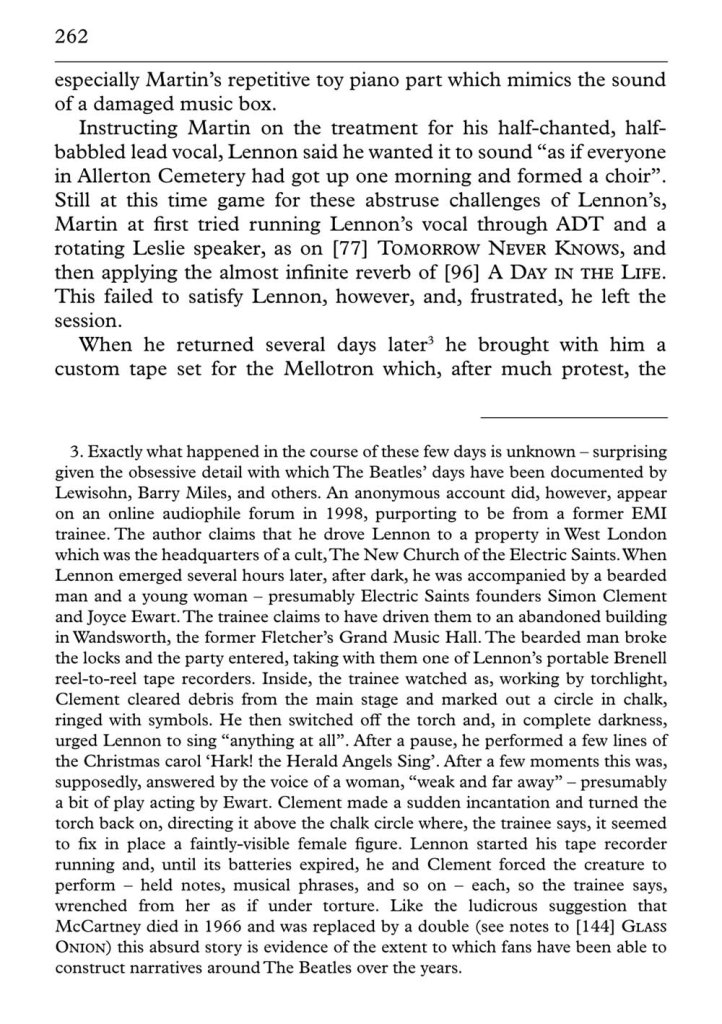
Back in 2021 I was seized by the sudden need to realise an idea and, in a flurry of activity one evening after work, created a short ghost story in the form of a pastiche of Revolution in the Head.
You can read that here on the blog as a sort of teaser for ‘Unreleased’. It’s more explicitly about The Beatles than ‘Unreleased’ and was as much an exercise in capturing Ian McDonald’s voice (snarky, a little too sure of his own correctness) and the design of the book (fonts, layout) as it was a piece of storytelling.
The overlap between ghost story people and Beatles people is quite small, I think, so this didn’t exactly set the world alight. A couple of people did say, “Ho ho, very clever!” and Robin Allender talked about it on his podcast Your Own Personal Beatles.
The song it describes, ‘The Beyond’, is in my mind somewhere adjacent to ‘Tomorrow Never Knows’, ‘Carnival of Light’, ‘You Know My Name, Look Up The Number’ and ‘Revolution 9’. The title is, of course, borrowed from the 1981 Lucio Fulci film which seems to have lodged in my brain not as Italian exploitation gore but as a rare example of genuine nightmare logic weirdness on film. If anyone wants to have a go at recording a version, by the way, I’d love to hear it.
For the past five years, I’ve been trying to work out how to turn that snippet into a full story. There were several failed attempts including one that was told entirely in the form of found text. Some of that made it into the final version but not, for example, this:
Flyer for the New Church of the Power Station of God, 1966
Are you dissatisfied?
Life is a miracle, but being alive is a drag.
We spend energy every waking moment.
Soul vampires take energy from us.
However much we eat of the flesh, and of the bounty of the earth, we can never keep up: we are machines for producing shit, and ennui is the result.
But what if there were an infinite power source to which a chosen few might connect?
God has left us, for now, abandoning us to our atom bombs and holocausts – but the source of his power remains!
If only we have the courage to crowbar the door, cross the threshold, and seize control.
We need a coup. We need leaders. We need soldiers.
Telephone Chelsea 4831 to arrange a personal confessional with a counsellor and find your way to endless spiritual power!
There was also a version told mostly through posts and threads from early internet Beatles forums. This was great fun to write but, ultimately, probably wouldn’t have been much fun to read.
Releasing the unreleased
When you take five years to write a story, you have plenty of time to draw in new ideas. By the time I reached something like a final draft of ‘The Unreleased’ earlier this year I’d also been thinking, for example, about how the team managing The Beatles’ legacy has used artificial intelligence to clean up old film footage and create new mixes of old songs.
This all began with ‘Free as a Bird’ back in the 1990s which used a fluttering, degraded tape of Lennon singing to create a new Beatles single. I like the record partly because it sounds uncanny and ghostly, rather than sweetly nostalgic as I think was the aim.
This only compounded a feeling I’ve had for years that recorded music has an inherent uncanny quality. You’re telling me that we’ve captured the performances of long-dead people in such fidelity that we can hear them clearing their throats, blowing their noses and asking for cups of tea from the studio canteen? When a review of a remastered album says, “It’s like being there in the room,” I shudder slightly and wonder if they ever sensed our presence.
One final contribution to the story was reading about obsessive vinyl collectors, and observing them in the real world in record shops and charity shops around Bristol. A challenge I set myself for Thin Places in Hard Concrete was not to rely purely on nostalgia and period settings. That meant I needed to find contemporary characters and give them a reason to encounter the haunted tape bank. Obsessive collectors, and the people who are obliged to live with them, gave me the necessary angle.
You can order ‘Thin Places in Hard Concrete‘ now, with 10 brand new stories of everyday worlds weirdly out of whack: cults, ghosts, impossible infrastructure, haunted holiday apartments…
A key feature of popular music is the use of artificial echo and reverberation to make small ensembles sound big, to complexify simple arrangements, and to turn poky studio spaces into wide open landscapes.
Listen to ‘Isi’, the opening track of Neu! 75, by German band Neu, for example. It begins with a simple sequence played on a piano. But a reverberation (reverb) effect sends each of the three basic chords out into a big blue sky – one that exists only in a studio box of tricks.
Echo and reverb are such a part of the background to recorded music that most of us don’t notice they’re there. We would notice, however, if they weren’t.
The same piano chord ‘dry’ and then with reverb and echo.
When a piece of music is described as ‘epic’ it’s probably reverb, often paired with echo, that is creating that impression.
Echo, or ‘delay’, is a subtly different effect. It’s about the repetition of distinct sounds rather than their washing away into space.
Play a single note, add repetitions with delay, and play that into reverb and, in an instant, you have music. A sound that can make you feel things.
Please subscribe to get notified when I post something new here. It’s what I’m doing instead of setting up yet another Substack newsletter.
Psychedelic music was largely built on the use of reverb and echo. Think of Sgt. Pepper’s Lonely Hearts Club Band by The Beatles and its associated single, ‘Strawberry Fields Forever’, and how often John Lennon’s voice in particular is adrift in a swirl of its own tails, haunting itself.
To psychedelic and progressive musicians, reverb and echo perhaps seemed to mimic the opening up of their own minds through the use of psychedelic drugs, or their discovery of esoteric spirituality, or both.
These effects turn the performer into a god, their voice calling out across all the lands – or, alternatively, allow them to become as one with the universe. At any rate, they allow them to cease to be themselves:
“With ‘Tomorrow Never Knows’ I’d imagined in my head that in the background you would hear thousands of monks chanting.”
John Lennon quoted in The Beatles by Hunter Davies, 1968
What we rarely acknowledge is how strange it is to be able to create these auditory virtual realities from loops of magnetic tape, wobbly springs, sheets of metal suspended in boxes, electronic circuits or, most recently, lines of code.
Before reverb and echo devices, these effects were created by playing in real spaces such as halls, churches or water tanks. Then studio technicians worked out that they could pipe sound into those spaces, record the echo remotely, and blend it with the mix. But, still, you needed big, empty rooms to play with.
Spring reverb was an early breakthrough. It achieved the impression of space by channeling sound through a box full of springs and recording their vibrations. This is very much the sound of surf music. But where is the surf guitar player as we hear them twanging on recordings? In the hall created by the curl of a giant wave? In Monument Valley? In deep space?
Early echo/delay effects were created through similarly analogue means, using loops of tape to record a sound and play it back almost immediately, layered over the original. By adjusting settings engineers can create the impression of sounds bouncing into infinity, or slapping back as if from a nearby cliff face.
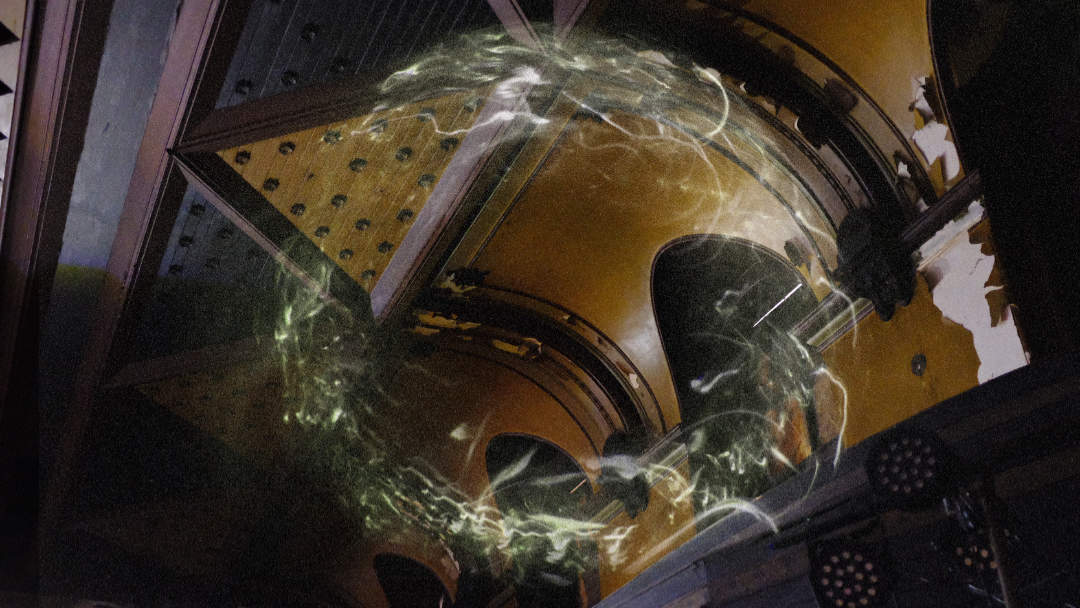
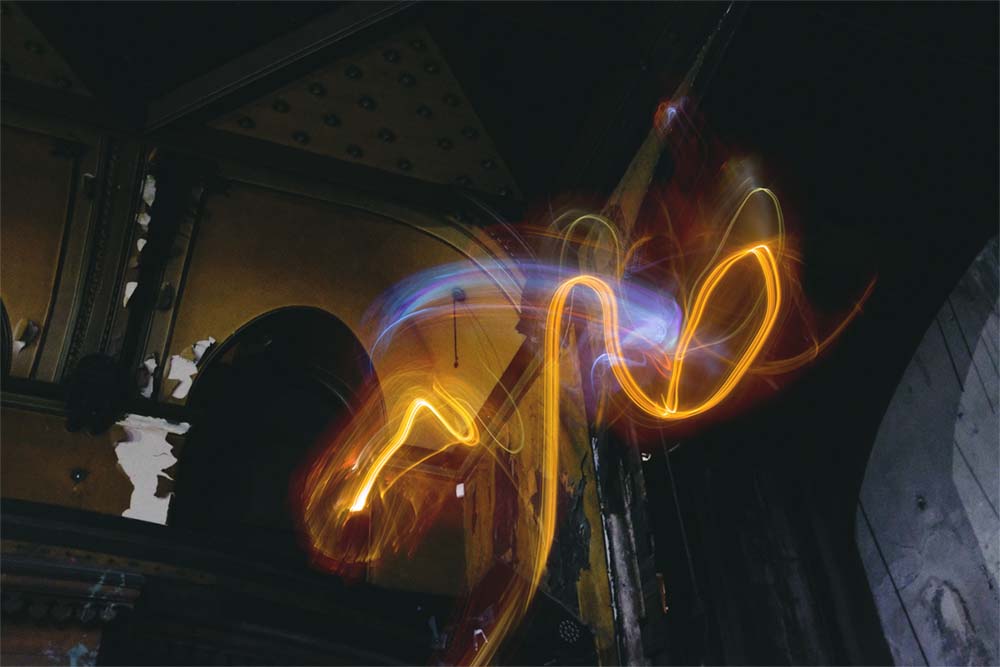
The EMT 140 plate reverb, first manufactured in 1957, was a significant breakthrough. That’s it travelling in space in the main image above. It was used extensively on recordings by The Beatles and Pink Floyd, among others, and is one of the defining sounds of psychedelia.
It conjures vastness from a bland looking wooden box of the type you might find collecting dust at the back of a school assembly hall.
Inside that box is a large plate of sheet metal suspended from springs. Your raw sound – John Lennon singing, for example – is played into the plate through (in non technical terms) a small speaker. That causes the plate to reverberate and that sound, in turn, is picked up and sent back out of the box to be mixed with the original sound.
Since the 1970s, it’s been possible to create reverb and echo using, first, analogue electronic circuits, and then digital signal processing. This has allowed those mindbendingly enormous spaces to be housed in ever-smaller packages – the voice of God in a matchbox.
In recent years, convolution reverb has emerged. It uses ‘impulse responses’ (IRs) to capture the qualities of real spaces. Or to steal their souls at gunpoint, you might say. Because that’s often how IRs are created – by firing a starter pistol into, say, a cave, or concert hall, and recording the violent boom.
Another modern trend is shimmer reverb which, rather than recreating real spaces in perfect fidelity, creates impossible ones, where sound behaves in illogical but magical ways. It uses digital processing to repeat each sound at a different pitch, as part of a wash of sound, creating twinkling harmonies. It’s a key feature of modern ambient music.
Ambient music. Musical ambience. Ambience as music. Listeners want to be taken away, enveloped, lifted ten feet off the ground.
Many musicians have tried to sound like the Beatles and most have failed because what makes the Beatles great and enduring is an essential, alchemical quality of Beatlesness.
Before I get into this, here’s my history with the Beatles. I grew up in a family where the Beatles weren’t especially important. My Dad liked them and had most of their records, but he much preferred the Rolling Stones and the Kinks; Mum hated the Beatles, having pledged her allegiance to the Small Faces in 1965; and the other influential baby boomer in my life, Uncle Norman, was all about the Beach Boys and the Ventures. I think I decided for myself, as a teenage swot trying to work out what music was all about, that the Beatles were essentially crap – excessively revered, too sentimental, too self-indulgent. I mean, brass bands? No thanks.
Then, during my first year at university, I got religion – a sudden conversion, listening to ‘Strawberry Fields’ over and over again during a thunderstorm, in the circle of light from an Anglepoise. By the time I was 24, my obsession had led me to write 30,000 words on the subject of Revolver that got near to being published as a book before the publisher got taken over, and in e-book form elicited kind comments from various quarters including Rolling Stone. That got it out of my system, or at least the bootleg-seeking, mono-is-best part of the madness.
Every now and then, though, I come back to the Beatles and listen to them obsessively for a week or two. Or, as in the most recent resurgence of interest, their imitators.
Pastiche has always intrigued me. You can learn a lot about H.P. Lovecraft or Sherlock Holmes by reading attempts to imitate them which never quite reach the mark but, in failing, tell us something about the original. Exposing yourself to work that makes you say, “Oh, no – Conan Doyle would never do that,” is a particularly effective way of discerning the outlines of what Conan Doyle did.
The Beatles are an especially productive seed for pastiche and ‘Beatlesque’ is a word that can be applied, and has been applied, to almost every artist from ABBA to the Chemical Brothers at one point or another.
That’s partly because in their psychedelic pomp the Beatles were so much about easily borrowed surface decoration. Use a Mellotron, a piccolo trumpet, a megaphone, some backwards loops, or a sitar, and you immediately have a sprinkle of Beatle dust over your song. Reprise the opening track at the end of your album and provide the bare bones of a concept, perhaps a few spoken words to segue from one song to another, and you’re a step closer. So why does a track such as, say, ‘King Midas in Reverse’ by the Hollies, though it ticks the boxes, not sound like the Beatles? The voices, for starters.
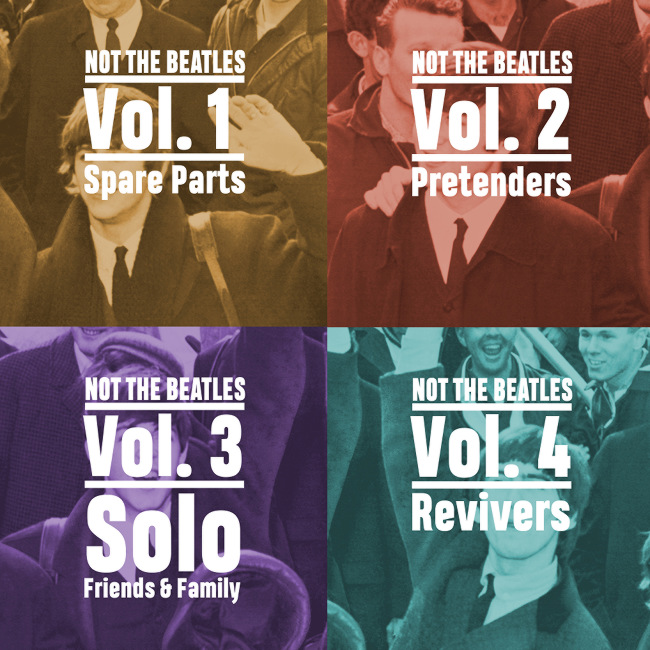
John Lennon’s adenoidal Scouse growl and Paul McCartney’s pretty-boy, pouting purr, apart or combined into a super-weapon, don’t sound like anything or anyone else. Though just occasionally, someone else will give it a shot. One of my favourite Beatles pastiches, which I discovered 20 years ago on a compilation called Circus Days, isn’t on Spotify and so I couldn’t include it on the playlist above (Vol. 2: Pretenders) but is on YouTube. Listen to the vocal on this first verse:
For a moment, for a few seconds, that sounds so like McCartney it’s unnerving. Then they had to ruin it by doing something stupid like hiring a child chorus. In general, the most effective Beatles pasticheurs are either those blessed with a soundalike, or shameless enough simply to do an impression which, even when it sounds daft, still triggers a response in the pleasure centres. Neil Innes’s John Lennon impression is broad but basically accurate, which is a good part of why it’s possible to use Rutles songs, “do a poo poo” and all, as a kind of methadone for Beatles addiction.
The other problem for would-be imitators is that the Beatles weren’t formulaic, or at least the formula mutated so quickly from one record to the next that its shape is hard to discern. Anybody can pick a Beatles song and copy it but they’ll just have that one song, not the key to the entire sound. There are, though, certain techniques and tricks that immediately summon the spirit of the Beatles, such as what Andy Partridge of XTC has called ‘banana fingers piano’ – that insistent, rudimentary thumping that McCartney used time and again. The ‘Tomorrow Never Knows’ drum beat is almost the basis of its own sub-genre; and the same might be said for the ‘Taxman’ bassline, and bubbling McCartney notice-me bass more generally.
Production, the sonic texture of the recordings, is important too. Even in an age when you can buy sample libraries of every keyboard at Abbey Road and play them through painstaking digital recreations of the original mixing desk and compressors, the sound seems somehow out of reach. Some attempts end up sounding too clean or too cold, while others lean too far the other way and end up lacking sizzle and crispness. The Beatles weren’t muddy, even when they were dense. Again, the word alchemy springs to mind: those people, those instruments, that space, in that moment, created something greater than the sum of the parts.
Finally, there’s something about energy levels. No pop song ever sounds quite as frantically exciting as ‘Twist and Shout’ or ‘It Won’t Be Long’, or as perfectly mellow and distant as ‘A Day in the Life’. Some of that I suspect came from the Beatles’ confidence, later shading into arrogance, and perhaps it’s hard to broadcast confidence when you’re imitating somebody else, because you don’t really believe who you are is good enough.
Of the bands seeking to imitate the early Beatles (see volumes 2 and 4 above) the most successful are those which manage to capture a little of the amphetamine frenzy, the bite of the guitars, and those voices. ‘Jealousy’ by the Poppees is a notably convincing attempt that I reckon would fool 80 per cent of non-obsessives. Wannabe Sgt Peppers get closest when they are able to wriggle into that tiny gap between shoddy (a cheap organ parps into a cheap reverb unit in lieu of a brass section; a synthesiser that sounds more like a B&Q doorbell than a Lowrey) and cheesy (Mantovani strings where they should be Bernard Herrmann; excessively harmonious harmonies).
But Beatlesness is so ethereal that it doesn’t sound the same to any two people. The message boards and comment threads I read researching my playlists were full of people saying that this band or that sounds exactly like the Beatles when, frankly, they don’t. I cannot hear the Beatles in Crowded House, for example, but the chances are you won’t hear the Beatles in some of my choices, either. Sometimes it’s only there fleetingly or partially anyway.
Your thoughts on Beatlesness are very welcome. In the meantime, I hope you enjoy the playlists.
If you want to listen to all the tracks from the four playlists embedded above on shuffle there’s also a master list, ‘Not the Beatles Vol. X: Everything’. I got a lot of ideas from this website in particular — do have a look.