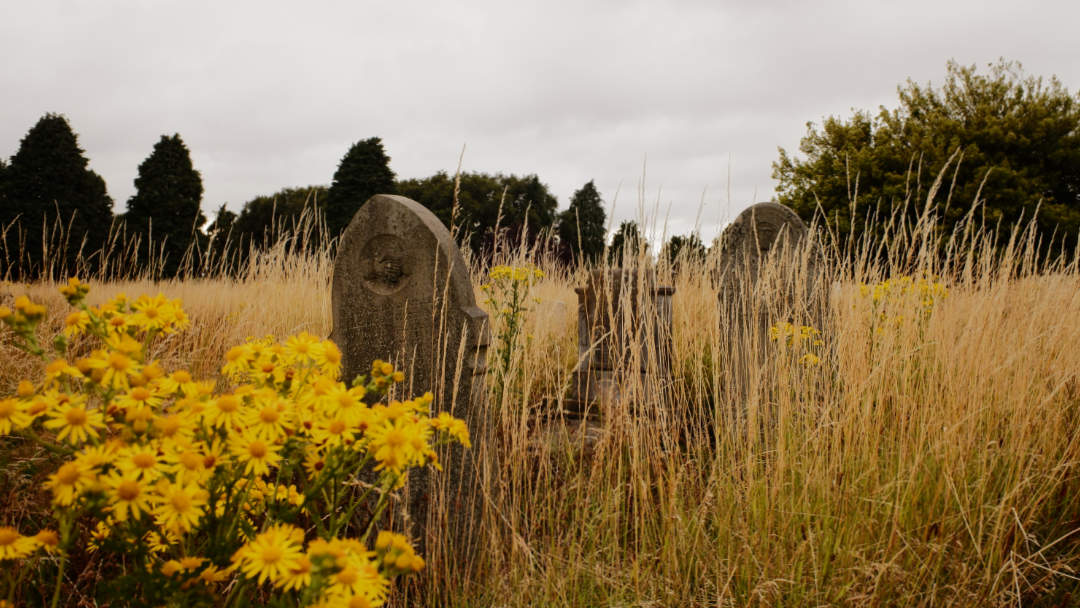
The ninth story in my new collection Thin Places in Hard Concrete is about what happens when you read aloud the names on old headstones in your local cemetery.
If you follow me on BlueSky, and previously followed me on Twitter, you might know that I collect names from headstones and sometimes share them with the hashtag #CemeteryNames.
I do this because I find them beautiful and fascinating, especially when the name is one I’ve never come across before.
When I was the guest at one of David Collard’s online literary meetups the other day someone mentioned the fact that many surnames died out during World War I and perhaps this brings an added layer of melancholy and bittersweetness.
Here are some recent examples from cemeteries in Bristol and South Gloucestershire:
- Bundey
- Dascombe
- Dolling
- Duffin
- Filor
- Greasley
- Gubbins
- Hordo
- Krywen
- Lasper
- Loney
- Rodbard
- Skyrme
- Tossell
- Weetch
The best, though – my absolute favourite – is Frederick T. Mittens, which would be a great name for a cat.
These names sometimes end up in my stories, too, bringing their own strange flavour. Another place I look for character names is on war memorials. (And on the shelf right above my desk, where I keep books about London, the West Country, and folk traditions.)
I have wondered if my spotting, writing down or saying aloud these names triggers some kind of notification to their bearers in the afterlife: “Ping! Emma Weetch you have… One… new mention.”
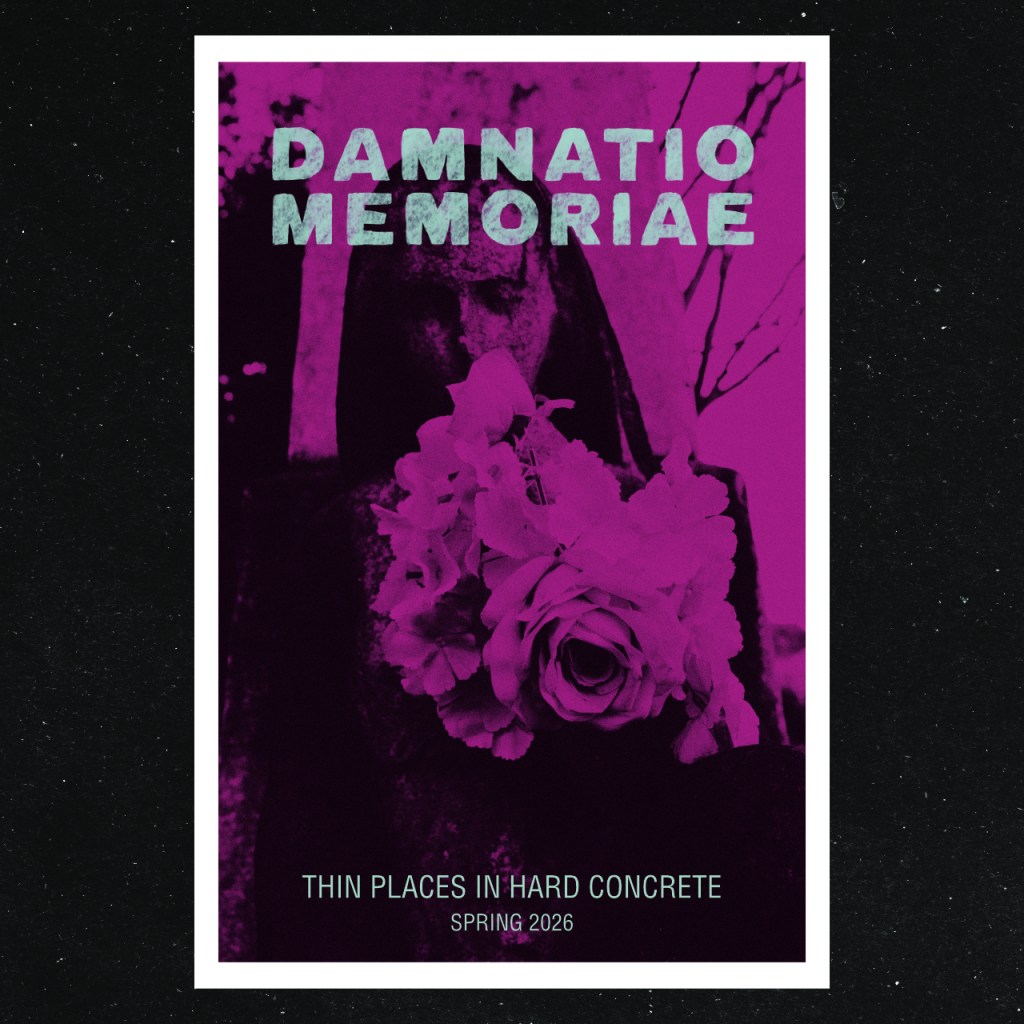
As you’ll know if you’ve already read it (thank you) this thought was the origin of the story ‘Damnatio Memoriae’.
Avonview Cemetery in Bristol really is my nearest cemetery and, like the unnamed protagonist of ‘Damnatio Memoriae’, I often walk there. My family on both sides has tended to prefer cremation so there are very few places I can go to pay my respects. Visiting the graves of other people’s relatives is a good substitute, though, prompting me to think about my dad, my grandparents, my uncle Norman, and various other people I’ve lost over the years.
It also helps put my everyday worries in perspective. Sure, I might be a bit stressed at work, but at least I’m alive beneath a big blue sky, hearing the wind shaking the trees, rather than buried under a stone which records the charabanc accident that killed me.
The mechanics of the afterlife
‘Damnatio Memoriae’ is also a contribution to one of my favourite sub-genres: stories about how the afterlife works, and especially its processes and bureaucracy.
I’ve got a Letterboxd watchlist of films that fit, including Albert Brooks’s Defending Your Life and After Life directed by Hirokazu Kore-eda.
The former depicts a blandly pleasant reception resort for the recently dead where they’re given the chance to explain why they deserve to move onto heaven.
The latter depicts the grey-suited civil servants who process the departed, helping them understand the meaning of their lives before they’re allowed to progress.
A similar example from TV would be The Good Place.
In each case, there’s an attempt to grapple with the practicalities of how the afterlife might work, and an assumption that it will resemble the systems of waiting rooms, appointments, petty rules and paperwork we know from our lives on earth.
My story doesn’t quite go there but it does assume that there’s a line of communication between earth and the afterlife, and that the system has its own rules, faults and quirks.
Cemeteries lend themselves to stories like this because they resemble human filing cabinets; they’re places where death is visibly present in our communities; and where we go to transact with our own mortality.
A note on the title
The title for this story came from one of the many museums I visited in the Balkans last year. They’re stuffed with Roman artefacts and one exhibit explained that when a prominent Roman was deposed, and fell out of favour, their name and face would be scrubbed from the record – their memory would be condemned or damned.
You can buy Thin Places in Hard Concrete as an eBook or paperback from Amazon wherever you are. For starters, here’s where you’ll find it if you’re in the UK or US:
I’ve chosen not to apply digital rights management (DRM) to the eBook file so you can download it as an ePub file or PDF to read on whichever device you like, such as a Kobo.


