The third story in my new collection, Thin Places in Hard Concrete, is called ‘Unreleased’ and is about a haunted Mellotron tape bank.
It isn’t about The Beatles, exactly, but it is very clearly inspired by my reading of books and articles about them over the course of many years.
It’s funny that I sometimes think I’m not enough of a Beatles guy to consider myself A Beatles Guy. That’s despite the fact that my first (short) book was ABOUT THE BLOODY BEATLES.
In 2006, as a rather understimulated junior civil servant, I wrote 30,000 words about Revolver, based on extensive research. I published it online under a Creative Commons licence and it went somewhat viral after mentions at Boing Boing, in Rolling Stone and in The Sunday Times, among other places.
Then it got picked up by a publishing house that specialised in turning blogs into books. This was very exciting – I was going to be a published writer! The book got a cover design, got listed on Amazon, the publicity wheels started to turn… But the publisher got bought by a multinational and promptly dumped the project.
It badly needs an update, rewrite and edit – I’ve learned a lot about writing since 2006 – but it’s still worth a read if you want to grab the PDF.
The point is, though, like lots of people, I love The Beatles and think about them a lot, and for some time one strand of that thinking has been about how dark they could be at times. One little joke of mine from a few years ago was to choose alternate titles for Beatles songs that would make them sound much more miserable, using only actual lyrics from the songs in question.
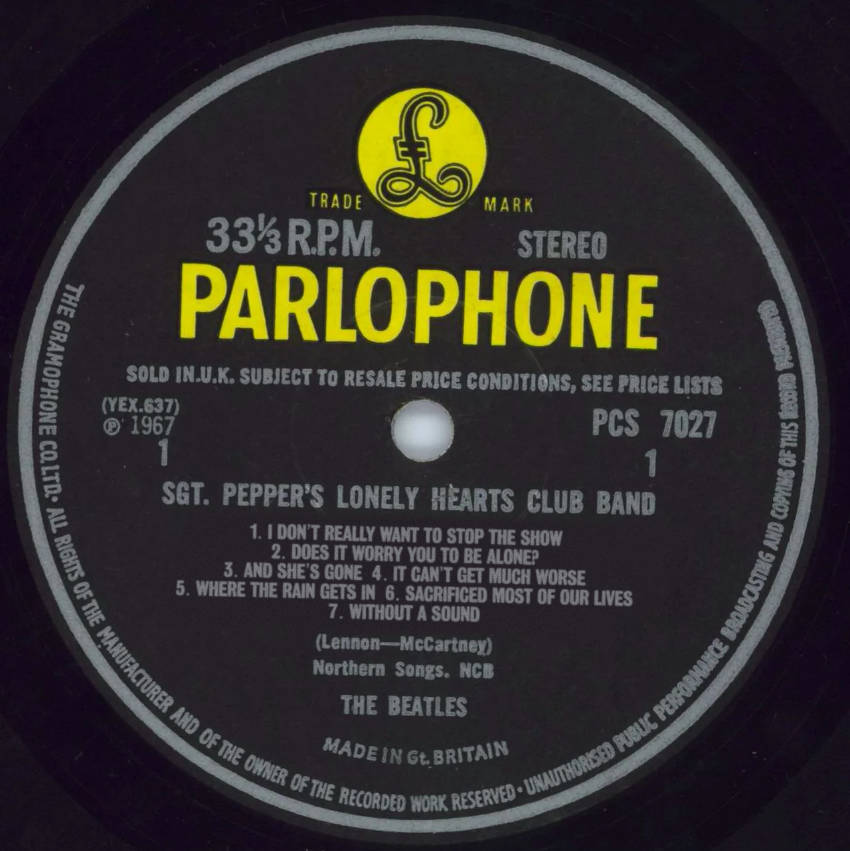
The cover of Sgt. Pepper’s Lonely Hearts Club Band includes occultist Aleister Crowley, horror writer Edgar Allan Poe, and Aubrey Beardsley who illustrated Poe among other macabre subjects. Stuart Sutcliffe, a former Beatle who died in 1962, also features, like a ghost haunting his old band. (In my story, serial killer Ed Gein is on the cover of an unnamed 1967 album, just to underline that this is not quite about The Beatles.)
Then there’s the whole conspiracy theory about Paul McCartney having died and been replaced by a double. Of course this didn’t originate with The Beatles but, as Ian McDonald points out in Revolution in the Head, they also couldn’t resist teasing people who inferred secret messages from their lyrics.
I’m fascinated, too, by the emphasis on mind-expanding near-death experiences in accounts of LSD use. John Lennon’s song ‘Tomorrow Never Knows’ is very much an attempt to evoke the sensation of an acid trip and contains multiple references to death and dying – the surrender to the void.
Which brings us to ‘The Beyond’, the unreleased song at the centre of my story.
The Beyond
Back in 2021 I was seized by the sudden need to realise an idea and, in a flurry of activity one evening after work, created a short ghost story in the form of a pastiche of Revolution in the Head.
You can read that here on the blog as a sort of teaser for ‘Unreleased’. It’s more explicitly about The Beatles than ‘Unreleased’ and was as much an exercise in capturing Ian McDonald’s voice (snarky, a little too sure of his own correctness) and the design of the book (fonts, layout) as it was a piece of storytelling.
The overlap between ghost story people and Beatles people is quite small, I think, so this didn’t exactly set the world alight. A couple of people did say, “Ho ho, very clever!” and Robin Allender talked about it on his podcast Your Own Personal Beatles.
The song it describes, ‘The Beyond’, is in my mind somewhere adjacent to ‘Tomorrow Never Knows’, ‘Carnival of Light’, ‘You Know My Name, Look Up The Number’ and ‘Revolution 9’. The title is, of course, borrowed from the 1981 Lucio Fulci film which seems to have lodged in my brain not as Italian exploitation gore but as a rare example of genuine nightmare logic weirdness on film. If anyone wants to have a go at recording a version, by the way, I’d love to hear it.
For the past five years, I’ve been trying to work out how to turn that snippet into a full story. There were several failed attempts including one that was told entirely in the form of found text. Some of that made it into the final version but not, for example, this:
Flyer for the New Church of the Power Station of God, 1966
Are you dissatisfied?
Life is a miracle, but being alive is a drag.
We spend energy every waking moment.
Soul vampires take energy from us.
However much we eat of the flesh, and of the bounty of the earth, we can never keep up: we are machines for producing shit, and ennui is the result.
But what if there were an infinite power source to which a chosen few might connect?
God has left us, for now, abandoning us to our atom bombs and holocausts – but the source of his power remains!
If only we have the courage to crowbar the door, cross the threshold, and seize control.
We need a coup. We need leaders. We need soldiers.
Telephone Chelsea 4831 to arrange a personal confessional with a counsellor and find your way to endless spiritual power!
There was also a version told mostly through posts and threads from early internet Beatles forums. This was great fun to write but, ultimately, probably wouldn’t have been much fun to read.
Releasing the unreleased
When you take five years to write a story, you have plenty of time to draw in new ideas. By the time I reached something like a final draft of ‘The Unreleased’ earlier this year I’d also been thinking, for example, about how the team managing The Beatles’ legacy has used artificial intelligence to clean up old film footage and create new mixes of old songs.
This all began with ‘Free as a Bird’ back in the 1990s which used a fluttering, degraded tape of Lennon singing to create a new Beatles single. I like the record partly because it sounds uncanny and ghostly, rather than sweetly nostalgic as I think was the aim.
Unofficially, there are also people using AI to make John Lennon sing songs he never sang, which I found profoundly disrespectful but, at the same time, weirdly fascinating.
This only compounded a feeling I’ve had for years that recorded music has an inherent uncanny quality. You’re telling me that we’ve captured the performances of long-dead people in such fidelity that we can hear them clearing their throats, blowing their noses and asking for cups of tea from the studio canteen? When a review of a remastered album says, “It’s like being there in the room,” I shudder slightly and wonder if they ever sensed our presence.
One final contribution to the story was reading about obsessive vinyl collectors, and observing them in the real world in record shops and charity shops around Bristol. A challenge I set myself for Thin Places in Hard Concrete was not to rely purely on nostalgia and period settings. That meant I needed to find contemporary characters and give them a reason to encounter the haunted tape bank. Obsessive collectors, and the people who are obliged to live with them, gave me the necessary angle.
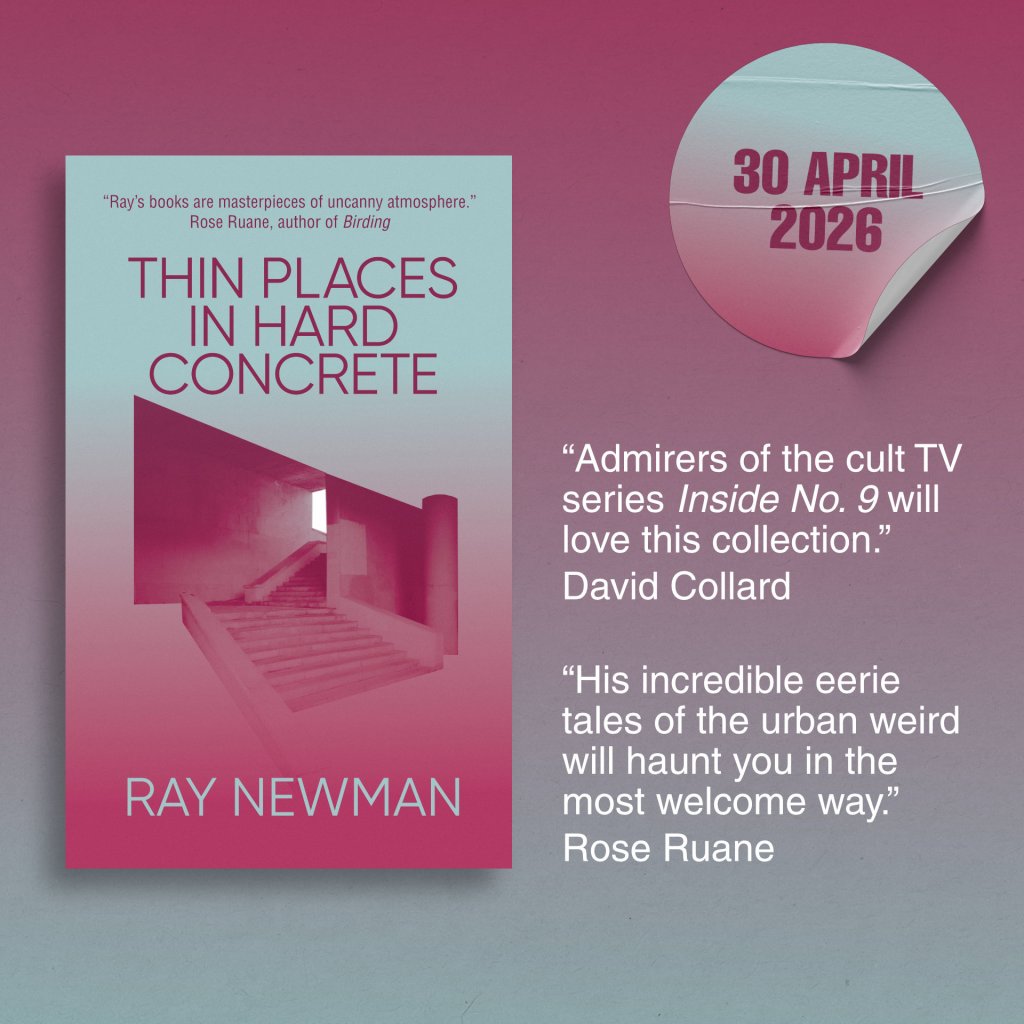
You can order ‘Thin Places in Hard Concrete‘ now, with 10 brand new stories of everyday worlds weirdly out of whack: cults, ghosts, impossible infrastructure, haunted holiday apartments…


