
The second story in my new collection, Thin Places in Hard Concrete, is called ‘Wolf in Exile’ and is about the son of a deposed dictator trying to live a quiet life but (literally) haunted by his past.
I wrote the first draft of this story in a single day in a fairly gloomy apartment in Bucharest, Romania, which perhaps gives you a clue to the specific inspiration.
My partner and I were in the middle of one of those ‘trips of a lifetime’ built around a three-month career break that I was lucky enough to be allowed to take.
She’s a natural traveller, someone afflicted with Wanderlust. I’m not. About three and a half weeks into the trip I was exhausted, homesick, and badly wanted to spend a day sitting at my desk, alone, typing. When my partner decided she wanted to go to the thermal baths, also not my thing, I had my chance.
The urge to type was a result of inspiration having struck at an earlier stop on the journey, Timișoara, the city where the 1989 revolution which led to the end of the communist regime began.
The Museum of the Revolution in Timișoara is small but does its one job very well: it tells the story of how the Romanian people rose up, step by step, against Nicolae Ceaușescu and his family.
In one room there was a wall covered with official portraits of Ceaușescu, like a grim version of a Warhol print. In another, there were wobbly mannequins wearing the moth-eaten uniforms of various soldiers, police officers and riot squad men. I stared at those for quite a time.
Another stop on the tour was Sibiu, a beautiful city in Transylvania, which was the home of Ceaușescu’s alcoholic son and heir, Nicu. Something about the idea of this loser, destined for power, fascinated me. After his parents were executed, Nicu was arrested and imprisoned for two years. He was released in 1992 and lived the rest of his life in Vienna where he died at the age of 45.
In Bucharest, I found myself thinking about Nicu living the life of a playboy prince in a country where the population was oppressed and often starving, and then getting to spend his final years in relative comfort.
So, when I got to sit down at my keyboard in that very city, out came most of ‘Wolf in Exile’ in an uninterrupted stream.
Other seasonings
The story is not about Nicu Ceaușescu and Nicu Ceaușescu was not the only influence on the story.
Another, for example, was this specific DVD cover image from about 20 years ago which lodged in my brain.
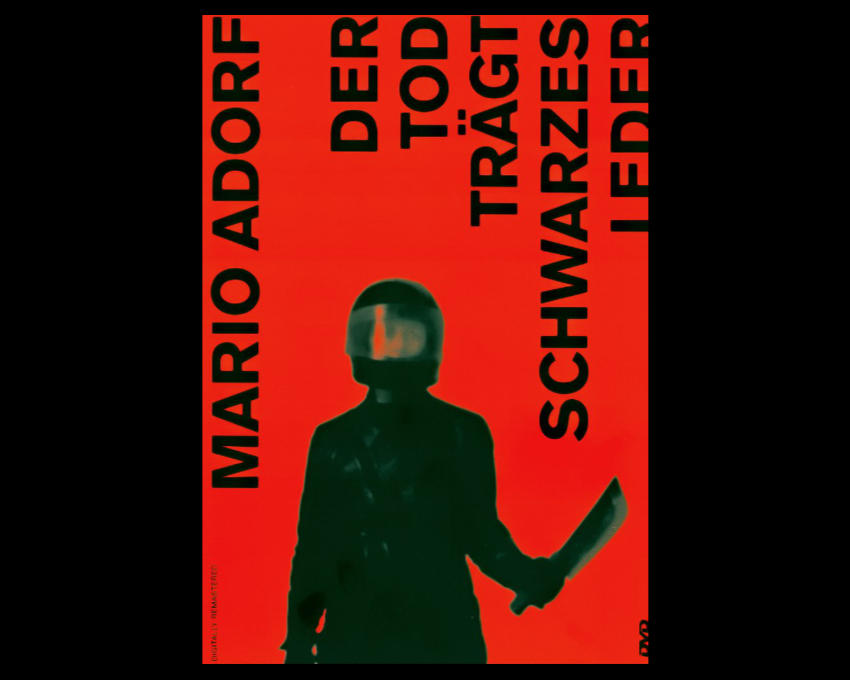
I wrote (and rewrote, and rewrote) an entire crime novel which had this image as its seed, about the murder of a senior civil servant by a right wing lone wolf disguised as a motorcycle police officer. It’s the facelessness, I think, and the stance.
Here’s the poster I created for this story with my own sketched illustration.
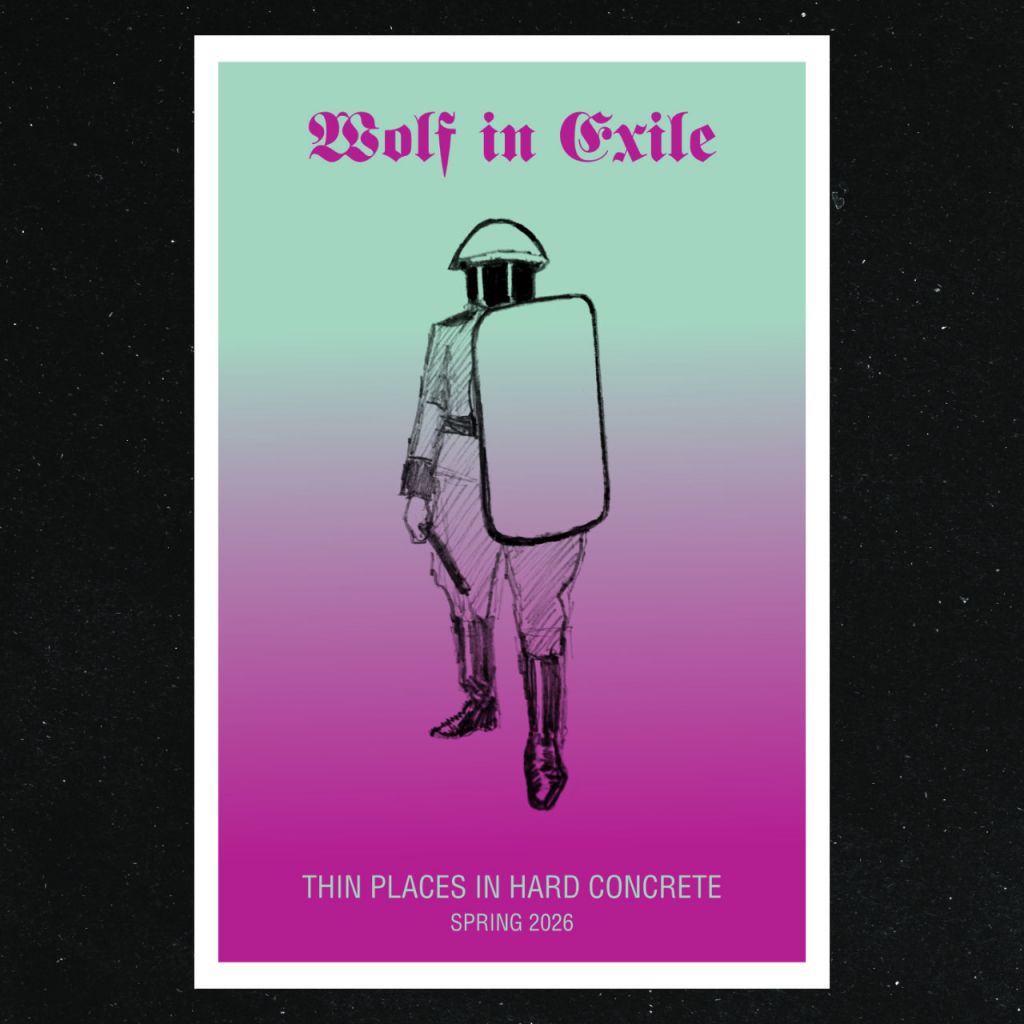
The setting of ‘Wolf in Exile’ also reflects the many holidays I’ve taken in Germany over the past three decades, with places in Munich, Cologne, Nuremberg and elsewhere muddling in my subconscious to create a non-specific nightmare version of a rather complacent, well-to-do city.
There’s also a minor story by H.P. Lovecraft from 1926 called ‘He’ which I’ve always rather liked. It’s about a man who has moved to New York City and hates it but finds some comfort in finding and wandering the oldest streets in the city late at night:
The man came upon me at about two one cloudy August morning, as I was threading a series of detached courtyards; now accessible only through the unlighted hallways of intervening buildings, but once forming parts of a continuous network of picturesque alleys. I had heard of them by vague rumor, and realized that they could not be upon any map of today; but the fact that they were forgotten only endeared them to me, so that I had sought them with twice my usual eagerness. Now that I had found them, my eagerness was again redoubled; for something in their arrangement dimly hinted that they might be only a few of many such, with dark, dumb counterparts wedged obscurely betwixt high blank walls and deserted rear tenements, or lurking lamplessly behind archways unbetrayed by hordes of the foreign-speaking or guarded by furtive and uncommunicative artists whose practises do not invite publicity or the light of day.
It’s the idea of impossible geography, of streets that don’t make sense, that obliquely inspired certain aspects of ‘Wolf in Exile’.
Finally, I must mention the stories of my friend Jamie Evans. He and I are members of an small, informal writers’ group and I’ve been lucky enough to listen to him explain the concept of ‘cosmic justice’ as a narrative driver. Basically, it’s fun to read about a shithead getting what he deserves through supernatural means. This is more Jamie’s turf than mine but ‘Wolf in Exile’ definitely fits into this category.
You can pre-order the eBook of Thin Places in Hard Concrete now and the paperback will be available to order from 23 April.
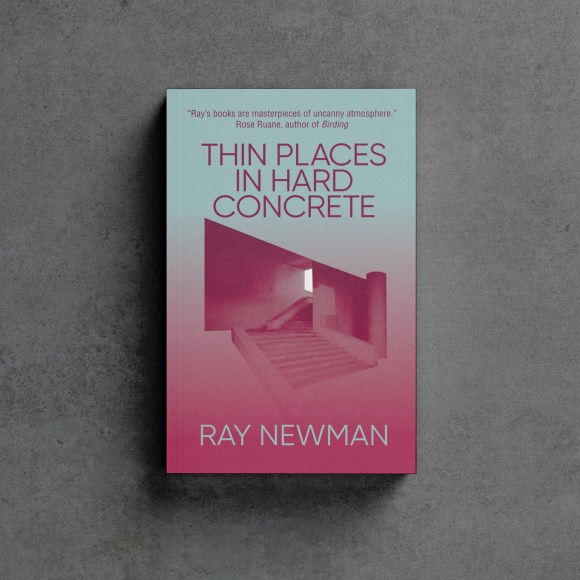
“Ray Newman is an M.R. James for the 21st century. His haunting stories unfold in familiar, even banal settings – a rented flat, a holiday let, an inexplicable motorway interchange, the corner of a room. Things happen, or seem to happen, just out of sight, and beyond comprehension. Admirers of the cult TV series Inside No. 9 will love this collection.”
David Collard


