Categories
books Film & TV ReadingThinkingDoing

Reading, watching, thinking March 2026: Witches, ghosts, cheesemakers

In the first quarter of 2026 I’ve been reading about witchcraft and folk horror, watching a lot of J-Horror, and trying to make more music, faster.

First, a quick reminder of the point of these posts: I very nearly set up a newsletter, then decided against it, because the world doesn’t need more Substacks. (And, in fact, my partner and I have now shuttered the Substack we used as the newsletter for our long-running beer blog.)

So, if you want to keep up to date with what I’m reading, watching, thinking and doing, your options are:

  • subscribe to this blog with the little widget down at the bottom right
  • add this blog to your RSS feed reader (I’m using Feedly)
  • follow me on BlueSky

I think blogs are fundamentally a good thing and I will keep blogging until they shut down the internet for good. I think more people should blog and those with blogs should (time and circumstances permitting) blog more often, even if nobody reads a word of it.

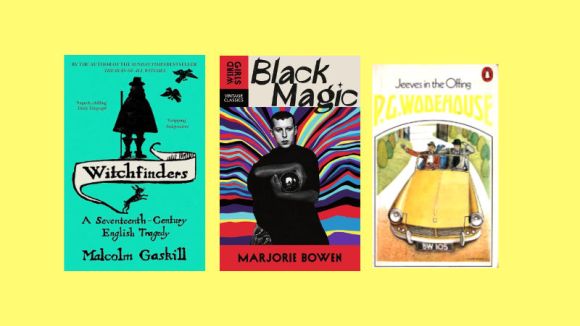
The covers of Witchfinders by Malcolm Gaskill, Black Magic by Marjorie Bowen and Jeeves in the Offing by P.G. Wodehouse.

What I’ve been reading

I’ve been struggling with reading in the past couple of months. I got promoted at work and am also on a tricky project which takes up a lot of bandwidth in my brain including, unfortunately, at 2 am when I should be sleeping. Still, having that soft annual target of 50 books has pushed me to pick up the odd paperback even when I felt weary.

If there’s been a theme it’s witchcraft. I read and enjoyed Malcolm Gaskill’s Witchfinders from 2005, appreciating his skill at turning hard research into a compelling narrative. I especially enjoyed collecting the names given by various people when forced to confess to keeping ‘imps’:

  • Littleman 
  • Prettyman
  • Dainty
  • Rug
  • Jack
  • Prickears
  • Frog
  • Touch 
  • Pluck 
  • Take 
  • Jacob 
  • Hangman 
  • Meribell
  • Kit
  • Beelzebub (a log)
  • Trullibub (a stick)

At a certain point, though, I did start to find the accounts of specific witchcraft panics repetitive and wondered whether he wasn’t being a little too generous to the archive material that, fair play, he’d spent years finding and burrowing through.

The most important lesson I learned from the book was that the belief in witches was generally sincere, rather than cynical, and that England in the 17th century was full of tensions and anxiety about what God might want and whether he might be mad at us. The execution of witches almost feels like a form of human sacrifice in that context.

Without planning it, I bounced straight from that into another book about witchcraft, Marjorie Bowen’s 1909 novel Black Magic, recently republished as part of the Vintage Classics ‘Weird Girls’ series. Being Edwardian, it’s no surprise that it is occasionally long-winded and a little too leisurely, with the same passionate conversations repeating themselves every few chapters. What feels way ahead of its time, however, is that complex portrayal of gender and sexuality, and the sheer raging blasphemousness of the story. Our hero, Dirk, is a practising black magician who falls in love with another would-be witch, Theirry, as they form a sort of coven. That feels quite daring and I can’t tell if it increases the frisson, or provides a moral get out clause, that it is blindingly obvious to modern readers that Dirk is actually a woman in disguise. The other surprise, for me at least, is that religious magic is real in this world, leading to a positively apocalyptic ending in a Rome lashed by God’s fury.

After that, I needed something light and turned to the stack of Penguin editions of P.G. Wodehouse novels I picked up in a charity shop in Ealing the other week. I hadn’t read Jeeves in the Offing before and was excited at the prospect of a new-to-me Bertie Wooster book. Being from 1960, however, it is an example of a lesser later Wodehouse. The prose in peak Wodehouse makes me laugh out loud every two or three lines. Here it was more like every three pages. The sparkle simply wasn’t there. It was nonetheless pleasant to spend time in a world where, apparently, the war never happened, nothing really matters, and people are constantly falling into ponds.

I’ve also been reading ‘zines’ in that 21st century sense of remarkably professional indie publications. The second edition of Ritual from the people at Weird Walk was themed around hauntological TV and featured, for example, a good piece on The Mind Beyond by Adam Scovell.

And I’m really savouring the first issue of Crossroads, a new publication about American folk horror edited by Candice Bailey AKA ‘Rowan Lee’ and Gavin Lees. At its core are three essays about Deliverance, The Texas Chain Saw Massacre and Race With the Devil introduced by Bailey’s own essay arguing that these could be said to constitute the ‘holy trinity’ of American folk horror. It’s available in the UK as a print on demand book or a bargain-priced eBook.

Finally, I’ve been enjoying rediscovering Longreads as a source of substantial articles, via my RSS reader. I’ve also subscribed to Wired for the first time in ages, specifically prompted by their publication of an article by Jane Ruffino about undersea cables.

What I’ve been watching

My aim for this year is to watch only films from countries other than the USA. I’ve been doing pretty well on that except that my partner loved Andy Weir’s novel Project Hail Mary and made a very rare request to watch the film adaptation at the cinema. I enjoyed it quite a bit, and I certainly enjoyed how much she enjoyed it, given that she’s someone who can generally take or leave movies.

Last year I acquired the Arrow Films Blu-ray box set J-Horror Rising and working through the lesser-known films in that collection prompted me to revisit the classics. In the first months of this year I rewatched Ring, Dark Water and Ju-On: The Grudge, along with several others I never got to first time round. This led to a blog post about how J-Horror revived the traditional ghost story for the 21st century.

I know it’s weird that I’m always giving myself these little jobs to do but once I’d decided to write that post it helped me prioritise watching movies over, say, watching TV, or binging YouTube.

My mission to watch more non-American films has also been aided by the excellent BFI Player streaming service which is a bargain at about £7 a month. It’s got a smaller selection of films than some other services but what’s there is so interesting, and so well chosen, that I never struggle to find something that piques my interest. Holy Cow (Louise Courvoisier, 2024) is something I’d never have ordered on disc but which I found fascinating, funny and moving. It’s about a teenage tearaway in France’s Jura region who suddenly decides he needs to become an expert cheese maker when his father dies. (That sounds like a spoof of a French film from The Simpsons, I know.)

I’ve also been buying discs from Radiance Films, a relatively new UK Blu-ray label which specialises in world cinema from the junction of genre and art film. From Japanese ghost stories to French crime thrillers, their catalogue is full of utter obscurities, each of which makes you think, “Wait, why isn’t this film better known?” Particular highlights have been the German heist movie The Cat (Dominik Graf, 1988) and Alain Corneau’s Série noire from 1979, about a weaselly little fantasist who mistakenly believes he can commit the perfect murder.

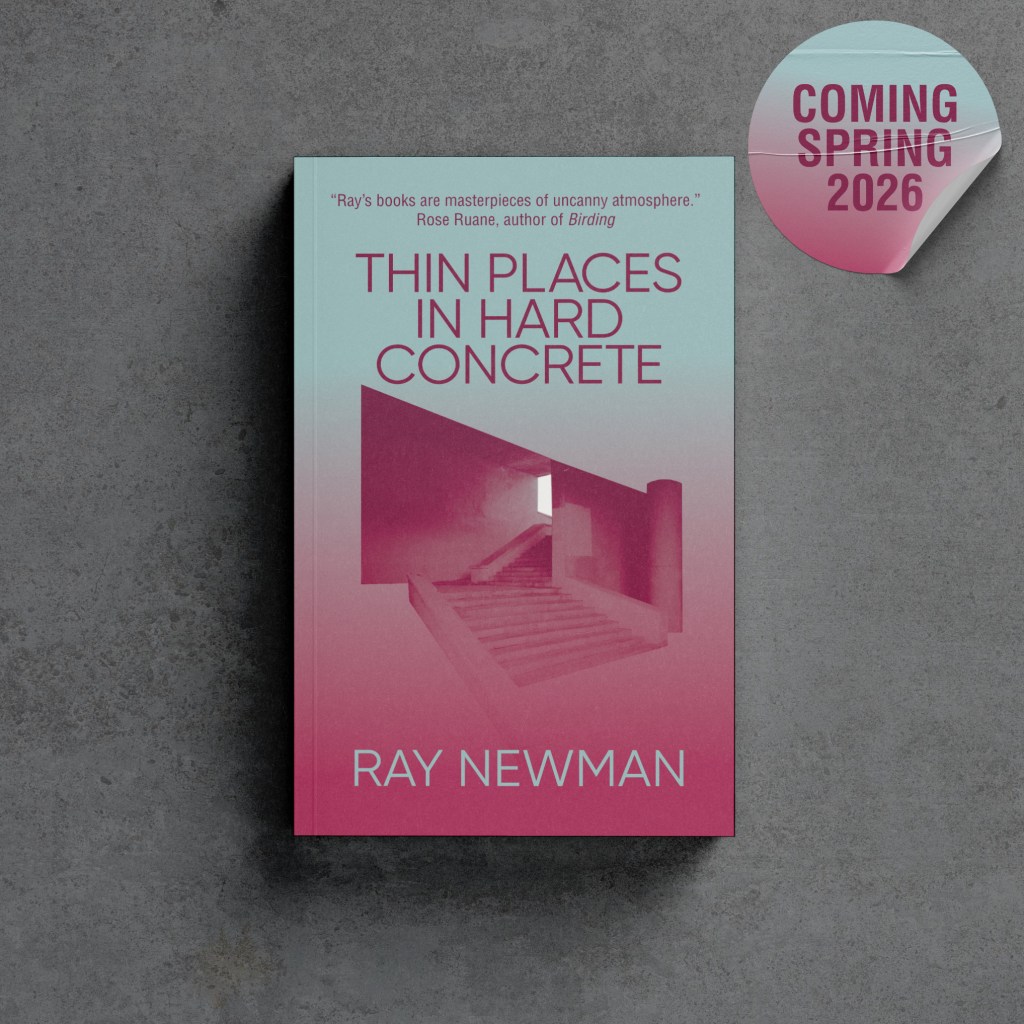
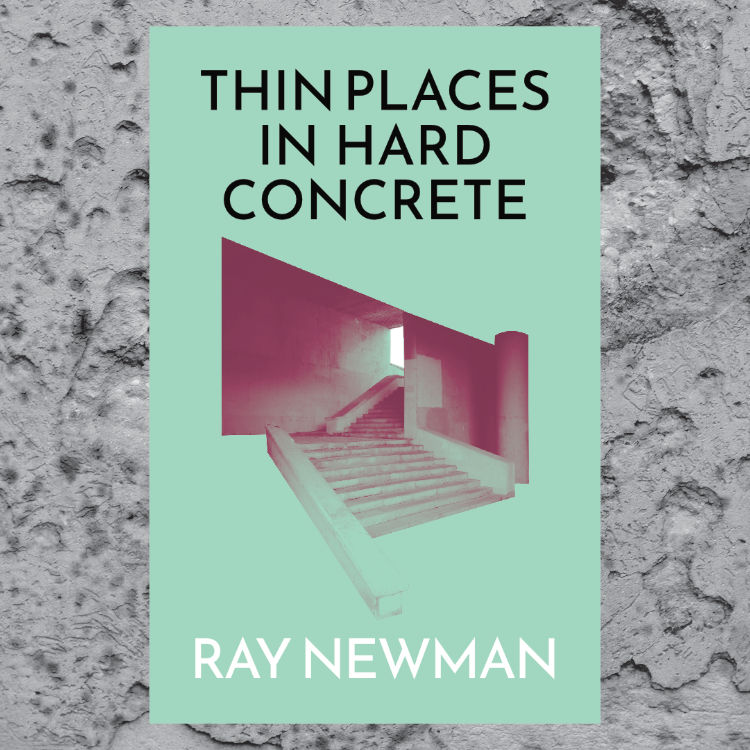
The cover design for Thin Places in Hard Concrete as of March 2026. There might be further tweaks.

What I’ve been doing

My main focus has been getting my next collection of short stories, Thin Places in Hard Concrete, to the finish line. The stories were all written months ago but they’ve needed rewriting, editing, polishing and proofreading – none of which are as much fun as writing. I’ve also had to do a bunch of admin around the self-publishing process, such as setting up the text for paperback and formatting the eBook.

I sometimes have my doubts about self-publishing – the thought lingers that it’s what you do when, actually, you cannot write, and cannot get published ‘properly’. Then I look at some books that have been traditionally published, with their knocked-up-in-Canva covers and complete lack of marketing, and feel reassured I’m doing the right thing. It helps that the feedback so far from those who’ve read it has been extremely positive. For example, here’s the blurb that David Collard has very kindly supplied:

Ray Newman is an M.R. James for the 21st century. His haunting stories unfold in familiar, even banal settings – a rented flat, a holiday let, an inexplicable motorway interchange, the corner of a room. Things happen, or seem to happen, just out of sight, and beyond comprehension. Admirers of the cult TV series Inside No. 9 will love this collection.

As a spin-off from that, I also collaborated with Giles Booth on an adaptation of ‘The Interchange’, one of the stories from Thin Places in Hard Concrete, for his podcast Listen With Other. This was great fun to do, even if I did end up recording the audio about 16 times.

This also motivated me to make some music for Giles to use in the production which I did with a mix of field recordings, hardware synthesisers, a dodgy old tape recorder, and Reason, my preferred digital music tool. It was such fun that I then recorded a bunch more ambient, droney background music which I’ve told Giles he is free to use however he likes in other episodes of Listen With Other.

MrRayNewman · Dream Interference

I used Reason for this second batch, though, realising that it really is much easier and faster than using hardware, even if it’s less tactile and ‘pure’. I also found myself questioning the ease with which a piece of music can be created using tools like Reason’s chord player, and its various arpeggiators. Is this so different to just generating a piece of music with AI? Well, yes, but it still feels very close to cheating.

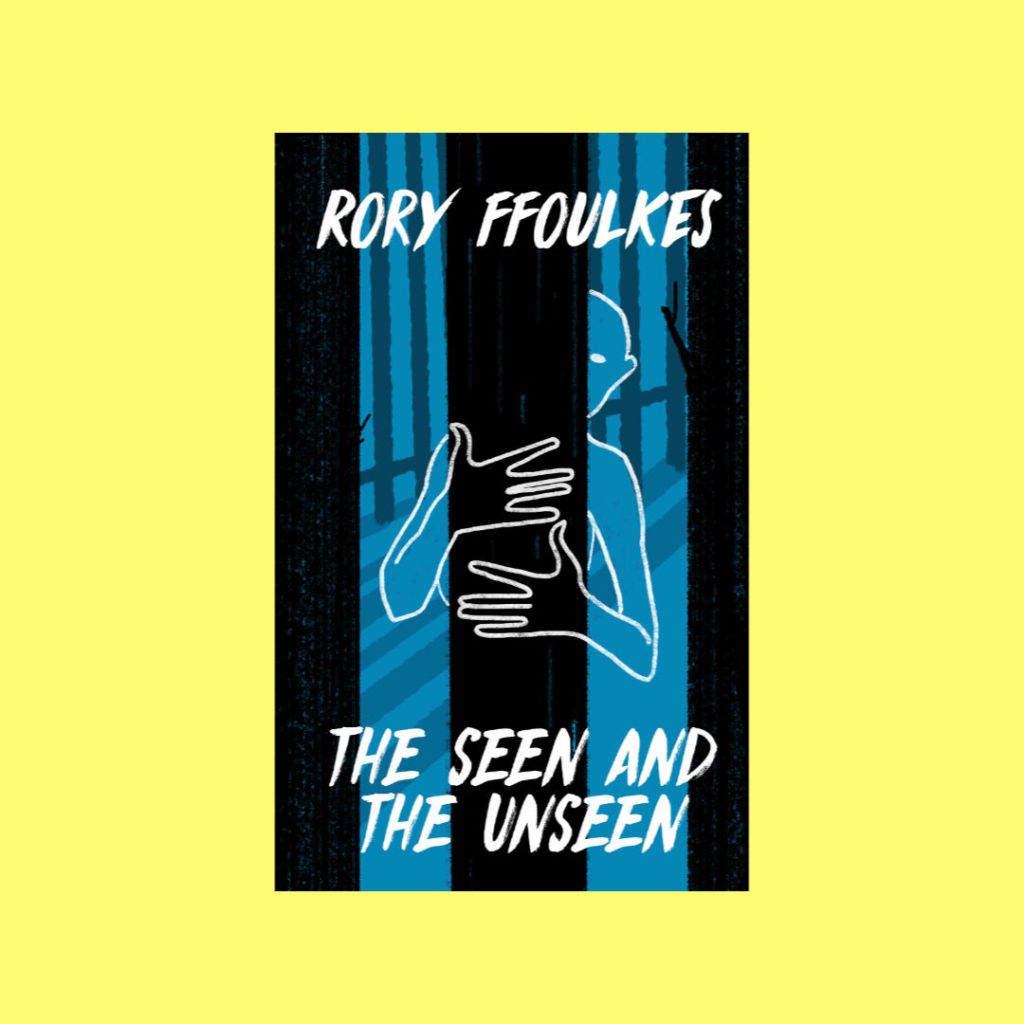
With my lesser-worn graphic design and illustration hat on, I designed a cover for my friend Rory ffoulkes’s collection of weird stories, The Seen and the Unseen, which you can buy now.

The cover of The Seen and the Unseen with a mysterious glowing transparent figure hugging a tree in a dark forest.

Final thought: zoom in

In the next quarter, I’m going to be inspired by this excellent article by Adam Page about Christopher Lee’s performance in The Wicker Man which reminded me of the power of picking one detail or aspect of an artefact and really focusing on it. Not everything needs to be longread or an all-encompassing deep dive.

Categories
books Film & TV ReadingThinkingDoing

Reading, thinking, doing December 2025

I’ve been reading about New York during prohibition, thinking about Stanley Kubrick, and writing in the Edwardian mode.

This blog is what I do instead of starting yet another Substack newsletter.

You can subscribe to this blog (enter an email address, get updates when I post) using the widget at the bottom of the screen.

Or, if you use an RSS reader like Feedly or Readwise Reader, you can add this blog there.

This particular post is the third in an ongoing series inspired by someone saying: “I don’t really want to read writing advice from authors… I just want to know what they are reading and thinking and doing.”

If you follow me on Bluesky, you already have a pretty good idea of what I’m reading, thinking and doing at all times. These are some edited highlights.

The cover illustration from a book showing a pretty young woman in a big fur coat on  a New York street.
Adrian Bailey’s cover illustration for the Penguin edition of BUtterfield 8.

Reading John O’Hara’s BUtterfield 8

The entire premise of this post is a fib, by the way, because what I’ve really been thinking is “Ugh, I’m so ill”, and what I’ve been doing is sleeping, coughing, and generally feeling run down.

But I couldn’t lead with that because other people’s illnesses are utterly tedious.

When the flu was at its height, I couldn’t even read. I spent two days mostly lying in bed with my eyes closed, only half listening to podcasts and audio dramas. In a low key way, this made me somewhat anxious, because I knew I had a yearly reading target to achieve.

That target is a very manageable 50 books. It’s just challenging enough to make me take a book from the shelf and read it rather than looking at my phone, but not so tough that it becomes a chore. As the end of November came around, I’d read 47 books, and needed to stay on track.

When the flu began to lift, I grabbed almost the first thing I saw with an interesting cover, and that was John O’Hara’s 1935 novel BUtterfield 8.

It’s a startlingly frank, sexy novel, with an undercurrent of sexual sickness. Gloria Wandrous is a flapper (although that term had gone out of fashion by the time the book is set, in around 1931) with many boyfriends, and dark memories of being abused by a family friend when she was eleven.

Her latest boyfriend, Weston Liggett, is a married man unhappy with his wife and overcome with lust for the 18-year-old Gloria. When he unwisely takes her to the family apartment after a day of drinking, she steals his wife’s mink coat, which careless act brings everything crashing down around them.

I didn’t realise until after I’d finished it that it was based loosely on a true story, that of a woman with the equally unlikely name Starr Faithfull, born Marian Wyman in 1906. The truth is even more grim and sad than O’Hara’s reinvention.

What O’Hara does brilliantly is to capture the whirl of conflicting feelings and emotions in the mind of a young person who has not been well cared for. She’s sexually uninhibited, she’s socially conservative; she wants a platonic friendship, she is offended that her one platonic friend doesn’t want to have sex with her; she feels dirty, she knows she is the most beautiful woman in New York City. The most important thing is never to stand still, or be alone, or think even for a moment.

For the beer blog I’ve been writing with my partner since 2007 I wrote a post highlighting O’Hara’s depiction of the New York speakeasy – an incidental but not unimportant aspect of the book.

Stanley Kubrick

One of my favourite podcasts, Pure Cinema, recently ran a pair of epic episodes considering the complete films of Stanley Kubrick.

It’s just a podcast, not a documentary or an academic text, but within those bounds it was a great primer on the films I haven’t seen, and a reminder of what’s interesting about those I have.

It made me think I need to prioritise seeing Lolita, which I’ve put off until now because, well, I’m basically a prude, and even the basic premise of the book/film made me feel uneasy.

It also made me want to watch Eyes Wide Shut again, having not seen it since it was released in cinemas in 1999. Back then, I was bewildered and bored by it. Now, with a bit more life behind me and more patience, I suspect I’d get more out of it.

I should say that Karina Longworth’s You Must Remember This seeded this idea. That’s less of a podcast and more like a documentary and in a series from a couple of years ago, Erotic Nineties, Longworth made a strong case for Eyes Wide Shut over the course of two long episodes.

As you might know, one of my particular obsessions is the way cities are recreated on studio backlots, like London in Los Angeles. One of the features accompanying the new Criterion Collection release of Eyes Wide Shut is a documentary about how Kubrick went about recreating New York in London, commissioning Lisa Leone, a friend of his daughter’s, to photograph the real New York in intense detail to inform the design of the set.

This feels like a fascinating creative project in its own right and there’s something fascinating about seeing photos of rubbish bins (sorry, trash cans) and shop fascias presented like evidence in a trial, or as if intended to communicate the concept of America to an alien from another world.

It’s also given me an idea for a project of my own. Watch this space.

Writing like an Edwardian

One of the principles behind my next collection of weird stories is to try to avoid nostalgia and retro pastiche. At the same time, I’ve written quite a bit of that over the years, and might put out a separate collection of only Victorian-Edwardian-style stories at some point.

As I have done for a few years in a row, now, I want to share a ghost story for Christmas on this blog. This time, I weakened, and decided to write something vaguely in the style of M.R. James or one of his contemporaries. It’s a long way from Municipal Gothic but what the hell, it’ll be free. The important thing, really, is that I enjoy writing it.

With that in mind, I’ve spent three evenings after work to get to a finished draft of about 2,800 words. What’s particularly enjoyable about writing in this mode is learning little historical details on the way. For example, you know those all-in-one underwear suits with a little flap on the bum? Those were known as ‘union suits’ in the US and as ‘combinations’, ‘woolly combinations’ or ‘woolly comms’ in the UK.

The story needs an edit and will be out in time for Christmas. Hopefully it’ll offer at least a little of the thrill of the real thing.

Broadcasts

I’m recording a podcast tonight, another episode of CinéClub with Joe Tindall, talking about the BBC ghost stories for Christmas and similar. That’ll be out before Christmas too, I hope.

A few weeks ago, with my professional hat on, I was the guest on another podcast talking about content design in healthcare. You can listen to that now.

Here on the blog, I wrote about AI art and how it stinks up anything it’s part of, even if it’s only used incidentally or for minor aspects of a larger work. It seemed to resonate with people.

Categories
ReadingThinkingDoing Uncategorized

Reading, thinking, doing October 2025

I’ve been reading about the end of the world, walking from Kings Cross to Wapping, and making zines.

This blog is what I do instead of starting yet another Substack newsletter.

You can subscribe to this blog (enter an email address, get updates when I post) using the widget at the bottom of the screen.

Or, if you use an RSS reader like Feedly, you can add this blog there.

This particular post is the second in what might be an ongoing series inspired by a post in which someone said: “I don’t really want to read writing advice from authors… I just want to know what they are reading and thinking and doing.”

If you follow me on Bluesky, you already have a pretty good idea of what I’m reading, thinking and doing at all times.

These are, I suppose, some edited highlights.

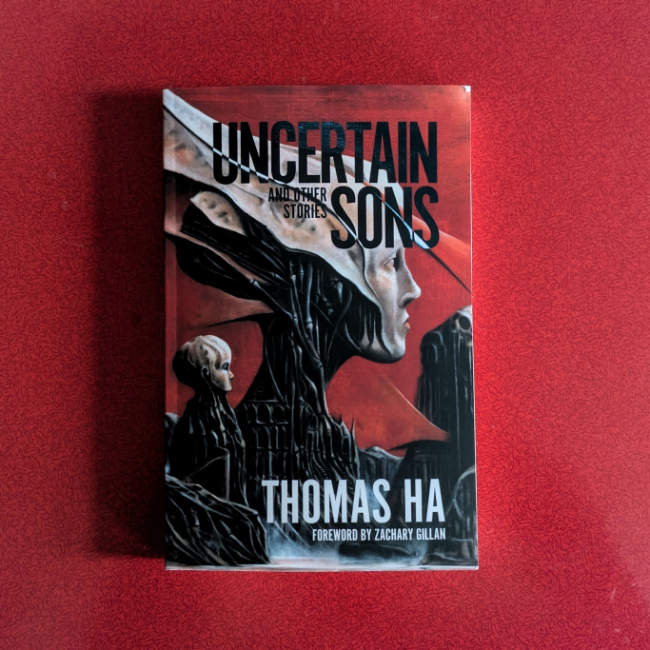
A paperback book with a cover image of horrific monstrous figures, half machine, half human, in a Gigeresque landscape.
Uncertain Sons by Thomas Ha

Reading Thomas Ha’s Uncertain Sons

I’ve been struggling with reading again, if I’m completely honest. I started a new project at work and the process of onboarding is using most of my energy and brainpower. So, at bedtime, I’m only managing a few pages before conking out.

Having said that, on a week’s holiday in Belgium, I ripped through Thomas Ha’s new collection Uncertain Sons.

It presents a series of thematically linked stories, some of which also share mythologies and are perhaps hints of novels to come.

Those themes include the apocalypse, denial, family relationships, artificial intelligence (obliquely), alien forms, and mutation. They’re all defiantly weird, disorienting us and forcing us to learn on the fly new rules about how the world works.

Sentient zombie hot air balloons that only come at night. A mutant that lives in the roots of a tree and kills its sibling over and over again. A new disease that causes narcolepsy, and the sinister perverts who prey on those sleeping in public.

It’s bleak and bewildering, the latter balancing the former, and keeping our eyes locked on a world falling apart.

The standout for me was ‘Where the Old Neighbors Go’ which offers very slight respite from the climate change, pandemic, End Times vibes of the rest of the book. It’s about urban gentrification but overlaid with fairy folklore and enchanted animal imagery straight out of the darker end of Studio Ghibli.

You can read various of Ha’s stories online if you want a taster, or order the book from Undertow Publications. I actually ended up breaking my Amazon streak for this one, though, as I couldn’t find an easy way to buy it in the UK otherwise.

Thinking about creepy hotels, Krimi, delinquency and content design

I’ve written quite a few blog posts since I last produced one of these updates.

Here at Precast Reinforced Heart – that’s the blog’s rarely used official name, by the way – I wrote about how…

  • “Hotels are fundamentally weird places and the sense of unease they prompt is powerful fuel for weird stories.” – Horror Hotels
  • “I’ve found the Blu-ray box set Shadows in the Fog to be a great introduction to the West German Krimi genre despite, on paper, being a collection of also-rans.” – The German-accented phantoms of old London town
  • “What happens when angry young men are more than angry? These three roughly contemporary books give us portraits of youths struggling with their own murderous instincts.” – Three pulp paperbacks about juvenile psychopaths

With my work hat on, I’ve been writing about design and content design on LinkedIn, of all places:

A couple of my LinkedIn posts (not articles) also went, by my standards, gently viral, including this item about cognitive load.

I also wrote some press release material to support a new exhibition about Bristol’s brutalist architecture which prompted me to think pretty hard about brutalist car parks in particular. I now want to write something more substantial just about the giant Trenchard Street car park which was built in the 1930s, replaced and rebuilt in the 1960s, and which, Overlook Hotel style, has a somewhat dark history.

Walking, zines, photos

Last weekend, I went up to London to meet a couple of old university friends for our annual walk. This year, it came late, and wasn’t very adventurous. Logistics got the better of us.

Still, I arrived in London early and got to walk on my own in glorious sunshine from Paddington to the rendezvous point at Kings Cross.

I find London very soothing. Being surrounded by people (against loneliness) who don’t want to talk to me (introversion) is perfect – and there’s just so much to look at.

When I’m walking, I sometimes activate what I call Path Less Taken Mode (PLTM). It’s really easy to follow the route Google Maps suggests, or to lock into habits and routines. With PLTM, the idea is, at every decision point, to take the less familiar turn.

In London, PLTM took me past the Tyburn Convent and the former Oranjehaven where Dutch airmen hung out during World War II. It also led me to some remarkably tranquil streets one or two blocks behind Tottenham Court Road where, from the right angle, it might have been 1892.

Back home, I’ve been making zines somewhat compulsively. There’s generally no particular purpose to this although I might end up slipping them in with orders of my books.

Which reminds me: you can order copies of Municipal Gothic and Intervals of Darkness directly from me. They’re £13 each, including delivery, or it’s £25 for both.

Anyway, back to zines… What I’m particularly enjoying is trying to make a complete zine from (a) one sheet of A4 paper and (b) a single copy of a magazine, or several copies of the same magazine. This creates a pleasing consistency in style and typography and also challenges me to dig a little deeper.

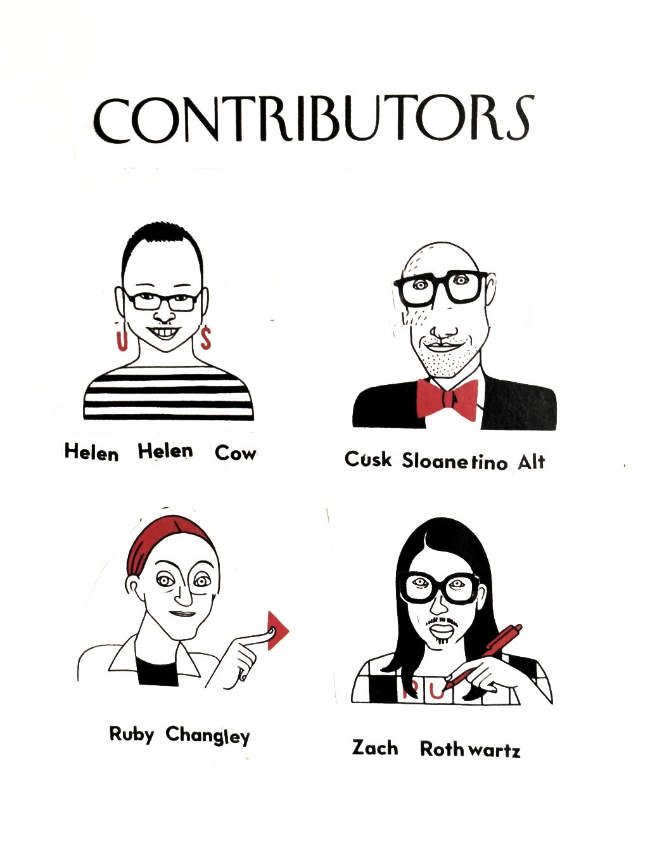
A page of contributors to The Nerk: Helen Helen Cow, Cusk Sloanetino Alt, Ruby Changley, Zach Rothwartz. Their faces are made from cut-up caricatures of New Yorker writers, so they all look a bit wrong and odd.
A detail from a zine called The Nerk made my cutting up a copy of The New Yorker.

I even made a zine at work, although that angered the Brooklyn Zine Police.

I’ve been taking photos too, of course, although the fading autumn light makes that harder.

I take most of my pictures on walks before or after work, and when it’s grey and/or dimpsy, it feels harder to find subjects.

There’s been the odd image I’ve been quite happy with, though.

White minibuses parked above a strip of lavender painted wall in front of a lavender painted industrial building beneath a blue sky.
Rose Green Road, Bristol, September 2025

A prize for making it this far

This is the first time I’m saying this publicly: my next collection is likely to be called Thin Places in Hard Concrete and this is a first sketch of the cover.

The cover of a book called Thin Places in Hard Concrete by Ray Newman. It is pale minty green with a concrete staircase cut out and floating in purple.

You can expect it at some point early in 2026.

Categories
ReadingThinkingDoing

Reading, thinking, doing

Having narrowly avoided setting up a newsletter on Substack (well, a second newsletter) I’m going to use this blog for a similar purpose.

Not least because the other day I read this…

Hot take: I don’t really want to read writing advice from authors I like and to who’s newsletters I subscribe to. I just want to know what they are reading and thinking and doing.

Hildur Knútsdóttir (@hildur.bsky.social) 2025-07-16T07:49:26.366Z

…and I thought, yes, same.

I’ve also been inspired by Paul Watson in a couple of ways. First, by his monthly round-up of interesting reading, much of which really is interesting for once. And, secondly, by his habit of maintaining a proper RSS feed reader, which is how he manages to stay on top of other people’s blogs.

As a result, I’ve fired up Feedly and given it a spring clean.

That is, I’ve deleted all the blogs and websites I followed about a decade ago – because most of them are now either defunct or degraded beyond belief – and added a bunch of new and active blogs.

Many of those I cribbed from Paul’s blogroll but I also had success asking people on BlueSky to let me know about their own blogs, or suggest others they liked.

I’m especially interested in:

  • hauntology
  • folk horror
  • architecture
  • cities
  • books, films, music
  • graphic design
  • content design

Do let me know if you have a blog in that territory, or know of a good one by someone else.

In lieu of a newsletter, I’m also nudging people to subscribe to this blog, so they’ll be notified when I update it. So, uh…

A new favourite blog is Stephen Prince’s A Year in the Country which examines various hauntological and folk-horror-related texts in serious detail, drawing unexpected connections between them.

In fact, I’ve been enjoying it so much, I bought the latest print-on-demand anthology of recent writing which I’ve also been reading before bed.

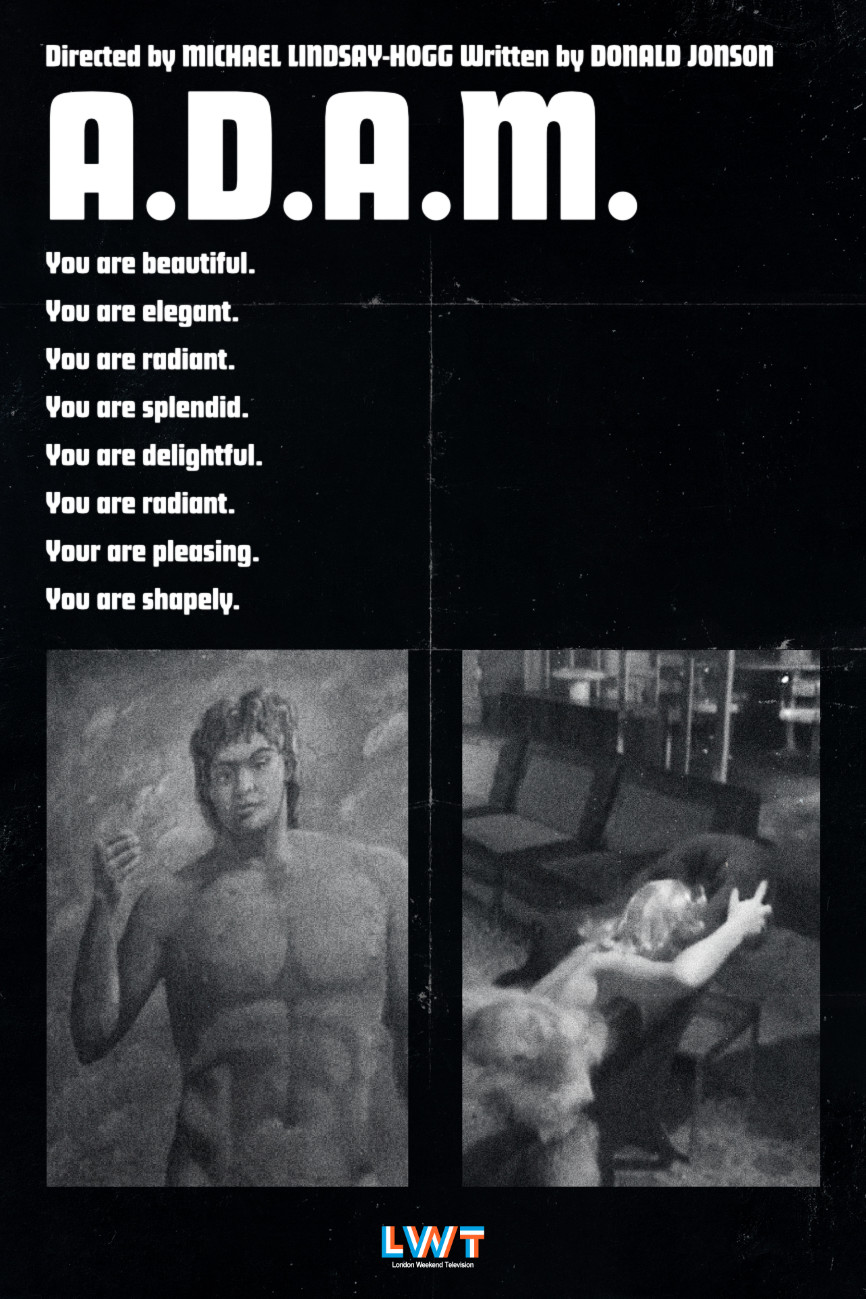
That, in turn, led me to A.D.A.M., a one-off play broadcast on ITV in 1973 as part of its Sunday Night Theatre strand.

It’s about a disabled woman (Georgina Hale) whose scientist husband builds her an electronically controlled house with a voice-activated AI helper. Predictably, perhaps, stuck at home together all day while hubby does Serious Government Work, A.D.A.M. and Jean form an intense and unhealthy relationship.

I found it fascinating and rather enjoyed its paciness, at 53 minutes. Of course it has gained new relevance in the age of Alexa and ChatGPT. In particular, with recent stories of people becoming infatuated with avatars in AI dating apps, there was particular resonance in a scene where Jean writhes naked on a chaise longue while A.D.A.M. robotically recites compliments she’s taught him.

My short review is on Letterboxd, where I try to log every film I watch. Jon Dear, an expert in televised horror, was less impressed than me:

“[In] a TV play that comes in under an hour, a two and half-minute sequence that is essentially two people walking through a doorway comes across as some fairly extreme padding. As this is only the second scene, it doesn’t bode well.”

Oddly, and pleasingly, A.D.A.M. is available for anyone in the UK to watch for free via the excellent BFI Player, so you can make up your own mind at little cost. If nothing else, the opening five minutes are a wonderfully moody piece of grey 1970s British grot.

I was also moved to design a new poster for the film, very quickly, because the default one on Letterboxd was so crappy. Fan made posters are discouraged at The Movie Database but I’ve contributed a few where there really wasn’t otherwise a good alternative.

I love it when reading one thing leads me to read another which leads me to watch something else which prompts me to make something – however trivial. That’s what it’s all about.

Integrating music making into my life

I’ve also been trying to work out how to make more music, just for fun, in a way that fits around my day job, my relationships, and my other hobbies.

The latest effort is to actually spend time playing my guitar and learning to play particular songs, in part or in whole.

A tiny little gadget with a little colour screen, two buttons, and a dial. The colour scheme, off-White and maroon, is an homage to the Famicom, I think.

I’m being helped with this by a new gadget, the Sonicake Pocket Master, which cost about £50, has a headphone jack, and among other features can convincingly (to my ears) recreate the sound of playing through various amplifiers.

Last night, I spent about an hour and twenty minutes learning to play ‘September Gurls’ by Big Star for no particular reason other than that for about an hour and twenty minutes I didn’t think about anything but ‘September Gurls’ by Big Star.

It helps, I think, that thanks to the headphones other people can’t hear my playing badly, so I’m able to stick at it until it actually sounds good.

Writing weird stories

I’m continuing to work on my next collection of short stories in the background and seeking input, through blogs, books and films, as set out above, is helping enormously.

I’ve actually got drafts of a full set of stories but I really want to have more than enough so I can (a) pick the very best and (b) try to pull out a theme.

One of my theories for why Municipal Gothic continues to outsell Intervals of Darkness is that the former has a stronger proposition which is further underlined by the brutalist tower block on the cover.

While I’m working on Title TBC please do take a look at those earlier collections and also check out the selection of stories here on the blog.

I’ve also been considering turning those free stories, and some other bits I’ve written for zines, or never published at all, into a sort of bargain B-sides and offcuts compilation.

I always loved those as a teenage music collector because they were both cheaper than ‘proper’ albums and tended to have weirder stuff on them.

What do you reckon?

Lois the Witch

Finally, I’m going to recommend the novella Lois the Witch by Elizabeth Gaskell, from 1859. It’s been rereleased as a cute little minimalist Penguin paperback which I picked up on a whim at Bookhaus in Bristol.

It tells the story of a girl who is sent to New England to live with relatives when her parents die and finds herself at the heart of the Salem witch trials.

In the middle of a heatwave this description of the spookiness of 17th century Salem in winter hit all my buttons:

Sights, inexplicable and mysterious, were dimly seen – Satan, in some shape, seeking whom he might devour. And at the beginning of the long winter season, such whispered tales, such old temptations and hauntings, and devilish terrors, were supposed to be peculiarly rife. Salem was, as it were, snowed up, and left to prey upon itself. The long, dark evenings, the dimly-lighted rooms, the creaking passages, where heterogeneous articles were piled away out of reach of the keen-piercing frost, and where occasionally, in the dead of night, a sound was heard, as of some heavy falling body, when, next morning, everything appeared to be in its right place – so accustomed are we to measure noises by comparison with themselves, and not with the absolute stillness of the night-season – the white mist, coming nearer and nearer to the windows every evening in strange shapes, like phantoms, – all these, and many other circumstances, such as the distant fall of mighty trees in the mysterious forests girdling them round, the faint whoop and cry of some Indian seeking his camp, and unwittingly nearer to the white men’s settlement than either he or they would have liked could they have chosen, the hungry yells of the wild beasts approaching the cattle-pens, – these were the things which made that winter life in Salem, in the memorable time of 1691-2, seem strange, and haunted, and terrific…

Photography

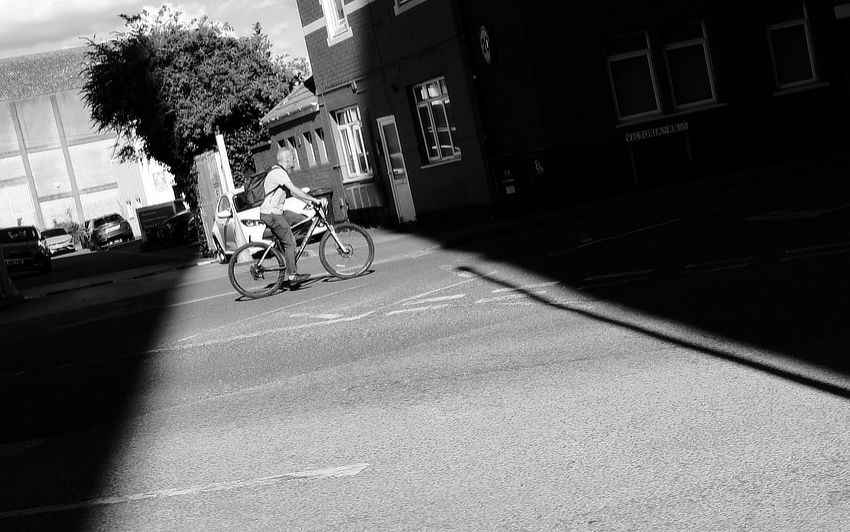
Finally, I’m still taking photos, and currently enjoying trying to imitate Daidō Moriyama. See the main image above for an example.

Moriyama’s style is high contrast black and white, shot from the hip, often askew or otherwise technically ‘bad’, and yet full of vigour and interest.

The murkiness of his photos is half the fun, forcing you to stare a little harder to understand what you’re looking at. Which may well just be a bin bag blowing down an empty street.