Categories
weird fiction

Broken Veil Series 2 – secrets and lies in haunted Essex

Series 2 of the found footage horror podcast Broken Veil builds and improves on the first season with a focus on the audio uncanny.

Arguably my positive reaction to Broken Veil, verging now on fanboyish, is because this is media made for people exactly like me, by people rather like me.

Creators Joel Morris and Will Maclean are children of the so-called ‘haunted generation’ who seem to have spent their adult lives chasing the thrill of reading The Unexplained magazine, of hearing local legends in the school playground, and catching glimpses of grainy ghost stories on late night TV.

The problem with real life creepy stories is that eventually you run out of good ones. Just look at the hit podcast and TV show Uncanny which, after a dazzling start, has been scraping the barrel for a couple of years now.

Enter Morris and Maclean with a valiant effort to make up some brand new faux genuine eerie mythology. Their efforts are so deft that, at times, I had to pause the podcast and ask myself: wait, is this real? The trick is that they interlace their fabrications with snippets of real and familiar supernatural lore.

They mention the well-known Max Headroom broadcast intrusion. That’s the convincer. Then they introduce their own invented ‘Marconi Intrusion’ which is not. But even knowing this is cleverly camouflaged drama, it took me a while to realise we’d crossed the line from fact into fiction.

In fact, there really was a Marconi intrusion, in 1903, when the magician Nevil Maskelyne interrupted an early radio broadcast. So when the Broken Veil team uses that phrase, something in the recesses of the brain says, “Oh, yes, I’ve heard of that.” Cunning.

One reassuring giveaway that we are listening to drama is that, in many instances, their concoctions are too perfect and perhaps too weird. The description of the Marconi Intrusion from the Broken Veil timeline (outcome) is dense with fantastic, Lovecraftian imagery a million miles from some dickhead in a rubber mask wobbling about in front of a tin shed.

When the real story of the rediscovery of the audio for the legendary Hexham Heads footage is borrowed and applied to an invented local news report from 1979 it performs one of two functions. Either it makes you feel clever for spotting the reference, bringing you in on the joke. Or it triggers that feeling that you’re re-hearing something familiar but half forgotten, and therefore true.

I wonder how many listeners, even those well schooled in British folklore and the paranormal, would correctly identify every truth and every falsehood. Eric Gill did indeed carve 14 stations of the cross for Westminster Cathedral. But is there a memorial to him studded with black stone and inscribed ‘Lapidarius’ beneath station 14? I really haven’t been able to confirm that there is, even though it sounds entirely plausible, and even though Joel Morris stridently declares “This is not bullshit” at that point in the episode.

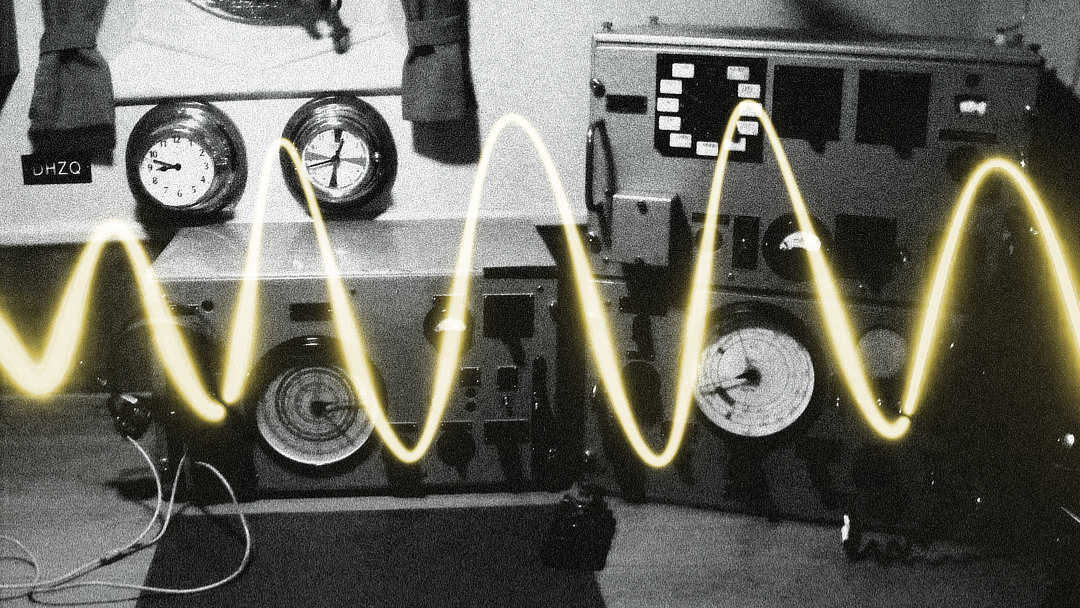
The emphasis on the early days of radio, electronic voice phenomena (EVPs), lost tapes and broadcasting gives this series a sharper focus than the first. It also, obviously, leans into the podcast medium. Morris’s immersive sound design adds layers of dirt, noise and obfuscation so that the ‘evidence’ in the case is always heard obliquely, through a sort of fog. The two investigators are placed in echoing, noisy spaces – cars, trains, cafes – constantly reinforcing the mundane reality of their adventures.

Broken Veil is also a great example of how nimble independent audio productions can be. Though a year in the making it nonetheless includes what feel like references to the current fascination with liminal horror triggered by the release of the film Backrooms and to a weird news story that went viral back in February.

If I had reservations about the excellent first season they were around the ending which felt hurried and somehow unsatisfying. This time, they really stick the landing, finishing on a suspended note of uncertainty that’s been building throughout the series.

If you think of it as like buying an album, or a Big Finish Doctor Who audio adventure, the price of entry via Patreon is pretty minimal. I’ve certainly got more value from it than I would from a couple of takeaway coffees.

I also find myself wondering about spinoffs. A Haunted Essex Corridor short story anthology, perhaps, inviting various authors into the game. Or a TV adaptation starring Laurence Miller and Chris McNally – ideally with monster of the week episodes to prolong the enjoyment.

The second series of Broken Veil is available via Patreon. The first series is available free wherever you forage for podcasts.

Categories
Fiction Film & TV weird fiction

12 thoughts about liminal horror

The new film Backrooms directed by Kane Parsons has everyone talking about ‘liminal horror’. As someone who writes stories which might fit into this bracket, I’m excited to have a new sub-genre to ponder.

Here are some initial thoughts – reactions, almost – to a phrase I had not heard until about three days ago.

1. In liminal horror the space itself is the source of the unease, not the ghosts or monsters that lurk within it. A still image of an empty room can evoke the appropriate sense of unease, partly because it is empty.

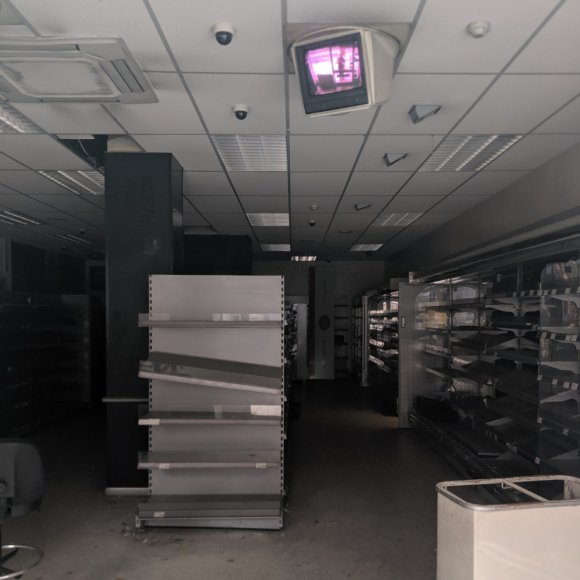
An empty, abandoned shop with bare shelves, dark shadows, and security monitor on the ceiling glowing purple.

2. “It’s bigger on the inside…” Perhaps liminal horror is about spaces that should not be and that make no sense. A long corridor is creepy; a corridor that seems infinitely long is deeply unsettling. H.P. Lovecraft wrote about spaces with non-Euclidean geometry just as he referred to impossible colours. You might also think of the deliberately disconcerting geometry of Hill House in Shirley Jackson’s The Haunting of Hill House. Or even the land that somehow sits beyond the back of the wardrobe in the works of C.S. Lewis.

3. Do we hate these eerie spaces, or yearn for them? It’s a love-hate relationship. We call it liminal horror but there’s also a romantic allure about places that are silent, empty, blank… Where we might lose ourselves, slip between walls, and be left alone for two fucking minutes. In Genki Kawamura’s Exit 8, the other liminal horror film currently doing the rounds, the protagonist finds himself on a subway station corridor that he soon learns is an impossible space and a trap. But at the beginning, for a moment, he is free from the noise and aggression of the city – and from his responsibilities. Did he perhaps want this?

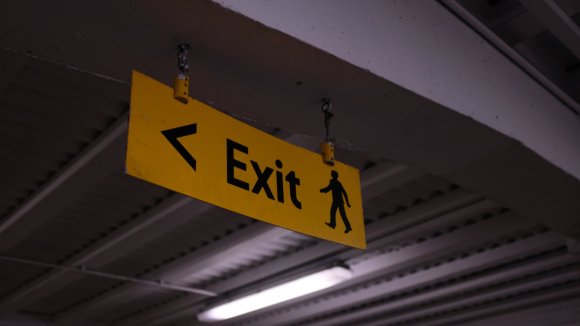
A dangling yellow exit sign in a brutalist car park with poor lighting.

4. Did Lucio Fulci get there first? I know, I know, I’m always on about Fulci’s 1981 film The Beyond, which I don’t even think is a good film, and certainly isn’t one I’d recommend to everyone. But the ending has the protagonists run down a staircase in a hospital and find themselves in the labyrinthine basement of a hotel from which they had earlier fled. They continue their flight until the basement opens up into an infinite, foggy plain strewn with shrouded corpses. That feels like liminal horror to me.

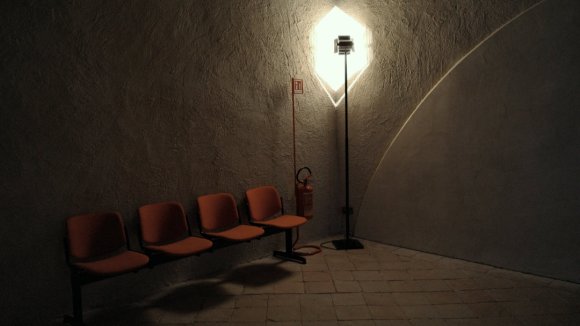
Four seats against a concrete wall in a dark corner of an institutional building.

5. These are some other things that are coming to mind, but I don’t know if they’re liminal horror:

  • the mausoleum in Phantasm
  • the wasteland and abandoned industrial buildings of Stalker
  • the near-abandoned apartment block in Dark Water
  • the shopping mall in Dawn of the Dead
  • Dave Bowman’s tacky hotel room in space in 2001: A Space Odyssey
  • Judgement City in Albert Brooks’s comedy Defending Your Life
  • Being John Malkovich and the floor between 7 and 8
  • that perfectly white room where Willie Wonka shrinks Mike Teavee

6. “Alright, cunt, what happens?” – Reece Shearsmith. Liminal horror as internet meme doesn’t need a plot, or characters. It can just be, “Whoah, look at this weird door I found,” or, “Check out this hallway!” But books, stories and films generally do require things to happen to people. But does this spoil the fun? Perhaps liminal horror is a rare sub-genre that might work best in virtual reality.

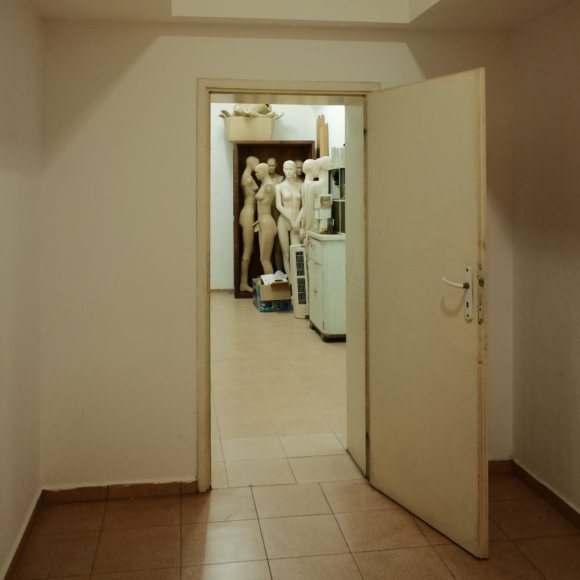
A door in a dingy basement through which can be seen a group of creepy white mannequins gathered around a wardrobe.

7. Oh, actually, never mind Fulci – perhaps Elizabeth Jane Howard got there first. At the end of her story ‘Three Miles Up’ from 1951 concludes with a canal boat exiting a channel not on the map into “a sheet, an infinity, of water stretched ahead; oily, silent, and still, as far as the eye could see, with no country edging it, nothing but water to the low grey sky above it.” Infinite, edgelesss and endless feel like the qualities we’re looking for here.

8. Are the spaces where liminal horror stories take place related to ideas of heaven, purgatory or hell? I mentioned Defending Your Life above which isn’t a horror film but, like the sitcom The Good Place which I’m sure it inspired, suggests that death might feel like being in a waiting room. “I’m in the waiting room now,” is something my mum actually says when pondering her mortality. Waiting rooms, like corridors, are spaces between spaces, checkpoints or chokepoints on a journey rather than the final destination.

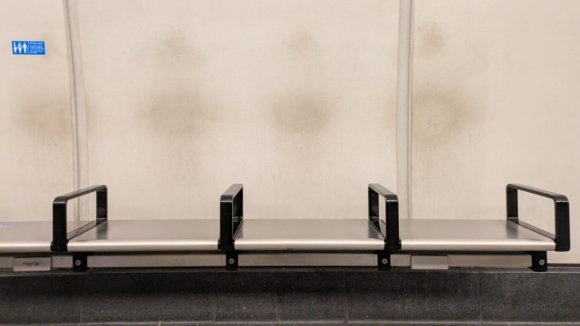
A bench on the London Underground with dirty smudges on the wall showing where people have been sitting.
Ghosts of the Elizabeth Line, London.

9. Fog creates instant liminality. It erases the edges, swallows the horizon, silences the world, and leaves you floating in space. It turns any house into The House on the Borderland.

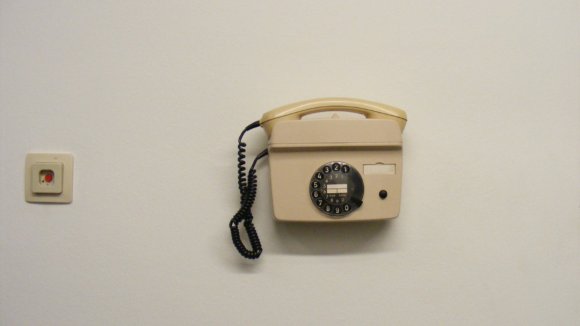
10. So, every single haunted house story is liminal horror? So, John Carpenter’s The Fog is liminal horror? So, any story where they find tunnels hidden beneath a building is liminal horror? Well, yes, maybe, I don’t know, that’s what I’m trying to work out. But perhaps the missing component in my thinking above is that the weird spaces in which liminal horror occurs need to be modern, or at least not antique. In liminal horror, the lights are probably on; they’re probably fluorescent; and they’re probably humming. They’re probably not domestic settings, either, but institutional: hotels, schools, transport hubs, office blocks. They’re bland, beige and functional. Is there some element of the Kafkaesque here – the fear of being lost in the system?

An old beige institutional telephone on a white wall.

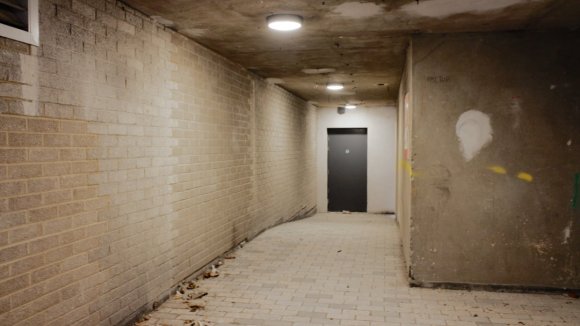
11. Liminal horror is in the eye of the beholder. When I wrote about the creepiness of hotels, someone on BlueSky got mad at me because they just didn’t understand what I was talking about. Hotels are nice! Stop saying things are uncanny when they’re not! It’s just a hallway. It’s just an empty space. It’s only a storeroom.

A doorway at the end of a concrete hallway.

12. Sorry I keep using the word ‘liminal’. It’s one that many people avoid using these days. I usually avoid it myself. How else might we describe this sub-genre or trend? I’ve heard ‘analogue horror’ thrown around, referring to the use of filters to evoke VHS recordings and other vintage media. That’s not about spaces but it can help sell their reality and their feeling of being outside time. Today, I saw ‘ordinary horror’ for the first time, via Zachary Gillan, but Andrea Capra, the author of the book of that title, means something very specific: “the horror that haunts our world, and that we may encounter firsthand”. I feel some connections between liminal horror, analogue horror, and various forms of lo-fi ambient music – analogue hiss and crackle, ASMR-adjacent field recordings, a hypnotic waiting room quality. So, perhaps ambient horror would work, too.


My latest collection of stories Thin Places in Hard Concrete has a story about a motorway interchange and a recreation of a medieval palace in an underground bunker, among other contenders for the liminal horror tag. It’s available as an eBook or paperback from Amazon wherever you are. For starters, here’s where you’ll find it if you’re in the UK or US:

I’ve chosen not to apply digital rights management (DRM) to the eBook file so you can download it as an ePub file or PDF to read on whichever device you like, such as a Kobo.

Categories
Film & TV weird fiction

What is ‘What is folk horror?’

When we ask ‘What is folk horror?’ we’re grappling with a problem of categorisation. We want there to be simple rules and neat boxes. But in the murky world of genre, those do not exist.

There are many well-argued attempts to define folk horror, running in length from a single sentence to hundreds of pages of dense academic prose.

What’s fascinating to me is that whichever definition you place in front of people, their immediate reaction will be to try to break it:

“Oh, so by this definition To The Manor Born is folk horror?”

My instinct is to find this infuriating: that thing is obviously not folk horror, and you don’t want it to be folk horror. You’d be disappointed if I sold you a box set of folk horror films that turned out to contain Dawn of the Dead and The Texas Chain Saw Massacre, right? Even if it wouldn’t be that difficult to construct a clever argument for their inclusion.

I guess I expect the thought process to be:

  1. This thing feels to me as if it might be folk horror.
  2. What tests can I apply to see if/how it might fit?
  3. I was right/wrong! That’s interesting.

Rather than:

  1. These tests exist.
  2. What’s the oddest shaped item that I can put through these tests that will pass?
  3. I get a medal for being cleverer than the person who devised the test.

Talking about this on BlueSky the other day another thing that occurred to me is that people are sometimes eager to broaden the definition, or to squeeze in a particular favourite film or book, because they think the folk horror label is a mark of quality, rather than simply a way to file media. (On a shelf, or in your brain.)

Perhaps we’ve been trained to think this way by other definitional debates: punk is better than not punk; indie is better than not indie; craft beer is better than not craft beer. (None of these are true either.)

I think it’s fine for the definition of folk horror to be quite narrow. I think it’s fine for things to fall outside of it, especially when there are alternative, more accurate, often overlapping labels that might fit better.

For example, I am baffled by the repeated suggestion that The Stone Tape is an example of folk horror, but I’m quite comfortable with it being described as ‘hauntological’ or an example of ‘English eerie’. Or just as a ghost story, for that matter.

For a few years, though, the folk horror label has carried value as a sales tool. Publishers were looking for folk horror to publish; producers wanted to produce films that could be marketed as folk horror.

In that context, maybe it’s understandable that people would want to fight to get their thing inside the tent.

A test I’ve often applied in conversations about genre or category (I’ve done it above, re: Dawn of the Dead) is this:

Would someone be confused if they liked a quintessential example of folk horror (say, The Wicker Man), asked for a recommendation, and I pointed them to [media product X].

There’s a lot of debate about whether Witchfinder General really fits into the folk horror genre, for example, and I can imagine people who didn’t know the backstory being baffled by it as a ‘Now watch…’ recommendation. While others might say, OK, I get it, I see the connections.

But partial matches and fuzzy edges are OK, too.

Genre categorisation helps us triangulate and facilitates discussion. Items can sit in multiple categories, or move categories, or sit on different shelves in different people’s mental models.

Categories
books buildings weird fiction

Horror Hotels: you can check in but…

Hotels are fundamentally weird places and the sense of unease they prompt is powerful fuel for weird stories.

Even before we consider aspects of the uncanny, and the hotel in weird fiction, the very concept of the hotel is troubling. 

You’re telling me I’m going to a strange town to sleep in a strange room, in a strange house, where someone I don’t know has a master key to my room?

It’s no wonder I barely get a wink of sleep whenever I’m away from home.

I have stayed in some objectively odd hotels over the years. The converted U-Boat factory in Gdańsk, for example, which aimed for industrial minimalism but whose concrete walls throbbed with memories of Nazism.

In Lithuania, one hotel had a display of KGB bugging and recording equipment that had been removed from the walls during its renovation.

Back home in the UK, my mind turns to a genteel bed and breakfast in Gloucestershire that hadn’t been decorated in about forty years. There were faded paintings of Spitfires, Hurricanes and the Queen on every flat vertical surface. In the corner of my room was a small door which I opened to find a cupboard filled with box after box of children’s drawings and schoolbooks from, I’d guess, the nineteen-seventies.

In the Scottish Highlands, there was a would-be boutique hotel whose lobby came with a chaise longue strewn with sinister porcelain dolls, and whose owner had a way of making tourist tips sound like threats: “I’m only trying to help you…”

Chain hotels are no better. In one, my partner and I only discovered there was a connecting door to the next room when its occupant burst in looking for the bathroom. He was almost as terrified as us.

In another we were kept awake all night by local youths roaming the corridors banging on doors and smoking pungent weed.

Bad things do happen in hotel rooms, too – those private spaces for hire where, even if you can no longer sign in as ‘Mr and Mrs Smith’, you are at least free from surveillance or supervision.

For the Brutal Bristol zine I wrote about the history of a brutalist Premier Inn in Bristol, now demolished, which was used by a grooming gang. It was all too easy for people to believe in conspiracy theories around the Elm Guest House. Hoteliers spy on their guests. And sometimes, guests leave corpses behind.

The cover of a hardback book with a ghostly figure passing through a door.
The Hotel by Daisy Johnson

The hotel in weird fiction

I was prompted to think about the hotel in connection with weird fiction by reading Daisy Johnson’s The Hotel. It’s a collection of stories originally written for BBC Radio Four all of which are set in and around the same fenland hotel.

It feels to me as if Johnson was trying to exorcise every single anxiety she’s ever felt while visiting hotels, whether caused directly by the strangeness of the buildings themselves (what’s behind that door?) or the social situations that bring us to them. There’s a particularly effective pair of stories about a hen party in which an actual monster is less scary than the cruelty of old friends.

Critics have rightly noted a connection between Johnson’s creation and The Overlook Hotel from Stephen King’s The Shining, via Stanley Kubrick’s 1980 film adaptation of that novel.

The Overlook is a brilliant creation, and of the best haunted houses in fiction, alongside Shirley Jackson’s Hill House. Here’s my favourite line from the book:

It was empty and silent, the only sound that curious subaural echo that seems to linger in all large rooms, from the largest cathedral to the smallest home-town bingo parlour.

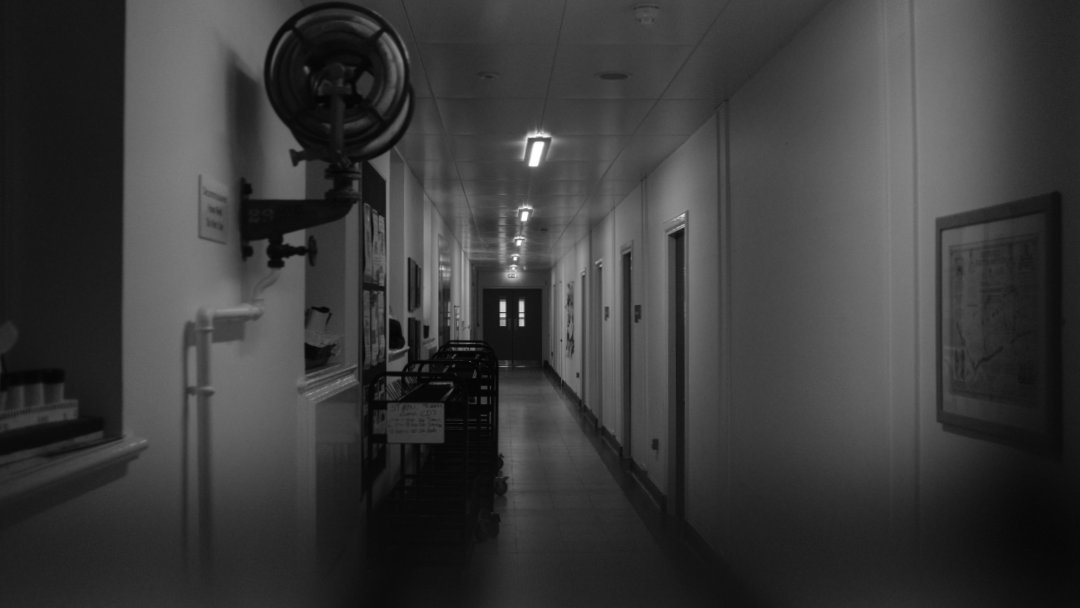
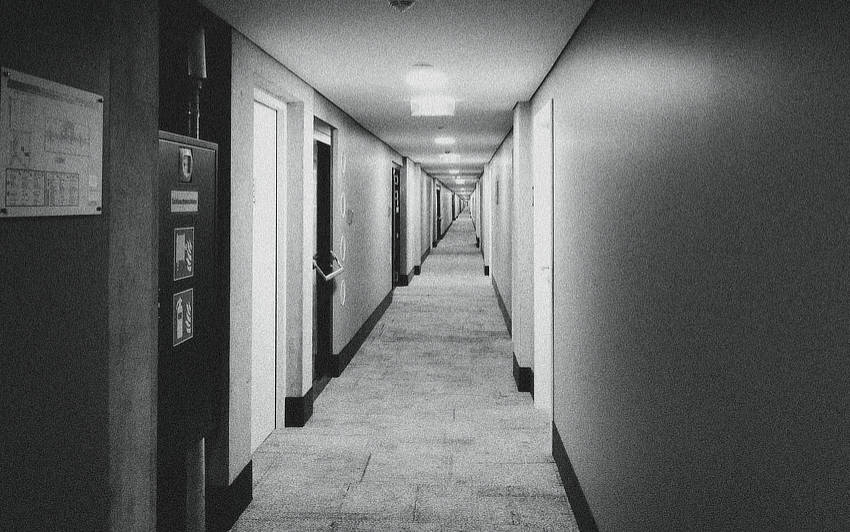
Hotels are bigger than our houses, and often as big as palaces. There might be hundreds of other guests, or none. We can easily find ourselves alone on seemingly endless corridors, lined with endless doors. King, and Kubrick, mine these in-between spaces for all they’re worth.

A handcrafted photo manipulation duplicating a hotel corridor into infinity.

Neither the Overlook nor Daisy Johnson’s hotel are especially old buildings but both have managed to accumulate many ghosts in their short lives. A private house might have, say, twenty occupants in a hundred years, whereas even a small hotel could have that many people pass through in a single weekend. Many lives are overlaid there.

In Joanna Hogg’s film 2022 film The Eternal Daughter Tilda Swinton plays a woman staying at a country hotel out of season, surrounded by dense fog. She is accompanied by her elderly mother, also played by Swinton. It’s an unsettling, confusing film, which plays with ideas of time and memory – and what are ghosts if they’re not memories? We might visit the same hotel every year, or years apart, and feel that we’re picking up where we left off, stepping into another life, or other timestream.

Another feature of The Overlook as presented in the film of The Shining is that, like Hill House, it does not make sense as a coherent space. There are many analyses of the layout of The Overlook online, some treating these problems as ‘goofs’ or continuity errors, others acknowledging that they might contribute to our unease.

This gives us a link to the traditional English ghost story which was often quite capable of high weirdness.

In his tale ‘Number 13’ M.R. James gives us a hotel room that shrinks and expands as an impossible room next door appears and disappears during the night:

He started to go down to breakfast. Rather late, but Number 13 was later: here were his boots still outside his door—a gentleman’s boots. So then Number 13 was a man, not a woman. Just then he caught sight of the number on the door. It was 14. He thought he must have passed Number 13 without noticing it. Three stupid mistakes in twelve hours were too much for a methodical, accurate-minded man, so he turned back to make sure. The next number to 14 was number 12, his own room. There was no Number 13 at all.

A welcome you’ll never forget

We’re supposed to feel welcome in hotels; the industry is called ‘hospitality’. But in horror or weird fiction, they can be either cold, or positively hostile.

The Bates Motel from Robert Bloch’s Psycho, filmed by Alfred Hitchcock in 1960, is a famous example of a hotel that lures in guests, then devours them. There are peep holes, so no privacy, and the doors do not keep predators out of the rooms. The chambers of the Bates Motel are very unsafe spaces.

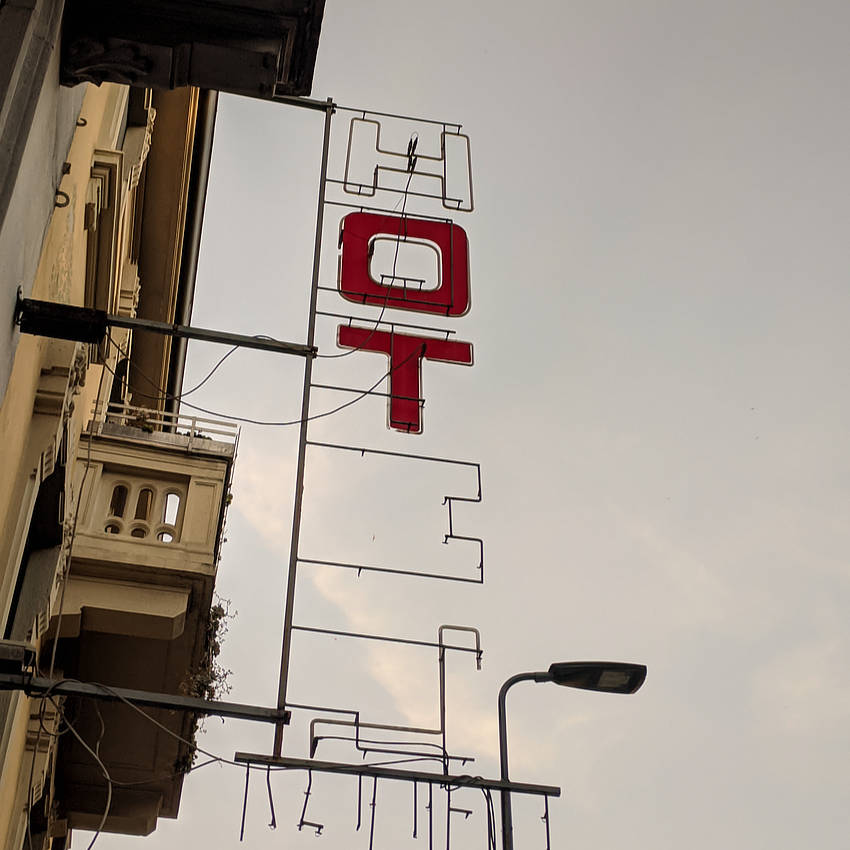
A broken neon sign that once read HOTEL but now has only two letters, O and T, remaining.

Robert Aickman’s 1975 story ‘The Hospice’ is about a travelling salesman who gets lost on country roads and checks into a country hotel. The events that occur during the course of his stay follow nightmare logic – and are, in fact, very much like some of my own recurring nightmares. He wants to leave, but can’t, with various obstacles placed in his way.

Are the guests there against their wills? Are some of them ghosts? Has there been a murder?

Aickman’s technique here, as usual, is to leave us asking questions, and to withhold answers.

His story also makes me wonder about the overlap between hotels and other bed-and-board institutions – hospitals, care homes, mental health care facilities, halfway houses, and prisons. 

In 2025, of course, they also perform the role of refugee asylum facilities. They weren’t designed for this, and their guests are not on holiday. But that doesn’t stop mobs assailing them from outside, turning the hotel into a trap.

Hotels in my stories

I could easily write a hundred stories about hotels. As set out above, I often find discomfiting – even the most benign examples.

Why do Premier Inns have those weird purple-tinted Lovecraftian landscape prints on their walls? Who left that handwritten love letter in the drawer? What do the Gideons know that I don’t?

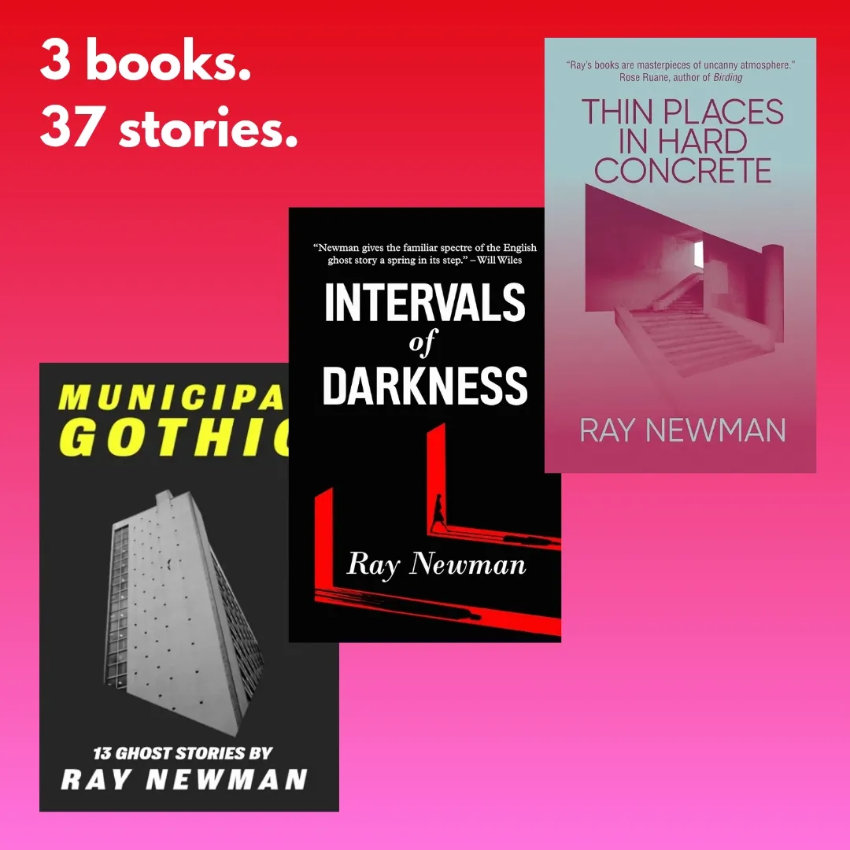
In practice, I restrain myself, and it’s only ‘Alice Li is Snowed Under’ in my collection Municipal Gothic that really explores this setting. It was inspired by the many years I spent doing too much travelling for work.

As I was, Alice is an earnest twentysomething trying to make a career in the Civil Service and, like me, she is an introvert who welcomes the loneliness of hotels – up to a point.

When the hotel becomes snowed in, she is forced to stop working, and to be alone with her own thoughts, and with a visitation that makes her confront an unresolved question. The blank, bland offers nowhere to hide.

There is also, however, a strange old country hotel in my retro folk horror story ‘The Night of the Fox’ and a truly horrible one-star dosshouse in ‘The Horns in the Earth’. Both are in my other collection Intervals of Darkness.

There’s also another story I’m working on inspired by a stay at a chain hotel in central London the night before an early train. There, I was kept awake by the sound of drilling during the night, which the manager insisted was not happening.

When all you want is to sleep, a malevolent hotel that insists on preventing that from happening is pretty close to the ultimate horror.

A quote from Verity Holloway: "Impressively eerie and packed with shocks... moments of powerful poignancy and startling strangeness. You'll want to linger over these stories." Next to it is the cover of Intervals of Darkness with a black background and red details. The illustration is of a person casting a long shadow. Nearby is another shadow suggesting a lurking but hidden figure.
Categories
Fiction weird fiction

FICTION: Mothership

Penny does not expect to hear the roar of an invisible dragon on the path on the edge of a potato field. It takes a moment for her to think to look up.

The hot air balloon passing above her head is too low and too large. Its white sphere stands out sharply against dense black clouds.

Should it even be in the air on a day like this, with a gale blowing up and rain beginning to spot the cracked soil? Penny misjudged the weather for her walk but is dressed for it in waterproof trousers and hooded jacket. Perhaps the pilot of the balloon also misread or ignored the weather forecast. Or has a deathwish.

The wicker basket beneath the balloon is only a few metres above her head. She stops and waits for it to go by, and to progress beyond the line of red-studded bramble bushes ahead. She knows very little about balloons but understands that they have little control over their direction, being at the mercy of layers of wind at different altitudes. She hopes this one, this colossal pearlescent object, will avoid the fourteenth century tower of St. Leonard’s Church which lies a mile or so ahead.

As the balloon moves ahead she expects to see its pilot come into view above the edge of the basket. This does not happen, though someone must be there to trigger the burner, which turns the pearl orange for a second. The balloon does not rise.

In fact, even as the wind whips at the synthetic fabric of her waterproofs and pulls strands of her dark hair across her face, the balloon seems to slow. Then it stops altogether, fixing itself in the air, as if a pause button has been pressed. The hawthornes to Penny’s left are shaken by the growing gale and lurch forward. A torn cement sack tumbles across the field to her right, a tangle of white, brown and blue. But the balloon does not move, at least not forward, because, yes, like an elevator, it is descending gently.

The basket rolls slightly on contact with the pale brown earth, rights itself, settles flat. The structure of the balloon sits solidly, neither sagging nor swaying.

Penny takes a few steps and calls out in her high, nasal voice: ‘Hello? Is everything okay? Do you need help?’ She can barely hear herself and knows that her words have been lost.

The balloon waits.

Rain comes harder, tearing across her rucksack and back. She moves instinctively towards the balloon hoping it might offer shelter, skipping awkwardly over ruts in the ground, stumbling in her sturdy boots.

Close by, the balloon has the bulk of an office block. Its perfect white shell throws out a soft internal light, as if the sun itself has fallen, weakened, from the sky.

The burner exhales flame and it sounds like a weary sigh, or an exhortation. Penny is overcome with a sense that to ignore it would be rude, or hostile. The rain lashes her forward as she hurries to the basket, throws her rucksack over the worn leather of the rim, and climbs in after it.

The basket is empty. There is no pilot, no flask of hot tea, no warm blanket. Here, though, the wind is diminished, and the rain cannot reach. She feels like a child in the arms of a great mother.

Flames rise above her head. Mother sighs. The balloon begins to rise.

Categories
Fiction weird fiction

FICTION: Do Not Eat

Do you get the urge or is it just me? You’re walking along and you see a half-eaten sandwich lying on the ground, covered with bits of grit and crawling with ants, and you think: I want to eat that.

You don’t, obviously. But you think it.

Like how you consider throwing your wallet into the river every time you cross the bridge in town. Or feel your hand edging towards the emergency brake on the train during your commute, specifically because there’s a sign telling you not to. That’s exactly what it’s like when you see a plastic glass half full of cola sitting on a wall and you think, I want to drink that, and eat the chunks that are floating in it, whatever they are. Do you really never get that? Really? I do. All the time.

You don’t do it, as I say, obviously you don’t do it, but it’s touch and go sometimes. When nobody’s looking, when you’ve had a really bad day and everything’s turned to absolute shit, you think, if I eat something I’ll feel better. And if you’re going to eat something, why not that scoop of ice cream that’s been dropped on the pavement and is still mostly solid, even though it’s sent out sticky brown runners towards the gutter? Imagine just scooping it up in your fingers and sticking it in your mouth in one neat move. If you get it right you could leave behind the bit that’s been in contact with the pavement and just get the good stuff that’s probably hardly even been licked. You get so you don’t mind a bit of lick, anyway. People snog strangers all the time – how is a bit of lick on an ice cream any different?

It started when I was a washer-up in a chain restaurant as a teenager. The stuff that used to come back uneaten! Chicken nuggets from the kids’ meals, they’re the ones that tempt you the most, and cakes. Imagine throwing away good food like that and then going home to an economy burger, oven chips, and frozen peas. So, yes, you do eat the odd bit here and there, when they look fairly clean and intact. Nobody notices and nobody cares. It’s like a little bonus, a little treat, and all for free.

One particularly bad shift, though, when the manager had been snippy with me, and I knew it wouldn’t be much better at home, I confess that I did once give myself an extra treat and eat some gristle left over from a steak. It had been chewed and spat out. I chewed it again myself, like gum, while I used the extendable hose to rinse gravy from a pile of plates. You chew and chew and eventually it softens up. That’s why people chew gum, because it’s calming and meditative.

Licking ketchup and melted cheese from the insider of a discarded burger wrapper, that’s another good one. It’s like you’ve eaten the burger without having eaten the burger. Sometimes, when the wrapper’s been out all night, blowing round the retail park car park, it’ll have picked up crunchy bits of glass or splinters of wood. You clear the paper with your tongue and it leaves you feeling clean, too, like you’ve groomed the dirt off your own body.

Nobody eats the salad from a kebab, have you noticed that? On Saturday and Sunday mornings you can pick up all sorts: trampled iceberg lettuce salad, pickled chilli peppers, pitta breads soaked with grease and garlic sauce where the bread has become like a sponge in the morning dew. Get your five a day.

A bit of mold doesn’t even do any harm. You eat blue cheese, don’t you? They say it’s good for you to put bacteria into your gut. There was a whole bag of shopping once, hanging on a railing. A pack of pittas gone blue all over, a cucumber rotten in its plastic sleeve. You can slurp that like an ice pop. You can’t just leave it hanging there. You can’t just walk past, letting good food go to waste, even if it does leave you feeling too full to move. Beats feeling empty inside, that’s what I say.

Or what about those full plastic bottles you find in the gutter? It might be apple juice or beer, it might not, but waste not want not. You’ve got to scratch the itch sometimes, you’ve got to give into the urge.

Some people take roadkill home and cook it. They have freezers full of the stuff. I say, why go to all that bother? The good stuff is like jerky, dried naturally in the sun, seasoned with engine oil and brake fluid. Does your mouth water when you smell petrol? Mine does. Chicken wings, too – it’s like eating chicken wings. Lots of little bones to chew the tough meat from. You really feel as if you’ve earned your meal.

When people feed good bread to the ducks, that breaks my heart. There’s kids starving and they’re throwing bread into the pond in the park – are you serious? It’s not even good for ducks to eat bread, is it? If you have a small net, it’s easy enough to fish the bread out out, or you can just use your hands. The texture is like nothing else. Municipal caviar, I call it.

Dregs from drinks cans, too. Lots of variety, a little dribble of lots of different things, cider or Fanta or whatever, and you can always spit out the cig ends and the insects.

I like a mystery, a blind taste test. You don’t always know what’s in a holdall you find dumped on a verge, do you? There’s no way to be sure if it’s been there a while. You just have to get stuck in and enjoy it for what it is, all of it, pounds and pounds of raw, sweating meat. Almost enough to fill the infinite empty space inside you – not quite, but almost. The only problem is that sometimes you worry you might have helped to dispose of evidence, when they start talking about that holdall on the news, but how are you to know?

I find there’s really no need to go home at all these days, or to go to work, not when you can eat three square meals a day out and about for free. You just need to have a good eye and a strong stomach. And your stomach gets stronger, too, the more you do it. What’s at home, anyway? Much better to be in the fresh air, enjoying all of nature’s bounty.

Oh, see there, under the brambles – a yoghurt pot that looks to be, yes it is, almost half full. Now, don’t you get the urge to eat that? Don’t you? Is it just me?


A quote from Verity Holloway: "Impressively eerie and packed with shocks... moments of powerful poignancy and startling strangeness. You'll want to linger over these stories." Next to it is the cover of Intervals of Darkness with a black background and red details. The illustration is of a person casting a long shadow. Nearby is another shadow suggesting a lurking but hidden figure.

If you enjoyed ‘Do Not Eat’ check out Intervals of Darkness, my most recent collection of weird stories, which is available as an eBook and paperback.

Categories
weird fiction

Broken Veil: indescribable horrors gently whispered in your ear

The six-part podcast series Broken Veil, created and presented by Joel Morris and Will Maclean, exploits the inherent ‘truthiness’ of the podcast format to chill its audience.

When the first episode landed a few weeks ago I wasn’t sure if it was an attempt to jump on the Uncanny bandwagon by telling a supposedly true ghost story, or a clever fiction.

    I suspected the latter thanks to the involvement of Maclean, best known for his 2020 novel The Apparition Phase. It didn’t take long to spot tells which confirmed that, yes, this was a drama – albeit one that felt, at times, uncomfortably real.

    Those tells? Acting as if you’re not acting is difficult, for one thing. Broken Veil is cleverly directed to minimise this problem with actors apparently briefed on the story they need to tell and encouraged to improvise around a loose script.

    Conversations recorded on noisy microphones, in noisy cafes, in open spaces, or in moving vehicles, also dragged it a touch closer to verisimilitude.

    I’ve listened to a lot of audio drama that feels like stage school kids in sound-proofed studios, over-egging their performances, and slurping their tea too aggressively, too near the microphone. Broken Veil felt light years ahead of that. But still not completely, seamlessly, perfectly convincing, even if it got very near.

    Despite deciding that it was fiction, there continued to be moments when I doubted myself. Perhaps it was more complex than I’d realised. Perhaps some of the incidents described were real, and only some were fictional, or fictionalised.

    The spooky, moody, Scandi-noir score was another tick in the ‘feels real’ column. This is how true crime and supernatural podcasts tend to sound.

    Another was the way episodes were edited to finish on revelations and cliffhangers. Co-creator Morris is an expert in understanding and documenting the patterns and structures behind stories, and comedy, and he applies that expertise here to apply the unwritten rules of of non-fiction podcasting.

    Just as real non-fiction podcasts tend to do, it also went off on tangents, and gave over whole episodes to what felt like ‘side quests’. Each made the story feel more complex and more confusing, in pleasing ways. When the real actress Gabrielle Glaister (Bob from Blackadder) turned up playing herself it worked both as a standalone story and as a ‘convincer’.

    Horror, or weird fiction, often thrives in that space between truth and fantasy. To paraphrase Fox Mulder from The X-Files (a reference point for Broken Veil) “We want to believe.”

    Like Morris and Maclean, I’m of the generation that saw Ghostwatch air live on the BBC in 1992. It was clearly labelled as a drama, with an on-screen writing credit for Stephen Volk. But it employed non-actors like Sarah Greene and Michael Parkinson, and the look and feel of live TV, to play with the audience’s perceptions of reality.

    Other touchpoints in a similar vein are Alternative 3, a 1977 mockumentary which was originally scheduled for 1 April but actually aired much later in the year, and so fooled many viewers; and The Blair Witch Project, which triggered the found footage movie boom of the early 21st century.

    Throughout Broken Veil’s short arc the hosts frequently invoke cultural references like these, along with myths and legends of the paranormal that a certain type of British child has latched onto and absorbed for decades.

    The Philadelphia Experiment gets a mention, for example, as does Matthew Hopkins, the Witchfinder General, and the ‘backrooms’ internet meme.

    All of these are shortcuts to the mood the creators want to create: paranoid, hauntological, psychogeographical – layers of muddled meaning on worn-out, overdubbed tape.

    As with many weird stories, the opening is the strongest section. It’s when the sense of reality is strongest and the story being told feels most plausible. A challenge for creators of weird fiction is that setting up a mystery is fun, and it’s what people enjoy. They think they want a solution but no explanation you can provide will be as pleasurable as drifting, bewildered, in the unknown.

    If there’s a problem with Broken Veil, it’s the pacing. Though it’s been a success, at least in terms of podcast charts and critical commentary, it was a side project for two busy creatives, and that shows in its brief run, and hurried denouement.

    The final episode in particular felt like several weeks’ worth of content crammed together into too small a space. And of course the opaque solution half provided wasn’t wholly satisfactory – how could it be?

    I would have been quite happy to listen to a longer, slower version of this podcast that revealed small nuggets of information over months. And I wouldn’t have minded had it never resolved.

    Just being in this world, with two softly-spoken, slightly geeky hosts murmuring strange stories to each other, was pleasure enough.

    Broken Veil is available through all the usual podcast services.