Categories
1959 books reading1959

Three pulp paperbacks about juvenile psychopaths

What happens when angry young men are more than angry? These three roughly contemporary books give us portraits of youths struggling with their own murderous instincts.

I came to The Furnished Room, Big Man and The Dead Beat one at a time after finding tatty old paperbacks in charity shops or roadside book swap boxes.

All three were written during a period of anxiety about juvenile delinquency and a simultaneous growth in popular discussion of psychopathy.

The term ‘psychopath’ was popularised in the 1940s and a slew of novels and movies from that point on portrayed a particularly chilling type of killer. Being outwardly in control, and even charming, they were able to walk and live among us.

Joseph Cotten’s Uncle Charlie in Alfred Hitchcock’s brilliant 1943 film Shadow of a Doubt is one example. Patricia Highsmith’s The Talented Mr Ripley introduced us to the chameleonic Tom Ripley in 1955.

At the same time, young people were beginning to seem dangerously out of control, with motorbikes, switchblades, and a lack of respect for authority.

That’s the context in which the following three pulp paperbacks emerged.

Little boys to broken men

Big Man is the earliest, published in 1959. Its author was prolific novelist Evan Hunter, born Salvatore Lombino, and best known for a series of police procedural novels written under the name Ed McBain. He wrote this book as Richard Marsten and it reflects something of that sense of fractured personae.

It’s written from the point of view of Frankie, a young man living in poverty with an alcoholic mother, and drawn into petty crime by sheer boredom. Petty crime leads to organised crime where, after resisting, he embraces his true murderous self.

The 87th Precinct novels are set in an anonymised fantasy of New York where Manhattan is Isola, Queens is Bethtown, the river is the Harb, and so on. Big Man is set in New York proper, where Hunter grew up and which he knew at street level. 

This authenticity shines through in his portrayal of the everyday lives of idle young men with no coin in their pockets and every reason to feel detached from the world. That Frankie’s best friend Jobbo has appalling body odour sets the tone: this is a world where sweat stinks.

These early chapters are similar in mood to The Incident, a 1967 film based on a 1963 TV play, about two young men who terrorise a New York City subway car. In both cases, the thesis is that the road to murder begins at robbery, and robbery comes as much from a need for something to do as from the urge to acquire.

For Frankie, the lure of organised crime isn’t so much money but also a sense of family, respect, and affection. The mob boss is a father figure – someone who tells Frankie he is a good boy and has value.

Even through Frankie’s unreliable narration we see, of course, that he is being preyed upon and manipulated. Through favours owed, debts incurred, steps taken from which there is no walking back, he is drawn away from society and becomes ever more tangled in a shadow world with its own values.

What really sets the book apart is Frankie’s relationship with his two lovers. Frankie is torn between two women – a sexually insatiable gangster’s moll who has been with the whole crew, and the nice neighbourhood girl who wants to start a family.

It is shocking when he shoots the former on the indirect order of his boss. It is absolutely devastating when he puts a bullet in the head of the second because she has become a hindrance to his career.

Hunter plays with our prejudices: promiscuous girls who get involved with criminals put themselves in the firing line, but nice girls who just want their boys to go straight? They deserve a happy ending.

By the end of the novel, Frankie has become a killing machine, like a soldier trained for combat. He follows orders and shoots when he’s told to shoot.

He is also cursed with the knowledge that if he can bring death to the others so swiftly and easily, then death can come to him the same way.

A suburban house in America.
SOURCE: Library of Congress.

The killer is in the house

Robert Bloch’s The Dead Beat was published in 1960 and tells the story of another blank, murderous young man.

Larry Fox is a dead beat jazz pianist who finds a way to break out of the world of crime, prostitution and drugs and into the nice suburban home of a nice suburban family.

His great skill is being able to present as a good boy when it suits him – or maybe these are actually glimpses of the real Larry, or another Larry, battling Bad Larry for supremacy?

As Good Larry, he’s bashful, well-spoken and polite. He’s musically talented and has hopes to study composition at university. This is catnip for the middle class saviours who take him in and nurse him when they find him unconscious in the back of their car. Especially the women.

But Bad Larry plans to get revenge on his former accomplices in a robbery and will fuck, rob, drug and manipulate anyone who gets in his way, or can help him achieve his goal.

Bloch doesn’t expect the reader to read between the lines. He has his characters debate matters of juvenile delinquency and ‘the beatnik problem’ which gives him an excuse to insert chunks of his thesis into the text:

It all began with World War One, I suppose. Up until then, the traditional role of the young man in this country was that of an apprentice. In rural communities he started as a hired hand or helped his father on the farm. In the cities he entered business as a clerk or a messenger or an office boy. Youth accepted a subordinate position unquestioningly, even when the industrial era developed… War is the great glorifier of youth… Our economic leaders, through the media of advertising, assure us that it is the duty of everyone to appear young; to buy products which enhance the illusion of immaturity. Our books, magazines, motion pictures and television programs inform us, not too subtly, that romance and adventure are the exclusive property of young people between the ages of seventeen and twenty-five. Nobody over that age ever falls in love or experiences anything of lasting significance, except for a few oddball characters thrown in for comedy relief.

Bloch was primarily a writer of horror stories and the scary idea in this story is that adults cannot tell good boys from bad ones. That nice young man your daughter is dating might be a hophead, a junkie, a pervert or a killer – better not let him in. Especially not if he reminds your wife of when she was young.

A Victorian terraced house in West London.

The kitchen sink killer

Crossing the Atlantic, Laura Del-Rivo’s The Furnished Room was published in 1961 and filmed as West 11 in 1963.

In many ways it sits alongside British social realist novels like Saturday Night and Sunday Morning or, closer in tone and setting, Absolute Beginners. The difference is that Del-Rivo introduces a gun into the mix turning it into something like a crime novel, or one of Georges Simenon’s romans durs.

Joe Beckett is another semi-intellectual, but a reader rather than a musician. Like Larry Fox, he is capable of making himself presentable, as long as nobody gets close enough to notice the grubbiness of his shirt or smell his unwashed socks. To some people he reads as clever, almost an intellectual, although his drug-fuelled lectures don’t stand up to the scrutiny of really intelligent people.

As with the protagonists of many other British novels of the period, he is too full of fury to be constrained by the drudgery of a nine to five job, or by love and marriage. Unlike Arthur Seaton, however, he decides that committing a murder might fix the emptiness inside him.

Haunting the cafes and bedsits of West London, Joe meets a classic British type: the faux-military conman with a range of regimental ties to suit whichever story he is telling on any given day. Keen to inherit from an aged aunt, he draws Joe into a scheme apparently inspired by Strangers on a Train.

That standard crime plot isn’t where the excitement lies in this story, though. That’s in Joe’s battle with his own worst instincts. He has constant intrusive psychopathic, paedophilic and fascistic fantasies. Reading about Nazi concentration camps thrills him:

Beckett’s immediate reaction had been a burst of sadistic joy. He knew that if, at that precise moment, he had seen a woman prisoner with her arms yearning for a lost child, he would have kicked her in the face. The shooting of the new detachment had pleased his sense of order. They were damn nuisances, screaming and panicking like that. Shooting them was the only orderly thing to do. He loathed the prisoners for their ugliness, their suffering, and their lack of pride. The photographs of these degraded sufferers, squatting behind their barbed wire, had revolted him so much that he had thought it a pity that the whole lot hadn’t been gassed. He had preferred the photographs of the Nazi guards, who had at least looked clean and self-respecting.

This book in particular feels like a commentary on present day alt-right, manosphere and incel cultures.

All three books force us to inhabit the minds of boys who don’t know how to love, even if they sometimes get close.

Those are the moments when we want them to break through the barriers, to untangle the complex feelings that threaten to break through their anger, resentment and hatred.

But they can’t do it. So they reach for guns and point them at innocent people.

Categories
books

Le Fanu’s Carmilla: how loneliness makes us vulnerable to vampires

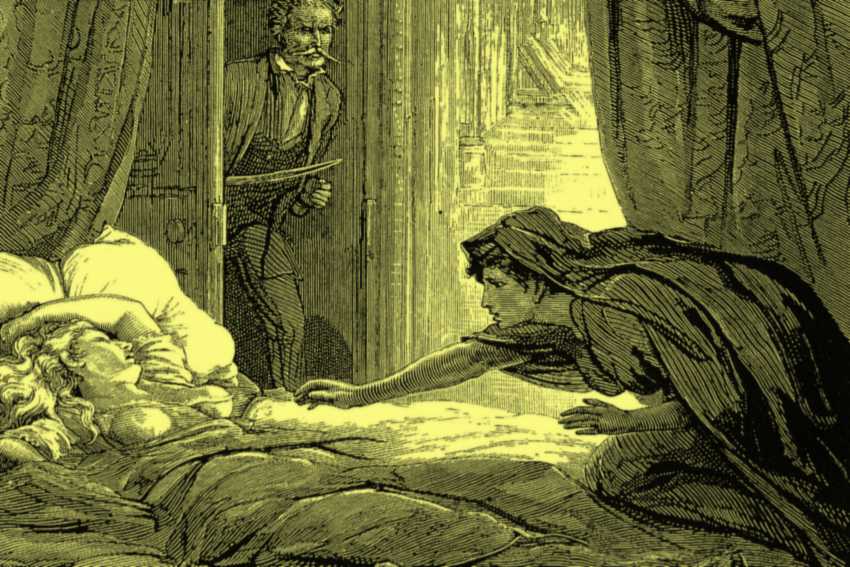
Sheridan Le Fanu’s Carmilla is a fascinating story. If nothing else it was published in 1872, long before Dracula, and was clearly a huge influence on Bram Stoker.

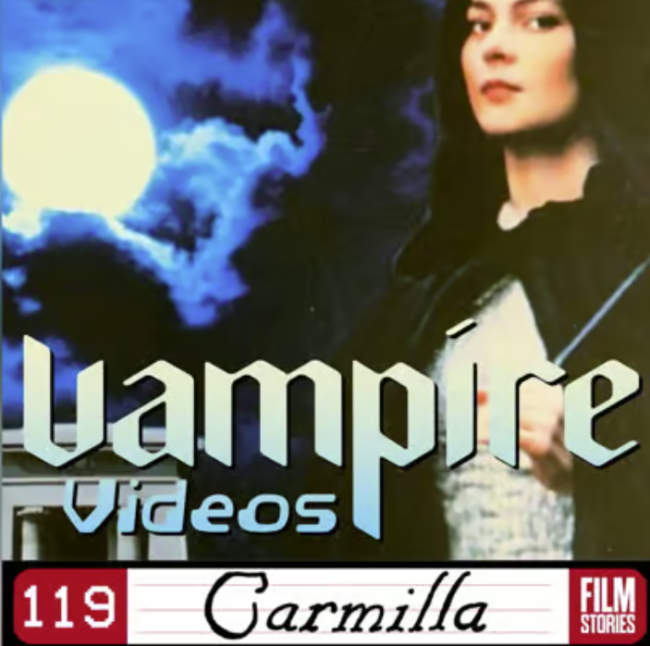
When the team at the Vampire Videos podcast invited me to join them as their guest on an episode my first challenge was to think of a vampire movie they hadn’t already covered.

Fortunately, I’ve developed a taste for the kinds of films you can only find in the depths of YouTube, which is where I found a 1989 episode of the US anthology series Nightmare Classics based on Carmilla.

It stars Jennifer Tilly as Carmilla and relocates the action from Styria in Eastern Europe to the American Deep South.

You can find out what I think of this adaptation by listening to the podcast.

The cover image for the podcast wit Jennifer Tilly as Carmilla.

Here, though, I wanted to say a few words about Le Fanu’s original story which I suspect many readers of vampire fiction have overlooked for various reasons.

I first read Carmilla as a teenager during the vampire craze of the early 1990s, when kids at my comprehensive school in Somerset – even those who wouldn’t normally be seen dead with a book – were carrying around film tie-in editions of Dracula and Interview With a Vampire.

I read both, and saw both films, and wanted more, so when I was given the chance to choose a book for a school prize, I selected The Penguin Book of Vampire Stories edited by Alan Ryan.

What a treasure trove that book was, and is. I still have the same copy, its pages yellowing, wrapped in ‘protective film’ that is slowly eating it, with a slip on the flyleaf which tells me I won the Phillips Award for Academic Achievement in 1994.

As well as John Polidori’s ‘The Vampyre’ and Stoker’s own ‘Dracula’s Guest’ it contains the complete text of Carmilla, a novella at 70 or so pages.

I sometimes describe myself as Britain’s Most Uptight Man and I was even worse as a teenager. Carmilla, at that time more than 120 years’ old, still had the power to thrill and shock (me, at least). I was astonished by how modern it seemed with an intense sexuality and, specifically, what seemed to me in 1994 to be a clear and unambiguous portrayal of a lesbian relationship:

In silence, slowly we walked down to the drawbridge, where the beautiful landscape opened before us.

“And so you were thinking of the night I came here?” she almost whispered.

“Are you glad I came?”

“Delighted, dear Carmilla,” I answered.

“And you asked for the picture you think like me, to hang in your room,” she murmured with a sigh, as she drew her arm closer about my waist, and let her pretty head sink upon my shoulder. “How romantic you are, Carmilla,” I said. “Whenever you tell me your story, it will be made up chiefly of some one great romance.”

She kissed me silently.

“I am sure, Carmilla, you have been in love; that there is, at this moment, an affair of the heart going on.”

“I have been in love with no one, and never shall,” she whispered, “unless it should be with you.”

I’d like to pretend I had a sensitive, sophisticated response to this at the age of 16 but what I probably thought was “I’m confused, help!” and/or “Cor, girls kissing!”

Carmilla, I later learned, was the source for all of Hammer’s “Cor! Girls with their tops off!” vampire movies of the 1970s, their use of the name ‘Karnstein’ being the most obvious giveaway.

The Vampire Lovers from 1972, with Ingrid Pitt as Carmilla, is a fairly close adaptation of Le Fanu’s novella with all the flaws and compromises you might expect for a film of the time.

I don’t want to spoil the podcast but it’s fair to say the 1989 adaptation, though less exploitative, also has its flaws.

It would be great to see an adaptation of this story as lavish and careful as Francis Ford Coppola’s Bram Stoker’s Dracula or Robert Eggers’s recent version of Nosferatu.

There are themes in Carmilla that still resonate in 2025, not least the negative power of loneliness.

Laura is utterly isolation in a castle in the middle of nowhere, surrounded by stuffy old men and servants.

It is her desperation for a friend, for any kind of companionship, that makes her so vulnerable to Carmilla’s serial predation. Or, to put it another way, that makes her so ready to be liberated. Which is it?

I see in this uncomfortable tension some interesting echoes of online exploitation and catfishing.

That such contemporary parallels can be drawn is perhaps a sign that Carmilla has depth and value beyond it’s part in the genesis of Dracula, and beyond its undoubted erotic charge.

You can listen to the podcast at vampirevideos.co.uk or wherever you usually get podcasts. The full text of Carmilla is available online at Project Gutenberg and in The Penguin Book of Vampire Stories which you can buy used for buttons.

Categories
Fiction

FICTION: The Newhamstead Goblin

You stop calling the police after a while, d’yer know worrimean? What’s the point? Either they don’t come at all, or by the time they turn up, the bloody thing’s gone to ground.

They think we’re daft enough up here as it is, up at Longwood. Normal for Longwood – NFL. That’s what the doctors write on your clipboard at the hospital. It means they think you’re either mental, or thick.

So, yeah, you don’t call the police. You just learn to live with it. Well, you have to, don’t you, know worrimean? Life’s too short, intit?

In practice, that means, one, trying to get home before dark. If you can’t, get a cab to the door, and get in quick.

Two, keep your doors and windows shut and locked after dark – which is easier said than done with these summers we have nowadays, don’t get me started! And before you say it, yes, we’ve tried nets over the windows, which is how we lost two dogs and a toddler back in 2015. ‘Mystery disappearance’ my arse. We all knew what did it. We told them. But they don’t believe you, do they?

Oh, and three, you keep your curtains drawn, because it’ll look in, if it can, and that’s no good. Best case, it puts you right off your tea, with them bloody eyes. Literally, I mean. Bloody. The eyes. Worst case scenario, you end up sort of mesmerised. That’s what they say happened to old Graham Dodd. Saw it, he did, and stared at it, and then climbed out the window. From the second floor of Thorncombe House, mind, so, well, you don’t need me to describe it.

Right, four: don’t answer your door after dark, even if it’s someone you know. God knows how but it’s got a way of speaking to you. I heard it once and I’d have sworn blind our Darren was outside. Your first thought is, oh, shit, I’d better let him in before that bloody thing gets him. Then you think, hang on, Darren’s in Corfu this week. Then it stops knocking and starts scratching like it’s going to burrow right through the wood.

In the daytime it’s alright. You don’t see it, not a sign. Maybe the odd footprint. Maybe a big pile of shit. Maybe an upturned car. You ignore it, though. Well, you have to, don’t you? You just get on with your life.

They asked me once, the lads from the Railwayman’s Club, did I want to go on a hunt for it. I said, no thank you, bugger that for a game of soldiers. Well, they did it anyway, out with their air rifles and cricket bats until dawn. Nothing. Sod all. Except when Kev Parsonage got home, it had been all through his house and ripped the place to shreds.

Have I seen it? Many times. Oh yes. Many times. First time, I’d have been about fourteen, not long after we moved here from up country. Nobody warns you, because they know you won’t believe them. They just wait for you to catch on yourself. I was out kicking a ball around the green, wondering why all the other lads hadn’t come out again after tea. Then I looked straight down Longwood Avenue, and I couldn’t make any sense of it at all. There was too much of it, in one way, but not enough at the same time. Too many arms and legs, that’s what I thought, but I couldn’t quite count them. The way it moved… Now, hold on, how do I put this? It was as if it wasn’t taking steps so much as shifting between them. Like… Like… Like dirty water pouring from one container into another. Does that sound daft? And the eyes. They were like old bike lamps, which was fine, until the bastard blinked.

Last time I saw it was about a week ago. Forgot to put the bins out, decided to risk nipping down the path to the gate after dark. Got most of the way there when, boom, there it is, eating something from the gutter, down into the drain, with that… What would you call it, oh, my bloody memory, that, um, that sort of trunk it has.

I should have taken a picture, I suppose. Then you’d understand. Maybe you wouldn’t. I’ve seen other people’s photos and it just looks like… Well, it don’t look like nothing. There’s literally nothing to see. A load of old dead leaves in the gutter, a tarp caught on the brambles, streetlights in a puddle. Nothing. It’s as if it knows how to make sure you can’t see it.

Trust me, though, that’s what it was – that’s what’s done this to you. I probably scared it off before it had finished, driving through with my lights on full beam. I’d like to help you, I really would, but I should never have stopped. And, like I say, you stop calling the police after a while, because they don’t come. They don’t believe you.

I’d best be on my way, mate. Let it finish what it started.

It’s for the best all round.


A quote from Verity Holloway: "Impressively eerie and packed with shocks... moments of powerful poignancy and startling strangeness. You'll want to linger over these stories." Next to it is the cover of Intervals of Darkness with a black background and red details. The illustration is of a person casting a long shadow. Nearby is another shadow suggesting a lurking but hidden figure.

If you enjoyed ‘The Newhamstead Goblin’ check out Intervals of Darkness, my most recent collection of weird stories, which is available as an eBook and paperback.

Categories
Fiction weird fiction

FICTION: Mothership

Penny does not expect to hear the roar of an invisible dragon on the path on the edge of a potato field. It takes a moment for her to think to look up.

The hot air balloon passing above her head is too low and too large. Its white sphere stands out sharply against dense black clouds.

Should it even be in the air on a day like this, with a gale blowing up and rain beginning to spot the cracked soil? Penny misjudged the weather for her walk but is dressed for it in waterproof trousers and hooded jacket. Perhaps the pilot of the balloon also misread or ignored the weather forecast. Or has a deathwish.

The wicker basket beneath the balloon is only a few metres above her head. She stops and waits for it to go by, and to progress beyond the line of red-studded bramble bushes ahead. She knows very little about balloons but understands that they have little control over their direction, being at the mercy of layers of wind at different altitudes. She hopes this one, this colossal pearlescent object, will avoid the fourteenth century tower of St. Leonard’s Church which lies a mile or so ahead.

As the balloon moves ahead she expects to see its pilot come into view above the edge of the basket. This does not happen, though someone must be there to trigger the burner, which turns the pearl orange for a second. The balloon does not rise.

In fact, even as the wind whips at the synthetic fabric of her waterproofs and pulls strands of her dark hair across her face, the balloon seems to slow. Then it stops altogether, fixing itself in the air, as if a pause button has been pressed. The hawthornes to Penny’s left are shaken by the growing gale and lurch forward. A torn cement sack tumbles across the field to her right, a tangle of white, brown and blue. But the balloon does not move, at least not forward, because, yes, like an elevator, it is descending gently.

The basket rolls slightly on contact with the pale brown earth, rights itself, settles flat. The structure of the balloon sits solidly, neither sagging nor swaying.

Penny takes a few steps and calls out in her high, nasal voice: ‘Hello? Is everything okay? Do you need help?’ She can barely hear herself and knows that her words have been lost.

The balloon waits.

Rain comes harder, tearing across her rucksack and back. She moves instinctively towards the balloon hoping it might offer shelter, skipping awkwardly over ruts in the ground, stumbling in her sturdy boots.

Close by, the balloon has the bulk of an office block. Its perfect white shell throws out a soft internal light, as if the sun itself has fallen, weakened, from the sky.

The burner exhales flame and it sounds like a weary sigh, or an exhortation. Penny is overcome with a sense that to ignore it would be rude, or hostile. The rain lashes her forward as she hurries to the basket, throws her rucksack over the worn leather of the rim, and climbs in after it.

The basket is empty. There is no pilot, no flask of hot tea, no warm blanket. Here, though, the wind is diminished, and the rain cannot reach. She feels like a child in the arms of a great mother.

Flames rise above her head. Mother sighs. The balloon begins to rise.

Categories
music

They cannot stop you making music

They – that is, the bastards that would grind you down – cannot stop you making music.

They can stop you from making a living from it, though.

Think of all those bands who somehow never seemed to get paid despite multiple hit records. Steve Marriott of The Small Faces ended up collecting 7-Up bottles for the deposit, and stealing to feed his family.

Thirty years ago, the standard fee for a gig in a pub was around £200. In 2025, it continues to be around £200.

Spotify has automated and perfected the business of ripping off musicians, paying them very little for their work and sometimes nothing at all.

Still, you make music for the love it it, right? As long as you’ve got something to pluck, bash or blow into, you can still make a noise.

Until they take away your instruments, of course.

School music services in the UK, which used to supply many working class kids with their first instruments, have been eroding for decades. A 2019 survey found a 21% decrease in the provision of music lessons in state schools while, of course, with bloody inevitability, provision increased in independent schools.

Musical instruments are also among the first things to go when poorer families need extra cash. Go into any high street pawnbroker and you’ll see rows of guitars hanging on the wall, along with keyboards, string instruments, saxophones, drum machines…

At least pawn shops used to be an affordable place to acquire instruments, too, although the internet has changed that. We live in a world where there is no longer any such thing as a bargain, because every second-hand item is priced at its theoretical maximum market values, pegged against eBay.

Still, music software has done away with the need for real instruments, hasn’t it? Apple’s Garageband is a free app that comes with loops, virtual drummers, a library of instruments, and multitrack recording capabilities.

And I’ve just paid a few pounds for Koala Sampler which puts an incredibly powerful, easy-to-use sampler on my phone and in my pocket.

Back in the 2000s, grime musicians created backing tracks using Playstation games consoles and mobile phone ringtones.

And entire careers have been built on hacked and cracked music software – complete production studios running on bedroom PCs, for which not a penny was paid.

Unfortunately, they, the bastards, can also make sure you never have the time, energy or focus to practice or perform.

Work takes up the best part of your brain and leaves you hollowed out. I say that as a privileged desk worker with one steady, regular job. Imagine trying to fit music in around shift work, or multiple jobs?

That’s before we get into the multiplying distractions of modern life, with a thousand algorithms competing to break your flow and steal your attention.

I’m writing this partly because I’ve been thinking about my dad again. A year ago today was the last time I saw him, at a hospital in Weston-super-Mare. I wrote an obituary for him last year while still in the deepest pit of grief.

Now, still missing him but less painfully, I’m able to feel inspired by his passion for making music.

His real job, his real identity, wasn’t as a factory or warehouse worker. It wasn’t even being a dedicated father, sweet as it would be to be able to make the claim.

No, he was, with a capital M, a Musician.

That he found time to learn to play the bass guitar, to form bands, to rehearse with them, and to play so many gigs over the course of decades, is a miracle.

Like many men of his generation, he started out with skiffle – the ultimate expression of working class musical ingenuity, with tea chest basses and kitchen sink percussion.

Later in life, he bought cheap bass guitars with bent necks and bad actions and battled with them until they sang.

He prioritised practicing in draughty church halls over watching TV and rehearsed until his fingers had grown armour.

He overcame his natural introversion and social awkwardness to approach other similarly gruff working class men and say: “Will you be in my band?”

When I think of Dad in full bloom it’s on stage in a pub, wrists strapped with support bandages, with fingers scarred from years of turning pistons moving up and down the fret board just as they’ve been drilled to do.

He couldn’t make his living out of music but he lived music all the same. They couldn’t stop him.

Categories
Film & TV

Beavers, battlefields and the suspension of disbelief

Watching the film Hundreds of Beavers and a product of Shakespeare’s Henry V in the same week was something of a crash course in the suspension of disbelief.

Hundreds of Beavers (Mike Cheslik, 2022) is a slapstick comedy about a fur trapper (Ryland Tews) using ever more elaborate methods to catch beavers.

Except the beavers are people in cheap beaver costumes and much of the action was conjured up using deliberately unconvincing digital effects.

Even if we allow the excuse that it’s supposed to resemble a cartoon, the quality of the animation is often so janky that it jars. More South Park than Snow White.

Two people in cheap, fake beaver costumes. Sorry, I mean, two beavers.
A still from Hundreds of Beavers. SOURCE: hundredsofbeavers.com

Does this in-your-face fakeness matter? Clearly, in this case, it’s intended to be a selling point, with phrases like “lo-fi” being used to describe what, in other contexts, might be referred to as “shit”. But whether it’s a plus point or not, it certainly doesn’t get in the way of enjoying the story.

If there’s one thing human brains are good at, it’s working with the limited information they’ve been given to create sense from chaos.

In this case, once you’ve been told a person in a beaver costume represents a beaver, and that a paper cutout style animation represents a man climbing a tree.

After all, what do you need to know to follow the story? That the man is climbing the tree to catch and kill the beaver. They could almost be represented by boardgame counters or, indeed, plain text.

If you want to be notified when I post something new, usually once every week or two, do subscribe. 👇

Insane Root’s production of Henry V employs similar tricks to evoke crowded, chaotic 15th century battlefields with a cast of seven, minimal sets, and a handful of props.

What’s interesting about Henry V in particular is that Shakespeare addresses the question of suspension of disbelief head on, in the text. He has the Chorus (the MC, or narrator) address the audience at the beginning of the play, urging them to get on board:

…pardon, gentles all,
The flat unraised spirits that hath dar’d
On this unworthy scaffold to bring forth
So great an object. Can this cockpit hold
The vasty fields of France? Or may we cram
Within this wooden O the very casques
That did affright the air at Agincourt?
O, pardon! since a crooked figure may
Attest in little place a million;
And let us, ciphers to this great accompt,
On your imaginary forces work.
Suppose within the girdle of these walls
Are now confin’d two mighty monarchies,
Whose high upreared and abutting fronts
The perilous narrow ocean parts asunder.
Piece out our imperfections with your thoughts:
Into a thousand parts divide one man,
And make imaginary puissance;
Think, when we talk of horses, that you see them
Printing their proud hoofs i’ th’ receiving earth;
For ’tis your thoughts that now must deck our kings,
Carry them here and there, jumping o’er times,
Turning th’ accomplishment of many years
Into an hour-glass; for the which supply,
Admit me Chorus to this history;
Who prologue-like, your humble patience pray
Gently to hear, kindly to judge, our play.

In both the 1944 and 1989 film versions of the play this preamble works brilliantly, highlighting the artificiality of the filmmaking process while also gaining a note of ironic self deprecation.

Because, of course, film can have a broader canvas than theatre, and better special effects, and hosts of extras in period costume.

But watching the Insane Root company shrouded in smoke, swinging swords in balletic slow motion, mimicking the hunched posture of mounted soldiers, I can’t say that I missed any of that.

I played along.

I accepted that (hiking boots and sunglasses aside) we were in 15th century France on a field strewn, horrifyingly, with butchered corpses – even if those corpses were nothing more than scattered red tennis balls.

A third strand in my accidental study of suspension of disbelief this week emerged from reading German Expressionist Cinema by Ian Roberts, published in 2009. It’s a slim volume designed as primer on the subject and includes observations like this:

The Austrian novelist and playwright Hugo von Hofmannsthal [claimed] that “all the working people are looking for in the movie theater is a substitute for dreams”… Yet with hindsight we can acknowledge that this oneiric quality, the ability of film to transport the viewer to a world of dreams, is precisely why cinema went on to confound its critics, and why the films of the Weimar period contribute to our understanding of the process whereby cinema was transformed from a vaudeville sideshow for the masses to a global entertainment industry and a major art form in its own right.

The Cabinet of Dr. Caligari, directed by Robert Wiene in 1920, is perhaps the most famous example of expressionism on film. Its obviously, unashamedly painted sets aren’t intended to feel real. They use contrasting paint to create light and shadow, and forced perspective to imply depth. They are intended to read as beyond real, as dreamscapes, or as projections from a troubled mind.

The lack of realism isn’t a bug, it’s a feature. It’s style. It supports the themes and mood of the film. And it’s one of the main reasons people are still talking about Caligari more than a hundred years after it was made.

If audiences are willing to suspend their disbelief and play along, filmmakers should feel more confident in doing things the cheap and dirty way.

Not everything needs to look cinematic or hyperreal, especially if that aspiration becomes a barrier to making anything at all.

Being aggressively handmade and imperfect might also a way to push back against the rise of computer generated imagery (CGI) and images generated with artificial intelligence.

Categories
books Intervals of Darkness municipal gothic

A rare chance to buy books direct from me

I’ve got a limited supply of paperback copies of both Municipal Gothic and Intervals of Darkness ready to ship to anyone in the UK who wants to buy one.

They’re £13 each including delivery in the UK, or you can get both for £25.

They’ve each got a selection of weird stories and ghost stories, with Intervals of Darkness being the more recent of the two collections.

“Impressively eerie and packed with shocks, Intervals of Darkness ushers the reader through 1970s grime and Gothic opulence, with moments of powerful poignancy and startling strangeness. You’ll want to linger over these stories.” – Verity Holloway

“Housing estates, factories, tower blocks and caravans, nowhere is safe from Ray Newman’s dark imagination. Existing somewhere between Robert Aickman and JG Ballard, these blackly funny tales are sure to chill you, no matter how high you turn the central heating. It’s every bit the equal of Municipal Gothic, and if anything it’s darker and stranger.” – John Grindrod

Contact me to sort out payment and delivery, and to let me know if you want the books signed or dedicated.

If we’re already connected, you probably know how to reach me, but otherwise…

If you’d rather buy from Amazon, that’s also fine. I get about the same cut and I don’t have to wrangle padded envelopes or schlep to the post box.

Categories
music

Echo and reverb: the mechanical ghosts of wide open spaces

A key feature of popular music is the use of artificial echo and reverberation to make small ensembles sound big, to complexify simple arrangements, and to turn poky studio spaces into wide open landscapes.

Listen to ‘Isi’, the opening track of Neu! 75, by German band Neu, for example. It begins with a simple sequence played on a piano. But a reverberation (reverb) effect sends each of the three basic chords out into a big blue sky – one that exists only in a studio box of tricks.

Echo and reverb are such a part of the background to recorded music that most of us don’t notice they’re there. We would notice, however, if they weren’t.

The same piano chord ‘dry’ and then with reverb and echo.

When a piece of music is described as ‘epic’ it’s probably reverb, often paired with echo, that is creating that impression.

Echo, or ‘delay’, is a subtly different effect. It’s about the repetition of distinct sounds rather than their washing away into space.

Play a single note, add repetitions with delay, and play that into reverb and, in an instant, you have music. A sound that can make you feel things.

Please subscribe to get notified when I post something new here. It’s what I’m doing instead of setting up yet another Substack newsletter.

Psychedelic music was largely built on the use of reverb and echo. Think of Sgt. Pepper’s Lonely Hearts Club Band by The Beatles and its associated single, ‘Strawberry Fields Forever’, and how often John Lennon’s voice in particular is adrift in a swirl of its own tails, haunting itself.

To psychedelic and progressive musicians, reverb and echo perhaps seemed to mimic the opening up of their own minds through the use of psychedelic drugs, or their discovery of esoteric spirituality, or both.

These effects turn the performer into a god, their voice calling out across all the lands – or, alternatively, allow them to become as one with the universe. At any rate, they allow them to cease to be themselves:

“With ‘Tomorrow Never Knows’ I’d imagined in my head that in the background you would hear thousands of monks chanting.”

John Lennon quoted in The Beatles by Hunter Davies, 1968

What we rarely acknowledge is how strange it is to be able to create these auditory virtual realities from loops of magnetic tape, wobbly springs, sheets of metal suspended in boxes, electronic circuits or, most recently, lines of code.

Before reverb and echo devices, these effects were created by playing in real spaces such as halls, churches or water tanks. Then studio technicians worked out that they could pipe sound into those spaces, record the echo remotely, and blend it with the mix. But, still, you needed big, empty rooms to play with.

Spring reverb was an early breakthrough. It achieved the impression of space by channeling sound through a box full of springs and recording their vibrations. This is very much the sound of surf music. But where is the surf guitar player as we hear them twanging on recordings? In the hall created by the curl of a giant wave? In Monument Valley? In deep space?

Early echo/delay effects were created through similarly analogue means, using loops of tape to record a sound and play it back almost immediately, layered over the original. By adjusting settings engineers can create the impression of sounds bouncing into infinity, or slapping back as if from a nearby cliff face.

The EMT 140 plate reverb, first manufactured in 1957, was a significant breakthrough. That’s it travelling in space in the main image above. It was used extensively on recordings by The Beatles and Pink Floyd, among others, and is one of the defining sounds of psychedelia.

It conjures vastness from a bland looking wooden box of the type you might find collecting dust at the back of a school assembly hall.

Inside that box is a large plate of sheet metal suspended from springs. Your raw sound – John Lennon singing, for example – is played into the plate through (in non technical terms) a small speaker. That causes the plate to reverberate and that sound, in turn, is picked up and sent back out of the box to be mixed with the original sound.

Since the 1970s, it’s been possible to create reverb and echo using, first, analogue electronic circuits, and then digital signal processing. This has allowed those mindbendingly enormous spaces to be housed in ever-smaller packages – the voice of God in a matchbox.

In recent years, convolution reverb has emerged. It uses ‘impulse responses’ (IRs) to capture the qualities of real spaces. Or to steal their souls at gunpoint, you might say. Because that’s often how IRs are created – by firing a starter pistol into, say, a cave, or concert hall, and recording the violent boom.

Another modern trend is shimmer reverb which, rather than recreating real spaces in perfect fidelity, creates impossible ones, where sound behaves in illogical but magical ways. It uses digital processing to repeat each sound at a different pitch, as part of a wash of sound, creating twinkling harmonies. It’s a key feature of modern ambient music.

Ambient music. Musical ambience. Ambience as music. Listeners want to be taken away, enveloped, lifted ten feet off the ground.

Reverb and echo are how that happens.

Categories
ReadingThinkingDoing

Reading, thinking, doing

Having narrowly avoided setting up a newsletter on Substack (well, a second newsletter) I’m going to use this blog for a similar purpose.

Not least because the other day I read this…

Hot take: I don’t really want to read writing advice from authors I like and to who’s newsletters I subscribe to. I just want to know what they are reading and thinking and doing.

Hildur Knútsdóttir (@hildur.bsky.social) 2025-07-16T07:49:26.366Z

…and I thought, yes, same.

I’ve also been inspired by Paul Watson in a couple of ways. First, by his monthly round-up of interesting reading, much of which really is interesting for once. And, secondly, by his habit of maintaining a proper RSS feed reader, which is how he manages to stay on top of other people’s blogs.

As a result, I’ve fired up Feedly and given it a spring clean.

That is, I’ve deleted all the blogs and websites I followed about a decade ago – because most of them are now either defunct or degraded beyond belief – and added a bunch of new and active blogs.

Many of those I cribbed from Paul’s blogroll but I also had success asking people on BlueSky to let me know about their own blogs, or suggest others they liked.

I’m especially interested in:

  • hauntology
  • folk horror
  • architecture
  • cities
  • books, films, music
  • graphic design
  • content design

Do let me know if you have a blog in that territory, or know of a good one by someone else.

In lieu of a newsletter, I’m also nudging people to subscribe to this blog, so they’ll be notified when I update it. So, uh…

A new favourite blog is Stephen Prince’s A Year in the Country which examines various hauntological and folk-horror-related texts in serious detail, drawing unexpected connections between them.

In fact, I’ve been enjoying it so much, I bought the latest print-on-demand anthology of recent writing which I’ve also been reading before bed.

That, in turn, led me to A.D.A.M., a one-off play broadcast on ITV in 1973 as part of its Sunday Night Theatre strand.

It’s about a disabled woman (Georgina Hale) whose scientist husband builds her an electronically controlled house with a voice-activated AI helper. Predictably, perhaps, stuck at home together all day while hubby does Serious Government Work, A.D.A.M. and Jean form an intense and unhealthy relationship.

I found it fascinating and rather enjoyed its paciness, at 53 minutes. Of course it has gained new relevance in the age of Alexa and ChatGPT. In particular, with recent stories of people becoming infatuated with avatars in AI dating apps, there was particular resonance in a scene where Jean writhes naked on a chaise longue while A.D.A.M. robotically recites compliments she’s taught him.

My short review is on Letterboxd, where I try to log every film I watch. Jon Dear, an expert in televised horror, was less impressed than me:

“[In] a TV play that comes in under an hour, a two and half-minute sequence that is essentially two people walking through a doorway comes across as some fairly extreme padding. As this is only the second scene, it doesn’t bode well.”

Oddly, and pleasingly, A.D.A.M. is available for anyone in the UK to watch for free via the excellent BFI Player, so you can make up your own mind at little cost. If nothing else, the opening five minutes are a wonderfully moody piece of grey 1970s British grot.

I was also moved to design a new poster for the film, very quickly, because the default one on Letterboxd was so crappy. Fan made posters are discouraged at The Movie Database but I’ve contributed a few where there really wasn’t otherwise a good alternative.

I love it when reading one thing leads me to read another which leads me to watch something else which prompts me to make something – however trivial. That’s what it’s all about.

Integrating music making into my life

I’ve also been trying to work out how to make more music, just for fun, in a way that fits around my day job, my relationships, and my other hobbies.

The latest effort is to actually spend time playing my guitar and learning to play particular songs, in part or in whole.

A tiny little gadget with a little colour screen, two buttons, and a dial. The colour scheme, off-White and maroon, is an homage to the Famicom, I think.

I’m being helped with this by a new gadget, the Sonicake Pocket Master, which cost about £50, has a headphone jack, and among other features can convincingly (to my ears) recreate the sound of playing through various amplifiers.

Last night, I spent about an hour and twenty minutes learning to play ‘September Gurls’ by Big Star for no particular reason other than that for about an hour and twenty minutes I didn’t think about anything but ‘September Gurls’ by Big Star.

It helps, I think, that thanks to the headphones other people can’t hear my playing badly, so I’m able to stick at it until it actually sounds good.

Writing weird stories

I’m continuing to work on my next collection of short stories in the background and seeking input, through blogs, books and films, as set out above, is helping enormously.

I’ve actually got drafts of a full set of stories but I really want to have more than enough so I can (a) pick the very best and (b) try to pull out a theme.

One of my theories for why Municipal Gothic continues to outsell Intervals of Darkness is that the former has a stronger proposition which is further underlined by the brutalist tower block on the cover.

While I’m working on Title TBC please do take a look at those earlier collections and also check out the selection of stories here on the blog.

I’ve also been considering turning those free stories, and some other bits I’ve written for zines, or never published at all, into a sort of bargain B-sides and offcuts compilation.

I always loved those as a teenage music collector because they were both cheaper than ‘proper’ albums and tended to have weirder stuff on them.

What do you reckon?

Lois the Witch

Finally, I’m going to recommend the novella Lois the Witch by Elizabeth Gaskell, from 1859. It’s been rereleased as a cute little minimalist Penguin paperback which I picked up on a whim at Bookhaus in Bristol.

It tells the story of a girl who is sent to New England to live with relatives when her parents die and finds herself at the heart of the Salem witch trials.

In the middle of a heatwave this description of the spookiness of 17th century Salem in winter hit all my buttons:

Sights, inexplicable and mysterious, were dimly seen – Satan, in some shape, seeking whom he might devour. And at the beginning of the long winter season, such whispered tales, such old temptations and hauntings, and devilish terrors, were supposed to be peculiarly rife. Salem was, as it were, snowed up, and left to prey upon itself. The long, dark evenings, the dimly-lighted rooms, the creaking passages, where heterogeneous articles were piled away out of reach of the keen-piercing frost, and where occasionally, in the dead of night, a sound was heard, as of some heavy falling body, when, next morning, everything appeared to be in its right place – so accustomed are we to measure noises by comparison with themselves, and not with the absolute stillness of the night-season – the white mist, coming nearer and nearer to the windows every evening in strange shapes, like phantoms, – all these, and many other circumstances, such as the distant fall of mighty trees in the mysterious forests girdling them round, the faint whoop and cry of some Indian seeking his camp, and unwittingly nearer to the white men’s settlement than either he or they would have liked could they have chosen, the hungry yells of the wild beasts approaching the cattle-pens, – these were the things which made that winter life in Salem, in the memorable time of 1691-2, seem strange, and haunted, and terrific…

Photography

Finally, I’m still taking photos, and currently enjoying trying to imitate Daidō Moriyama. See the main image above for an example.

Moriyama’s style is high contrast black and white, shot from the hip, often askew or otherwise technically ‘bad’, and yet full of vigour and interest.

The murkiness of his photos is half the fun, forcing you to stare a little harder to understand what you’re looking at. Which may well just be a bin bag blowing down an empty street.

Categories
Film & TV

The mask as the cheapest unit of the uncanny

If horror film makers have nothing else they can always rely on a cheap mask to bring a sense of the uncanny, playing upon our deepest instinctive fear of The Other.

Watching the 1974 Spanish horror thriller Night of the Skull, directed by Jess Franco, I was struck by how it instantly seemed to step up a notch when a character in a mask appeared on screen.

The mask in question isn’t a lovingly crafted custom design. It’s not carved or sculpted. No, it’s a typically floppy, tacky rubber Halloween mask, as you can see in the picture above. But that doesn’t matter.

What matters is that, suddenly, there’s a human on screen whose true features we cannot see or read – who is utterly blank.

A few years later the same trick was used to even greater effect in Halloween, from 1978. John Carpenter’s film, which really kickstarted the ‘slasher’ craze, gave its enigmatic killer Michael Myers a mask which, as everyone knows, was adapted from a novelty product supposed to depict William Shatner as Captain Kirk.

In that case, the mask is more detailed and comes with the added oddness of feeling vaguely familiar. Should we recognise this face?

Demonstrating just how broadly we might define a mask in this context, the monster at the heart of the Friday the 13th series, Jason Voorhees, at first wore a simple sack over his head. Then, from the third film in the series, he gained his trademark hockey mask – a white ellipse with a few dark holes punched in it.

A person in a yellow anorak with a cheap plastic mask covering their face. It has shiny red cheeks and smiling red lips. The whole thing looks waxy and alien.
Alice, Sweet Alice.

In proto-slasher Alice, Sweet Alice (Alfred Sole, 1976) the mask is the cheapest, simplest plastic mask you can imagine – the kind I might have bought with my pocket money at the seaside, held on with a string of thin elastic. And it still works. The killer’s face becomes fixed, glossy and rigid, frozen in a smile that our animal brains read as uncanny.

There are examples of real life murderers wearing masks. The perpetrator of the 1946 Texarkana Moonlight Murders, for example, wore a white cloth mask.

And the Zodiac Killer who terrorised San Francisco and the surrounding area in the late 1960s wore a hood that concealed his face, turning him into a folkloric bogeyman.

For people like this, the mask is a way to become more than their pathetic selves, and to assert their dominance.

If you can’t see my face, but I can see you, then I’m in control.

Ed Gein, the inspiration for Norman Bates, The Texas Chain Saw Massacre, and many other fictional serial killers, made a mask from the peeled skin of his victims. His motive seems to have been to possess them from within – to steal their identities in a sense that predates online fraud.

A shot from a black and white film of two robbers wearing loose, leathery masks that make them look like monsters.
Kansas City Confidential.

Accessories to crime

The mask gives anonymity to criminals of all kinds, from lads riding eBikes too fast round the local park to hardened blaggers.

Criminals pull a pair of tights over their heads, or a balaclava, and in an instant their features are concealed or distorted.

In the heist movie, as much as the horror movie, masks create an instant visual hook. Think of the gang in Kansas City Confidential (Phil Karlson, 1952) with their unsettling felt masks, or the crew in Point Break (Kathryn Bigelow, 1991) who wear comical rubber masks representing various presidents of the USA.

In A Clockwork Orange (Stanley Kubrick, 1971) the juvenile delinquent Alex wears a particularly grotesque, phallic mask during an instance of home invasion and rape.

A comparison of Alex the Droog with his phallic nose and Mr Noseybonk with his perfectly innocent, but very similar, long proboscis.
Alex, left, and Noseybonk, right.

And when hauntologically minded British people over fifty talk about being ‘terrified’ of the 1970s children’s television character Noseybonk, consider the similarities between Alex’s mask and Noseybonk’s.

Much as they are empowering masks can also be dangerous.

The best section of a book I did not otherwise care for, Grady Hendrix’s 2023 novel How to Sell a Haunted House, is a side narrative which depicts the danger of masks. It tells the story of a troupe of avant garde puppeteers who fashion and don masks in the likeness of Pupkin, a sinister haunted puppet, and lose control of themselves:

It’s hard to describe what it feels like to wear a mask. You’re aware of what’s going on around you but it all feels far away. The longer you wear the mask, the more distant the world becomes through your eyeholes. Bits and pieces of time go black because the mask is active and you slip into a semi-somnolent state, but it feels good because you’re not in control. Nothing is your fault. You’re a puppet. Like Clark said, ‘A puppet is a possession that possesses the possessor.’ And a mask turns a person into a puppet.

In Kaneto Shindō’s 1964 film Onibaba, set in medieval Japan, the particularly sinister mask below equates to a curse. Yes, it confers power, but it also extracts a fee, binding itself to the wearer’s face, with removal only coming at too high a cost.

A Japanese mask fixed in a horrifying grimace.
Onibaba.

Creating horror from nothing

Masks are scary, among other reasons, because they deny us the cues we rely on to assess threats.

They turn our fellow humans into creatures that are humanlike but different enough to trigger deeply programmed fight-or-flight subroutines.

If you can afford to buy or make a mask, as simple and cheap as you like, you can generate horror.

And you will do so in the most efficient, powerful way possible – by short circuiting our rational minds.

Night of the Skull is available on Blu-Ray from Vinegar Syndrome, along with two other rare gialli, in the box set Spanish Blood Bath.