
Instead of setting up yet another newsletter every now and then I do this instead: a blog post about what I’ve been reading, thinking and doing.
In the past couple of months, that’s included thinking about liminal horror and folk horror, and making various things including some little zines. More on all of that after this message.
Because this isn’t a newsletter, I’d love it if you:
- subscribed to this blog with the little widget down at the bottom right
- added this blog to your RSS feed reader (I’m using Feedly)
- followed me on BlueSky
I think blogs are fundamentally a good thing and I will keep blogging until they shut down the internet for good. I think more people should blog and those with blogs should (time and circumstances permitting) blog more often, even if nobody reads a word of it.

What I’ve been reading
I was beginning to feel embarrassed about not having read much by Thomas Ligotti so, last payday, I ordered a bunch of his books. So far, I’ve read the expanded, currently in-print edition of Songs of a Dead Dreamer. This was enough to tell me that, first, he’s a powerful, compelling writer; and, secondly, that he’s not afraid to let things get pretty ripe. Or perhaps a more complimentary description would be ‘baroque’. I’m looking forward to reading more.
For a podcast appearance I’m recording tomorrow evening I read Andrew Michael Hurley’s 2019 novel Starve Acre. It’s annoyingly well written. I’m very sensitive to writers using cliches, or overloading their prose with adverbs, similes and metaphors. Hurley keeps it very clean and when he does launch off into something a little more poetic invariably finds an original way of expressing himself. And despite his literary status he’s also got a pulp fiction writer’s instinct for when to switch to a fresh viewpoint or introduce a twist, so it’s never dull.
In print I enjoyed Farran Smith Nehme’s piece about Marilyn Monroe for Sight & Sound which is also now online:
As we celebrate the centenary of Marilyn Monroe’s birth, let’s start by examining something I’ll call the ‘Marilyn moment’. That’s the one that makes you set aside everything else – and with Marilyn, there is so much else – and laser-focus on what matters: the acting.
Online there was a fantastic double whammy of Moreau Vazh writing about Witchfinder General and its precarious place in the folk horror canon, which inspired Candice Bailey (AKA Rowan Lee) to reflect on genre:
The definition seemed so easy before. Folk horror is when a stranger stumbles into a “quaint” village and discovers horrors at a harvest festival! Folk horror is fundamentally British and pagan! Wait, no, maybe that’s too reductive. Folk horror is when there’s a “Chain,” in which geographical isolation leads to skewed morals and eventually a summoning. Hang on, that definition feels a little tight. How about this? Folk horror can either be the “horror of the folk” (culture) or “horror by the folk” (people). Or, I don’t know, maybe it’s all just vibes. Is Road House folk horror? Is Twin Peaks? Is your mom?
I also enjoyed David Cairns reviewing Steven Spielberg’s Disclosure Day:
Unfortunately, when you pursue an honourable desire not to repeat the near-perfect film you made, you may find that every change you make to it weakens it.
And Moreau Vazh again, this time reviewing the podcast series Broken Veil:
British culture tolerates whimsy and strangeness as long as it is situated away from London in places like Wales, Scotland, and the West Country but Broken Veil applies the methods of surrealists and fringe theorists to Essex, which is arguably the least magical of all the Home Counties.
What I’ve been thinking
I’ve actually done a pretty good job in the past couple of months of translating what I’ve been thinking into writing, which makes this much easier.
I wrote about the power of lists and the act of curation – giving people enough to help them find something cool and interesting without totally overwhelming them.
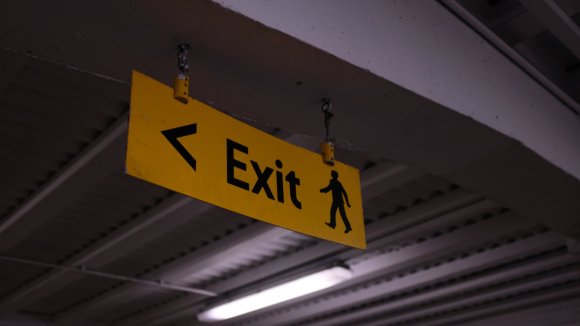
Having seen Exit 8 but before I saw Backrooms, I fired off some instinctive ideas and feelings about what ‘liminal horror’ might or might not be:
In liminal horror the space itself is the source of the unease, not the ghosts or monsters that lurk within it. A still image of an empty room can evoke the appropriate sense of unease, partly because it is empty.
I wrote my own review of series 2 of Broken Veil and, on Letterboxd, a longer than usual review of Backrooms, which I loved, even if it frustrated me.
And with my day job hat on, I wrote about designing services for people on low incomes, drawing on my own experience of childhood poverty:
Something I don’t hear talked about enough, or ever, really, is how we might build more inclusive design teams with people who bring fresh lived experience to the table… Culturally, there’s something about taking steps to make sure ‘professional’ is not a euphemism for ‘middle class’. Hire people with accents and imperfect grammar. Hire people who don’t even own a blazer. Hire people who have never been on a skiing holiday and don’t know which fork to use at a formal dinner.

What I’ve been doing
I’ve been trying to make my brain work in healthier ways lately. How can I force myself to rest and relax instead of trying to be productive all the time? How can I find hobbies that don’t turn into competitive pursuits?
So, I ended up making a couple of Airfix kits, because Lidl was selling ‘starter sets’ for about £7 a pop, including paints and glue and what have you. The Land Rover and Aston Martin DB5 I made are distinctly imperfect but, boy, did they take my mind off my worries. You can’t fret about work when you’re trying to work out how to fit tiny wheels to a tiny axle.
My journaling has also ramped up, with six months’ continuous diary keeping at this point. I don’t want to be a journaling wanker but keeping a notebook with me has stopped me reaching for my phone as often. I’ve also started to find new ways to use my notebooks, such as collecting stickers from lampposts around Bristol.
I’ve continued to mostly watch non-American films, lapsing during last week’s heatwave because I needed air conditioning. On BlueSky I called for recommendations for non-obvious folk horror films, which produced this excellent watchlist, which led me to watch The Vourdalak on the Channel 4 streaming app. It was truly excellent and is one of the films I’ve rated most highly this year.
I’ve been making zines because, again, I’m trying to find hobbies that aren’t screen-based, with low stakes. Last weekend, I went out determined to take some photos that I could turn into a zine. Knowing I was going to be making a zine focused my mind and made me take more and better photos. But knowing that it didn’t really matter also helped me feel more open minded and relaxed about the whole process.
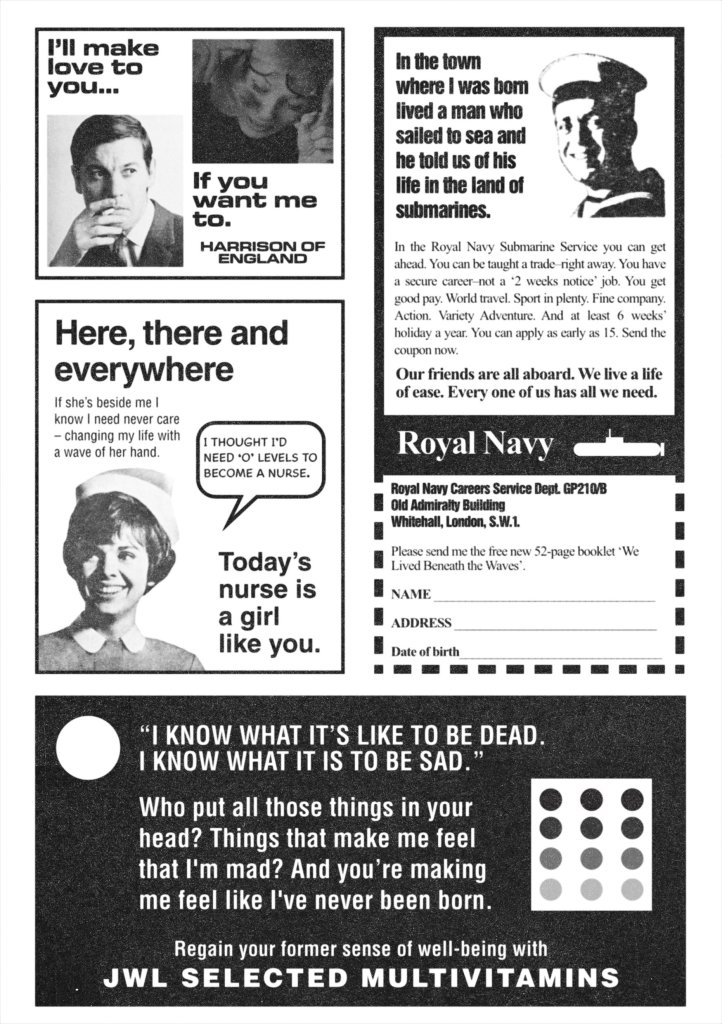
Last night, while my partner was watching football, I mocked up vintage newspaper advertisements based on songs from Revolver by The Beatles. There was no real point to this activity which is what made it so relaxing and, for the first time in a while, I went into a full-on flow state.
On the writing front, I’ve been revisiting and editing my crime novel The Sleep That Knows No Waking because (breathes into a paper bag, tries to look unfussed) I’ve finally got an agent who read it, thought it was good, and is keen to get it out to potential publishers.


