Lists and guides can be a great way to find new books to read, films to watch and music to listen to. They’re also difficult to put together and seem to make people furious.
As I write, the most recent list to have riled people was The Guardian’s top 100 novels of all time. The criticisms of the list are along these lines:
- “My favourite book isn’t on it.”
- “A book I hated is on it.”
- “Nobody really likes these boring books, they’re just being pretentious.”
- “The very idea of a list offends me, why must everything be counted and categorised?”
Because this particular list is interactive and helps readers tot up how many of the books they’ve read, there’s also some anxiety around not having read enough of them or having read fewer of them than other people. And anyone who has read quite a few of them is, of course, lording it and showing off.
Honestly, I think the list is fine. As critic and writer Andy Miller has pointed out, however you cut it, these are 100 worthy, interesting, notable books. I didn’t personally get much out of Ulysses but I don’t dispute its right to be on the list because I am not the most special boy and the world does not revolve around my tastes.
The controversial Sight & Sound top 100 films list from a couple of years ago prompted similar debate – which is, of course, exactly why publications go to the immense trouble of running polls and compiling lists. Not cynically, as ‘clickbait’, but because they know that, whatever they might claim to the contrary, people are, in fact, extremely interested in lists and are likely to engage with them as a result.
What I saw on BlueSky yesterday, dismissed as ‘discourse’ by the weary eye-rolling classes, was lots of people having passionate, involved discussions about books. And reacting against the list is just another totally valid way of engaging with it.
For me, that conversation spilled over into a very enjoyable discussion with my partner in the pub, and a flurry of interesting messages with a couple of writer pals.
What does ‘best’ mean anyway?
One problem with lists and guides is that there are a hundred different ways to approach the question of what is ‘best’.
If you’re choosing a hundred novels to represent the best of human intellectual endeavour, and the full breadth of global culture over centuries, your list will look one way. If it’s about which novels you’d take to a desert island, it might be quite different.
You might also think about novels that have meant the most to you over the course of your life, or novels that are socially important, or novels that will have the widest popular appeal, or novels you’d recommend to friends, or…
These are all interesting questions with which to grapple and, remember, lists aren’t rationed. We can have as many as we like, and anyone can write one for the group to get mad about, as long as they’ve got a blog or social media account on which to share it.
Short lists beat long ones
A hundred novels sounds like a lot but it’s not. Of course good and important books are going to get left out.
Even so, if I asked a friend for recommendations and they gave me a list of a hundred books, films or albums, I’d think it was too much, and not particularly helpful.
A list of ten items is more useful. When I create Letterboxd lists they often include only ten or twelve films. That seems digestible and achievable to me. It’s enough to make an argument and to avoid marginal cases and fuzzy edges.
A list of three recommendations might be better again, though, and perfect for social media. To paraphrase, “If I had more time, I’d have made a shorter list.” If someone asks, for example, “I liked The Big Combo, what should I watch next?” you can suggest:
- something safe and similar (The Big Heat)
- something a little more obscure (Kansas City Confidential)
- something tangentially connected (Leave Her To Heaven)
Interesting doesn’t always mean good
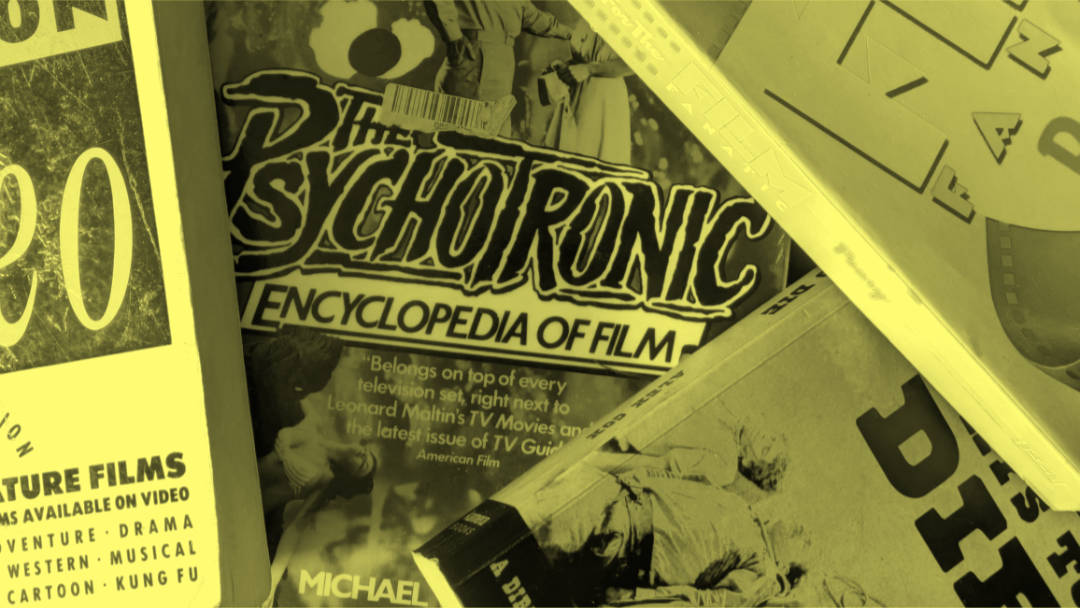
One of my favourite podcasts, Pure Cinema, has recently been focused on two important books by Michael J. Weldon, The Psychotronic Encyclopedia of Film from 1983 and The Psychotronic Video Guide from 1996.
These are great breeze blocks of books and intimidatingly comprehensive. But, of course, you’re not really supposed to read them from cover to cover so much as dip into them for reference, or at random.
I also watched a short documentary about the BBC’s Moviedrome strand that popped up on BFIPlayer the other day. Moviedrome ran from 1988 to 2000, originally with filmmaker Alex Cox as the host, and later critic and documentarian Mark Cousins.
The format was simple: before a showing of one of the many films in the BBC’s library of licensed titles, Cox/Cousins would speak for two or three minutes, setting the context and giving the viewer some ideas to bear in mind.
It was hugely influential in establishing a British angle on the canon of cult films. I often ended up watching it and taping the films for my personal collection. Ask any British film enthusiast of a certain age when they first saw a particular cult film and there’s a good chance it will have been via a Moviedrome screening.
What both Weldon and Cox do well is to explain with energy and enthusiasm why a film is noteworthy and valuable, even if it might not make it onto that rather highbrow Sight & Sound list anytime soon – even if, frankly, it stinks, and they don’t personally like the movie at all.
I’m drowning, help
What properly curated guides and lists do is reduce the cognitive load of navigating an overwhelming media landscape.
They make the millions of books, films and records we’ll never get to feel a little more manageable.
They help us decide how to spend our time, energy and money. And they give us permission to focus on certain things while ignoring others.
The only problem is knowing which guides or lists to look at. We probably need a top 100, as voted for by experts.
My list of 10 great novels
In case you’re interested, here’s the list I’d have submitted if, for some reason, The Guardian had asked my opinion:
- The Long Goodbye by Raymond Chandler
- Great Expectations by Charles Dickens
- War & Peace by Leo Tolstoy
- The Code of the Woosters by P.G. Wodehouse
- The Rising of the Moon by Gladys Mitchell
- The Yellow Dog by Georges Simenon
- The Inheritors by William Golding
- Buddenbrooks by Thomas Mann
- The Haunting of Hill House by Shirley Jackson
- Ripley’s Game by Patricia Highsmith


One reply on “Lists, curation and the power of brevity”
[…] wrote about the power of lists and the act of curation – giving people enough to help them find something cool and interesting without totally […]
LikeLike