Categories
Fiction

FICTION: The Fugitive

In the late afternoon, slow-moving cloud came in off the mountains and burst over Maxton City. Main Street had just been macadamed the year before and the rain turned it into a stream.

Dan Todd used the storm as an excuse to drop into the Turkey Inn on his way home from the newspaper office. He had already dawdled and detoured. He was avoiding the road home, and the one-pot dinner he knew was being kept warm on the stove.

That damn black pot. The thought of it made his gut hurt. Hazel always did use too much salt, and never trimmed the fat off the meat. Which would be fine, which he could live with, if she cooked it long enough for the damn fat to render out, but damn her, she never did. It just stewed like white rubber, and then he wouldn’t sleep with it sitting on his gut.

The Turkey was an old wooden building, one of the oldest in Maxton. In recent years, however, the old half-height saloon doors had been replaced with shining new ones in chrome and glass. They looked out of place but a travelling salesman from the city had dazzled old Jim with talk of modernisation, hygiene and glamour. It was true that  they kept the dust out in summer. Dan pushed his way in and let the door swing behind him.

The bar was gloomy, and downright dark towards the back. Jim ought to have switched on the lamps, what with the storm having made it so dark outside, but he always waited until six o’clock. It was a point of principle.

The barroom was long and thin. The counter was of polished wood with big cut glass mirrors on the wall behind. A row of stools lined the bar and there were wooden booths with benches along the opposite wall. There was a cigarette machine, a gum machine, and a cardboard sign that said ‘Please pay when served’.

Music was coming from a radio on the counter, a big city dance band strangled through a small speaker. Dan didn’t recognise the song but could hear somebody crooning about the moon and loneliness.

Dan took off his hat, revealing fine, fair hair, and slapped the felt brim firmly against his hand. Rainwater scattered on the floor. He hung the hat on the stand by the door. Then he shook off his coat and hung that up, too. He used his handkerchief to wipe raindrops from his spectacles as he approached the bar.

‘Beer, if you please.’

Jim was a round, blank-faced man bald except for tussocks of hair above his ears. He poured a mug of Old Joe’s Lager Beer and placed it on a napkin on the bar.

Dan glanced along the counter to the only other customer.

He was a hunched, miserable looking man in a heavy plaid jacket with a sheepskin lining. His head hung over an almost-empty beer mug that was clutched in his thick, dark hands.

Dan had few friends. He didn’t need them. But that night, he wanted to talk, and he heard himself saying: ‘Buy you a beer, friend?’

The man looked up.

Dan had never seen such eyes. They were like those of a whipped dog, or a seasick stowaway. The whites were the colour of slow-baked cream.

‘Had a couple already,’ he growled.

Dan began to turn away.

‘Could handle another.’

Jim looked at Dan, who nodded. As Dan lifted himself onto a stool, Jim placed the beer in front of the stranger.

‘Obliged to ya,’ said the stranger. He pushed his spent glass away and lifted the fresh one, glittering with dew, in Dan’s direction.

‘Name’s Dan Todd,’ said Dan. ‘What do I call you?’

The man on the other stool turned slowly to look over his shoulder, the movement creaky and apparently painful. He turned back and glanced at Dan from under black, unruly brows.

‘Call me Grant.’

‘That your first name or your last?’

Grant took a long gulp of beer and rubbed foam from his stubble-covered upper lip.

Now he was settled next to Grant, Dan could detect a musk about the man that he didn’t like. Men often had a smell after a day’s work. Heck, even he needed to shower after a day baking in that miserable office which the old man insisted on keeping sealed like a diving bell. Grant’s smell, though, was rotten, as if he was sick and didn’t yet know it. It came out of his pores and in his breath whenever he turned a little towards Dan.

‘Hope you don’t mind a little company,’ said Dan, hoping that Grant would send him away.

‘I ain’t a big talker but I don’t mind listening,’ said Grant.

‘You might regret saying that, friend,’ said Dan with a dry laugh. He took his beer mug in his strong right hand and sipped a little. ‘I’ve got a lot on my mind.’

Grant rolled his yellow eyes towards Dan and waited.

‘Well, it’s just that, oh, well, a fellow gets so damn bored.’

‘Bored how?’

‘See, the thing is, I’ve never lived anywhere but Maxton,’ said Dan. ‘I didn’t even go to college, and I missed the war. Started writing for the paper when I was fourteen and I’ve been there ever since. I suppose it’s been quite different for you?’

‘I know the road, that’s true,’ said Grant. ‘Six states and five countries.’

With a sigh, Dan said, ‘Gosh. Doing what?’

‘Picking fruit. Crewing boats. Driving trucks. Peeling taters.’

‘I should have done all of that before I married,’ said Dan. ‘I should have done everything. Are you married?’

‘Was.’

‘Then you know how it is. The same conversations, the same dinners on the table, the same old flower arrangement on the stand in the hall.’

Grant grunted.

‘Sounds tough.’

Before Dan could reply Grant shivered as if an earthquake had shaken his body.

‘Got a fever?’ asked Dan, leaning back in his stool. ‘Get caught in the storm?’

‘Hungry, mostly,’ said Grant. ‘Ain’t eaten today.’

Dan waved a hand at Jim. The barkeep had slunk away to the far end of the bar to watch the rain on the glass but saw the movement from the corner of his eye.

‘Couple of sandwiches,’ he said.

Jim nodded and disappeared through a door into the kitchen.

‘You was saying about your wife,’ said Grant. ‘Them flowers in the hall.’

Dan knew he wasn’t really interested. It was just that he’d rather hear Dan talk than talk himself. Dan rubbed a hand through his damp hair and pushed his glasses tight to the bridge of his nose.

‘I shouldn’t have said anything,’ said Dan. ‘It’s not gentlemanly.’

‘You was saying about the dinners and the conversations.’

There was a suggestion of bitterness in Grant’s voice now. Jealousy, perhaps, Dan thought.

‘I don’t mean to complain,’ said Dan. ‘I don’t mean to boast either. We’re just like any other couple that’s been married five years. Not sick of each other, exactly, but—’ Well, he thought, maybe sick of each other is exactly right. ‘I like apple pie but I don’t want to eat it every damn day.’

Grant finished his beer in a single long pull as Jim returned with two thin, greasy sandwiches. Nobody came to the Turkey to eat. Grant flicked at one sandwich with a dirty nail, peeled back the bread, let it drop.

‘Another beer,’ Grant said.

‘Put it on my tab,’ said Dan. ‘I’ll take another, too.’

There was a sudden change in the air in the bar and the door made a booming sound as it was thrown open. Two men entered, followed by a gust of wind carrying about equal amounts of dust and rain.

Both were dressed in hunting clothes, plaid shirts and woolen caps, but Dan noticed immediately that they were wearing polished black city shoes.

‘Howdy,’ said one of the men with a broad, childlike smile. He was grey-haired, lean and tall. He looked everywhere but at Grant.

His companion was younger with rough red hair and a sharp jaw. His big teeth didn’t quite fit in his mouth. He looked directly at Grant and thereafter his eyes didn’t move from the shaggy figure at the bar.

‘What’ll it be?’ asked Jim.

‘Two beers,’ said the older man.

‘Not for me,’ said the other, still staring at Grant. ‘Coke, if you have it, or root beer.’

They took seats at the end of the bar, one looking at Grant, the other pointedly not.

‘My wife was a wonder,’ growled Grant, almost under his breath.

Dan turned so that his back blocked Grant from view. He did not know why he did this, only that he did not like the young red-haired man, not at all.

‘Not too good with the flowers or conversations but–’ He gave a low, howling whistle. ‘She was sure nice to be around. Sure knew how to make a feller feel like a million dollars.’

‘Then why did you leave her? Or let her go?’

Their conversation was now being held at a whisper and sounded more conspiratorial than perhaps they knew.

‘Somebody killed her,’ said Grant. He took hold of the beer glass in front of him and gave it four quarter turns with his dirty fingertips until it was back where it started.

Dan swallowed.

‘Somebody?’

‘Not me,’ said Grant, wearily. ‘Somebody. Something. They never did find out.’

‘Something? Who do you mean, “they”?’

Dan glanced towards the two men at the end of the bar and then back at Grant.

‘Who are those men?’

‘I ain’t never seen ‘em before today.’

‘Well, I just don’t know what to think,’ said Dan. He took a mouthful of beer, struggled to swallow, as if he’d forgotten how.

‘Don’t think nothing. We’ll finish our beers and then I’ll walk out of here. They’ll follow me and something will happen, who knows what. But it won’t matter none to you because you’ll be home with that wife of yours soon enough, feeling glad you ain’t me.’

For the first time, Grant laughed. It was a rough, raw bark.

‘The grass is always greener, they say,’ said Grant, ‘except there ain’t nobody looking at my lawn and wishing it was theirs.’

Grant drank some beer. He and Dan sat in silence for a minute before he drank the rest.

As he pushed back the stool it scraped on the boards and the two detectives, or special agents, or whatever they were, looked sharply in Grant’s direction. There was no jollity in the older man’s face now, and the younger man looked ready to wrestle a mountain bobcat.

Grant didn’t offer to shake Dan’s hand, which Dan was glad about, having seen his filthy nails and the blisters on his palms.

‘See you around,’ Grant said as he pushed past and headed for the bar’s front door. On the mat, he pulled up the collar of his plaid jacket and retrieved a woollen hat from his jacket pocket. He pulled the hat on tight, and low over his eyes. Then he stepped out into the blue evening light.

The moment the door was closed, the older of the two detectives threw a bill on the bar.

‘Keep the change.’

They rushed out into the street after Grant.

At last, when it was just Dan in front of the counter and Jim behind it, the two men spoke.

‘Policeman, I reckon. They believe he killed his wife,’ said Dan.

‘No smoke without fire,’ said Jim. ‘That feller stank of Folsom.’

‘I wouldn’t know,’ said Dan.

‘Some reporter,’ said Jim with a smile.

Jim checked his watch and switched on the lights. They filled the empty bar with queasy yellow light. The dance band on the radio finished with a flourish and a soap company spokesman began talking about how to avoid ‘scummy dishpan film’.

‘I’d better be going,’ said Dan. He looked at his glass of beer but didn’t finish it.


When he stepped outside he found the sky clear, the storm having blown on clean through the valley, and dusk coming on. There was a full, round moon rising faintly above the spikes of the ponderosa pine trees on the foothills.

Main Street was quiet, in that just-scrubbed silence that comes after a storm, and Dan could hear his own footsteps on the sidewalk as he tramped towards home. He was crying, just a little, because of the cold air in his eyes, he told himself, though he was thinking of Hazel and how sweet it would be to sit with her in front of the radio, even if there was nothing to talk about.

He could tell her about Grant, he supposed, but he wouldn’t. It would scare her, in lots of different ways.

The next morning Dan left his house under a cold, clear sky, feeling rested and fortunate. He passed the fine old houses on the street, each spaced apart with room for a paddock or orchard, and smiled. Some had cars or pickup trucks parked outside, none of them new, but all well cared for and clean.

As he neared the end of the road, he saw that there were big black cars parked along the edge of the forest that led into the foothills. There were men in uniform, too. As he came closer, Dan saw Pete Nachel, the Sheriff, and two of his deputies. Pete was a tall man with a moustache whose points reached his jaw, like Wyatt Earp. His hat was trimmed with a gold cord. There were men from out of town, too, in black suits and black hats.

‘Morning, Dan,’ said Pete as Dan approached. ‘Hear any trouble here last night?’

Dan stopped and peered into the trees.

‘Walked this way at about six thirty yesterday evening and all was well. What’s the problem?’

Pete looked towards the out-of-towners who were busy supervising a photographer.

‘Couple of G-Men dead in the gully. Followed one of them public enemies up this way. Been tracking him for months. Man named Grant.’

Dan swallowed hard and licked his dry lips.

‘Golly. And he shot ‘em?’

Pete pursed his lips and shook his head slowly.

‘Well, no. They’re cut up pretty bad. They say he done it with a knife. In a frenzy, they say. That’s how his wife got it.’

‘Did they find a knife?’

Pete squinted and tipped his head to one side.

‘Well, maybe it was a knife, maybe it wasn’t.’

‘What do you mean?’

Pete took off his hat and drew his long fingers through his thin hair.

‘This is still wild country round here, Dan, and I say an animal done it.’ He nodded firmly. ‘Biting and tearing, damn near minced… Yes, an animal. Can’t be nothing else. A man couldn’t have done it, not like that.’

Dan stood silently, staring down into the darkest part of the forest, and thought to himself: Old Grant never did eat that sandwich, hungry as he was.

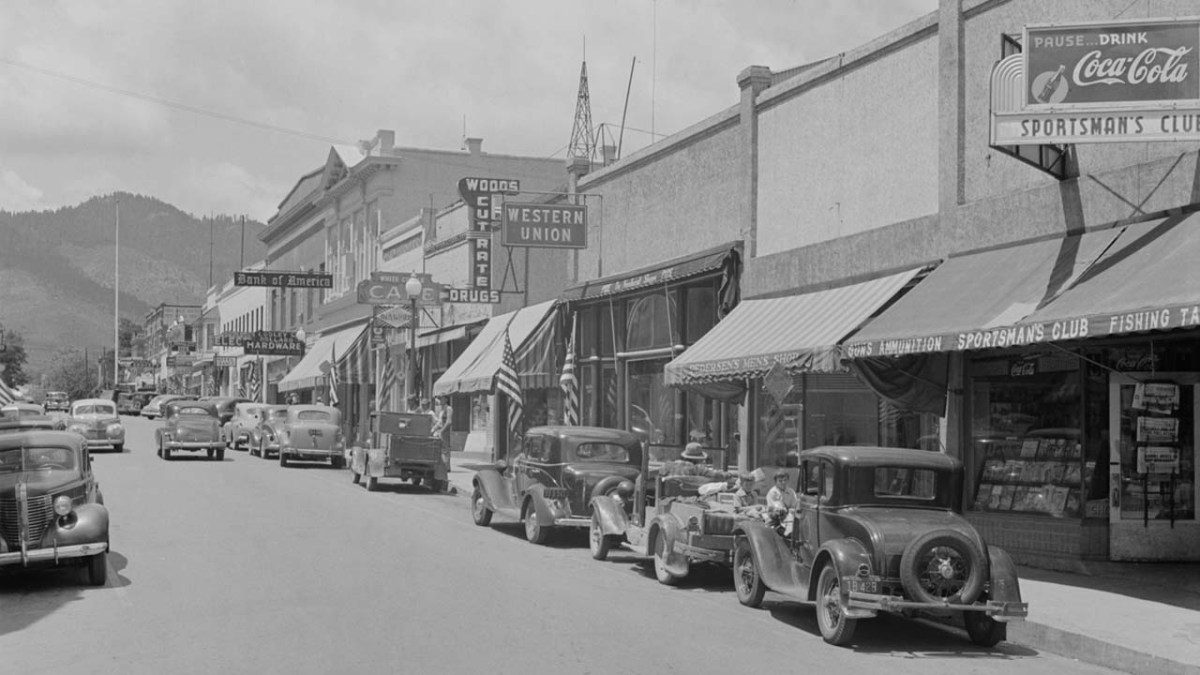
Main image: Yreeka, California, by Lee Russell, 1942, in the public domain via the Library of Congress.
Categories
Fiction Film & TV

FICTION: Scholomance, dir. Ewart Stangebye, 1927

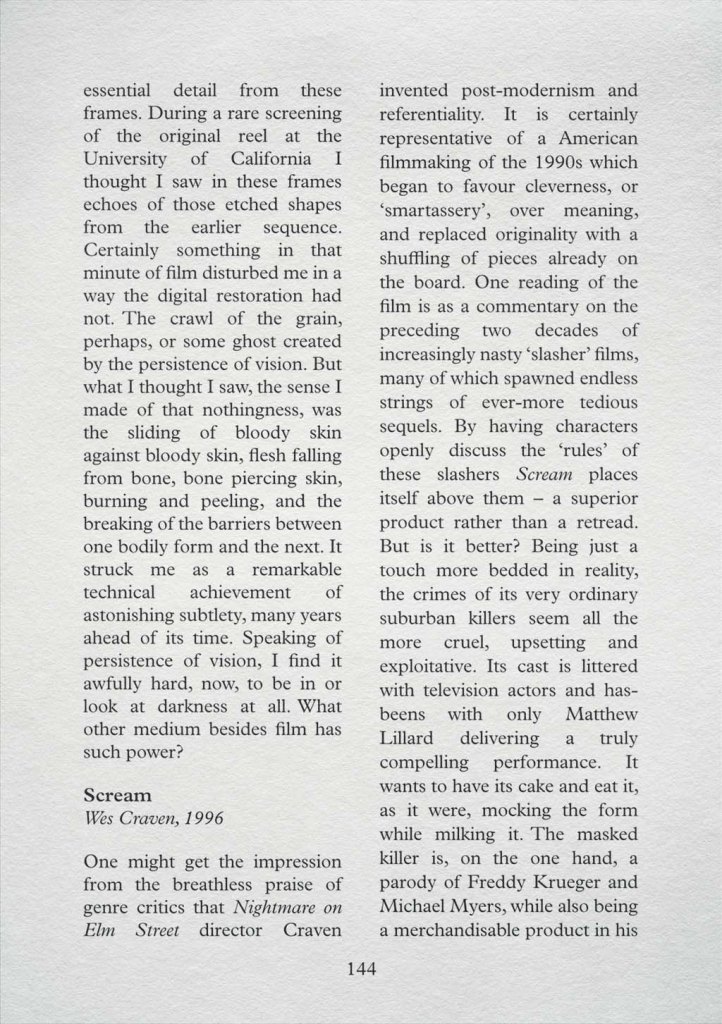
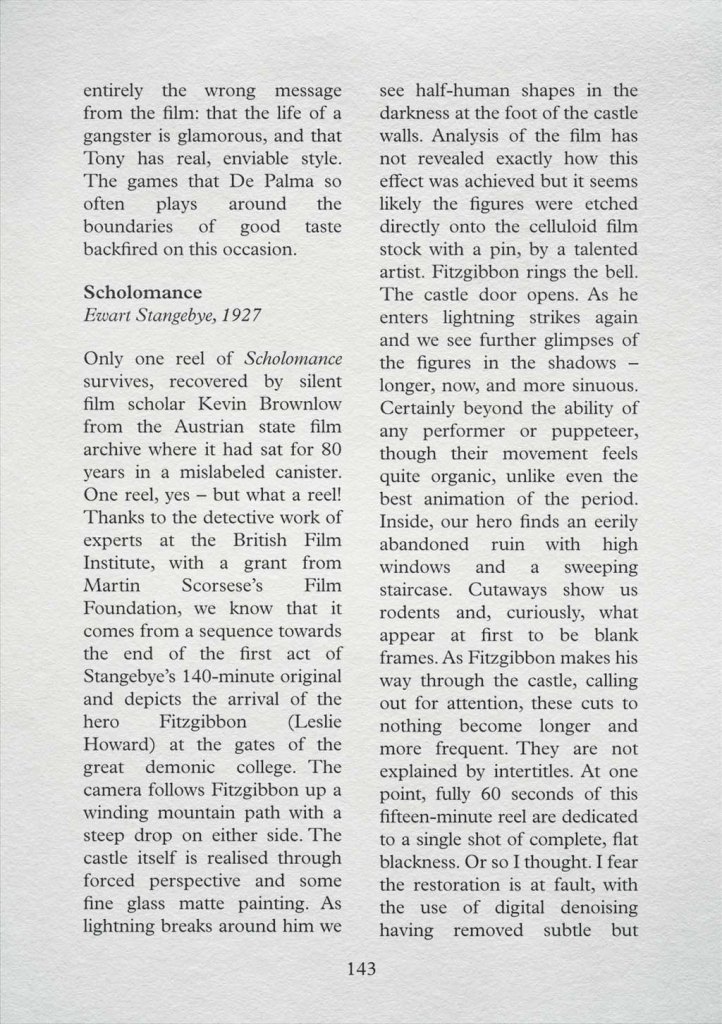
A page from a film guide that opens with the tail-end of a review: "...entirely the wrong message from the film: that the life of a gangster is glamorous, and that Tony has real, enviable style. The games that De Palma so often plays around the boundaries of good taste backfired on this occasion. Scholomance, Ewart Stangebye, 1927. Only one reel of Scholomance survives, recovered by silent film scholar Kevin Brownlow from the Austrian state film archive where it had sat for 80 years in a mislabeled canister. One reel, yes – but what a reel! Thanks to the detective work of experts at the British Film Institute, with a grant from Martin Scorsese’s Film Foundation, we know that it comes from a sequence towards the end of the first act of Stangebye’s 140-minute original and depicts the arrival of the hero Fitzgibbon (Leslie Howard) at the gates of the great demonic college. The camera follows Fitzgibbon up a winding mountain path with a steep drop on either side. The castle itself is realised through  forced perspective and some fine glass matte painting. As lightning breaks around him we see half-human shapes in the darkness at the foot of the castle walls. Analysis of the film has not revealed exactly how this effect was achieved but it seems likely the figures were etched directly onto the celluloid film stock with a pin, by a talented artist. Fitzgibbon rings the bell. The castle door opens. As he enters lightning strikes again and we see further glimpses of the figures in the shadows – longer, now, and more sinuous. Certainly beyond the ability of any performer or puppeteer, though their movement feels quite organic, unlike even the best animation of the period. Inside, our hero finds an eerily abandoned ruin with high windows and a sweeping staircase. Cutaways show us rodents and, curiously, what appear at first to be blank frames. As Fitzgibbon makes his way through the castle, calling out for attention, these cuts to nothing become longer and more frequent. They are not explained by intertitles. At one point, fully 60 seconds of this fifteen-minute reel are dedicated to a single shot of complete, flat blackness. Or so I thought. I fear the restoration is at fault, with the use of digital denoising having removed subtle but..." It continues on the next page.
The following page from the same film guide: "...essential detail from these frames. During a rare screening of the original reel at the University of California I thought I saw in these frames echoes of those etched shapes from the earlier sequence. Certainly something in that minute of film disturbed me in a way the digital restoration had not. The crawl of the grain, perhaps, or some ghost created by the persistence of vision. But what I thought I saw, the sense I made of that nothingness, was the sliding of bloody skin against bloody skin, flesh falling from bone, bone piercing skin, burning and peeling, and the breaking of the barriers between one bodily form and the next. It struck me as a remarkable technical achievement of astonishing subtlety, many years ahead of its time. Speaking of persistence of vision, I find it awfully hard, now, to be in or look at darkness at all. What other medium besides film has such power? Scream, Wes Craven, 1996: One might get the impression from the breathless praise of genre..."
Categories
Fiction municipal gothic

FICTION: Winter Wonderland

When Dad turned up with tickets for Winter Wonderland, Tyler and I were truly astonished, for several reasons.

First, we hadn’t seen Dad since October, when he and Mum had one of their dramas. He stayed out all night and she waited for him. When we went to school, he still hadn’t turned up. He wasn’t there when we got home and she only laid three places for dinner. We knew better than to ask.

Secondly, it had already been agreed this was going to be a Little Christmas. In our family, this was an important concept. When Mum and Dad were flush, or had managed to patch things up with one or both sets of grandparents, we might get a Big Christmas. That meant proper presents, a proper Christmas dinner, and maybe even a proper tree. But most years were Little Christmases, where we each got a few things in a stocking and Christmas dinner was whatever Mum could conjure up from the freezer and the cupboards. One year, we had instant mash with Bisto and burgers.

Thirdly, even when there was a little bit of money around, Dad never bought us anything. It never occurred to him to treat or spoil us, or even to pretend to find fifty pence behind our ears. If he had coins in his pocket, he spent them on himself. Or very occasionally on Mum, if he was trying to heal a wound. Clothes, usually – skimpier and more gaudy than anything she would ever buy herself.

So, when he arrived on the doorstep, pink faced and cider breathed, chuckling and prancing like a clown, we simply didn’t believe him. He waved the envelope at us and pinched our cheeks.

‘Who’s the best Dad in the world, eh? My lovely girl and my lovely boy.’

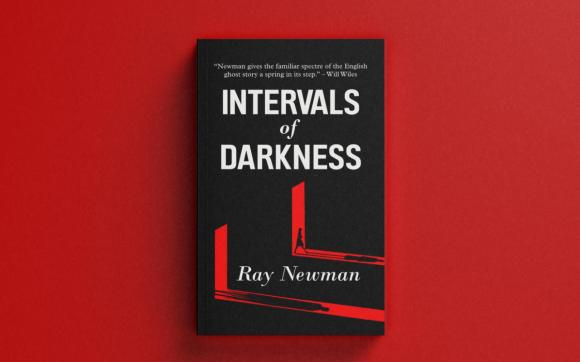
You can now read the rest of this story in my collection Intervals of Darkness available as an eBook and paperback from 7 September 2024.

The cover of Intervals of Darkness by Ray Newman. It is mostly black with an illustration showing two doorways bathed in red light. Someone is striding out of one doorway casting a long shadow. In the other doorway is just a shadow, implying an unseen figure.

Declaration on the use of generative AI

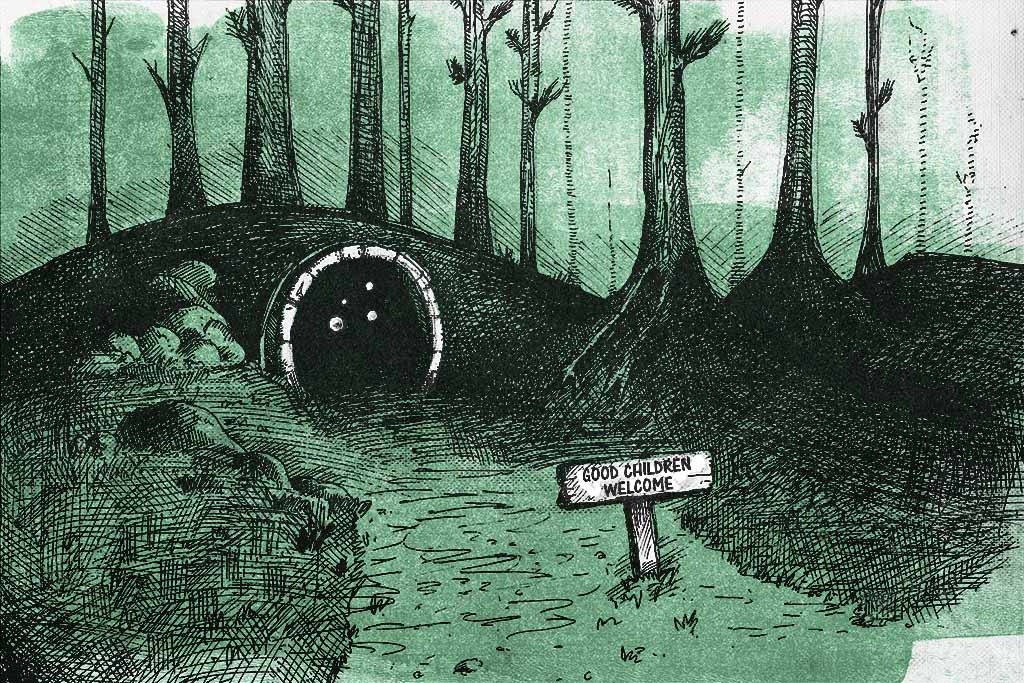
I didn’t use any AI tools, such as ChatGPT, to write the story. I drew the illustration myself with pen, on paper, and then edited it in Photoshop, which did include a small clean-up on the signpost using Adobe’s Generative Fill (Adobe Firefly).

Categories
buildings Fiction

FICTION: The Architects

‘I think I’d like to see Mountvale again,’ said Julian German from the tangle of his duvet.

Esther German, on her way to the airing cupboard with unnecessary haste, paused in the doorway of his room and peered at him. She smoothed a towel over her arm.

‘Did you say something, Jules?’

‘I said, woman, that I would like to see Mountvale one last time.’

Esther removed her glasses and let them hang around her neck on their beaded strap. She blinked and twitched.

‘Mountvale?’

‘Christ give me strength… Mountvale school. Bloody Mountvale. Again, meaning another time; once more.’

Esther came into the room with its smell of antiseptic cream and sweat. She lowered herself into the dusty steel-framed chair against the wall. Its feet scraped on the dull parquet. Julian winced.

‘The weather’s awful. Wouldn’t you rather spend the day in? I can find a film for you to watch.’

Julian put his hands behind his head.

‘No, I bloody wouldn’t. I want to see that school. One last time.’

‘I don’t see why. It’s a very ordinary building and–’

‘Russell Cavendish brought it up the other day. Said somebody from Historic England was talking about getting it listed. Unique example of post-war construction.’

‘But Russell–’

‘The first use of curtain walling in the whole county,’ Julian went on.

Esther looked towards the large window, speckled with rain and streaked with green moss at its corners.

Julian shook his head and growled.

‘Are you going to drive me or shall I drive myself?’

Julian had always been too tall to sit comfortably in cars. Even now, with a hump in his back and a couple of inches lost to the erosion of his spinal cartilage, he looked uncomfortable in the passenger seat of the Citroen.

Esther leaned forward against the steering wheel, thin wrists at ten to two. Her lips were pulled back from her teeth as she squinted past the windscreen wipers.

A passing van threw a fine mist from the road.

‘Left,’ snapped Julian, pointing with bunched arthritic fingers.

Esther ignored him.

He grabbed at the steering wheel.

‘Bloody left, woman! Left.’

She slapped his hand away and he winced.

‘Don’t panic, darling. I’m driving, not you, and I know the way.’

He stroked the translucent skin where she’d made contact, inspecting for a bruise, and pouted.

‘Do you? Know the way, I mean? I didn’t see you look at a map before we left.’

‘I don’t need a map.’

‘Typical woman. Why bloody plan anything?’

At a roundabout, she took the right exit. Julian leaned towards the window, scanning the road signs. He looked over his shoulder.

‘Where the bloody hell are we going now?’

‘It’s funny,’ said Esther, her voice unsteady. ‘The listing thing. Nothing we worked on was built to last, was it?’

‘Speak for your bloody self,’ said Julian, forgetting for a moment his anxiety over the route. ‘I always saw my work in context as part of the broader sweep of history.’

‘Our work,’ said Esther.

‘Oh, for God’s sake…  Yes, yes, technically, yes.’

‘And do try not to lecture. I’m not one of your students.’

He shrugged and folded his arms.

‘You were never a preservationist, anyway,’ she went on. ‘Knock it all down, you used to say.’

Julian didn’t reply.

Esther took her eyes off the road for a moment and saw that he’d fallen asleep, quite suddenly, as he often did in the car.

‘This isn’t the way to Mountvale,’ Julian bellowed.

‘I do wish you’d wear your hearing aid, darling. Then you’d know how loud you’re being.’

‘I don’t need it. My hearing is fine. And this is completely the wrong direction.’

They were on a country lane, now, passing through a village with a Norman church.

‘I thought we might go somewhere else instead of Mountvale,’ said Esther.

‘Where the hell are we?’

He saw and recognised the pub and so knew the village.

‘There’s a layby up ahead. You can turn there.’

‘Wouldn’t you like to stop for lunch? You could have a pint of beer.’

‘Don’t mother, me woman. For one thing, you’ve had no bloody practice. Just turn the car around and take me to Mountvale.’

Esther did as she was told, struggling with the gear stick as she conducted a five-point turn in ever-heavier rain.

‘I’m sorry,’ said Julian after a few moments, once he’d got his way. ‘About the mothering business. I forget sometimes.’

‘It’s alright, darling,’ said Esther. She sounded weary.

‘I’d have been a dreadful father, anyway.’

‘You certainly aren’t a terribly good husband.’

Julian laughed.

‘That’s my girl,’ he said, reaching across to pat her thigh. ‘As good as you get, eh?’

She brushed him away.

‘I’m driving.’

As they got nearer to Mountvale, in the early winter twilight, Julian became agitated again.

‘This is the estate, isn’t it? It’s changed a lot.’

‘Well, a lot of lives have been lived here,’ said Esther. ‘These buildings were always meant to be used.’

‘Plastic windows. Pebbledash. Pastel paint. Dreadful. Why did they cover the concrete?’ He raised his chin in lecturing mode. ‘It had such purity.’

‘But we didn’t have to look at it every day, did we? Or live in it, or work in it.’

‘Not that old argument!’ said Julian raising his voice and twisting in his seat.

She took advantage of his distraction to make a deliberate wrong turn.

‘Goldfinger lived in his tower, didn’t he?’

‘For a short while. But Le Corbusier lived in a fishing cottage. And Lubetkin lived in a Georgian townhouse.’

‘I’d have gladly lived on any of the estates where we worked. Our house, the house I designed for us–’

‘That we designed.’

‘Yes, yes, our house is true to the principles, isn’t it?’

Esther didn’t reply to that, not even to mention the draughts that blew through the open plan living area, or the water that gathered on the fatally flat roof all year round.

They were on a crescent, now, with a rippling concrete road and prefabricated homes. The house lights and streetlights had begun to come on.

‘This isn’t the way,’ said Julian. ‘I’m sure I remember…’ His mouth opened and closed as he tried to grip onto something. Spit gathered in the corners of his lips. He slammed a hand onto the dashboard.

‘Central square, community centre, health centre, shopping parade, schools complex opposite – primary, junior, secondary. These crescents are at the other end of the estate.’

‘You’re quite right, so they are,’ said Esther quietly.

‘What?’

She didn’t repeat herself, just flipped on the indicator and entered the final phase of the journey.

It couldn’t be avoided, now.

She parked the car half on the kerb and turned off the engine. The lights died with it.

They sat together in silence as rain sounded on the roof and windscreen.

Julian sighed.

‘Where’s my umbrella?’

Esther reached into the back seat and found it for him.

He undid his seatbelt and got out. After a struggle he got the umbrella up and lifted it. In his swollen hand, over his big head, it looked absurd, like something from Jacques Tati.

As he shuffled to the black cast-iron gate, Esther remembered when his stride was long and confident. She pulled the hood of her well-worn anorak over her head and joined him.

She looped her arm through his and they shivered together.

The gate and fence were still there but beyond was wasteland: concrete, wild grass, scattered bricks and litter.

‘The school’s gone,’ he said quietly.

‘Yes.’

 A large sheet of clear plastic trapped in brambles snapped and boomed.

‘But Russell said…’

‘Russell’s been gone a long time, too, darling.’

‘Gone?’

‘Three years.’

‘A highly significant building, he said, and now…’

‘Not significant enough. And with too much asbestos.’

Julian snatched his arm away.

‘A sound material, in its day. Hindsight is a bloody fine thing.’

‘Come on, Jules, let’s go home. Aren’t you hungry?’

Julian didn’t move except to raise a hand to the railings. He wrapped his fingers around the rusting metal and the wind filled his eyes with water.

The next morning, the sun made golden stripes on the far wall of the bedroom as it passed through the blinds.

‘Esther! Where the hell are you? 

Esther’s footsteps sounded along the parquet in the hall. She appeared in the doorway, small and exhausted.

‘I’ve had a thought.’

‘Yes?’

‘I’d like to see Mountvale one last time.’

Esther blinked and sighed.

‘Mountvale?’

Categories
Fiction municipal gothic

FICTION: Last Christmas

Christmas Day, four in the afternoon, and the stale air in the front room feels like a weighted blanket.

Dad is asleep in his grubby chair, whistling through his drooping white moustache. Mum is fussing about, back and forth from the kitchen, groaning every time she puts weight on her hips. My sister is staring at her phone, scrolling, liking, scrolling, liking…

We’re not allowed to watch TV because our family tradition is to play board games and card games, except that doesn’t happen any more, not since Aunt Jenny died and Uncle Terry stopped coming. Now, we just vegetate and compost.

Two more nights to go. Just two more nights.

‘I’m going for a walk,’ I say, surprising myself. ‘Get some air and the last of the light.’

And I’m coat on, out the door, before anyone can stop me.

It doesn’t feel much fresher outside. Like most Christmases, it’s grey and almost muggy.

One foot in front of the other, walking nowhere in particular.

I’ve lived away up in the city for twenty years and my home town feels psychedelically weird, like one of my stress nightmares. Is this really where I grew up? Are these really the streets I used to play on?

The pylons that run the length of the main road on the estate crackle as the evening dew begins to settle. I feel the hairs on my neck spring.

Nobody told me the pub was gone. There’s just a bare space now, surrounded by a wire fence, and notices about planning permission.

On the corner, there’s a phone box. One of the glass and steel type, skeletal and unromantic. It was where I used to call my first girlfriend during university holidays. I stop for a moment and look at the dangling handset. I wonder if it still works.

Then it rings.

There’s no traffic on the roads, no sound at all from the nearby houses, and the electronic chirruping seems outrageously loud. I feel embarrassed, as if I’ve made it happen, and quickly walk on. The phone keeps sounding behind me, calling after me even, but eventually fades out of range.

I take the next left, towards Holy Trinity Church and a patch of grass we used to call, charitably, The Green. That’s where Deano Tremlett broke my ankle playing football, with the ‘NO BALL GAMES’ sign for one goalpost and a cricket stump for the other.

I pass a shuttered cornershop, a shuttered fishing tackle shop, and a house lit up like a Las Vegas casino. An inflatable peeping tom Santa is staring through the window of the bedroom.

As I near The Green, I remember something: next to the post box and the concrete planters full of cigarette ends, there’s another phone box. I’m not exactly braced this time but I am ready. When it rings, though, I still say ‘Bloody hell!’ out loud.

Oh, I see. I get it. Someone’s watching me and they’re calling it from a mobile. It’s a prank. I smile for the benefit of my hidden audience and reach for the handset.

‘Hello?’ I say.

I’d forgotten how bad they smell, phone box handsets: bad breath, mould, metal. The black plastic feels cold in my hand.

The line crackles slightly.

‘Who is it?’

Then I hear something. Drums. A thin echoing beat, like hold music.

Now this makes more sense. It’s a robocall. Spam. I breathe out, relieved, and slam the handset back into place.

Keep walking. Past the church, up a rough path by the side – Hog Alley we called it as kids – and through into Chamberlain Court. Follow that towards the secondary school, the primary school and the health centre.

Through windows and net curtains I see families on sofas or in armchairs, staring towards the TV, either slumped or wrestling with game controllers.

I notice the phone box on the corner of Franklin Road well in advance. Its glass is stained and fogged. There’s grass growing around its base. I think about avoiding it but don’t want to turn back the way I came.

And of course it rings.

‘Fuck off,’ I shout at it.

The ringing, somehow, gets louder, so I have to answer it before anyone else comes along.

This time, the music starts immediately, before I have time to speak. This time, I recognise it.

It’s the intro to ‘Last Christmas’ by Wham! with its chugging synthesisers and a wordless vocal. George Michael’s voice squeezes through the small speaker as he sings the first line: ‘Laaaast Christmas…’

Then the recording catches.

It’s not quite like a record skipping but, rather, an insistent hard-edged loop.

‘Last Christmas/ Last Christmas/ Last Christmas/ Last Christmas/ Last Christmas/ Last Christmas/ Last Christmas/ Last Christmas–’

It’s the same few seconds of music but seems more intense with each repetition.

I drop the handset and leave it swinging as I walk away.

I can still hear the music for a few steps, dissolving into pure treble, then disappearing altogether.

It’s getting cold now and I need to be home where it’s safe. I break into a jog.

Each phone box I pass rings for me, desperate to tell me something.

I run up the garden path and turn my Yale key, the one I’ve had since I was fourteen.

In the kitchen, Mum and Dad are hobbling about the dining table, bickering over the pickled onions and the cheese board.

‘What’s the matter?’ asks Mum.

Clammy and shaky, I force a smile.

‘Nothing,’ I say. ‘Just glad to be here.’

And I mean it.


If you enjoyed this story then check out my collection Municipal Gothic which has thirteen stories about ghosts on council estates, devil dogs in supermarket car parks and haunted tower blocks.

Categories
books Fiction municipal gothic

Municipal Gothic: 13 ghost stories

Council estates, motorway underpasses, bypass hotels, concrete cathedrals and run-down pubs. Places we all know, that we see where we live in suburbs and towns. Why shouldn’t they be haunted?

Municipal Gothic, my new collection of ghost stories, shows that they very much can be. It is now available as a paperback via Amazon, at £8.99 in the UK, $12 in the US and around the world at various prices.

In these thirteen stories you’ll meet a demonic black dog tasked with administering a lineal curse in the age of sperm donation; a witch’s familiar forced to live off fried chicken bones; an architect whose buildings can drive you mad; headless villains, and more.

It includes a revised version of ‘Modern Buildings in Wessex’, originally published as a zine or chapbook to some acclaim in 2020. It’s ghost story in the form of an architectural guide – M.R. James meets Ian Nairn.

David Southwell, of Hookland fame, is a fan of this particular piece which is how I got up the nerve to ask him to supply a foreword for the collection. He has plenty of interesting things to say about how ghost stories work, about working class fiction and, of course, about the power of plausible fake ephemera to conjure places that don’t exist.

In a similar vein, you’ll also find a new piece: ‘An Oral History of the Greater London Exorcism Authority’. Inspired by the kind of self-congratulatory in-house publications put out by public bodies in the 1970s and 80s, and by my love of institutional branding, it started life as a few mocked-up images on Twitter…

…but before long, I knew I’d have to write something more substantial to back up those ideas. It became an exercise in tone of voice – could I write first-hand testimony from multiple people? (Neville Hutchinson, the GLEA engineer who does not believe, and his colleague Ernest ‘Cabbage’ Lacomber are my favourites, I think.)

‘The Curse Follows the Seed’ is, as they say, ‘a very personal piece’ for reasons you might be able to work out when you’ve read it. It was the first story I wrote with the concept of municipal gothic in mind. Has anyone ever before set a key scene in a story in the area by the bins in a supermarket car park? I can’t help myself.

Other stories in the collection evolved from an abandoned novel. Why, when I try to write social realism, do ghosts, premonitions and black dogs keep turning up? See ‘Who Took Mary Cook’ for evidence of this.

Certain pieces emerged slowly, over the course of years, as I worked on them with my Wednesday night writers’ group. I must thank Andy Hamilton, Corinne Dobinson, Mike Manson and Piers Marter, and others who have come and gone, for their encouragement and advice. They saw scraps of ideas and helped me find the way, as with ‘Protected By Occupation’, which first landed with them in 2019 as a scrappy period piece inspired by the Lamb Inn haunting (PDF, bris.ac.uk).

Please do buy a copy of the book and let me know what you think. Or, more importantly, let Amazon and Goodreads know what you think – a quick rating and review is worth more than you can imagine.

Categories
Fiction

FICTION: [U115] The Beyond (Lennon)

Or ‘Revolution of the Dead’, with apologies to Ian MacDonald.

Page one.
Page two.
Page three.
A plain text version of this story is available here.
Categories
Fiction

FICTION: War Wound

The memory of the motorbike sustained John Patrick Fletcher through five years of war.

At Dunkirk he set fire to the Triumph 3HW the Army had given him when it ran out of fuel and, from the foxhole he had dug, watched it burn. It was a fine machine but nothing like the BSA he had at home. The Triumph was a workhorse, drab green and thick-set. The BSA was a leopard.

When the German soldier dragged him out of the hole, kicked and shoved him aboard a grey Opel truck with twelve other men in tattered battledress, John floated over it all. He levitated above the bad suspension that bounced them eastward over the course of days. Past the armed guards who sat by the tailgate, through the aperture in the canvas roof, he saw his favourite sight: open road.

This road wasn’t right. Too dusty and too wide. Surrounded by plains, with strange arrow-straight trees that looked more like telegraph poles. But it was enough to remind him of flying alongside dry stone walls, over kinks in the road that caused his gut to lurch, and past fields of sheep.

At the camp in the woods, staring sleepless at the bottom of the bunk above, he plotted routes in a dream-trance, forcing himself to move through each straight and turn in real time, ticking off the names of towns and villages: Stacksteads, Waterfoot, Cloughfold…

Shivering in the snow on a road building work party he would grip the shaft of a shovel and, with gloved hands, twist it, imagining throttling up on the wide road out of Blackpool.

Through four years of boredom he fed on memories of the vibrations and the growl, his physical imprisonment countered by the solidity of a remembered feeling: that he could go anywhere as long as he had a shilling for petrol. The war was a mere intermission in the spooling out of real life. A waiting room.

He broke his ankle playing football and spent two months in hospital reading the same pulp western novel over and again. Much better than working.

The work got harder. The rations got worse. The guards got both younger and older.

After five winters, one February, smoke appeared on the horizon. The guards told the prisoners to start stretching their legs and began to make them walk in the cold for a few hours each day. When the smoke got close enough to smell, they were ordered to start marching.

John dragged a sledge loaded with canned food. Shivering and scared, his feet pounded to tenderness in ragged, frozen boots, he watched as anyone too slow to walk was dragged into the forest and executed.

His consolation was that every step westward took him nearer the motorbike in the shed. It would need a service after all this time and there might even be some rust but he didn’t mind that – he’d enjoy sitting cross-legged in front of it with wire wool and a pot of delicious-smelling paint.

When what was left of the marching party reached its destination, John found himself working on the construction of an oil refinery. It was hard, dirty, shirtless work. Almost every night, the RAF would bomb flat the previous day’s efforts. More men died but John had got used to that. On the whole, he was pleased. Germany was faltering which meant that soon the war would be over and he could put on his helmet, goggles and leathers and roll her out onto the road.

One morning, there was silence. The guards were gone and the gates had been left open. A few hours later, Sherman tanks and Chevrolet trucks rolled through the town. Everyone cheered, even the German civilians. Even John. His eyes were drawn to US Army despatch riders on their low-slung Harley-Davidsons. The Americans handed out cigarettes and paperwork to the thin, weak British soldiers. John struggled to cram his bruised and shredded feet into a brand new pair of GI issue boots. They’d be good on the bike, he thought, flexing his ankle on an imaginary pedal.

After a month of waiting for something to happen, in late summer, he was ordered onto a truck with twenty other men and taken to an airfield. There, he was loaded onto an olive green C-47.

‘It’s a waste to send ‘em back empty,’ said an American military policeman as he herded them aboard.

John had never flown before. The fierce vibrations that shook his innards excited him, as if a hundred motorbikes were roaring at once.

The plane flew over fields and farms, harbours strewn with boats stranded on the mud, and then across the Channel, thick with steaming vessels, both military and civilian. Then the sequence repeated in reverse. Harbours and jetties, the Thames Estuary and London shining on the horizon. The fields looked different – smaller, less tidy, unmistakably English. As the plane dropped down towards another airfield he began to pick out details rushing past: the thatched roof of a cottage, the low flat tower of a country church in yellow stone, and a hedge-lined lane. The plane tracked the lane for almost a minute and, drifting and exhausted, John envisioned himself below, like a black-backed beetle racing at full throttle, tight into every curve.

Aboard a train to the North he couldn’t decide if it felt as if he’d been away a long time, or no time at all. The war had fixed things. The girls he couldn’t help but stare at wore the same kinds of clothes as in 1939, only more ragged, dyed brown and grey so that they resembled army fatigues. Everything was tired and dull, dented and run down. Birmingham, Sheffield and Leeds had gaps like open graves where there had once been buildings. The bricks looked blacker than ever.

Under the grey cloud that always sat on the valley, his home town was the same, barring a sentry box at the station and camouflage paint on the Railway Hotel.

With his cardboard suitcase in hand and an oversized suit hanging off his body, he walked. People stared at him and he stared back.

As the light faded, he walked along Ouseburn Street, passing Mafeking Road, Kimberley Terrace and Gordon Street. His heart began to beat harder as he reached the chip shop on the corner of Milepost Road. He could smell hot vinegar and stopped to stare in wonder at the blazing window which ran with condensation and beyond which dark shapes moved.

Milepost Road seemed as long as the war itself. Halving his pace every ten steps he put off arriving at the front door until it was truly dark. A neighbour in sagging trousers darted by, late for dinner, pumping out clouds of sweet smelling smoke from a short cigarette. ‘Now then,’ he said, by way of greeting.

‘Hello, Mr McCarthy,’ said John.

McCarthy waved over his cap but didn’t stop.

With a sigh John reached up to knock on the door and waited.

A light came on in the hall, visible in the sun-pattern stained glass above the door.

‘Who is it?’

‘It’s me, Mother.’ There was no reaction. ‘John.’

After a moment’s fumbling the door opened and there she was, pinch-faced, her black eyes glinting in the dimness caused by a low-wattage bulb and too much dark Victorian paintwork. She wore a grey dress with a lace collar and heavy black shoes that looked distinctly orthopaedic. Her hair was no longer brown but grey and her back had become hunched.

He leaned down to kiss her cheek. It was like brushing cold stone.

‘Well, there’s no dinner spare,’ she said.

‘I’ve eaten,’ he said. It was a lie.

She bellowed into the house as if announcing the arrival of a tradesman or some other nuisance: ‘It’s our John!’

There came a thundering on the floorboards above and his sisters appeared on the staircase. Evelyn, first, followed by Doris. They stopped halfway down and fell into the same pose, their faces with the same bland expression.

‘Well, he’s not having my room,’ said Doris.

‘Bloody hell – can I come through or not?’

He’d never sworn in front of his mother before. He saw a shock run through Evelyn and Doris. Their eyes switched to Mrs Fletcher.

She pursed her lips but stepped aside.

John walked past her, dumped his case on the floor, and marched straight through the kitchen. The three women followed him and dropped into formation, Mother in front, sisters behind, and watched with arms folded as he fumbled with the back door key.

‘If you need the lavatory,’ said Mrs Fletcher, ‘it’s indoors now.’

‘What’s wrong with this bloody key?’

Doris gasped.

‘I suppose this is army language,’ said his mother.

‘Here, let me,’ said Evelyn. She shoved John aside and carried out a manoeuvre which required her to hoist the door upwards as she turned the key in the lock.

John strode across the yard to the brick shed and opened the door. It was dark and filthy inside, foggy with dust and strung with cobwebs. Even so, he could see one thing clearly enough. He stared at the oil spots on the concrete floor.

‘Where’s me bloody bike?’

He turned wide eyes upon his mother and sisters who were now gathered around the back door as if to guard the entrance.

‘Well?’

His mother folded her arms.

‘I sold it.’

She shifted her chin up.

‘And the leathers and helmet.’

The wound in his ankle began to ache as an invisible weight settled on his back.

Categories
Fiction

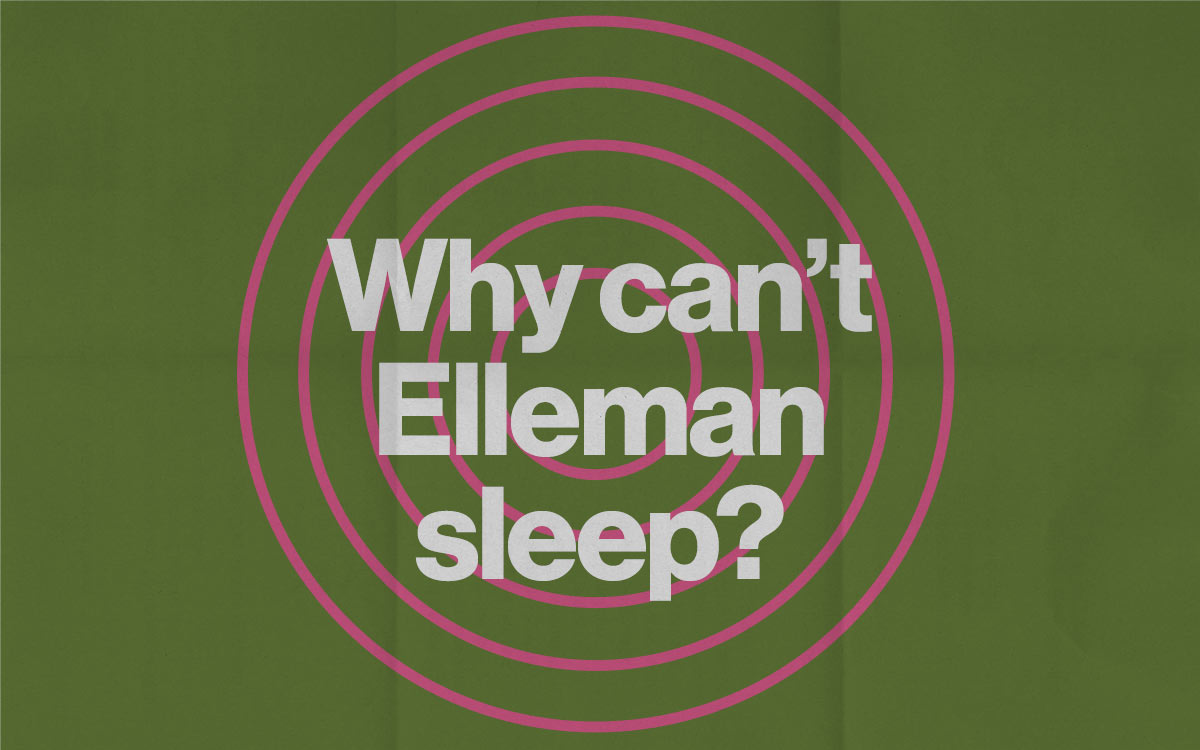
FICTION: Why can’t Elleman sleep?

Leipzig to Berlin to Klaipeda to Karlshamn to Stockholm to London.

Elleman spends six weeks in a safehouse in Ladbroke Grove, learning English from the Daily Mirror and Sexton Blake magazines.

At first, he thinks his insomnia is a stress response. London sounds different to Leipzig, smells different; he misses church bells and Bach on Sunday mornings.

The interrogators keep strange hours, too – a man and a woman, he with a moustache and pipe, she limping and fine-boned. They ask him questions at dawn, at midnight, on rainy afternoons. He draws organisation charts, picks faces from catalogues of mugshots and surveillance photographs – Henschke, Tiepelt, Brosig, all of them. He reproduces schematics from memory.

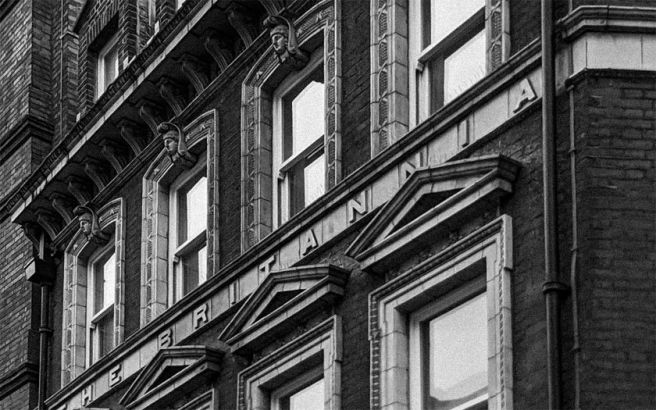
Windows on a London apartment block.

The first time a full twenty-four hours passes without a minute of sleep, he doesn’t notice. He moves from bare bedroom to bare bathroom to bare sitting room as the grey day comes and goes. When night falls, he shaves, startled at his own red-flooded eyes in the mirror. He puts on a clean, new English shirt and a new English tie in moss green. Then he goes to the window and watches the street.

Red buses, black cabs, Ford cars with impotent fins. In the orange circle of the street lamp he sees pretty girls in short skirts, men in pinstripes, then, after midnight, only vagrants and slow policemen in black overcoats. Dawn comes, with drizzle.

‘You didn’t sleep last night,’ says the woman. She offers him a French cigarette. Elleman notices her smell: garlic and mothballs. ‘Not at all.’

‘Didn’t I?’

She pushes a photograph across the kitchen table.

He blinks, eyelids scraping over eyeballs like fine sandpaper.

‘You’re watching me.’

‘Why can’t you sleep?’

Elleman looks at the photograph and feels his soul slide sideways. He doesn’t remember standing there in the bay window like that with his mouth open in a scream.

She shows him another picture, then another.

‘Ten o’clock, two o’clock, four o’clock…’ says the woman.

‘Pills, perhaps?’ says Elleman.

A silent scream.

The pills don’t work. They make him drowsy and upset his stomach, forcing him to sit for hours in the claustrophobic toilet with its stained copies of the Picture Post. But still no rest.

This time, he catches himself screaming and realises there is no sound, or at least not one his ears can detect. He wonders if the dogs can hear him, or the foxes under the brambles in the railway cutting.

The street light flickers, triggering a feather-edged memory of what he knows, somehow, to be the Soviet military hospital at Wünsdorf.

‘But that’s strange,’ he says to himself. ‘I’ve never been there.’

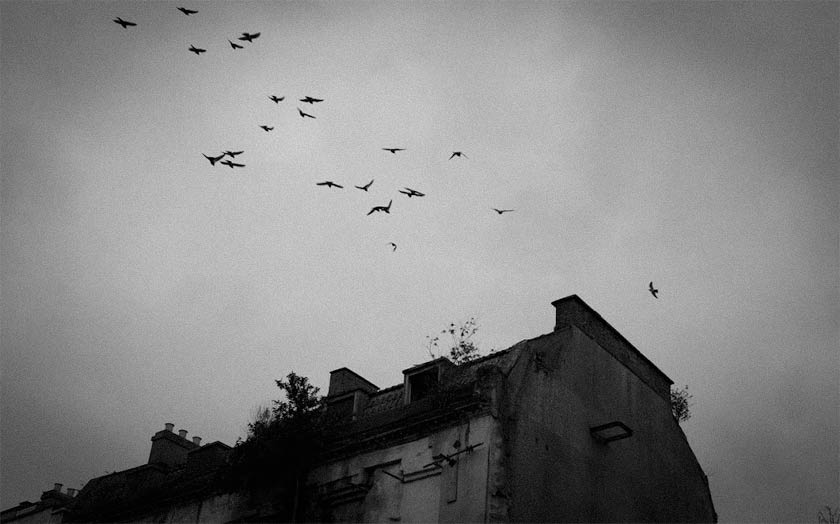
Birds fly above a rooftop.

‘Let me make you some coffee,’ says the woman. She grinds a fig with the beans and presents it in a dainty cup she has brought in her handbag.

‘It’s how they do it in Vienna,’ she says.

‘When can I leave the apartment?’ asks Elleman. ‘Some air might help.’

‘I’ll need to discuss this with my colleague.’

After three nights and days without sleep, the memory of Wünsdorf gains substance – or perhaps the hallucination becomes more vivid: he is on his back under swinging lights, squeaking wheels beneath, amid the stink of pickled cabbage and vodka sweat. Someone says, in Ukrainian-accented Russian, ‘We’ll crack him open like a boiled egg.’

An institutional telephone.

‘Dr Elleman,’ says the woman as she presents him with another Viennese coffee, ‘I should be delighted to take you for a turn on Wormwood Scrubs.’

‘Not Hyde Park?’

‘The Scrubs will be safer.’

The streets on the way are dirty and the terraces have aggressively blank, haunted gaps where strange weeds grow. As the breeze touches his face, bringing with it a little of her sweet bedsit perfume, Elleman imagines he hears a voice speaking imperfect German: ‘We must aim for maximum effect.’

‘When do you think I might start work?’ he asks as they cross a wide, quiet road. ‘I miss the laboratory. And work will help me sleep.’

‘There’s no chance, I’m afraid,’ she says. A sympathetic smile, a pat on the arm. ‘You’ve failed clearance.’

Elleman feels the scream rising. He opens his mouth to let it out and vomits, then collapses. A car pulls up and before he knows what has happened, two men in overcoats and small brown hats have thrown him onto the back seat.

‘Queen Alex, I think,’ the woman says to the driver.

At the hospital, they make him sleep. Not pills but injections – the nuclear option. His brain and body shut down.

A twin-bladed helicopter in flight.

When he wakes up it feels as if a century has passed. He knows at once he is outside, lying on the ground. He sees soft grey sky and hears gulls crying. He sighs with pleasure at the cool air flowing over his skin and stretches, shudders, smiles. There is grass beneath him, and sand.

‘I’m afraid we couldn’t get it out,’ says the woman. He rolls his head from one side to the other trying to locate her. She is sitting on steps leading up to the passenger door of a twin-rotor helicopter. She is smoking.

‘Hmm?’ says Elleman.

‘The thing the Russians put in your head. We couldn’t get it out. It sent the Geiger counter crazy. You’re a dangerous man to be around.’

She flicks away her cigarette end and waves a hand. The rotors begin to turn.

‘You didn’t know?’ she shouts, holding her hair back to stop it blowing into her eyes.

He blinks.

‘I’m sorry,’ she says.

She retreats into the helicopter and closes the door. It judders and lifts, kicking up grit, then howls away. For a moment, there is silence – no gulls, no people, just distant waves.

Elleman sits up and looks down at his hospital gown. His head does ache. It does feel heavy. He notices a sign in red –  LIVE FIRE KEEP CLEAR – and realises they have placed him at the centre of a great painted target.

Then he detects, far away, the sound of an Avro Vulcan beginning its bombing run.