Categories
bristol buildings

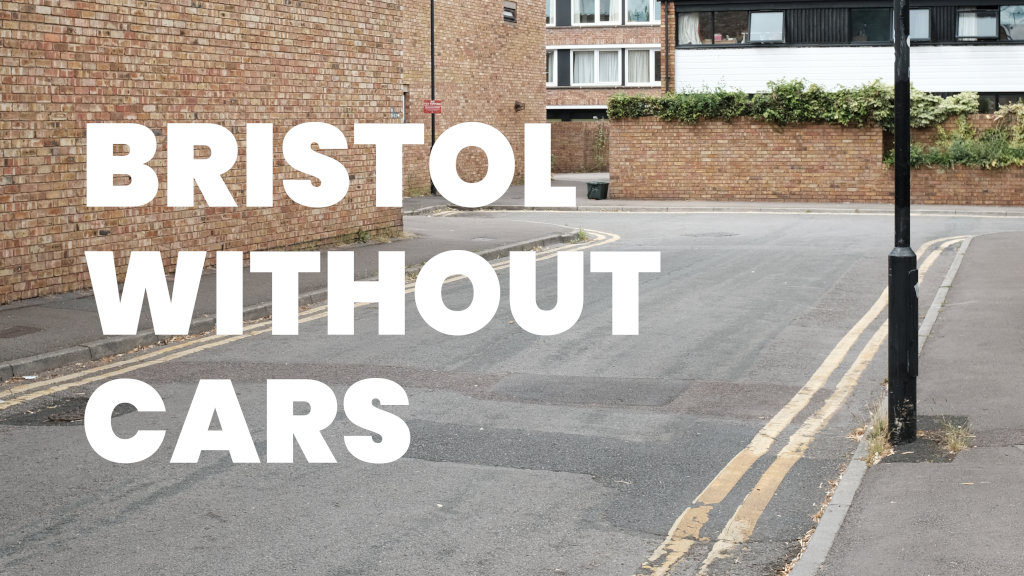
Bristol Without Cars

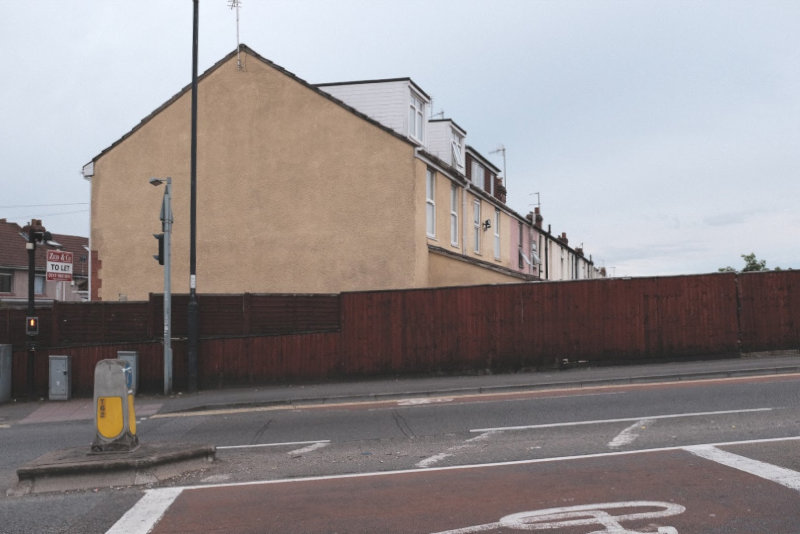
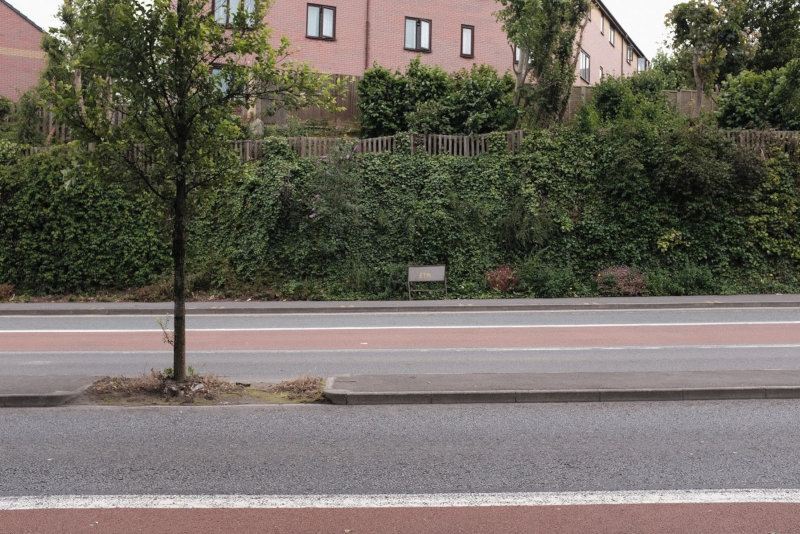
Bristol Without Cars (#BristolWithoutCars) is, I suppose, what you’d call a Project.

The idea is to capture images of the city without any motor vehicles in shot – not parked, not moving, and it’s been brewing for months, ever since I saw this Tweet:

It resonated because it made me realise how often I’d been frustrated at cars blocking my view of a landscape or a beautiful building when I went to take a picture.

Is anything less romantic than a 2015 Honda Jazz occupying a quarter of the scene?

Here are some embryonic attempts to capture urban scenes in a similar light, snapped with either my FujiFilm X100F, or just the camera on my phone, in the early part of 2019.

An empty road with billboard.
Wormwood Scrubs, London, April.
A shop on a side street.
St Andrews, Bristol, May.
Houses and main road.
Eastville, Bristol, in June.
Totterdown in June
Bath Road, Bristol, in June.
Empty roads in Birmingham
Empty roads in central Birmingham in early July.

That Tweet also stimulated my militant pedestrian tendency. Why should we put up with all that scrap metal littering the streets, blocking pavements and penning us in?

When I was a kid, there used to be an advert which warned against crossing between parked cars. These days, there’s no other option – almost every street is lined with them, bumper to bumper.

And on more than one occasion recently, cars have mounted the pavement to overtake or perform some other manoeuvre, leaving me no option but to leap out of the way making noises like a frightened chicken.

Wouldn’t it be nice to be able to click your fingers and make them go away?

Well, that’s what taking these photos feels like.

Industrial wasteland.
Netham Road, Wednesday, 21:15.
A pub.
St George’s Road, Sunday, 15:34.

I started taking this really seriously a couple of weeks ago, going out on hunting expeditions along the M32, and keeping my eyes open on the various routes to and from work.

I wasn’t sure of the rules at first – I knew I didn’t want cars in shot, obviously, but what about people or bicycles?

Sharing my photos on Twitter, I got some instant feedback: shots of completely empty streets were more striking than this…

People in a street.
Queen Charlotte Street, Wednesday, 13:33.

…which looks a bit like the kind of CGI rendering a property developer would plaster across a hoarding.

So I decided, rule two: no humans either, just empty streets.
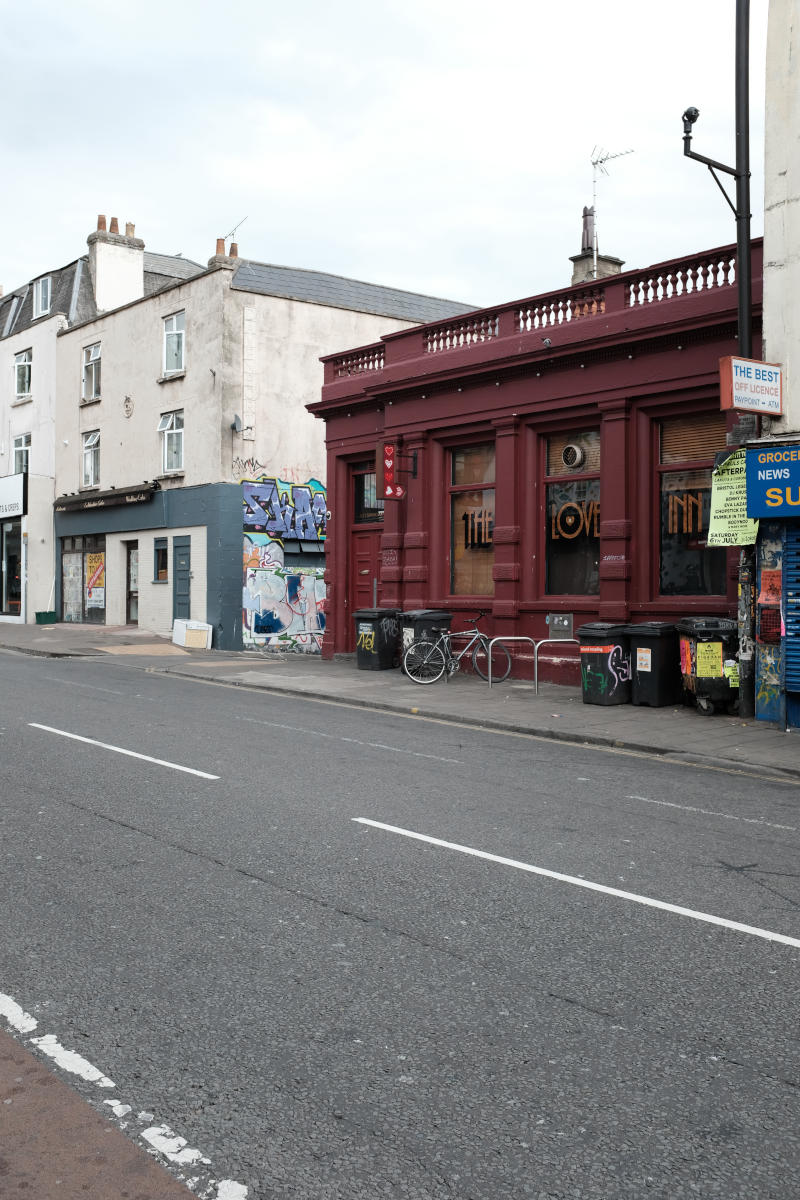
A city street.
Stokes Croft, Tuesday, 18:05.

Responses to this lifeless world were interesting. On the one hand, there were people who saw it as I intended, as a sort of Utopia – ‘River of Orchids where there was a motorway’. The world as a pedestrian friendly playground.

But others said it looked bleak or post-apocalyptic, which it absolutely does. For all my frustration with them, cars are, it turns out, a symbol of life and humanity.

I like the idea of these photos being a kind of Rorschach, with paradise/hell in the eye of the beholder.

I wonder how responses map to the old idea of introversion and extroversion?

With that in mind, one interesting development is how impatient I’m becoming with other pedestrians. When my frame is almost clear and someone takes so long dawdling out of shot that someone else wanders in, I feel something close to fury.

People walking in and out of shot.
Corn Street, Friday, c.12:55.

I’ve also learned that people often wander back and forth when they’re on the phone, presumably because they’re almost where they need to be but can’t hang up quite yet.

I’ve had a few suggestions for ways to remove cars using digital editing techniques, e.g. taking three photos of the same location and then averaging them to remove anything that’s different from one shot to the next. This would clearly be against the spirit of the thing.

So, there’s rule three: no cars or people to be edited out, although I will allow myself a bit of cropping and straightening.

Suburban street.
Bishop Road and King’s Drive, Sunday, 12:33.

Another convention that has begun to emerge (rule four) is around labelling: for the past week or so, when I share these photos, I’ve been saying where they were taken, on which day of the week, and at what time.

That’s because a couple of people asked if I was going out with my camera at 5 am which made me realise that a photo of, essentially, nothing, needs context – a few words so that others can hear the sound of my magical finger-click.

Hill without cars.
Constitution Hill, Sunday, 15:18.

These photos don’t show the cars that are parked just out frame on either side, or the lorry that passed out of view half a second before I hit the button.

I cannot emphasise this enough: there’s hardly been an easy shot yet.
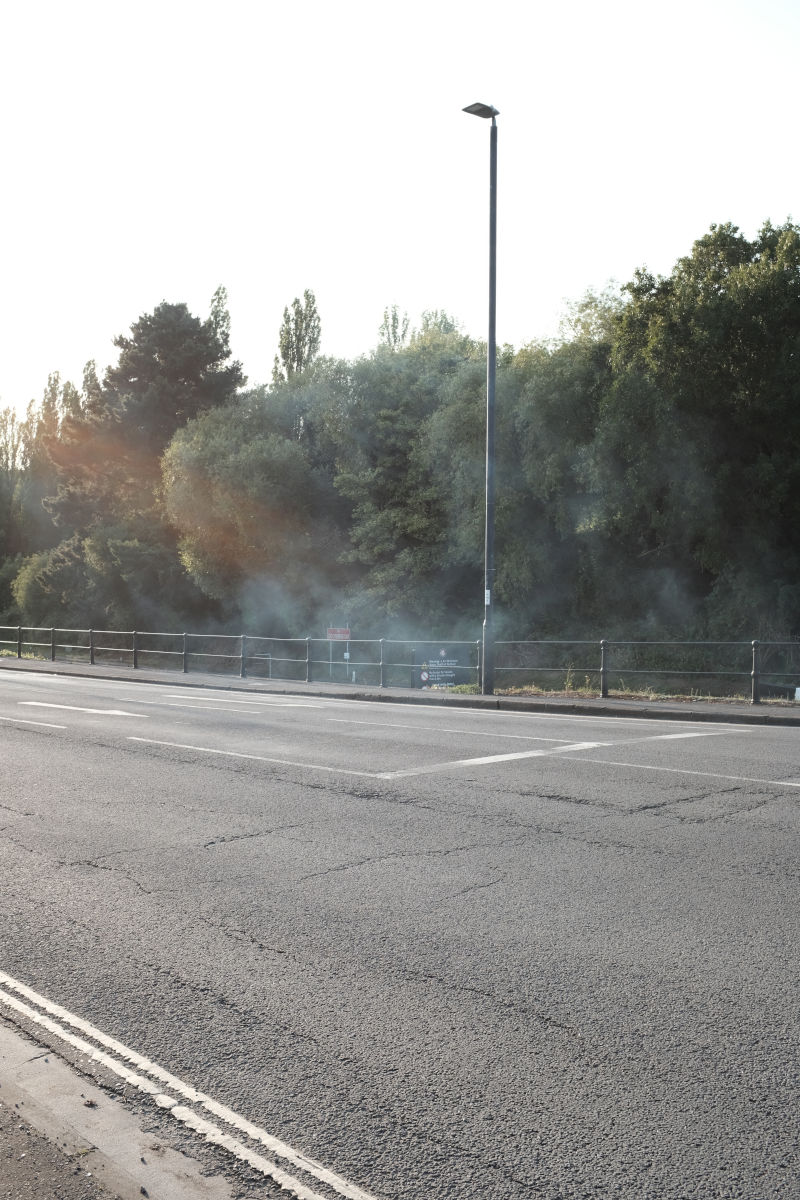
Fumes on a quiet street.
Feeder Road, Wednesday, 19:14.

Even on quiet backstreets or industrial estates which ought to be quiet, there is always – always – a car idling, turning or speeding through.

But that does help me zero in on what looks most unnerving or impressive. We expect motorways to be busy, for example, so a shot of the M32 in momentary blankness has greater impact and, yes, is actually harder to achieve, but not much harder.
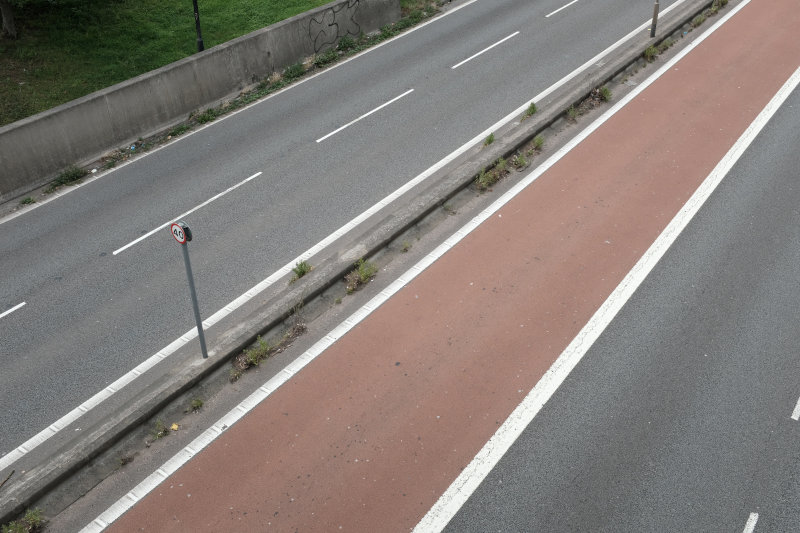
Empty motorway
M32, Friday, 18:40.

There are certain images I’m especially proud of because I know how long they took to achieve. This one was like torture but when it came together I literally punched the air, even though the reflection of a car crept into one of the windows.
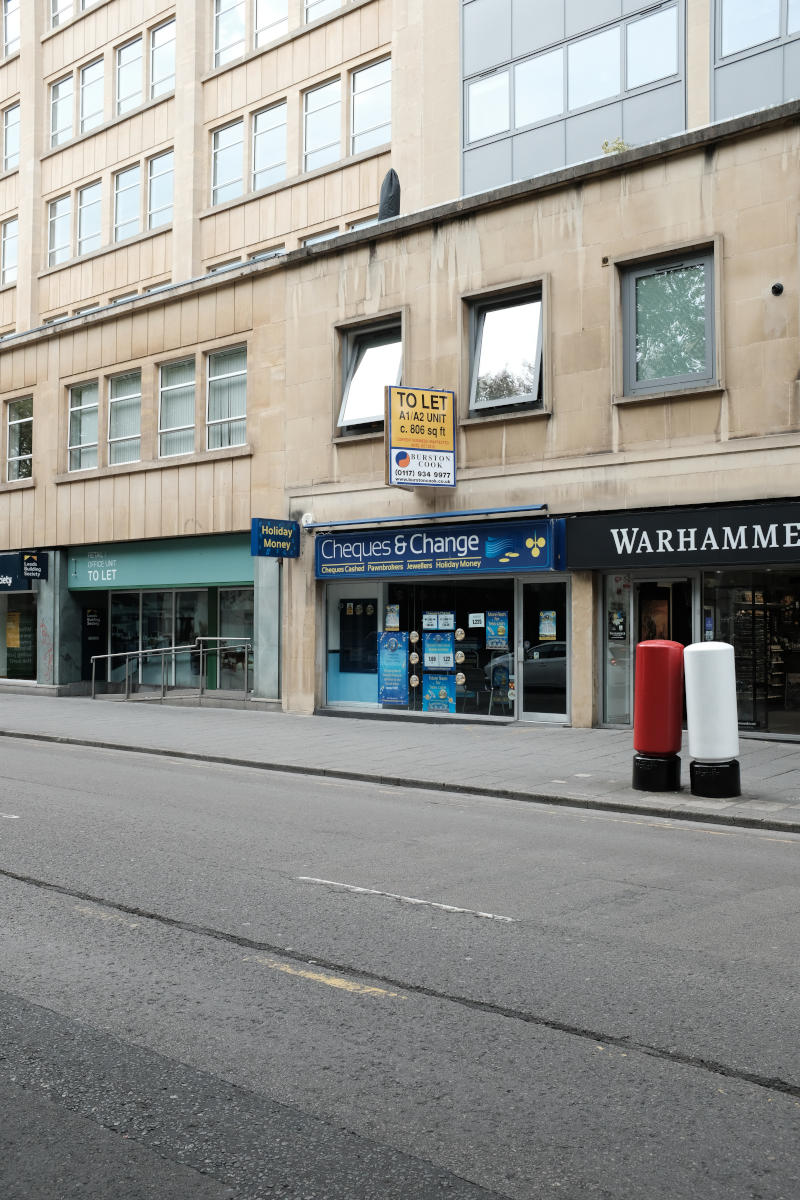
Empty city centre street.
Wine Street, Friday, 17:58.

In general, the waiting is pleasant. I stand there with people brushing past me or ducking beneath my lens, feeling the sun or rain on my head, listening to birdsong or the sounds of the suburbs, and enter into something like a trance.

When the viewfinder flashes clear, CLICK, then a moment of absolute joy, as if I’ve actually achieved something.

It can be frustrating, especially when I go out on my lunch break from work and know I can only wait so long for the shot to come good. That haste is why the angle is sometimes off, or a finger slips into shot.

The ideal shot shows a long stretch of road to the horizon but, in practice, those are almost impossible. But perhaps that’s the big game I need to be going for. If I get ten in a year, it might be worth it.

Tricks and techniques

Here are a few things I’ve learned so far, feeling my way.

  • Start by looking for a section of road with no parked cars – everything else is a matter of timing.
  • Junctions are good – it seems counterintuitive but there’s usually no parking.
  • Road markings are fun – they add interest and irony – CAR CLUB.
  • Use the camera grid for alignment – minimalism looks better with straight lines.
  • Be patient – the frame will clear, the shot will come, even in the busiest spot.
  • But be realistic – on a busy street, go for a head-on shot of the road and buildings opposite, or a slight angle, rather than the full panoramic sweep. (Unless you have all day.)
  • Frame with your feet – if there’s a car in view, shuffle left, right or backwards until it disappears behind a wall or hedge.
Categories
crime grave digger's boy

The local weirdo

Another important strand of The Grave Digger’s Boy (due out in about three weeks) is what happens when the police imprison the wrong person.

Not only is justice left undone but also a new injustice compounds the original evil.

The detective who acts on unerringly correct gut feeling is a standard trope in crime fiction. They’re plagued by bureaucrats and do-gooders who insist on the following of due process, or let creeps walk free for the trivial reason that there’s no real evidence.

In extreme examples, they bend or break the law to achieve justice – a fascist fantasy, essentially, in the Death Wish or Dirty Harry school.

I’m sure that in real life, police officers who falsify evidence or bend the rules often think they’re doing the right thing. But sometimes, it’s just about ticking a box, getting promoted, or fame.

That’s what I wanted to explore in The Grave Digger’s Boy with reference to some real life cases.

Though my book is primarily set in Devon, one important touchstone, for example, is the case of the New York City detective Louis Scarcella.

During the crack boom of the 1980s and 90s, Scarcella planted evidence, coached witnesses and forged statements to convict people for crimes they didn’t commit with the primary aim of advancing his career. In particular, he convinced one woman, a drug addict, to give false testimony in case after case.

When the truth emerged recently, every conviction he had achieved was thrown into doubt. At the time of writing, fourteen people have had their convictions overturned and about another 60 are still under review.

There’s a fantastic account from the perspective of one of the men Scarcella framed, Derrick Hamilton, in this 2016 article by Jennifer Gonnerman from the New Yorker:

The detective, Louis Scarcella, then thirty-nine, reminded Hamilton of the actor Joe Pesci, as he swaggered about the room, brandishing a cigar. But what Hamilton remembered most clearly, he says, is that Scarcella told him that “he didn’t care whether I did it or not, because I didn’t serve enough time for my previous case, and I would be going back to jail.”

Another story I find awfully fascinating is that of Colin Stagg – the ‘local weirdo’ who was the obvious, easy suspect in the murder of Rachel Nickell on Wimbledon Common in 1992.

Based, we now know, on little more than guesswork, flawed psychological profiling and prejudice, the police tried and failed to convict him. They used desperate measures, including getting an undercover police officer to flirt with him, encouraging him to confess to the murder and give details under the pretence that she found it arousing.

Even after the conviction collapsed, so convinced were police they’d had their man that they failed to relaunch a proper investigation. That left the actual murderer, Robert Napper, free to continue offending for more than a year when he was imprisoned for a different offence, and Stagg spent a decade being treated by the press as a murderer who had ‘got away with it’. His name was only cleared when Napper was convicted in 2004.

There are lots of instances of the police latching on to ‘local weirdos’ – Stefan Kiszko, Christopher Jefferies and Barry George (Bulsara) are other notable examples – and they’re depressing for various reasons.

First, they reveal how little tolerance our society has for people who are developmentally challenged, mentally ill or just a bit different.

How many of us can say honestly that when we saw Christopher Jefferies on TV during the investigation into the murder of Joanna Yeates we doubted his guilt? The police seemed sure; there was something unnerving about his manner; and the story seemed to tie up so neatly.

But he didn’t do it. He was just a man who fit our collective idea of what a murderer might look like, and who was in the wrong place, at the wrong time.

Secondly, then, what makes these stories worrying is the same thread Alfred Hitchcock so often pulled upon – how many innocent people are in prison right now?

And what must it be like to be The Wrong Man?

If they really wanted to, could the police make you look and sound like the kind of misfit who might murder someone? A particular hazard for crime writers, I suppose: “He obsessively read about murder, closely followed police investigations and even kept notebooks with the details of how people were killed…”

Things are further complicated by people like Levi Bellfield. He was convicted for the murders of three young women, including Milly Dowler, between 2002 and 2004.

Bellfield is thought to have murdered and abducted many more victims from around 1980 which is why when he confessed to the 1996 killings of Lin and Megan Russell, police took it seriously.

If he was found to have committed that crime it would have meant that Michael Stone, imprisoned since 1998, was innocent.

But investigators concluded that Bellfield couldn’t have done it and that his motive for confessing was probably to cause pain to the families of the victims.

What The Grave Digger’s Boy explores is the difficulty of ever really feeling sure that anyone is innocent or guilty. It also shows how quickly and easily we turn what we know into a narrative, filling in any gaps with assumptions and imagined details.

Humans are programmed to discern patterns and narratives. Unfortunately, sometimes, the conclusions we draw mean that innocent people go to prison while the guilty walk free.

Categories
books crime grave digger's boy

Start with a corpse

Ed McBain, author of the long-running series of 87th Precinct police procedurals, was once asked how he devised plots. His answer was: “I usually start with a corpse.”

McBain (a pseudonym for Evan Hunter) was talking about the seed of a story rather than literally about how to structure a book but, still, pick up ten crime novels and look at the first pages and the chances are most of them will contain either a dead body, or the promise of one.

Devouring crime fiction as a teenager, and reading how-to manuals such as Hillary Waugh’s On Crime Writing, I’d absorbed this rule and stuck to it throughout the first few (unpublished) detective stories I wrote.

But The Grave Digger’s Boy, which is out in a few weeks, doesn’t start with a corpse – it begins with the absence of one.

In fact, this is the second novel I’ve written with that as the seed. The other, a manuscript that lurks in a virtual desk drawer, was called Fears Grow for Missing Sam and had an entirely different plot, setting and cast of characters to The Grave Digger’s Boy.

What both share, though, is a grim fascination with the idea that without a body, those left behind are stuck in a kind of purgatory, unable to move on. Sometimes, this awful suspension last for decades.

All murders are sad. Murders that never resolve, that hang in the air, are the saddest of all. The fuel for much of the best crime writing is, I think, the probing of these emotions.

One tangential influence on my novel – though influences are hard to pin down in the memory – is the ongoing subplot which runs through the series of books Arnaldur Indriðason’s wrote about the Icelandic detective Erlendur. Over the course of several novels, we learn that Erlendur’s brother disappeared in the snow as a child, leaving Erlendur obsessed not only with that case but also disappearances more generally.

In the real world, I find myself haunted by the disappearance of Suzy Lamplugh, whose parents died without knowing what had become of her. News coverage of that story ran at intervals throughout my childhood and every now and then her face appears on TV or in the papers when some new lead emerges and, inevitably, dwindles. Another search was carried out just a few weeks ago and new witnesses occasionally come forward.

There’s also the case of Helen McCourt whose disappearance in 1984 led to a notable example of a murder conviction in the absence of a body. Her murderer, Ian Simms, was convicted using DNA and to this day refuses to reveal where or how he disposed of her remains.

And, of course, it’s hard not to think of 12-year-old Keith Bennett, who was killed by the moors murderers in 1964, and is yet to be found. Or, rather, whose whereabouts has been concealed out of pure malice.

It’s unlikely anyone reading The Grave Digger’s Boy would guess these or the other real criminal cases I had in mind because by the time they’ve been through the blender of my brain, all that’s left is a sort of essence – the mood rather than details.

Crime writers, awful carrion creatures that we are, are drawn to these cases, yes, by the sheer emotional power they hold, but also because of the complexity they instantly bring to the plot of a novel.

After all, stories that start with a missing body provide two mysteries for the price of one – a whodunnit, and a where-is-it.

Or is it three? With no body, it’s hard to say for sure whether a character was actually murdered. Or maybe it’s four: can we even say for sure they’re really dead?

Categories
grave digger's boy

Becoming a novelist

With my first novel, The Grave Digger’s Boy, being published by Bloodhound Books next month, I’ve been reflecting on how I clawed my way to this point over the course of several decades.

The first step, I think, was when I wrote a story that took up eight pages of my creative writing book in Miss Morris’s third-year class at junior school in Bridgwater.

The story was about aliens fighting Saxon warriors at Stonehenge and each page had about 20 words (bottom half) and a pencil drawing (top half).

When I reached three pages and the story still wasn’t done, other kids started to gather round: “He’s going on to a fourth page!”

I decided to aim for six, smashed through it, and by page seven everyone was willing me on.

They cheered when I wrote THE END and I was famous for a day or two after.

Then at secondary school – a comprehensive lurking at the bottom of the league tables – Mrs Newton, an English teacher who expected a lot of us regardless of our backgrounds, decided we were all going to write novels during the summer holiday.

Mine was a cliched sci-fi piece, probably amounting to 5,000 words, about a city under a dome.

I’ve a feeling the US Navy turned up at some point, too, because I’d been reading a lot of Tom Clancy. I typed every word on a word processor on my Commodore 64 and printed it on a whining, chattering dot matrix machine.

(That printer, long-gone to landfill, was important. Once I’d told my parents I wanted to be a writer, they spared no expense or effort in helping me realise it, even though we were, frankly, poor and have never doubted that I’d make it one day. The same goes for my very supportive little brother.)

After school, there was a long stretch in which I wrote dissertations, poems, short stories, sketches, sitcoms, and the opening chapters of about 375 different novels, all the time getting a bit better at the business of putting words together in interesting ways.

The next milestone was non-fiction: in 2006, a few years out of university, 30,000 words on The Beatles.

I invented this project to release the pressure of the day job and to test myself – could I, for once, actually bloody finish something substantial? I did, and got interviewed on US radio, and reviewed in Rolling Stone. I felt my spirit expanding.

Next, it was back to fiction, via NaNoWriMo. This once-a-year exercise in getting-to-done isn’t without controversy and won’t work for every writer but, crikey, did it ever work for me.

I hammered away at my project before work, during my lunch break, and on the commute home – 800 words here, 500 there, adding up to 1,600 every day.

A stream of consciousness historical-horror-fantasy was the output – absolute rubbish, but 50,000 words of rubbish. And if I could manage that, why not 80,000?

So, approaching 30, I started writing crime novels in earnest. It wasn’t much fun. In fact, it was torture.

I’d have an idea, get excited, and then decide I hated it by chapter five. But with NaNoWriMo in mind, I didn’t give in – I finished them anyway, like a runner pushing through the pain barrier.

The first one was bad, I think, but it was 75,000 words long, and had a decent plot. The second, Fears Grow for Missing Sam, was better. The third… Well, Local Man Found Dead, I think, had something about it and I there were entire stretches of which I felt proud. A couple of publishers expressed interest, albeit not quite enough. I’d like to revise it again one day and maybe see it in print.

Meanwhile, I’d slowly been turning my way with words into a living, writing papers, letters, speeches, leaflets, articles and so on, in central government. I was getting paid to exercise my writing muscles, essentially – absolutely priceless.

When my partner, Jess, got a job in Cornwall, the chance to write more of what I wanted to write presented itself. I wrote and edited full time for six years, sometimes to contribute to the rent, sometimes with a view to getting published, but always at my desk from 9 to 5. One way or another, I turned out 2,000-5,000 words most days.

During all this, I co-wrote with Jess several non-fiction books on beer and pubs, which won awards and garnered general acclaim, further boosting my confidence. I started to think of myself not as ‘someone who does a bit of writing’ but as A Writer.

From being A Writer to being A Novelist is only a short hop. Between corporate blog posts, magazine articles and rewriting other people’s books, I used my time in Penzance to write and rewrite five novels, including The Grave Digger’s Boy.

Now, it’s being published, and I can’t tell you how excited I am – it feels like the end of a long slog with a heavy load.

In the coming weeks, I’m going to indulge myself by sharing some insights into how it came to be – the real life crimes and personal experiences that inspired it, my connection to the settings, and how my study of crime fiction over the years influenced its shape and structure.

Categories
bristol Film & TV west country

Bristol on Film: Some People, 1962

Some People is a little-known social realist film from 1962 that offers a glimpse of a post-war Britain rarely seen on screen. It is not set among northern terraces or the slums of the East End of London but on the docksides and gleaming new council estates of Bristol, the capital of the West Country.

When I moved to Bristol last year I wanted to get to know its culture and so asked around for tips on which novels and films best represent the city. Some People was one of the suggestions and after a little hunting I found a DVD released by Network in 2013.

It was lying on the coffee table when my then 69-year-old Dad visited and he recoiled at the sight.

“Is that… Is that Some People?”

“Yes. Why?”

“Oh, nothing,” he replied, still eyeing it with suspicion, and I knew there was a story to tell.

His reaction prompted me to watch the film sooner rather than later.

It was directed by Clive Donner who would make a name for himself with The Caretaker in 1963 and then head to Hollywood to make What’s New Pussycat? In 1965.

While Some People is clearly the work of a director finding his feet it is nonetheless an enjoyable drama about a teenager, Johnnie, played with charm and intensity by Ray Brooks, and his struggle to choose between straightening up or continuing a descent into delinquency.

Johnnie and his friends Bill (David Andrews) and Bert – a baby-faced David Hemmings – get into trouble racing their motorbikes along the Portway on the banks of the Avon and are banned from riding them which leaves them frustrated and deepens their boredom.

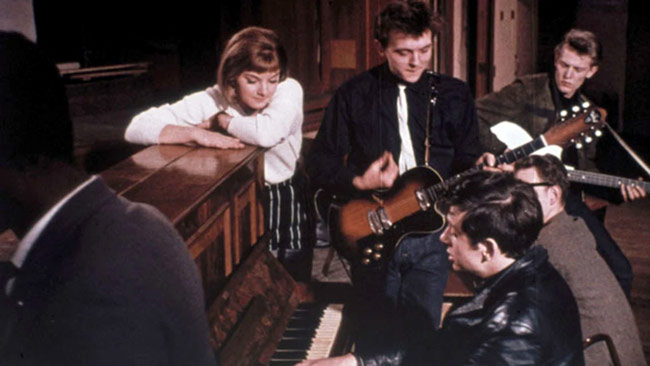
Then one night, while messing around in a church they’ve all but broken into, they are taken under the wing of Mr Smith, a local youth group organiser played by veteran British actor Kenneth More, who encourages them to form a pop group.

A grab from the film: the pop group.

Bill rejects Mr Smith’s mentorship seeing in it an attempt to control him and breaks with Johnnie and Bert, falling in with a gang of hard-cases.

Then, fuelled by jealousy over his girlfriend’s attraction to Johnnie, Bill tries to sabotage his friend’s new found stability. It’s small stuff – squabbling and scrapping, hardly Marlon Brando territory – but that makes it feel all the more authentically British.

The film’s strengths are its cast, setting and its considerable charge of nostalgia.

Filmed entirely on location, it captures the reality of Bristol in the heat of post-Blitz reconstruction, half tumbledown harbour city, half planners’ dream.

A large part of the action takes place on the Lockleaze estate, high on windswept Purdown in the city’s northern suburbs.

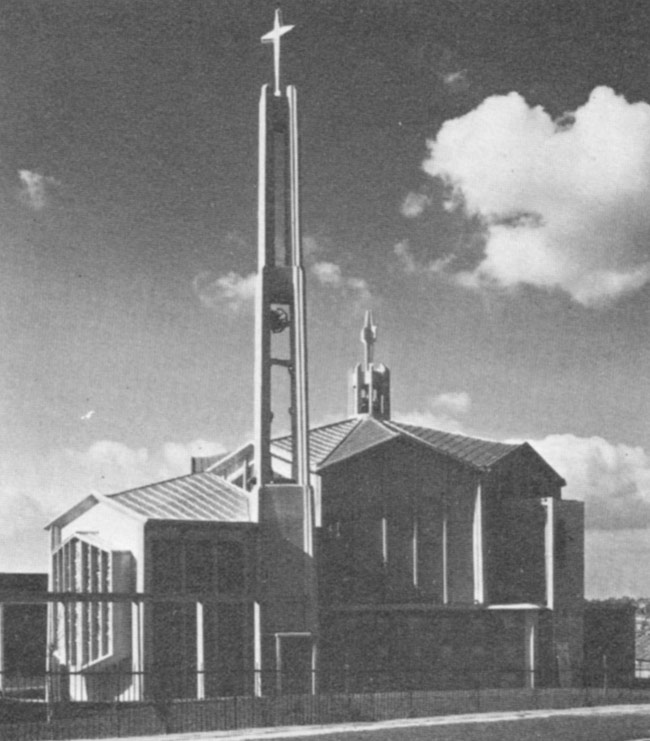
St Mary church
CREDIT: Desmond Tripp from Bristol, T.H. Burrough, 1970.

St Mary Magdalene with St Francis church is one of the stars of the production – a mad modernist vision in concrete and stained glass that provides a surreal sci-fi backdrop to the boys’ antics. The church opened in 1956 and was typical of the space age houses of worship built on overspill estates all over the country in the post-war period.

Unfortunately, though it looked astonishing, it was plagued with structural problems and was demolished in 1994, which only adds to the value Some People holds as a record of a time and place.

Another particularly striking scene takes place in the Palace Hotel, an especially grand Victorian pub on Old Market. There Johnnie has a breakthrough conversation with his taciturn working class father played by Harry H. Corbett (whose Bristol accent, it must be said, ends up drifting to somewhere near Cork). Real pubs are rarely seen on film, especially in colour, and this is a particular lovely example – cast iron tables, a beaten up piano, everything dark with age, the aroma of smoke and stale beer positively wafting from the screen.

Those with an interest in public transport will thrill at the plentiful footage of the famous Bristol ‘Lodekka’ buses while aviation geeks will get a similar thrill from scenes of Mr Smith at work: when he isn’t encouraging young tearaways to play nicely together he is an engineer overseeing test flights of the Bristol 188 ‘Flaming Pencil’ supersonic jet.

Anneke Wills plays Mr Smith’s daughter, Anne, who has a teenage fling with Johnnie. His influence leads her to buy tight jeans which she further shrinks to fit in the bath. You’d think this scene a little ripe if it turned up in a modern period drama set in the 1960s but here it is charmingly authentic.

In general the film is a useful reminder that in 1962 kids were still wearing quiffs and leather jackets.

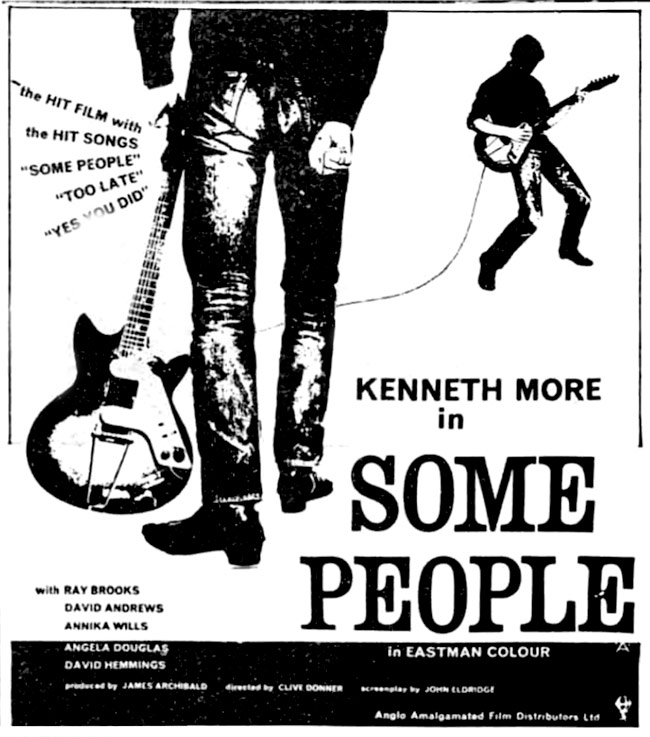
Original press ad from 1962
SOURCE: British Newspaper Archive.

Passing scenes of dancehalls, espresso bars and roadside motorbike hangouts will also bring back memories for anyone who was on the scene in the 1960s. Less thrilling but no less evocative are the bus stations, council houses and cigarette factories where real life plays out between bouts of fun or violence. It isn’t Grim Out West, only a little grey, a little sparse, slow and sleepy.

If Some People has weaknesses they are the score – square rock’n’roll arranged by Ron Grainer and performed by local Shadows wannabes The Eagles – and the fact that it is effectively propaganda for the Duke of Edinburgh’s Award Scheme which part-funded the production. I say ‘effectively’ because Bill, the rebel, delivers several stinging diatribes against it and, frankly, seems much cooler than Johnnie and his gang of goody-goodies.

Once I’d finally watched the film I was more curious than ever about Dad’s reaction and pressed him on it when we next went for a pint. With some reluctance he told me the story.

Like Johnnie, Bill and Bert, he and his 14-year-old friends on a Somerset council estate were often bored and got up to mischief. When it wasn’t joyriding, it was repeatedly breaking into the local CO-OP to steal cigarettes.

One night he returned home to find his father in a foul temper.

“Where have you been, boy?”

“In town to see Some People.”

“Oh, yeah? Some People? Well while you’ve been out, some bloody people have been here to see you.”

The people in this case were the police and Dad ended up with a criminal record.

After that, like Johnnie in the film, he started a rock group and threw his energy into making music rather than trouble, before settling down to a life working in factories and warehouses.

Art imitating life imitating art.

You can watch Some People via BFIPlayer.

Categories
1959 books reading1959

Reading 1959: Schooldays, Regency, Cold War

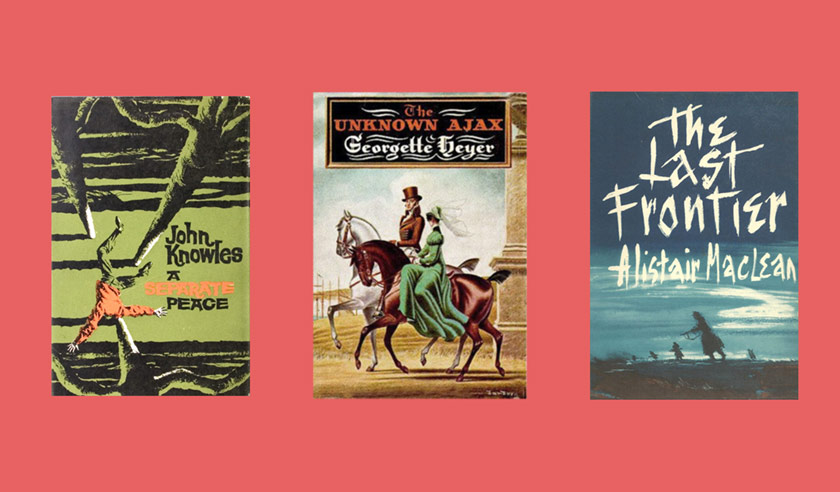
Covers of the three books.

One thing I’m keen to do in exploring novels from 1959 is to read widely – not just the most critically acclaimed books, those reckoned to be in The Canon, but also genre fiction, popular writing and books which have fallen out of fashion. This set, which I read on holiday, contributes to that aim.

A Separate Peace by John Knowles is considered a classic in the US and is, I gather, widely read in schools but I first heard of it in January this year.

It is set in a boys boarding school in New England during World War II and revolves around the intense friendship between the charismatic, athletic Phineas and the academically-minded, sour-witted Gene.

According to some readings, they are in love, though that is never made explicit and was denied by the author. Either way, the closeness of their relationship tips over into hatred for a brief, mad moment and the rest of the book deals with the fallout, against a backdrop of the end of childhood and the threat of conscription.

The landscape, the school, its culture and personalities are beautifully depicted. When Knowles described thawing snow, you feel it; when he writes about the stink of a locker room, your nose curls.

There’s also something startling in the reality of the human relationships the book depicts – of the fine line between affection and animosity, and the constant shifting of allegiance and the balance of power within groups of friends.

On Twitter, I described it as a cross between Brideshead Revisited and Lord of the Flies and, having thought on it for a week, still think that’s about right, flippant as it sounds.

How does it fit into 1959? Well, it’s another example of processing the experience of World War II; and, despite Knowles’s denial of the gay subtext, it also feels like part of an increasing honesty in writing about sex and relationships.

* * *

Georgette Heyer’s The Unknown Ajax is a funny thing – Jane Austen fan fiction, essentially, but more broadly-drawn than the model. If I say that if Hammer Films had fancied branching out into romance, they might have done it justice, does that hint at the tone?

The plot is a good one: the irascible Lord Darracott is reluctantly forced to acknowledge an estranged heir after his son and grandson are killed in a boating accident – Major Hugo Darracott, a giant, uncouth Yorkshireman who has been serving in the Napoleonic wars.

He is not made welcome by the family, especially the independent-minded Anthea, who is expected by her grandfather, his lordship, to marry the Major to keep control of the family fortune in trusted hands.

Hugo, of course, wins them over with his good nature and resourcefulness. After much gothic melodrama around smugglers, ghosts and hidden passageways, there is a twist that most readers will have seen coming from about page ten, but is no less satisfying when it arrives.

At times, it feels like being battered with a dictionary of slang. Having taken the trouble to research the speech and dialect of the Regency, Heyer seems determined to use every nugget, so hardly a line of dialogue is without one or two examples: wet-goose, widgeon, mushroom, once-a-week beaux, and so on. She also likes exclamation marks! In imitation of 18th and early 19th century writers, no doubt, but too much for modern readers!

Heyer is regarded as faintly ridiculous these days, although she remains very much in print, and invented a genre. Unfortunately, I can see why – anyone submitting this manuscript to a publisher in 2019 would be told it was lacking subtlety, riddled with cliches and too derivative. That doesn’t mean I didn’t like The Unknown Ajax, though: it is fun, highly digestible and rich in period detail. And I’ve just bought my Mum a copy.

What marks this out as a product of 1959? The camp quality, perhaps, and the fact that Hugo Darracott is yet another war veteran protagonist, albeit from the wrong war.

* * *

Alistair MacLean is one of those writers whose books I recall being everywhere when I was growing up – a whole shelf at the library, on the revolving racks at the Read-and-Return, cluttering the bargain bins in secondhand bookshops, and then overwhelming charity shops in the 1990s.

His most famous novels, thanks to their film adaptations, are probably Where Eagles Dare, Ice Station Zebra and The Guns of Navarone. His 1959 effort, The Last Frontier, is less well-known, though it too was adapted for the screen, as The Secret Ways starring Richard Widmark, in 1961.

There’s a certain pleasure in reading even bad thrillers. Between coshings, shootings, chases and bouts of torture, there’s rarely time to catch breath and think about the quality of the writing. Unfortunately, this book comes with long stretches of tedious expository dialogue which leave the mind free to reflect on the terrible prose and creaking plot mechanics.

It is set in Hungary in the years immediately following the 1956 uprising and concerns a British agent, Reynolds, who is sent behind the iron curtain to extract a kidnapped scientist with the help of the anti-communist underground.

Reynolds is at first presented as a machine – as a man so perfectly trained that nothing can sway him from his mission, who doesn’t ask questions, who reacts rather than thinks. A whole novel of that would have been interesting to read but, unfortunately, it doesn’t take long for Reynolds to become careless, sentimental, and lovelorn.

At various points, we are expected to believe in disguises so good that they can fool someone who knows both the person being impersonated and the impersonator in extended conversation at close quarters.

We are supposed to accept that the Hungarian secret service, the AVO, is run by a bunch of sinister oddballs who can be fooled by a bit of unsophisticated fibbing.

And chemical torture, it turns out, can be resisted if you try really hard.

All of this would be bearable if the book wasn’t so earnest – if it accepted itself as a bit of fun rather than a serious exposé of the evils of totalitarianism and a treatise on world peace.

Here’s the thing: Ian Fleming’s James Bond novels, for all their problems, are ageing well as literature; and if you want dourness without silliness, Le Carre is your man. I just can’t see what MacLean brings to the party. I’d rather read John Gardner.

The 1959 factor? The Cold War in general, and a fear of brainwashing in particular. (I’ve got The Manchurian Candidate, also from 1959, on my to-read pile.)

Categories
Gloucestershire

The Old Mythe Road

Road sign: MYTHE ROAD.

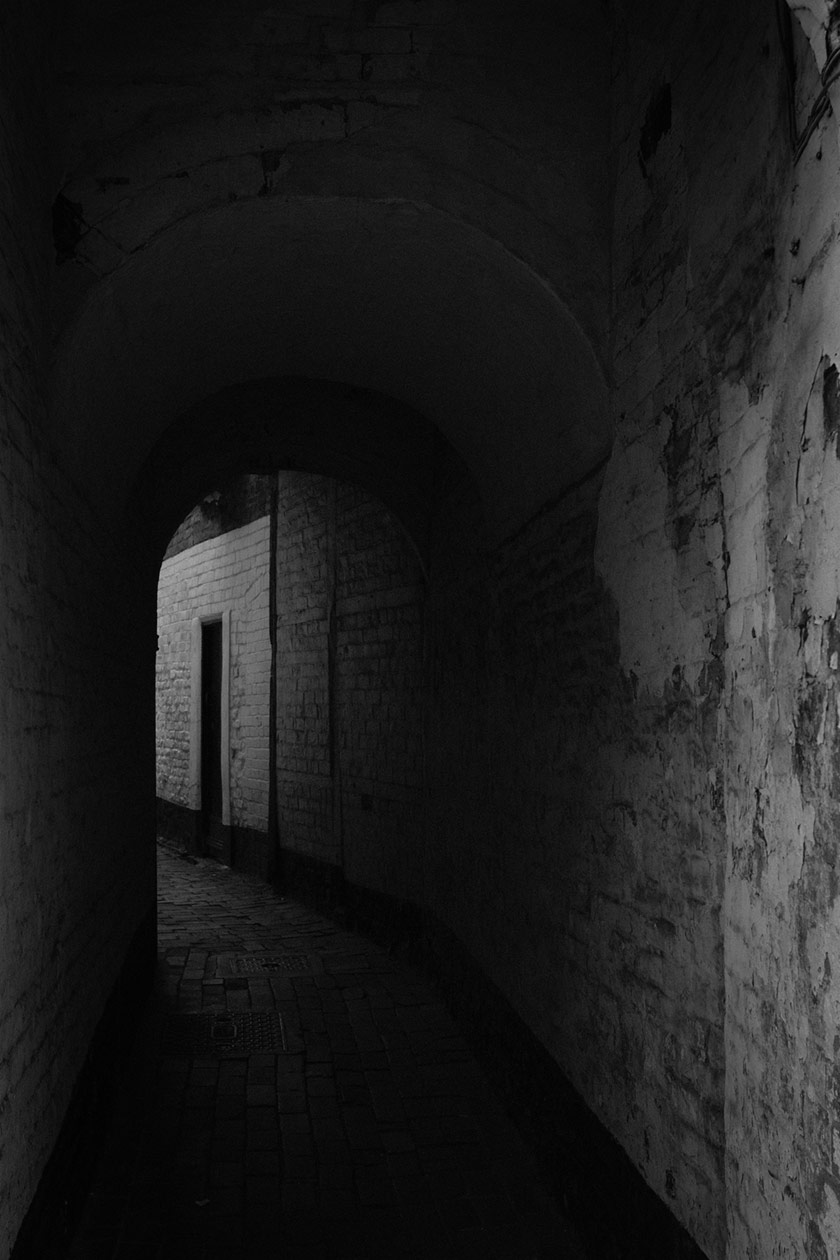
A dark alleyway

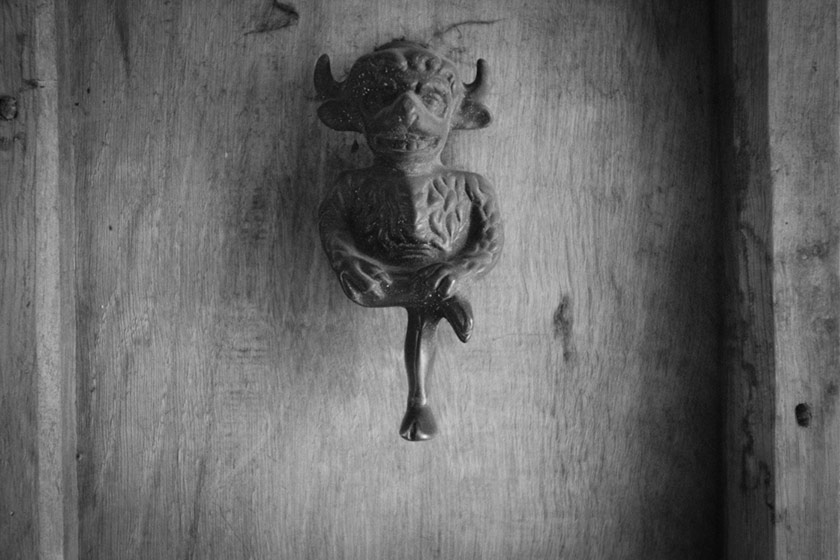
A beastly doorknocker

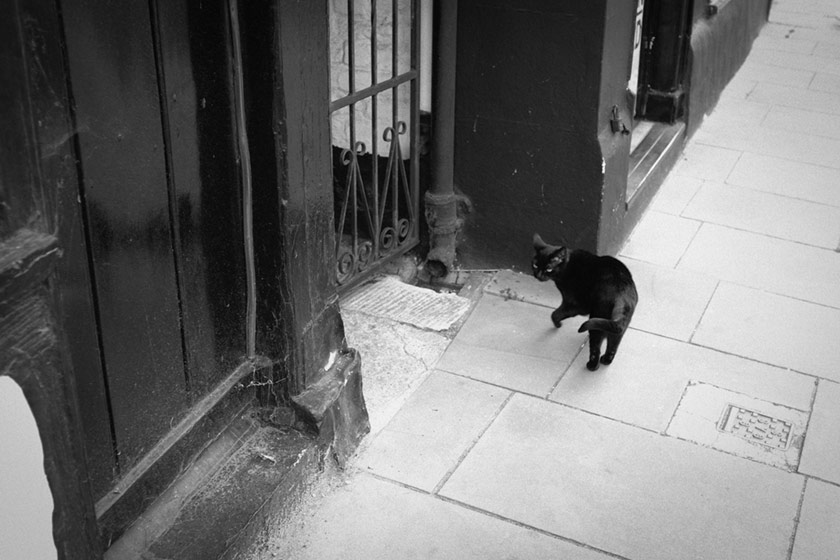
A black cat

A staircase at Tewkesbury Abbey

Cherubs in the abbey

An alleyway near the abbey

Half timbered buildings.

The devil

A watermill

The marsh

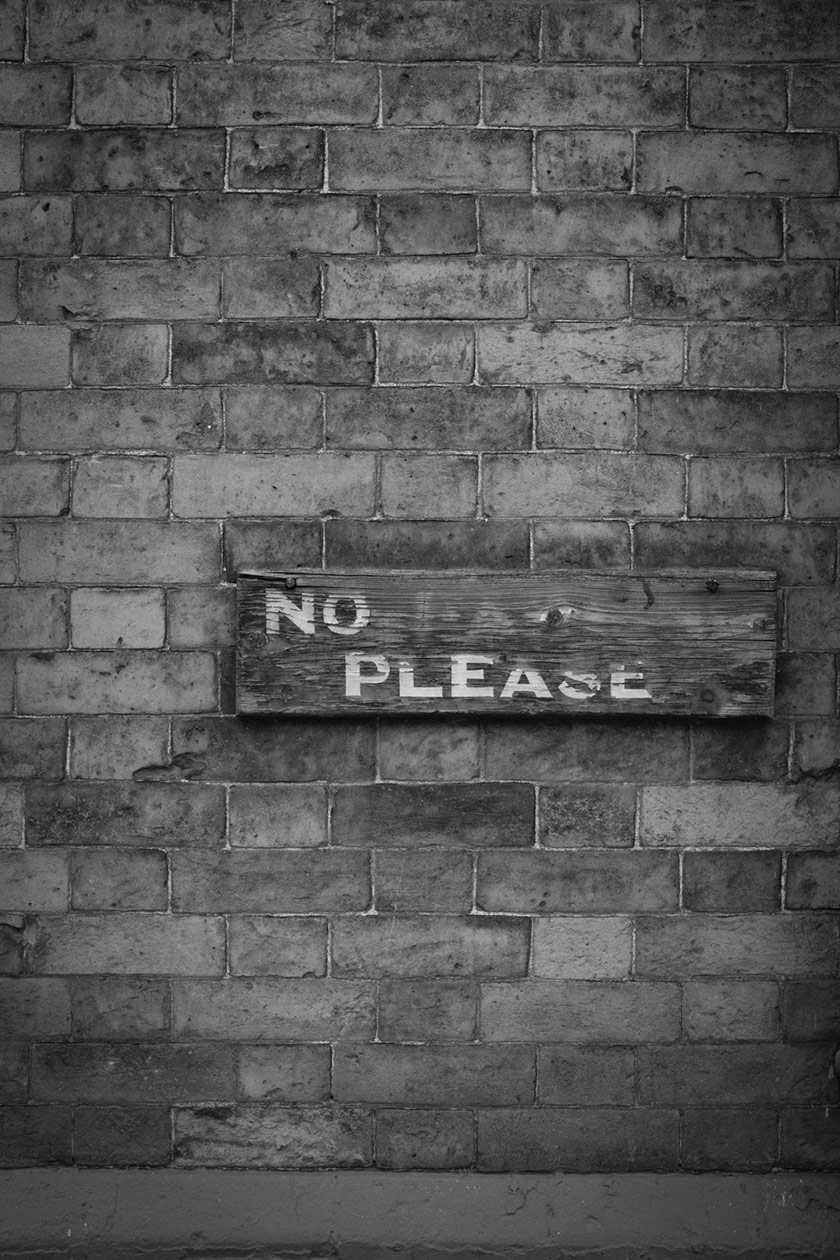
Eroded sign: PLEASE NO....


Tewkesbury, Gloucestershire, 2019.

Categories
music therapy

Lost albums, lost boys

I was 17 when Tom from college turned up at my parents’ house with an urgent need to talk about Brian Wilson.

At that point, I knew very little about the Beach Boys, and even less about Tom – an intense boy who had to bow to pass through doorways, who dressed in indie beige and stoner moss, and communicated mostly through Chris Morris quotes. We barely spoke in classes and certainly didn’t hang out after hours.

Who were his friends? The double-barrelled weed kids, I suppose, because they wore the same non-uniform uniform and the same carefully unstyled, uncut haircuts. They slouched around together, forming and disbanding songless bands every five minutes, dopey and aloof at the same time.

As Tom barged through the front door and made his way towards my room, distant and half-smiling, I thought, oh no, this is part of some elaborate mockery that will end up with my social status sinking lower than it already is.

He inspected my very small record collection, mostly stolen from Mum and Dad or bought at Woolworths: best-ofs and B-side compilations of the Kinks, the odd 99p Britpop single, some albums by the Jam on tape, and an embarrassing number of Hancock’s Half Hour tapes.

No comment, and then, eyes locked on, “Do you know about Smile?”

Smile? What was that? A band, maybe? I was too startled to reply.

“Brian Wilson. The Beach Boys. Smile.”

The Beach Boys, as in ‘Surfin’ USA’? As in the scratched LPs my uncle kept alongside the Ventures and Chris Rea in his Hi-Fi cabinet? My Dad, cooler than me then and always, had no time for the Beach Boys at all.

“No,” I said, and off Tom went, delivering the kind of passionate monologue that would end up on YouTube these days but back then had to be directed at people from college you barely knew, face to face, on gloomy Wednesday afternoons.

Brian Wilson, Tom said, was a genius but driven mad by LSD while producing what was to be his masterpiece, the album Smile, scheduled for release in 1967. It was a symphony, impossibly complex, like Pet Sounds but ten times more ambitious. And then Wilson, so Tom told it, scrapped the album, retired to his bedroom, and was never seen again. But, he went on, the tapes had leaked, and it was possible, if you were connected, to hear snippets – glimpses of something magical out of reach, of pop music on another level.

I don’t remember that I said anything – I was warily awaiting the punchline, and so gave the odd noncommittal uh-huh and mmmm.

After a while, Tom left, and we continued at college as if this moment had never occurred.

But Smile lingered.

It became my ‘thing’, in fact, for many years. I woke up to ‘Prayer’ every morning and listened to hour after hour of ‘Heroes & Villains’ sessions, trading tapes with oddball Americans and eccentric Scandinavians.

When Brian Wilson performed a finished version of Smile in London in 2004, I was there, laughing and sighing with delight.

Smile was found, but Tom got lost.

What I’d taken to be ironic detachment turned out to be clinical. I heard stories of his decline – that he’d dropped out and become a ghost, stalking our home town, back and forth from bedroom to record shop, shaggy and strange.

A Brian Wilson of our own, I suppose, without the cushion of songwriting royalties or the warmth of the sun.

Categories
1959 books reading1959

Reading 1959: Cider With Rosie and unexpected folk horror

The cover of the 1973 edition of Cider With Rosie

The first moment when it occurred to me that I might have the wrong idea about Laurie Lee’s autobiographical novel of life in rural Gloucestershire between the wars was a casual, almost approving mention of incest.

It is thrown into a run-through of various village characters:

John-Jack spent his time by the Bulls Cross signpost staring gloomily into Wales. Silent, savage, with a Russian look, he lived with his sister Nancy, who had borne him over the course of years five children of remarkable beauty.

Before I get to the murder, drowning, haunting, near-death experiences and rape, let me set out what I expected from this book: The Darling Buds of May, I think. Early evening ITV, yellow filters and the gentle romance of rural life.

Every edition I’ve ever encountered, including the hundred or so dusty copies in the store cupboard at my secondary school, has a cover design signalling that kind of lightness. Or, at least at first glance; there is, now I know to look for it, something sinister in Roger Coleman’s illustration for the early 1970s Penguin edition I read – a touch of Don’t Torture a Duckling, the uncanny gaze of a child too knowing.

I didn’t actually think of folk horror until almost half way through the book and a chapter entitled ‘Public Death, Private Murder’. In it, Lee tells the story of a traveller, a local boy made good, who returns to the village for Christmas. Flashing his money, boasting and insulting the locals, he makes himself the target for a gang which beats him, steals his wallet, and leaves him to die in a snowdrift. The horror – the stuff that wicker men are made of – comes in the reaction of the villagers:

[The] young men who gathered in that winter ambush continued to live among us. I saw them often about the village: simple jokers, hard-working, mild – the solid heads of families. They were not treated as outcasts, nor did they appear to live under any special strain. They belonged to the village and the village looked after them.

The very next vignette concerns Miss Flynn, a promiscuous young woman driven half-mad by the torturing presence of the ‘sick spirit’ of her late mother. She is found dead and naked in a pond by the milkman, having apparently drowned herself. Lee’s point is that death is part of village life, but this chapter approaches the mood of Wisconsin Death Trip at points:

The wet winter days seemed at times unending, and quite often they led to self-slaughter. Girls jumped down wells, young men cut their veins, spinsters locked themselves up and starved.

Our narrator himself is intimate with death. He dies as a baby, and comes close again later in life, surviving a harrowing illness that “put a stain of darkness upon my brow and opened a sinister door in my brain, a door through which I am regularly visited by messengers whose words just escape me, by glimpses of worlds I can never quite grasp”.

To balance death, of course, there is sex, but that too has the Summerisle look about it, enough to make Edward Woodward spit:

Our village was no pagan paradise, neither were we conscious of showing tolerance. It was just the way of it. We certainly committed our share of statutory crime. Manslaughter, arson, robbery, rape cropped up regularly… Quiet incest flourished where the roads were bad; some found their comfort in beasts; and there were the usual friendships between men and boys who walked through the fields like lovers…. Sometimes our sinners were given hell, taunted and pilloried, but their crimes were absorbed in the local scene and their punishment confined to the parish.

As it nears it conclusion, with the boy Laurie in the grip of adolescence, thrusting away at the fertile earth, we are given a final, sustained moment of suspenseful horror straight out of The Blood on Satan’s Claw: the plotting and attempted execution of the gang rape of a demonstratively Christian girl. In the exploitation film version of this story, the rape would be depicted in grim detail, but here the girl brushes away her would be assailants who are left feeling embarrassed and ashamed.

Cider with Rosie isn’t folk horror because it isn’t a horror story, but, still, I wonder what Ben Wheatley might do with it all. I’d especially like to see his handling of the two-headed talking sheep that appears during thunderstorms.

Categories
bristol buildings

Art Deco Bristol

The protagonist of William Gibson’s 1981 short story ‘The Gernsback Continuum’ finds himself pulled into an alternative reality in which the streamlined modernist design of the 1930s never went away.

Spotting surviving examples of Art Deco architecture in Bristol can feel rather like that – the shock of a sudden glimpse into a time before the Blitz and the ensuing austerity, when buildings soared, waved and curved into ever blue skies.

The term Art Deco derives from the French Arts Décoratifs and arose in the early part of the 20th century. It was a self-consciously modern movement that drew on diverse inspirations including industrial design and Egyptian art, and employed bold colours, geometric patterns alongside expanses of black, white, pale grey or cream to sell a vision of clean, bright living.

Bristol didn’t go all in on Art Deco, preferring the more conservative neo-Georgian style in many cases, and much of what there was was destroyed by war or progress. Most of the city’s lavish Art Deco cinemas, for example, have been pulled down (the Orpheus at Henleaze) or allowed to decay to their concrete bones like the Ambassador in Bedminster, now a climbing centre. There is still plenty to see, however, if you know where to look.

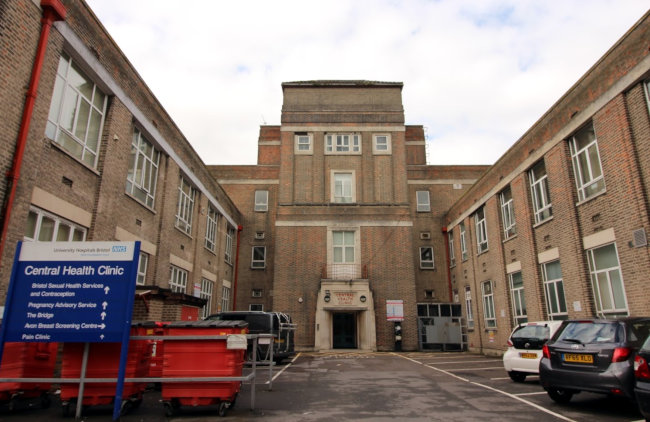
Central Health Clinic.

Bristol’s surviving Deco tends to be in the vaguely totalitarian Ministry of Information style, intended to project an image of business-like modernity, not leisurely decadence. The Bristol Central Health Clinic of 1935 by C.F.W. Dening is typical, and easy to miss unless you catch it from the right angle and pay attention to the details. It is composed around a central tower that barely towers, and has geometrically formed text over its defunct doorways – WOMEN PATIENTS and STAFF.

Queen's Court.

Alec French was an important Bristol architect whose firm is still trading today. His work includes the twin office blocks, Eagle House and St Stephen’s House, that take up most of one side of Colston Avenue. One oddity is French & Partners’ St Nicholas House which looks like pure 1930s Deco but was actually built as late as 1959. Queen’s Court, a block of flats built in 1937, is particularly striking. It resembles an ocean liner in red brick, its prow cutting into the road junction, with balconies turning its flats into seaview cabins. Halifax House on St Augustine’s Parade was built for the building society of the same name in 1937 before becoming once Alec French’s own HQ, and most recently a branch of Toni & Guy. It is quite plain but with distinct Deco touches around the balcony and in the black stone fascia.

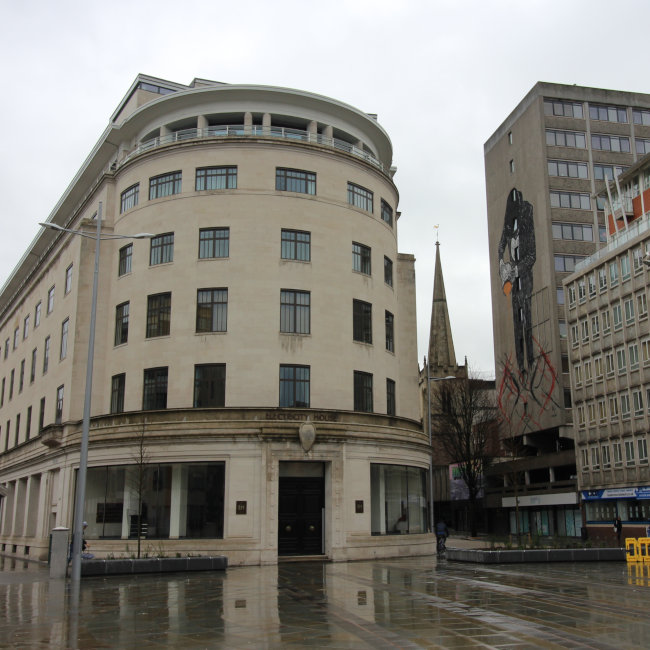
Electricity House

The Centre has more yet. Electricity House is a former showroom of 1937 by Giles Gilbert Scott, perhaps best known for designing Battersea Power Station and the famous red telephone box. Northcliffe House, a former newspaper office built in 1929, has streamline details and a clock tower which states thrusting modernity without subtlety.

Odeon cinema.

The Odeon at Broadmead is one example of frivolous leisure Deco, decked out in polished green and white tiles, and with a flying saucer canopy over what was once the grand entrance. The Merchant’s Arms at Stapleton, currently closed pending refurbishment or redevelopment, is a rare pub built in the streamline moderne style. In Stokes Croft there’s the former Blundell’s department store by W.H. Watkins at No. 77, much-altered but still unmistakably of the 1930s. The junction of Zetland and Gloucester roads has two minor relics: the former Morgan’s department store (lately Maplin’s) with its minimalist clock-face; and a Sainsbury’s supermarket which, if you look at the details, reveals itself as a branch of Burton’s the tailor dating to 1938.

Briavels Grove.

The very humblest examples can be found in residential suburbs. Subtly streamlined semi-detached houses crop up here and there in Westbury on Trym, while Briavels Grove in St Werburgh’s is an entire cul-de-sac of houses with bold geometric door surrounds and sun-ray garden gates. It’s all enough to conjur the sounds of Henry Hall and the BBC Dance Orchestra from a distant radiogram:

“It’s just the time for dancing/ Tomorrow is today/ Go where the music’s calling/ And dance the blues away…”