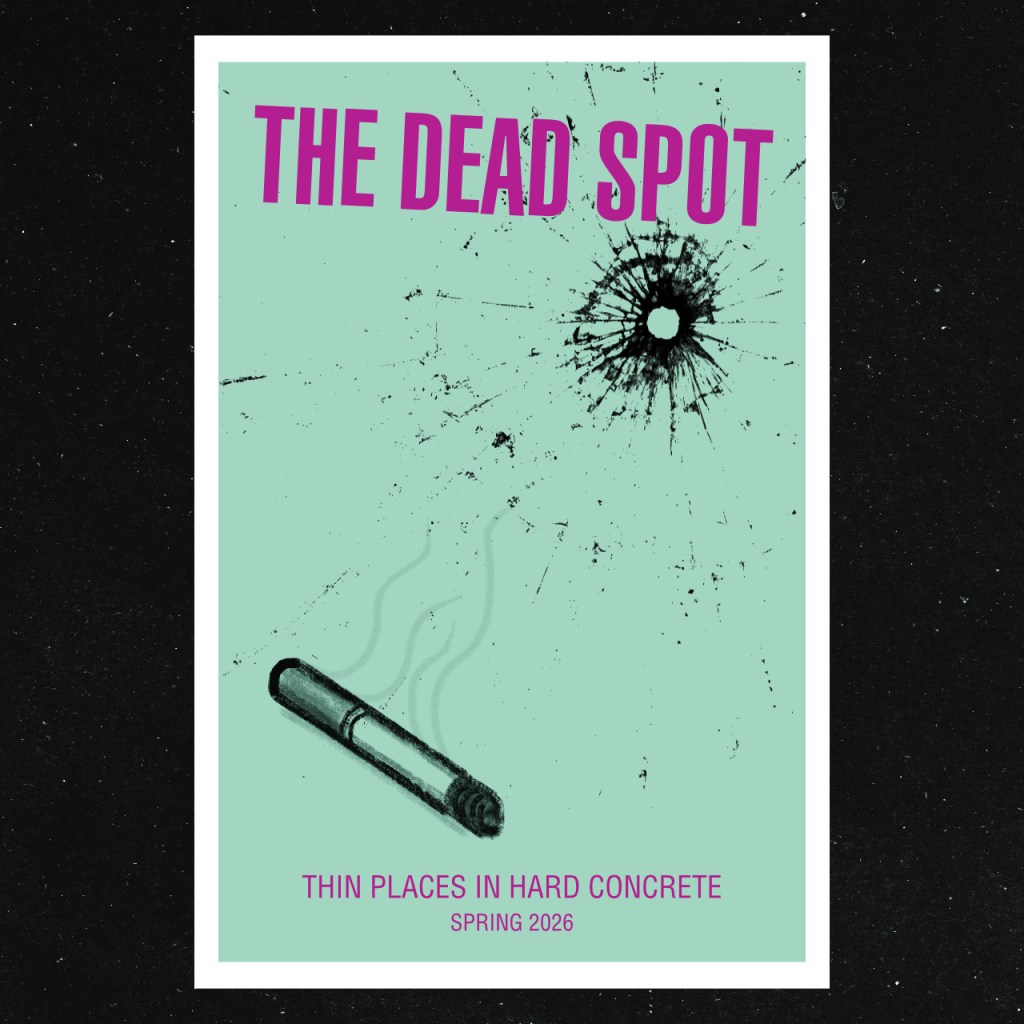
The eighth story in my new collection, Thin Places in Hard Concrete, is just as long as it needs to be. Which is another way of saying it’s very short – just shy of a thousand words.
I’ve mentioned before how inspiring I found ‘24 Rules for Writing Short Stories’ by Owen Booth. There’s plenty of good advice doused in snark, such as this:
9. All short stories should be 3,000 words long.
When I read that it flipped a switch in my brain and I suddenly understood that if I wanted to write a 10,000 word story, that was fine, and if I wanted to write 350 words, that was also OK. Sure, it’s useful to have guidelines, but they shouldn’t interfere with the simple act of storytelling.
‘The Dead Spot’, it turned out, wanted to be about a thousand words long. Sure, I could have stretched it, but I like to keep my prose lean, and I hate reading stories that I can tell have been padded, or pulled too thin.
With ghost stories especially the plot often comes after the central image, incident or premise. The writer wants to tell an anecdote, or evoke a feeling, but is obliged to shape it into a more substantial narrative.
I love Algernon Blackwood – his stories genuinely creep me out – but they often seem to me to be about a third too long, with an excess of preamble and rounds of repetition. I suspect he was often writing to meet the word count requirements of magazine publishers.
When I’m putting together one of my own collections, I’m not bound by any such restrictions. And, in fact, I like to vary the stories by theme, intensity and length. I won’t go so far as to suggest that a collection of stories has a rhythm but a succession of 3,000 word stories probably does register with the reader as repetitive on some subconscious level.
English Civil War
‘The Dead Spot’ is set in the aftermath of some sort of conflict – I’ve kept it fairly oblique – as life is getting back to a new post-war normal. Everyone wants to move on and forget, but that’s easier said than done with ruins and memorials all around.
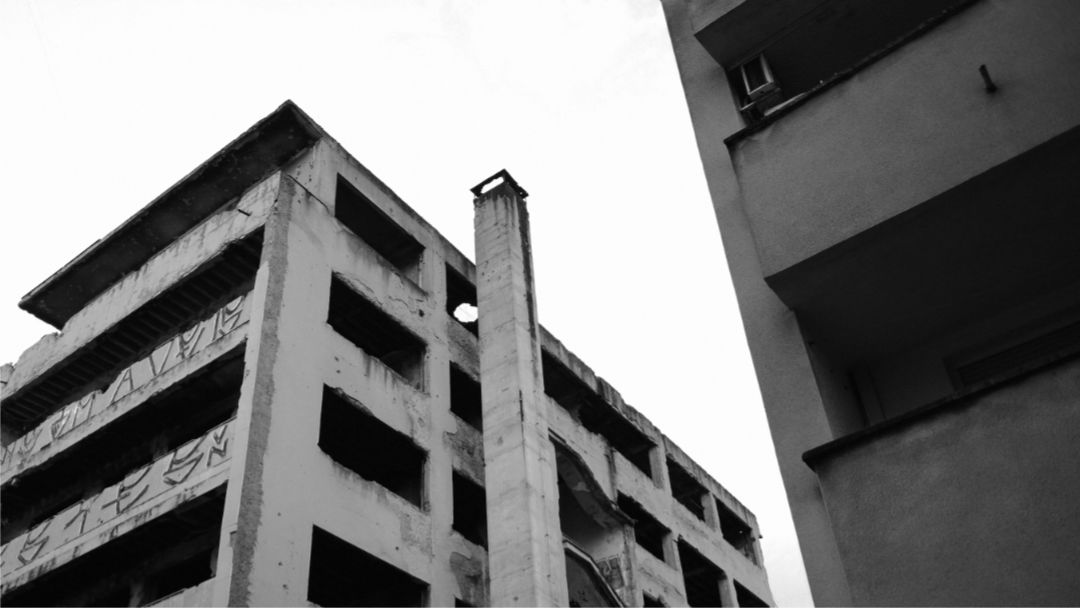
It was inspired by a visit to Mostar in Bosnia where we stayed in a clean, modern apartment-hotel that it turned out was previously a ruin on the frontline between Bosniak and Croat forces during the Bosnian War of the early 1990s.
Discovering this freaked me out. The flat was so ordinary – spatulas in the drawer, wi-fi router behind the telly, pot pourri on the coffee table – and yet 30 years ago it might well have been a sniper’s nest.
A couple of days ago I wrote about my story ‘One Star Review’ which touches on some of the same feelings which are, really, the fundamental energy source for ghost stories. What happened in this place and might it have left residue? It doesn’t matter if it’s a Gothic castle or a holiday flat, the feeling is the same.
There’s also something in the day-after-tomorrow faintly dystopian setting of ‘The Dead Spot’ that comes from the experience of living in 2026. Things feel unstable. Never-agains feel as if they might, in fact, be about to happen again. We’re already feeling the effects of climate change and the battle for resources has begun.
About 20 years ago, I started work on a novel provisionally titled English Civil War. I wrote about 20,000 words before, first, deciding that it was too ambitious for me to handle and, secondly, that reality was moving faster than my imagination.
A later completed but unpublished novel, Long Knives, borrowed some of the mood of that earlier piece, being set in the slow run up to civil war as the facade of British democracy begins to crumble.
‘The Dead Spot’ might be set in this same world.
You can buy Thin Places in Hard Concrete as an eBook or paperback from Amazon wherever you are. For starters, here’s where you’ll find it if you’re in the UK or US:
I’ve chosen not to apply digital rights management (DRM) to the eBook file so you can download it as an ePub file or PDF to read on whichever device you like, such as a Kobo.


