The six-part podcast series Broken Veil, created and presented by Joel Morris and Will Maclean, exploits the inherent ‘truthiness’ of the podcast format to chill its audience.
When the first episode landed a few weeks ago I wasn’t sure if it was an attempt to jump on the Uncanny bandwagon by telling a supposedly true ghost story, or a clever fiction.
I suspected the latter thanks to the involvement of Maclean, best known for his 2020 novel The Apparition Phase. It didn’t take long to spot tells which confirmed that, yes, this was a drama – albeit one that felt, at times, uncomfortably real.
Those tells? Acting as if you’re not acting is difficult, for one thing. Broken Veil is cleverly directed to minimise this problem with actors apparently briefed on the story they need to tell and encouraged to improvise around a loose script.
Conversations recorded on noisy microphones, in noisy cafes, in open spaces, or in moving vehicles, also dragged it a touch closer to verisimilitude.
I’ve listened to a lot of audio drama that feels like stage school kids in sound-proofed studios, over-egging their performances, and slurping their tea too aggressively, too near the microphone. Broken Veil felt light years ahead of that. But still not completely, seamlessly, perfectly convincing, even if it got very near.
Despite deciding that it was fiction, there continued to be moments when I doubted myself. Perhaps it was more complex than I’d realised. Perhaps some of the incidents described were real, and only some were fictional, or fictionalised.
The spooky, moody, Scandi-noir score was another tick in the ‘feels real’ column. This is how true crime and supernatural podcasts tend to sound.
Another was the way episodes were edited to finish on revelations and cliffhangers. Co-creator Morris is an expert in understanding and documenting the patterns and structures behind stories, and comedy, and he applies that expertise here to apply the unwritten rules of of non-fiction podcasting.
Just as real non-fiction podcasts tend to do, it also went off on tangents, and gave over whole episodes to what felt like ‘side quests’. Each made the story feel more complex and more confusing, in pleasing ways. When the real actress Gabrielle Glaister (Bob from Blackadder) turned up playing herself it worked both as a standalone story and as a ‘convincer’.
Horror, or weird fiction, often thrives in that space between truth and fantasy. To paraphrase Fox Mulder from The X-Files (a reference point for Broken Veil) “We want to believe.”
Like Morris and Maclean, I’m of the generation that saw Ghostwatch air live on the BBC in 1992. It was clearly labelled as a drama, with an on-screen writing credit for Stephen Volk. But it employed non-actors like Sarah Greene and Michael Parkinson, and the look and feel of live TV, to play with the audience’s perceptions of reality.
Other touchpoints in a similar vein are Alternative 3, a 1977 mockumentary which was originally scheduled for 1 April but actually aired much later in the year, and so fooled many viewers; and The Blair Witch Project, which triggered the found footage movie boom of the early 21st century.
Throughout Broken Veil’s short arc the hosts frequently invoke cultural references like these, along with myths and legends of the paranormal that a certain type of British child has latched onto and absorbed for decades.
The Philadelphia Experiment gets a mention, for example, as does Matthew Hopkins, the Witchfinder General, and the ‘backrooms’ internet meme.
All of these are shortcuts to the mood the creators want to create: paranoid, hauntological, psychogeographical – layers of muddled meaning on worn-out, overdubbed tape.
As with many weird stories, the opening is the strongest section. It’s when the sense of reality is strongest and the story being told feels most plausible. A challenge for creators of weird fiction is that setting up a mystery is fun, and it’s what people enjoy. They think they want a solution but no explanation you can provide will be as pleasurable as drifting, bewildered, in the unknown.
If there’s a problem with Broken Veil, it’s the pacing. Though it’s been a success, at least in terms of podcast charts and critical commentary, it was a side project for two busy creatives, and that shows in its brief run, and hurried denouement.
The final episode in particular felt like several weeks’ worth of content crammed together into too small a space. And of course the opaque solution half provided wasn’t wholly satisfactory – how could it be?
I would have been quite happy to listen to a longer, slower version of this podcast that revealed small nuggets of information over months. And I wouldn’t have minded had it never resolved.
Just being in this world, with two softly-spoken, slightly geeky hosts murmuring strange stories to each other, was pleasure enough.
Broken Veil is available through all the usual podcast services.
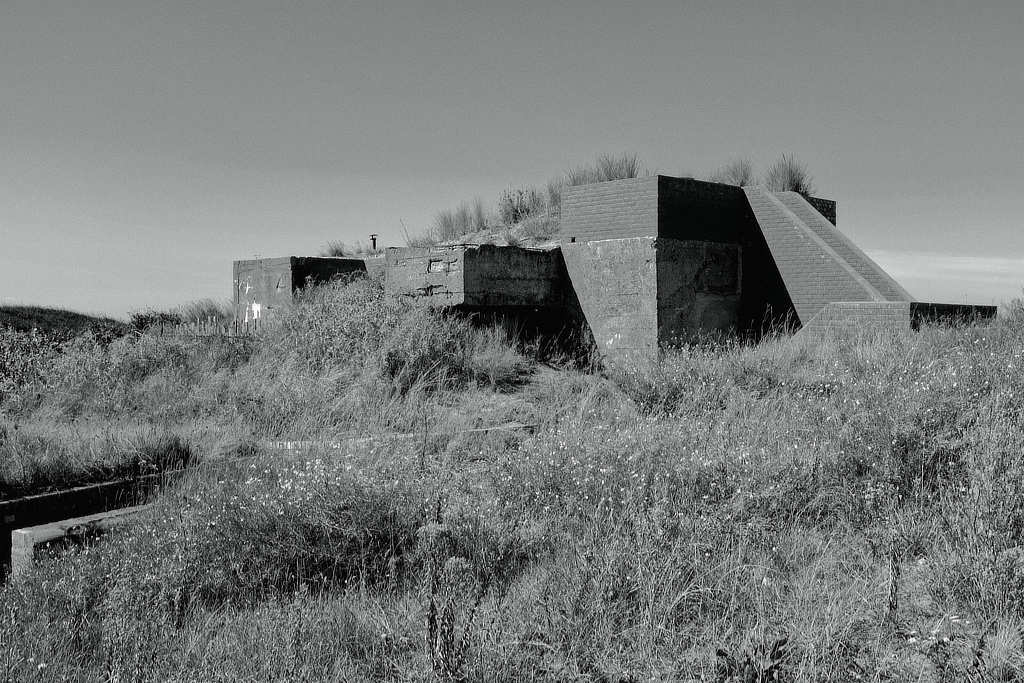
 Precast Reinforced Concrete Heart