Categories
books Intervals of Darkness municipal gothic

A rare chance to buy books direct from me

I’ve got a limited supply of paperback copies of both Municipal Gothic and Intervals of Darkness ready to ship to anyone in the UK who wants to buy one.

They’re £13 each including delivery in the UK, or you can get both for £25.

They’ve each got a selection of weird stories and ghost stories, with Intervals of Darkness being the more recent of the two collections.

“Impressively eerie and packed with shocks, Intervals of Darkness ushers the reader through 1970s grime and Gothic opulence, with moments of powerful poignancy and startling strangeness. You’ll want to linger over these stories.” – Verity Holloway

“Housing estates, factories, tower blocks and caravans, nowhere is safe from Ray Newman’s dark imagination. Existing somewhere between Robert Aickman and JG Ballard, these blackly funny tales are sure to chill you, no matter how high you turn the central heating. It’s every bit the equal of Municipal Gothic, and if anything it’s darker and stranger.” – John Grindrod

Contact me to sort out payment and delivery, and to let me know if you want the books signed or dedicated.

If we’re already connected, you probably know how to reach me, but otherwise…

If you’d rather buy from Amazon, that’s also fine. I get about the same cut and I don’t have to wrangle padded envelopes or schlep to the post box.

Categories
Fiction municipal gothic

FICTION: Winter Wonderland

When Dad turned up with tickets for Winter Wonderland, Tyler and I were truly astonished, for several reasons.

First, we hadn’t seen Dad since October, when he and Mum had one of their dramas. He stayed out all night and she waited for him. When we went to school, he still hadn’t turned up. He wasn’t there when we got home and she only laid three places for dinner. We knew better than to ask.

Secondly, it had already been agreed this was going to be a Little Christmas. In our family, this was an important concept. When Mum and Dad were flush, or had managed to patch things up with one or both sets of grandparents, we might get a Big Christmas. That meant proper presents, a proper Christmas dinner, and maybe even a proper tree. But most years were Little Christmases, where we each got a few things in a stocking and Christmas dinner was whatever Mum could conjure up from the freezer and the cupboards. One year, we had instant mash with Bisto and burgers.

Thirdly, even when there was a little bit of money around, Dad never bought us anything. It never occurred to him to treat or spoil us, or even to pretend to find fifty pence behind our ears. If he had coins in his pocket, he spent them on himself. Or very occasionally on Mum, if he was trying to heal a wound. Clothes, usually – skimpier and more gaudy than anything she would ever buy herself.

So, when he arrived on the doorstep, pink faced and cider breathed, chuckling and prancing like a clown, we simply didn’t believe him. He waved the envelope at us and pinched our cheeks.

‘Who’s the best Dad in the world, eh? My lovely girl and my lovely boy.’

You can now read the rest of this story in my collection Intervals of Darkness available as an eBook and paperback from 7 September 2024.

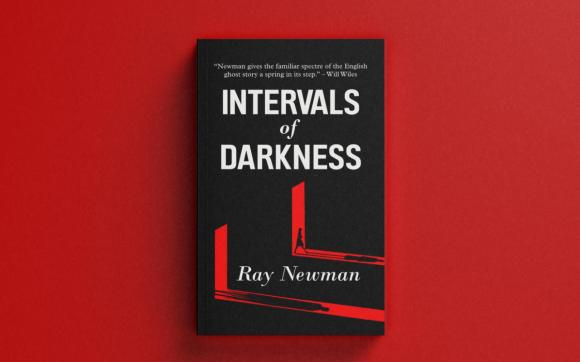
The cover of Intervals of Darkness by Ray Newman. It is mostly black with an illustration showing two doorways bathed in red light. Someone is striding out of one doorway casting a long shadow. In the other doorway is just a shadow, implying an unseen figure.

Declaration on the use of generative AI

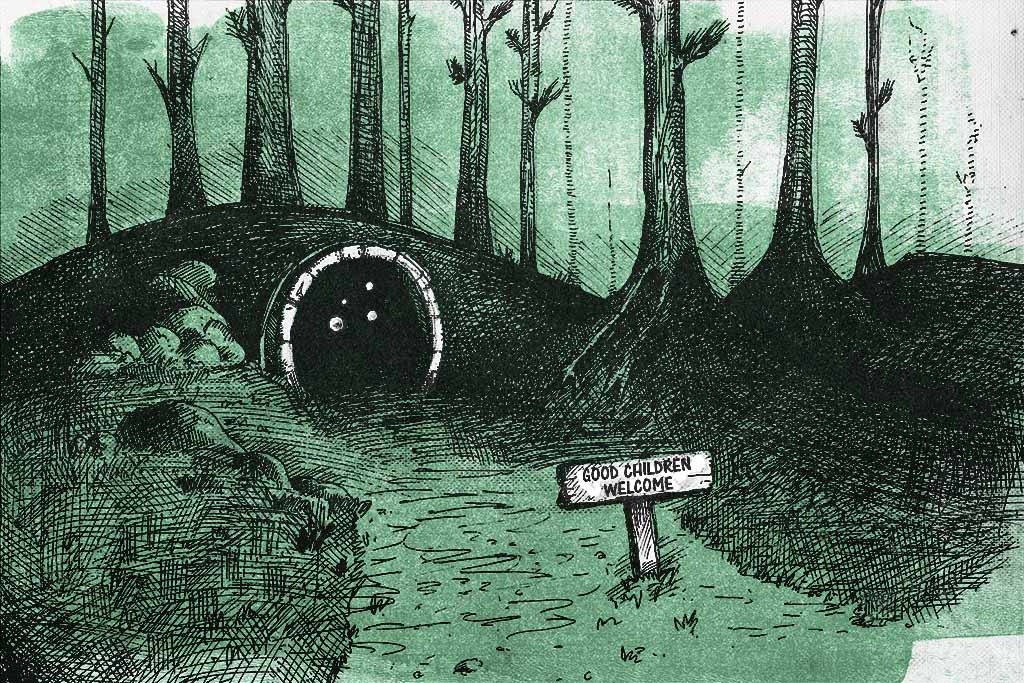
I didn’t use any AI tools, such as ChatGPT, to write the story. I drew the illustration myself with pen, on paper, and then edited it in Photoshop, which did include a small clean-up on the signpost using Adobe’s Generative Fill (Adobe Firefly).

Categories
Fiction municipal gothic

FICTION: Last Christmas

Christmas Day, four in the afternoon, and the stale air in the front room feels like a weighted blanket.

Dad is asleep in his grubby chair, whistling through his drooping white moustache. Mum is fussing about, back and forth from the kitchen, groaning every time she puts weight on her hips. My sister is staring at her phone, scrolling, liking, scrolling, liking…

We’re not allowed to watch TV because our family tradition is to play board games and card games, except that doesn’t happen any more, not since Aunt Jenny died and Uncle Terry stopped coming. Now, we just vegetate and compost.

Two more nights to go. Just two more nights.

‘I’m going for a walk,’ I say, surprising myself. ‘Get some air and the last of the light.’

And I’m coat on, out the door, before anyone can stop me.

It doesn’t feel much fresher outside. Like most Christmases, it’s grey and almost muggy.

One foot in front of the other, walking nowhere in particular.

I’ve lived away up in the city for twenty years and my home town feels psychedelically weird, like one of my stress nightmares. Is this really where I grew up? Are these really the streets I used to play on?

The pylons that run the length of the main road on the estate crackle as the evening dew begins to settle. I feel the hairs on my neck spring.

Nobody told me the pub was gone. There’s just a bare space now, surrounded by a wire fence, and notices about planning permission.

On the corner, there’s a phone box. One of the glass and steel type, skeletal and unromantic. It was where I used to call my first girlfriend during university holidays. I stop for a moment and look at the dangling handset. I wonder if it still works.

Then it rings.

There’s no traffic on the roads, no sound at all from the nearby houses, and the electronic chirruping seems outrageously loud. I feel embarrassed, as if I’ve made it happen, and quickly walk on. The phone keeps sounding behind me, calling after me even, but eventually fades out of range.

I take the next left, towards Holy Trinity Church and a patch of grass we used to call, charitably, The Green. That’s where Deano Tremlett broke my ankle playing football, with the ‘NO BALL GAMES’ sign for one goalpost and a cricket stump for the other.

I pass a shuttered cornershop, a shuttered fishing tackle shop, and a house lit up like a Las Vegas casino. An inflatable peeping tom Santa is staring through the window of the bedroom.

As I near The Green, I remember something: next to the post box and the concrete planters full of cigarette ends, there’s another phone box. I’m not exactly braced this time but I am ready. When it rings, though, I still say ‘Bloody hell!’ out loud.

Oh, I see. I get it. Someone’s watching me and they’re calling it from a mobile. It’s a prank. I smile for the benefit of my hidden audience and reach for the handset.

‘Hello?’ I say.

I’d forgotten how bad they smell, phone box handsets: bad breath, mould, metal. The black plastic feels cold in my hand.

The line crackles slightly.

‘Who is it?’

Then I hear something. Drums. A thin echoing beat, like hold music.

Now this makes more sense. It’s a robocall. Spam. I breathe out, relieved, and slam the handset back into place.

Keep walking. Past the church, up a rough path by the side – Hog Alley we called it as kids – and through into Chamberlain Court. Follow that towards the secondary school, the primary school and the health centre.

Through windows and net curtains I see families on sofas or in armchairs, staring towards the TV, either slumped or wrestling with game controllers.

I notice the phone box on the corner of Franklin Road well in advance. Its glass is stained and fogged. There’s grass growing around its base. I think about avoiding it but don’t want to turn back the way I came.

And of course it rings.

‘Fuck off,’ I shout at it.

The ringing, somehow, gets louder, so I have to answer it before anyone else comes along.

This time, the music starts immediately, before I have time to speak. This time, I recognise it.

It’s the intro to ‘Last Christmas’ by Wham! with its chugging synthesisers and a wordless vocal. George Michael’s voice squeezes through the small speaker as he sings the first line: ‘Laaaast Christmas…’

Then the recording catches.

It’s not quite like a record skipping but, rather, an insistent hard-edged loop.

‘Last Christmas/ Last Christmas/ Last Christmas/ Last Christmas/ Last Christmas/ Last Christmas/ Last Christmas/ Last Christmas–’

It’s the same few seconds of music but seems more intense with each repetition.

I drop the handset and leave it swinging as I walk away.

I can still hear the music for a few steps, dissolving into pure treble, then disappearing altogether.

It’s getting cold now and I need to be home where it’s safe. I break into a jog.

Each phone box I pass rings for me, desperate to tell me something.

I run up the garden path and turn my Yale key, the one I’ve had since I was fourteen.

In the kitchen, Mum and Dad are hobbling about the dining table, bickering over the pickled onions and the cheese board.

‘What’s the matter?’ asks Mum.

Clammy and shaky, I force a smile.

‘Nothing,’ I say. ‘Just glad to be here.’

And I mean it.


If you enjoyed this story then check out my collection Municipal Gothic which has thirteen stories about ghosts on council estates, devil dogs in supermarket car parks and haunted tower blocks.
Categories
grave digger's boy municipal gothic

Playlists are my secret weapon for writing

When I’m working on a novel or script, playing an imaginary soundtrack snaps my head back into the project and gets me ready to write – a kind of hypnotic trigger.

As a teenager, I used to make over-elaborate compilation tapes. Then I got into making complicated iTunes playlists. Since 2011, though, Spotify has been my go-to playlist playground, with what feels like all the world’s music a click or two away and clever algorithms to help me find pieces connected by mood.

The first book I recall making a soundtrack for was a now-abandoned conspiracy thriller police procedural called Long Knives. If you’re curious, here’s the playlist:

Although it’s one hour and forty minutes long, the most important tracks are the first two. The first track, ‘Electroconvulsive Shock’ by Peter Broderick, is a kind of instrumental overture that sets the mood – forlorn, minimal, ever-spiralling.

The second is a song, ‘You are a Knife’ by Danish band VETO, which I imagine playing over the opening credits of a TV adaptation or film version.

The funny thing is, neither of these is the kind of music I usually listen to. They were chosen purely because they seemed to work for the book, as if I was the music editor on that imaginary TV adaptation.

I used to make visual mood-boards and sometimes still do; this is an extension of that.

In this particular case, I think I was also after something that would help me picture the action as if it was a Scandinavian crime drama on BBC4, all washed out colours and frosty cityscapes. The theme tune I choose doesn’t sound unlike the one from The Bridge.

The book that eventually got published, The Grave Digger’s Boy, also has a soundtrack. This is more melancholy, with lots of solo piano and mournful cello, as befits a book about memory and obsession. Here it is if you fancy a listen. The same thing applies – I probably wouldn’t wander around listening to most of this music for fun and couldn’t tell you much about most of the artists.

The single most important track – one that I ended up playing on repeat for hours, sometimes – was ‘Theme’ from the 2009 soundtrack album And in the Endless Pause There Came the Sound of Bees by Icelandic composer Jóhann Jóhannsson.

There’s a passage in the book where the protagonist, Ben, is with his mother on a beach. I found it difficult to write and extremely emotional. This music – quite cheesy, now I listen back – seemed to suggest ‘bittersweet’ perfectly and helped me access feelings that I keep buried most of the time.

Sometimes, I berate myself over the time I spend tinkering with these playlists. Why have I just wasted fifteen minutes trying to find just the right piece of music when I could have been increasing my word count? Classic displacement activity, you idiot!

Except the more I think about it, the more I think my brain knows exactly what it’s doing.

First, it’s a way of engaging with and meditating on the project without jumping straight into writing. I’m restless with a short attention span – not great for a would-be novelist – and struggle to spend time thinking when I could be cracking on. An hour spent in Spotify focusing on the mood and tone of the book, with the plot and characters slowly marinating, is progress, even if it doesn’t always seem that way.

Secondly, the playlists are important because they help me envision the finished product and conceive of it being credible and successful. If there’s a TV or film adaptation it must be good, right? And it’s certainly no worse than some of the stuff that does end up on TV. This tactic is vital in overcoming impostor syndrome and the fear of the blank page – of the 80,000 words left to write.

Once I’ve got the soundtrack, it also makes me more productive. I can listen to it while I’m walking and thus force myself to think about plot or character problems. It also means that wherever I am – the canteen at work, a hotel room, a train – I can immediately slip back into a virtual version of my own work space.

There are a couple of bits of music that I use in less specific ways.

The first track from Brian Eno’s Music for Airports has become a sort of magic reset button I can hit when I’m suffering from writer’s block. I don’t know exactly how I trained myself with this habit but it works: I hear the first couple of cycles of the piano loop and the tap comes unstuck. It also seems to magically slow my heartbeat when I’m stressed. Handy, that.

My other half isn’t a fan of Michael Nyman or Philip Glass and I’m not sure I am, necessarily, except when I’m writing, but I do find them useful.

Glass – specifically this slightly weird playlist I made myself – doubles my productivity in short bursts. Repetitive, insistent… A kind of amphetamine for writers.

Nyman, on the other hand, is where I turn if I’m working on characters and need to give my emotions a prod. In particular, his soundtrack for Michael Winterbottom’s Wonderland is a go-to, giving ordinary lives a kind of poetic grandeur it’s easy to deny them.

And his song ‘If’, written for a Japanese animated adaptation of Anne Frank’s Diary, is similarly soupy but what can I say – I’m a sap. It makes me well up and sometimes I need to be in that state to write what needs writing.

One of my current works-in-progress, the title of which I’m going to be coy about for now, has a soundtrack and theme tune already. The score is a mix of Shostakovich, Bernard Herrmann and David Shire – dark, moody and just a touch spiky. The theme is this wonderfully wonky piece from Benjamin Britten’s A Ceremony of Carols:

That should give you a clue about what you can expect from the book when it’s done.

And my most recently published book, a collection of ghost stories called Municipal Gothic, has its own playlist, too. It’s a mix of genuinely unsettling field recordings, discordant modern classical music and synthesiser instrumentals. I don’t listen to it for fun but when I want to get into the right frame of mind to write about revenants and ghouls, it’s just the thing.

You’ll notice that I go to quite a bit of trouble over the cover designs, too. That’s another version of the psychological trick I described above: if I can see something that looks as if it already exists, that feels as if it’s got a physical form, it encourages me to make it happen.

Categories
books municipal gothic

Municipal Gothic: the other type of scary

Ghost stories are about the uncanny and, of course, about fear. But when do you ever feel really scared?

As in, fight or flight. As in, heartbeat up, breathing shallow, nerves twitching.

For me, it’s in subways, when I’ve committed to the tunnel and have nowhere to go, and I see someone blocking the exit up above.

Or when I find myself on a street I don’t know on an estate I don’t know, maybe walking towards a dead end, while whispering men stop whatever they’re doing in that alleyway to watch me pass.

That reminds me of the most scared I’ve ever been, I think, on the top deck of a bus going through Clapton after midnight. Between Central London and the east, it emptied, until it was just me and some hyped-up lads making a lot of noise about someone who was going to get shanked, if he wasn’t careful.

After a while, they noticed me on my own on the back seat.

“Excuse me,” one of them said, with surprising politeness, “but are you a police officer?”

Back then, I did kind of look like I sort of might be – a sturdy bloke with a shaved head, often wearing a white shirt and black trousers.

What was the right answer? Which would make them less likely to want to beat me up, or stick a knife in me?

While I thought about it, my heart began to thump. I knew my voice would wobble if I spoke.

So, after a moment, I smiled slightly and gave a slow shake of my head.

They stared. I stared back.

After a moment, their leader shouted, “Five oh”, and they scattered off the bus as it pulled into the next stop.

It was a while before I breathed again.

That’s logical, sensible, real-world fear. The fear of actually being injured and, perhaps worse, humiliated.

In my case, this is at least partly the result of growing up on an estate, in a town, where, if you weren’t careful, you’d get a ‘smack in the face’ for glancing at someone for too long, or failing to say hello, or for saying hello with the wrong tone.

It wasn’t so bad, not really – not as long as you remained hyper-vigilant at all times, took no risks, scuttled everywhere by the safest paths, thought constantly about your escape routes, didn’t make eye contact with anyone at any point, and got home before dark.

The problem with that is, you go into adulthood hyper-vigilant, taking no risks, scuttling everywhere… I’m in my mid-forties and still carrying it with me.

On the upside, all that internalised terror means I’ve never been mugged, touch wood, or even beaten up. I’ve got no shame about crossing the road if I don’t like the look of what’s up ahead on this side. I’d rather my face be intact than my masculine pride.

Writing ghost stories with resolutely real world settings, as in my collection Municipal Gothic, I want to draw on some of that energy.

Because when a ghost appears in a place or situation where you’re already on edge, it feels all the more horrifying.

But it’s also important not to lapse into the cheap cliché of the ‘faceless hoodie’ as a stand-in for zombies or ghouls.

And I certainly don’t want to write stories about gentlefolk wandering onto the wrong side of the tracks and forced to confront the ultimate horror: The Working Classes!

I’ll leave that to H.P. Lovecraft.

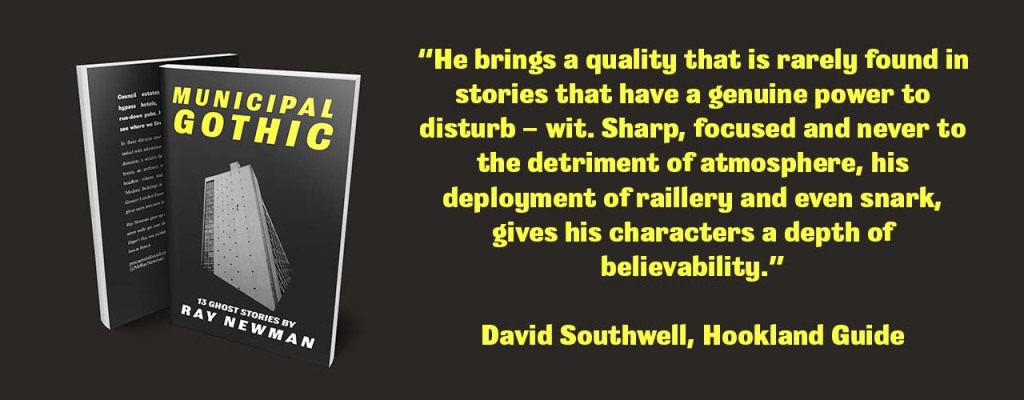
“He brings a quality that is rarely found in stories that have a genuine power to disturb – wit. Sharp, focused and never to the detriment of atmosphere, his deployment of raillery and even snark, gives his characters a depth of believability.”

David Southwell, Hookland Guide
Municipal Gothic is out now as a paperback via Amazon UK, Amazon US and around the world.

Categories
books Fiction municipal gothic

Municipal Gothic: 13 ghost stories

Council estates, motorway underpasses, bypass hotels, concrete cathedrals and run-down pubs. Places we all know, that we see where we live in suburbs and towns. Why shouldn’t they be haunted?

Municipal Gothic, my new collection of ghost stories, shows that they very much can be. It is now available as a paperback via Amazon, at £8.99 in the UK, $12 in the US and around the world at various prices.

In these thirteen stories you’ll meet a demonic black dog tasked with administering a lineal curse in the age of sperm donation; a witch’s familiar forced to live off fried chicken bones; an architect whose buildings can drive you mad; headless villains, and more.

It includes a revised version of ‘Modern Buildings in Wessex’, originally published as a zine or chapbook to some acclaim in 2020. It’s ghost story in the form of an architectural guide – M.R. James meets Ian Nairn.

David Southwell, of Hookland fame, is a fan of this particular piece which is how I got up the nerve to ask him to supply a foreword for the collection. He has plenty of interesting things to say about how ghost stories work, about working class fiction and, of course, about the power of plausible fake ephemera to conjure places that don’t exist.

In a similar vein, you’ll also find a new piece: ‘An Oral History of the Greater London Exorcism Authority’. Inspired by the kind of self-congratulatory in-house publications put out by public bodies in the 1970s and 80s, and by my love of institutional branding, it started life as a few mocked-up images on Twitter…

…but before long, I knew I’d have to write something more substantial to back up those ideas. It became an exercise in tone of voice – could I write first-hand testimony from multiple people? (Neville Hutchinson, the GLEA engineer who does not believe, and his colleague Ernest ‘Cabbage’ Lacomber are my favourites, I think.)

‘The Curse Follows the Seed’ is, as they say, ‘a very personal piece’ for reasons you might be able to work out when you’ve read it. It was the first story I wrote with the concept of municipal gothic in mind. Has anyone ever before set a key scene in a story in the area by the bins in a supermarket car park? I can’t help myself.

Other stories in the collection evolved from an abandoned novel. Why, when I try to write social realism, do ghosts, premonitions and black dogs keep turning up? See ‘Who Took Mary Cook’ for evidence of this.

Certain pieces emerged slowly, over the course of years, as I worked on them with my Wednesday night writers’ group. I must thank Andy Hamilton, Corinne Dobinson, Mike Manson and Piers Marter, and others who have come and gone, for their encouragement and advice. They saw scraps of ideas and helped me find the way, as with ‘Protected By Occupation’, which first landed with them in 2019 as a scrappy period piece inspired by the Lamb Inn haunting (PDF, bris.ac.uk).

Please do buy a copy of the book and let me know what you think. Or, more importantly, let Amazon and Goodreads know what you think – a quick rating and review is worth more than you can imagine.