The soundscapes of Radio Lento can turn even the most overwhelming urban landscape into a rural retreat. But is it good for me?
A couple of weeks ago, feeling stressed at work, I took myself around the block for a mid-afternoon walk. It didn’t help because all I could hear was the sound of traffic, which always feels louder and more intense when I’m anxious.
Even in the park the thundering of lorries, whining of boy-racer hatchbacks and throb of the nearby flyover seemed unbearable.
Then I had a bright idea: why not plug in my noise cancelling headphones and choose a better soundtrack? On Tidal I found a 4-minute track called something like ‘English countryside sounds’ and hit play.
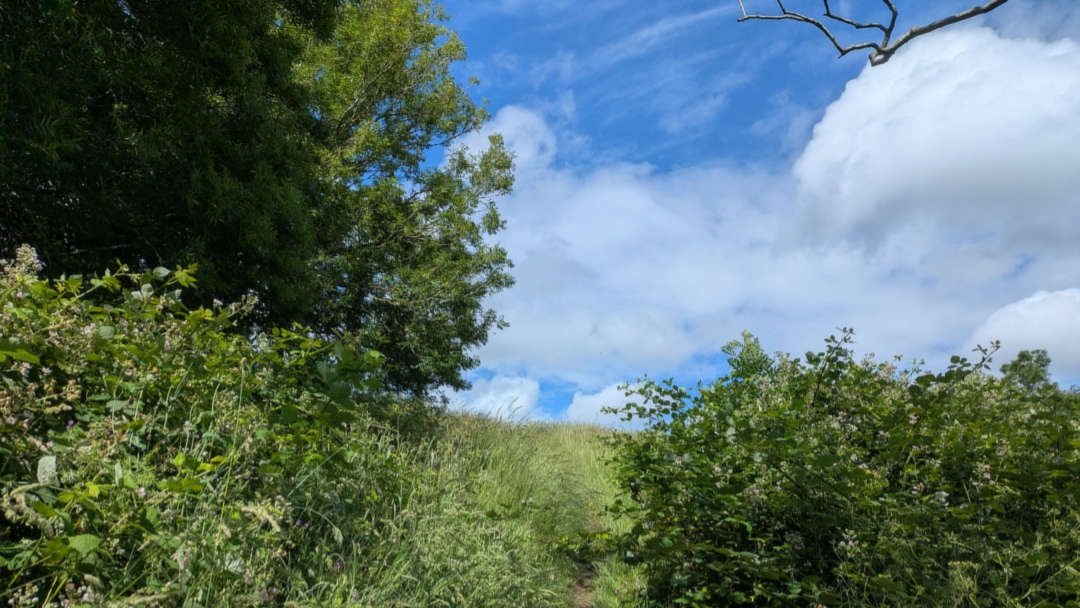
The improvement was instant. The sounds I was hearing matched what I saw in front of me – tall yellow grass waving in the wind, mature trees, weeds at full stretch – and as the recorded birds sang, I felt myself uncoil. By the time the track ended, I felt completely reset.
A few days later, after a difficult day, I set out to replicate this effect. This time, instead of random spammy ambient recordings on Tidal, I turned to Radio Lento.
A ‘slow radio’ podcast, it was launched by Hugh Huddy and Madeleine Sugden in 2020 during the pandemic, and now has a catalogue of almost 300 recordings of natural soundscapes.
On this particular after-work walk through the industrial and post-industrial landscape of East Bristol I chose the most recent episode, ‘Sonorous rural woodland before an approaching storm’.
In the park it worked predictably well, fitting this small green world far better than the background racket of jammed commuter traffic just beyond the trees. Again, my shoulders untensed, my breathing slowed, and I felt something like (I think I remember the sensation) happiness.
To my surprise, though, it continued to be effective even when I left the park and found myself on suburban side streets. The chirruping of birds and occasional flypast by a bee (recorded hundreds of miles away, weeks ago) turned a busy inner city neighbourhood into an impossibly tranquil one.
I tried again a few days after that, this time with ‘Dawn in Shelve Wood Shropshire with cuckoo’. In a different park, surrounded by houses and busy roads, I sat on a bench and let myself believe I was somewhere with no traffic at all.
Except that I didn’t quite believe it. It felt something like a lucid dream, or a hallucination, or an out-of-body experience.
Something about how much I liked it also made me uneasy. I was allowing myself to wallow in a fantasy, cutting myself off from reality. That I found it difficult to stop listening and remove my headphones also troubled me. Could this aural perfection be addictive?
It occurred to me that I was indulging in a version of an idea often found in science fiction: the Better Than Life simulation in which it is all too easy to get lost.
In The Matrix it’s all leather coats and high speed chases. It’s visual and visceral. This way of using the very gentle, genteel Radio Lento feels different – but is it?
I found myself thinking particularly of Stanisław Lem’s 1971 novel The Futurological Congress. It depicts a world in which everyone is permanently under the effect of hallucinogenic drugs which make them believe they are living in a functional, futuristic society. But they’re actually living in the dystopian ruins of human civilisation, eating slop in concrete bunkers and imagining it to be fine food in luxurious surroundings. When the protagonist of the novel discovers this reality, he feels bereft. He misses the illusion.
Of course I’m going to keep listening to Radio Lento, and letting the sound of invisible cuckoos drown out the intolerable racket of combustion engines. The immediate, obvious therapeutic benefits are worth a little philosophical fretting after the fact.
The question is, if I had the option of glasses that could make the world even greener and more beautiful, would I also choose to wear those? Maybe, because the thing about being blissfully unaware is, I suppose, is all that lovely bliss.


