In the first quarter of 2026 I’ve been reading about witchcraft and folk horror, watching a lot of J-Horror, and trying to make more music, faster.
First, a quick reminder of the point of these posts: I very nearly set up a newsletter, then decided against it, because the world doesn’t need more Substacks. (And, in fact, my partner and I have now shuttered the Substack we used as the newsletter for our long-running beer blog.)
So, if you want to keep up to date with what I’m reading, watching, thinking and doing, your options are:
- subscribe to this blog with the little widget down at the bottom right
- add this blog to your RSS feed reader (I’m using Feedly)
- follow me on BlueSky
I think blogs are fundamentally a good thing and I will keep blogging until they shut down the internet for good. I think more people should blog and those with blogs should (time and circumstances permitting) blog more often, even if nobody reads a word of it.
What I’ve been reading
I’ve been struggling with reading in the past couple of months. I got promoted at work and am also on a tricky project which takes up a lot of bandwidth in my brain including, unfortunately, at 2 am when I should be sleeping. Still, having that soft annual target of 50 books has pushed me to pick up the odd paperback even when I felt weary.
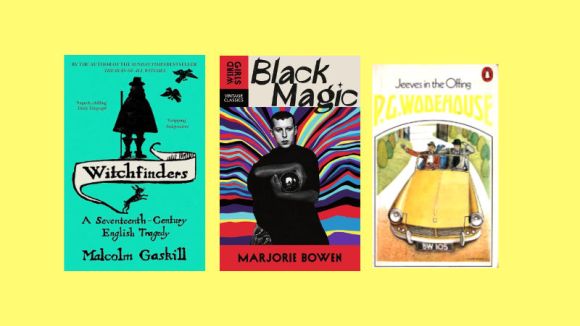
If there’s been a theme it’s witchcraft. I read and enjoyed Malcolm Gaskill’s Witchfinders from 2005, appreciating his skill at turning hard research into a compelling narrative. I especially enjoyed collecting the names given by various people when forced to confess to keeping ‘imps’:
- Littleman
- Prettyman
- Dainty
- Rug
- Jack
- Prickears
- Frog
- Touch
- Pluck
- Take
- Jacob
- Hangman
- Meribell
- Kit
- Beelzebub (a log)
- Trullibub (a stick)
At a certain point, though, I did start to find the accounts of specific witchcraft panics repetitive and wondered whether he wasn’t being a little too generous to the archive material that, fair play, he’d spent years finding and burrowing through.
The most important lesson I learned from the book was that the belief in witches was generally sincere, rather than cynical, and that England in the 17th century was full of tensions and anxiety about what God might want and whether he might be mad at us. The execution of witches almost feels like a form of human sacrifice in that context.
Without planning it, I bounced straight from that into another book about witchcraft, Marjorie Bowen’s 1909 novel Black Magic, recently republished as part of the Vintage Classics ‘Weird Girls’ series. Being Edwardian, it’s no surprise that it is occasionally long-winded and a little too leisurely, with the same passionate conversations repeating themselves every few chapters. What feels way ahead of its time, however, is that complex portrayal of gender and sexuality, and the sheer raging blasphemousness of the story. Our hero, Dirk, is a practising black magician who falls in love with another would-be witch, Theirry, as they form a sort of coven. That feels quite daring and I can’t tell if it increases the frisson, or provides a moral get out clause, that it is blindingly obvious to modern readers that Dirk is actually a woman in disguise. The other surprise, for me at least, is that religious magic is real in this world, leading to a positively apocalyptic ending in a Rome lashed by God’s fury.
After that, I needed something light and turned to the stack of Penguin editions of P.G. Wodehouse novels I picked up in a charity shop in Ealing the other week. I hadn’t read Jeeves in the Offing before and was excited at the prospect of a new-to-me Bertie Wooster book. Being from 1960, however, it is an example of a lesser later Wodehouse. The prose in peak Wodehouse makes me laugh out loud every two or three lines. Here it was more like every three pages. The sparkle simply wasn’t there. It was nonetheless pleasant to spend time in a world where, apparently, the war never happened, nothing really matters, and people are constantly falling into ponds.
I’ve also been reading ‘zines’ in that 21st century sense of remarkably professional indie publications. The second edition of Ritual from the people at Weird Walk was themed around hauntological TV and featured, for example, a good piece on The Mind Beyond by Adam Scovell.
And I’m really savouring the first issue of Crossroads, a new publication about American folk horror edited by Candice Bailey AKA ‘Rowan Lee’ and Gavin Lees. At its core are three essays about Deliverance, The Texas Chain Saw Massacre and Race With the Devil introduced by Bailey’s own essay arguing that these could be said to constitute the ‘holy trinity’ of American folk horror. It’s available in the UK as a print on demand book or a bargain-priced eBook.
Finally, I’ve been enjoying rediscovering Longreads as a source of substantial articles, via my RSS reader. I’ve also subscribed to Wired for the first time in ages, specifically prompted by their publication of an article by Jane Ruffino about undersea cables.
What I’ve been watching
My aim for this year is to watch only films from countries other than the USA. I’ve been doing pretty well on that except that my partner loved Andy Weir’s novel Project Hail Mary and made a very rare request to watch the film adaptation at the cinema. I enjoyed it quite a bit, and I certainly enjoyed how much she enjoyed it, given that she’s someone who can generally take or leave movies.
Last year I acquired the Arrow Films Blu-ray box set J-Horror Rising and working through the lesser-known films in that collection prompted me to revisit the classics. In the first months of this year I rewatched Ring, Dark Water and Ju-On: The Grudge, along with several others I never got to first time round. This led to a blog post about how J-Horror revived the traditional ghost story for the 21st century.
I know it’s weird that I’m always giving myself these little jobs to do but once I’d decided to write that post it helped me prioritise watching movies over, say, watching TV, or binging YouTube.
My mission to watch more non-American films has also been aided by the excellent BFI Player streaming service which is a bargain at about £7 a month. It’s got a smaller selection of films than some other services but what’s there is so interesting, and so well chosen, that I never struggle to find something that piques my interest. Holy Cow (Louise Courvoisier, 2024) is something I’d never have ordered on disc but which I found fascinating, funny and moving. It’s about a teenage tearaway in France’s Jura region who suddenly decides he needs to become an expert cheese maker when his father dies. (That sounds like a spoof of a French film from The Simpsons, I know.)
I’ve also been buying discs from Radiance Films, a relatively new UK Blu-ray label which specialises in world cinema from the junction of genre and art film. From Japanese ghost stories to French crime thrillers, their catalogue is full of utter obscurities, each of which makes you think, “Wait, why isn’t this film better known?” Particular highlights have been the German heist movie The Cat (Dominik Graf, 1988) and Alain Corneau’s Série noire from 1979, about a weaselly little fantasist who mistakenly believes he can commit the perfect murder.
What I’ve been doing
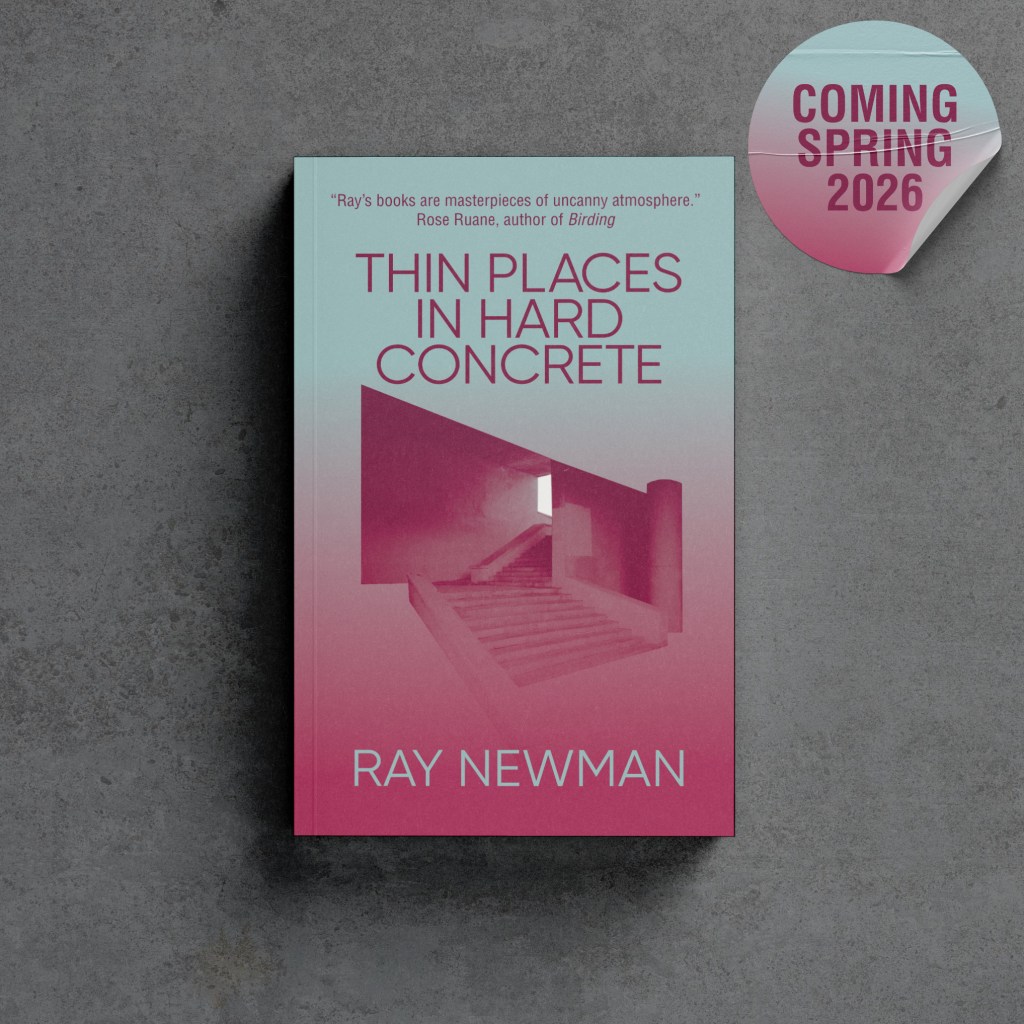
My main focus has been getting my next collection of short stories, Thin Places in Hard Concrete, to the finish line. The stories were all written months ago but they’ve needed rewriting, editing, polishing and proofreading – none of which are as much fun as writing. I’ve also had to do a bunch of admin around the self-publishing process, such as setting up the text for paperback and formatting the eBook.
I sometimes have my doubts about self-publishing – the thought lingers that it’s what you do when, actually, you cannot write, and cannot get published ‘properly’. Then I look at some books that have been traditionally published, with their knocked-up-in-Canva covers and complete lack of marketing, and feel reassured I’m doing the right thing. It helps that the feedback so far from those who’ve read it has been extremely positive. For example, here’s the blurb that David Collard has very kindly supplied:
Ray Newman is an M.R. James for the 21st century. His haunting stories unfold in familiar, even banal settings – a rented flat, a holiday let, an inexplicable motorway interchange, the corner of a room. Things happen, or seem to happen, just out of sight, and beyond comprehension. Admirers of the cult TV series Inside No. 9 will love this collection.
As a spin-off from that, I also collaborated with Giles Booth on an adaptation of ‘The Interchange’, one of the stories from Thin Places in Hard Concrete, for his podcast Listen With Other. This was great fun to do, even if I did end up recording the audio about 16 times.
This also motivated me to make some music for Giles to use in the production which I did with a mix of field recordings, hardware synthesisers, a dodgy old tape recorder, and Reason, my preferred digital music tool. It was such fun that I then recorded a bunch more ambient, droney background music which I’ve told Giles he is free to use however he likes in other episodes of Listen With Other.
I used Reason for this second batch, though, realising that it really is much easier and faster than using hardware, even if it’s less tactile and ‘pure’. I also found myself questioning the ease with which a piece of music can be created using tools like Reason’s chord player, and its various arpeggiators. Is this so different to just generating a piece of music with AI? Well, yes, but it still feels very close to cheating.
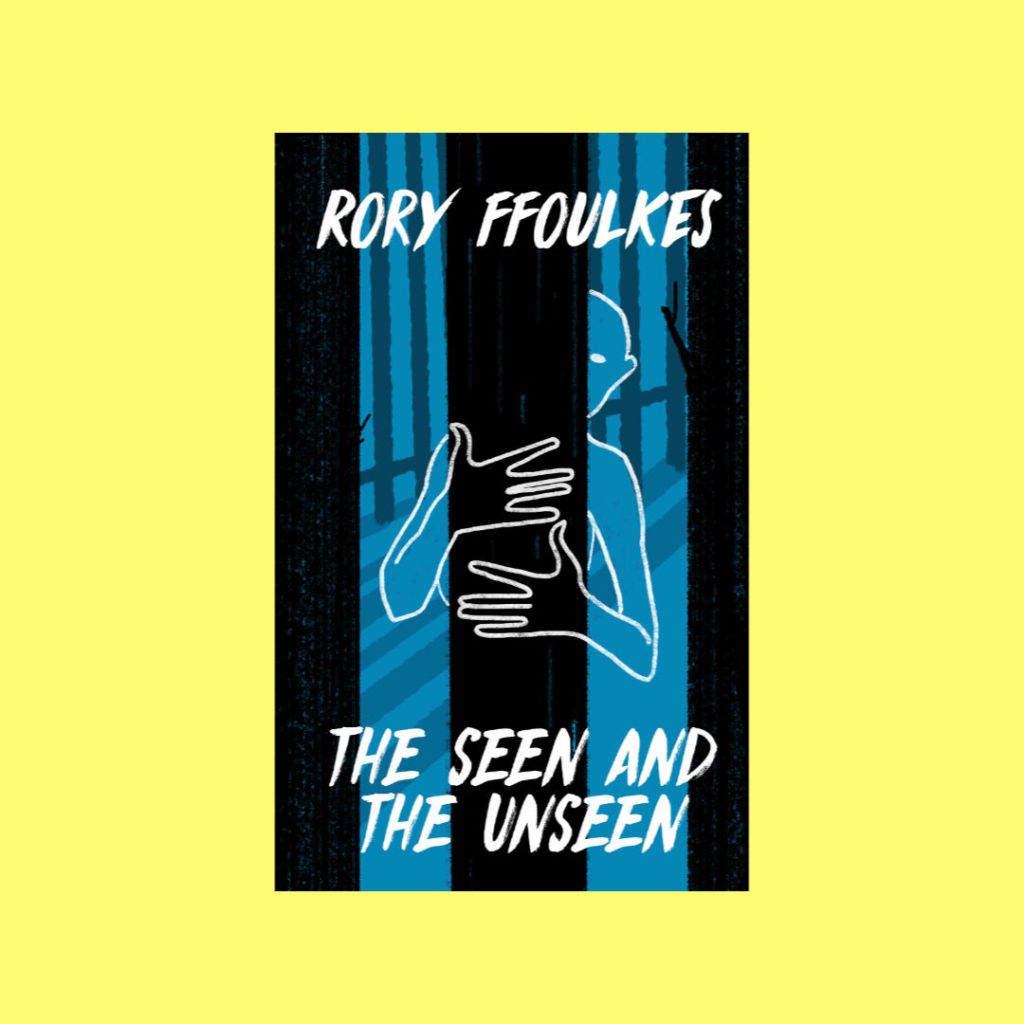
With my lesser-worn graphic design and illustration hat on, I designed a cover for my friend Rory ffoulkes’s collection of weird stories, The Seen and the Unseen, which you can buy now.
Final thought: zoom in
In the next quarter, I’m going to be inspired by this excellent article by Adam Page about Christopher Lee’s performance in The Wicker Man which reminded me of the power of picking one detail or aspect of an artefact and really focusing on it. Not everything needs to be longread or an all-encompassing deep dive.

 Precast Reinforced Concrete Heart